Vlora, in southern Albania, is one of the rare Mediterranean destinations where archaeology, landscape, and living history merge into a single continuous experience. This is not only a coastal city, but a region shaped by Illyrian settlements, Roman ports, Byzantine churches, and medieval fortifications.
For travelers searching for things to do in Vlora Albania, historical sites in Albania, or off the beaten path cultural experiences, this region offers one of the richest archaeological landscapes in the country.
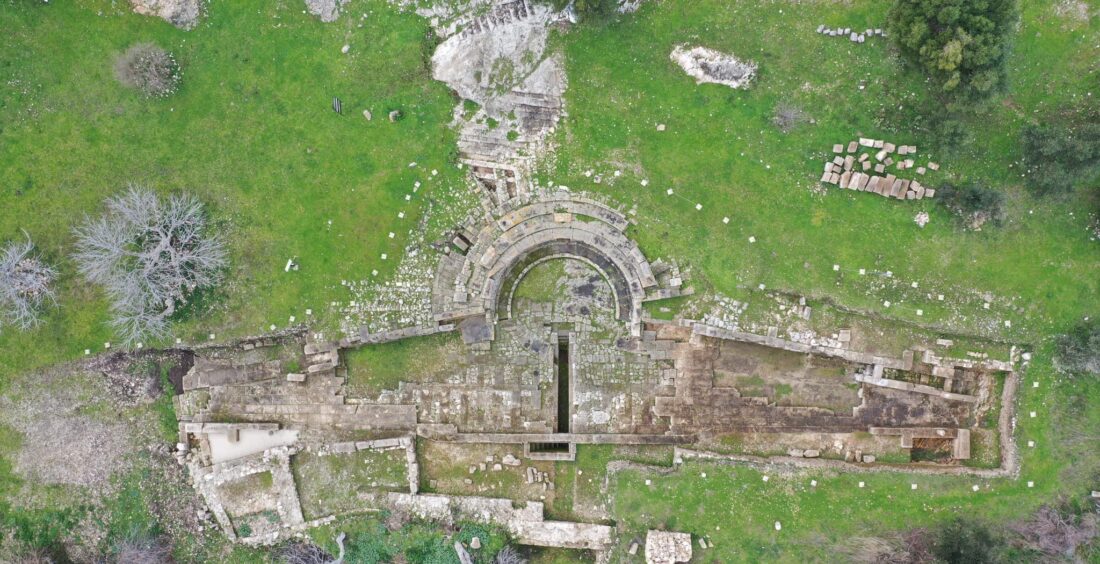
Visit the Archaeological Park of Amantia (Selenicë, Vlora)
An ancient Illyrian city positioned on a strategic hill overlooking the Vjosa valley.
What makes it special:
One of the best preserved ancient stadiums in Albania
Complex urban planning for its historical period
Panoramic Mediterranean landscape
Historical context:
Amantia flourished in the 3rd century BC as an independent Illyrian center with its own currency, governance system, and regional influence. Its position connected coastal trade routes with inland territories.
The landscape is defined by olive groves, dry Mediterranean vegetation, and limestone terrain that reflects the intense southern light.
Local storytelling:
The stadium is remembered as more than a sports arena. It was a place where public reputation, leadership, and social influence were shaped. Athletic victory was also political recognition.
When to visit and what to bring:
Spring and autumn
Comfortable shoes and water
Recommended guided visit for full context
Explore the Archaeological Park of Orikum (Orikum, Vlora)
A coastal ancient port deeply connected to Roman naval history.
What makes it special:
Ancient city built into natural coastal rock
Strategic maritime location in Epirus
Direct connection to Roman military campaigns
Historical context:
Orikum dates back to the 6th century BC and is described in ancient sources as one of the safest harbors in the region. In 48 BC, Julius Caesar used Orikum as a military base during the Roman civil war.
The site reflects a strong interaction between sea routes, geography, and political power.
Local storytelling:
Orikum was seen as a place where the sea determined human decisions. Ancient sailors often waited here for favorable winds before continuing their journey across the Adriatic.
Marmiroi Church and the Hiking Route to Karaburun
A quiet Byzantine landmark connected to ancient inland routes and coastal movement.
What makes it special:
13th century Byzantine church
Remote Mediterranean landscape
Starting point for Karaburun hiking trails
Historical context:
The area was part of an old network of routes connecting coastal settlements with inland villages. The terrain is typical Mediterranean, shaped by limestone, dry soil, and aromatic vegetation.
Experiential layer:
From here begins one of the most authentic hiking routes in southern Albania, crossing mountains toward hidden bays of Karaburun, highly valued in sustainable and slow tourism experiences.
Local storytelling:
This site was traditionally used as a place of pause before long journeys. Travelers would stop here for reflection and preparation before crossing the mountains or heading toward the coast.
Kanina Castle (Vlora)
A dominant historical viewpoint overlooking the entire bay of Vlora.
What makes it special:
Panoramic views over sea and city
Multi-layered historical structure
Strategic defensive position
Historical context:
Kanina Castle stands on a limestone hill covered with olive trees and Mediterranean vegetation. Its position allowed full control over maritime and land routes in the region.
The story of Rugjina Balsha:
Rugjina Balsha is remembered in local tradition as a strong medieval figure associated with Kanina Castle during a period of political instability in the region.
Her story is linked to resilience and symbolic resistance, transforming the castle into a cultural symbol of identity and endurance rather than only a military structure.
Grama Bay in Karaburun
One of the most unique natural and archaeological sites in Albania.
What makes it special:
Ancient inscriptions carved into limestone cliffs
Crystal clear waters and protected bay
Accessible mainly by boat
Historical context:
Gjiri i Gramës was used for centuries as a natural maritime shelter. During Roman times, ships carrying marble and construction materials stopped here for safety and logistical purposes.
The geological formation of white limestone cliffs and deep blue waters creates one of the most dramatic coastal landscapes in the Adriatic.
Local storytelling:
Sailors carved names into the rock as a way to leave a permanent trace. The belief was that the sea preserves memory, and those who respect it are never forgotten.
Ancient Aulona in Vlora City Center
A rare case where ancient history exists directly beneath a modern city.
What makes it special:
Located in the heart of Vlora
Continuous historical layering
Easily accessible urban archaeology
Historical context:
Ancient Aulona was a medieval coastal settlement and an important node in Adriatic trade networks. Over centuries, the city evolved through multiple layers of occupation and development.
Mystical local perspective:
There is a long-standing belief that Vlora is built over multiple ancient settlements that have never been fully excavated. This creates a perception of a city still partially hidden beneath its modern surface.
WHY VLORA IS A TOP CULTURAL AND ARCHAEOLOGICAL DESTINATION IN ALBANIA
Combines archaeology, coastal landscapes, and mountain ecosystems
Strong Illyrian, Roman, and Byzantine continuity
Ideal for hiking, cultural tourism, and slow travel experiences
One of the most diverse historical regions in southern Albania