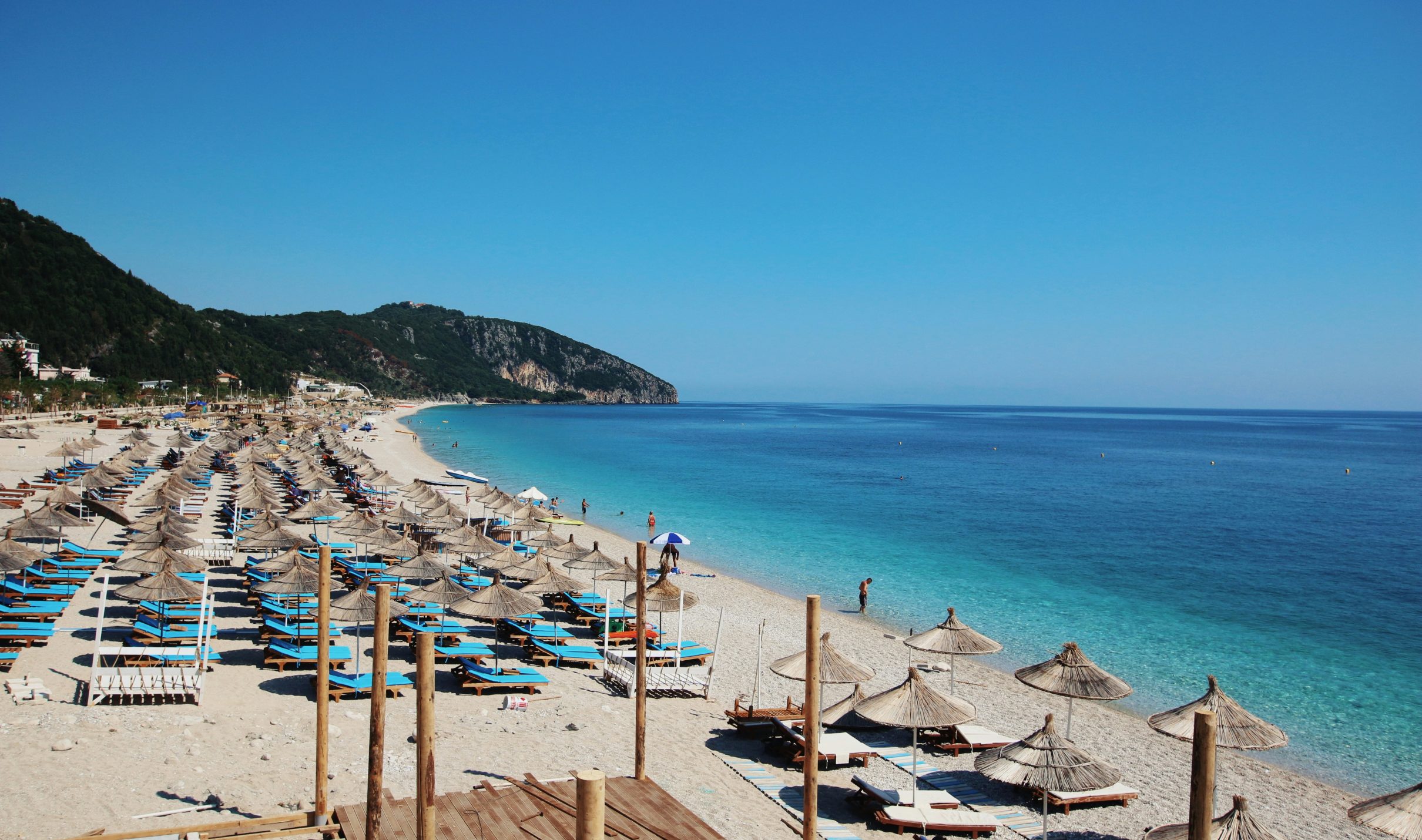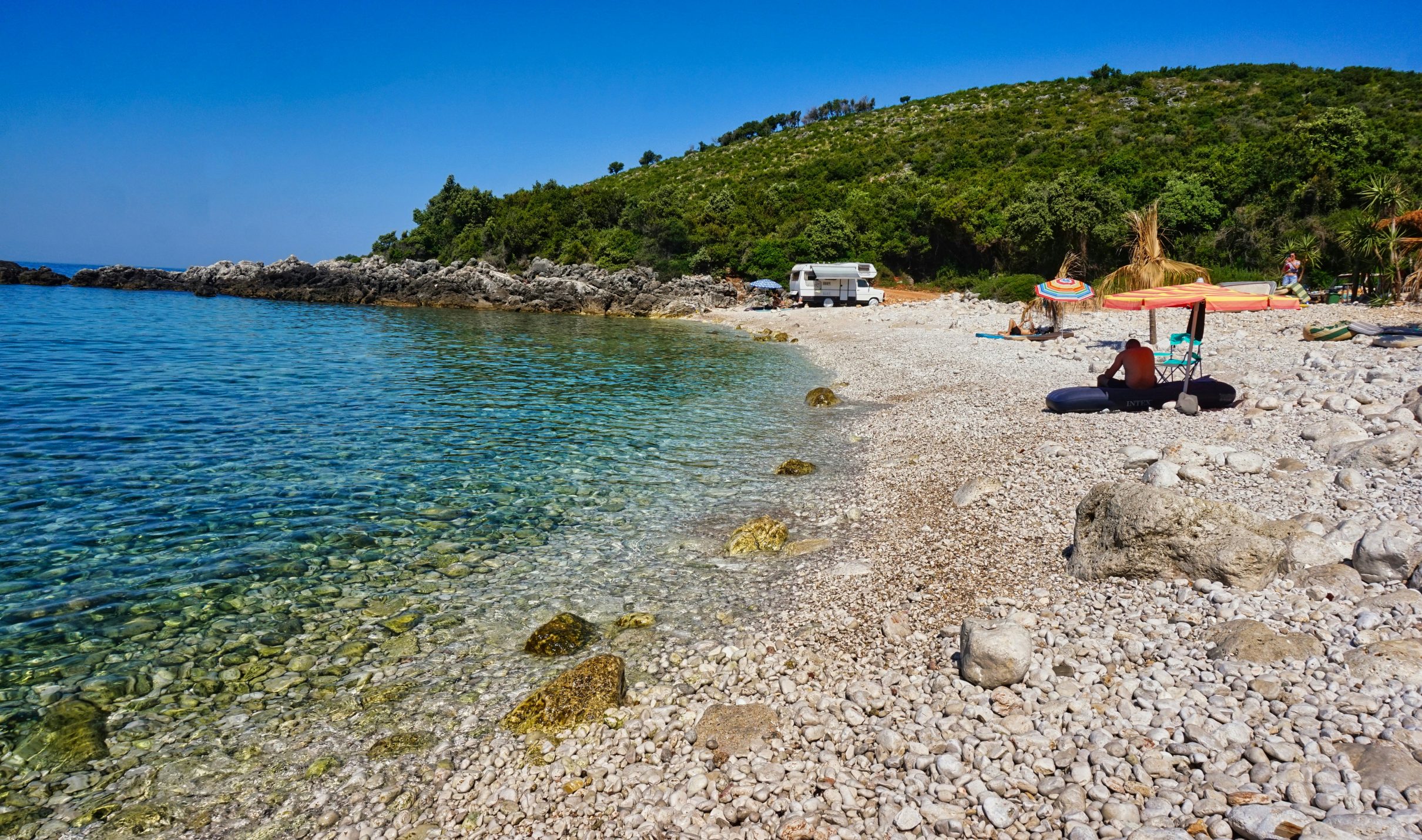
Just a short drive from Vlorë, the transition begins quietly. The warmth of the coast fades, the air sharpens, and the road starts to climb. Before the landscape fully opens, the atmosphere has already changed. This is Llogara National Park, a place defined as much by sensation as by scenery.
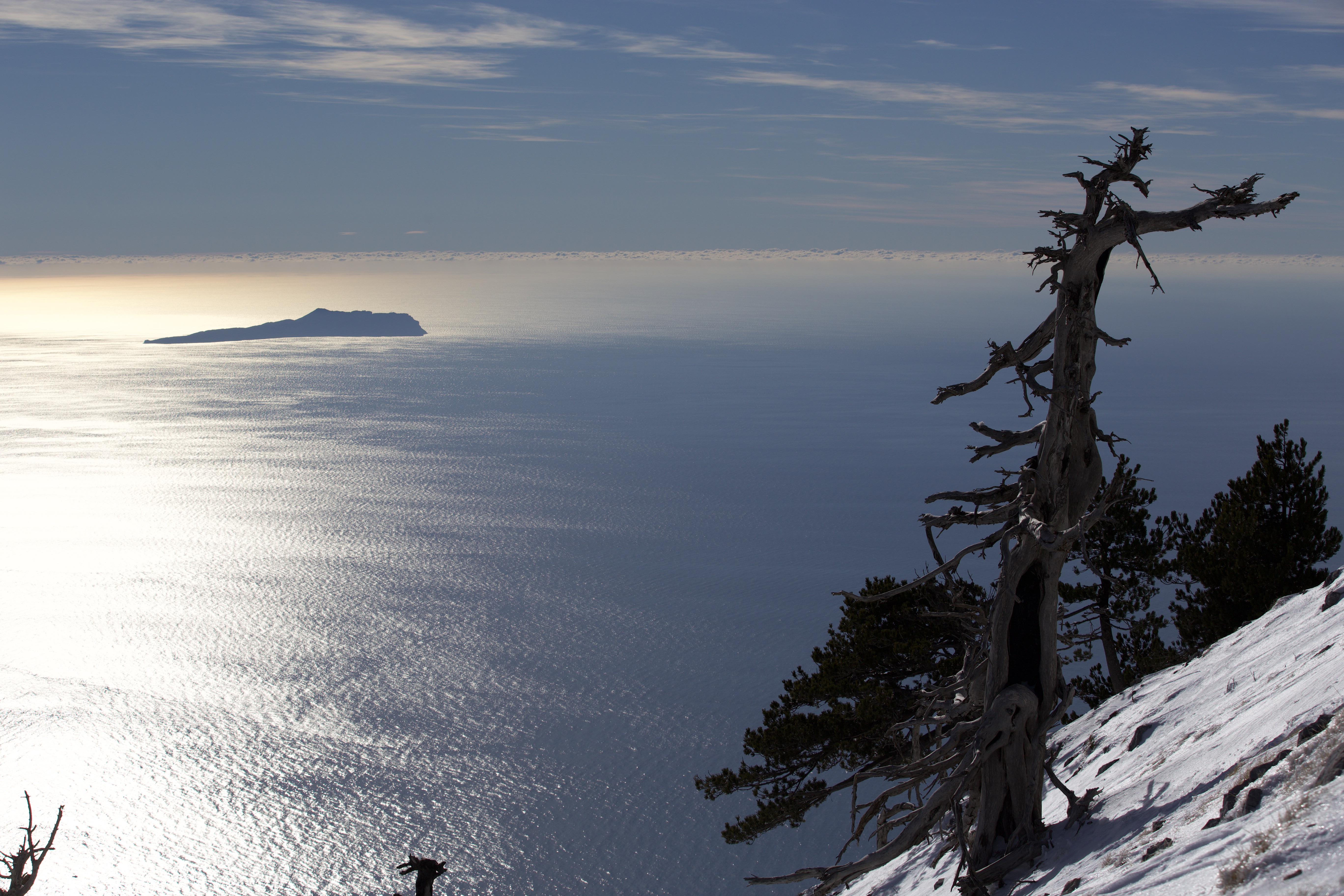
At its center stands Llogara Pass, rising just above 1,000 meters. From here, the view opens across the Albanian Riviera, but what stays longer is the contrast: cold mountain air above, warm sea air below, meeting in the same point.
Caesar’s route and the Ceraunian Mountains
This landscape has long been a natural corridor between coast and inland routes. During the Roman civil war, Julius Caesar is believed to have crossed this region while pursuing Pompey, moving through the rugged terrain of the Ceraunian Mountains.
In antiquity, these mountains were described as harsh and unpredictable, shaped by sudden storms and strong winds. Their name is linked to thunder and lightning, reflecting the intensity of the natural forces that define them. Over time, strategic routes became hiking paths, but the sense of passage remains unchanged.
Forests, pine trees, and a living ecosystem
The forest structure in Llogara is shaped by altitude, exposure, and constant wind pressure coming from the sea.
Key tree species include:
- Black pine (Pinus nigra)
- Balkan pine (Pinus peuce)
Many trees are visibly bent and sculpted by wind over decades, forming a natural signature unique to this park.
The ecosystem includes:
- Deer and foxes moving through deeper forest areas
- Eagles and birds of prey using thermal currents above ridges
- Alpine flora adapted to rocky soil and exposed terrain
This is a functioning natural system, not a static landscape.
Hiking trails and mountain peaks
Llogara National Park offers a network of trails ranging from easy forest walks to demanding alpine ascents within the Ceraunian Mountains.
Main hiking destinations include:
- Mount Çika (2,044 m), the highest point in the range with wide coastal views
- Mount Qorre, known for steep and dramatic ridgelines
- Mount Shën Thanas, a more accessible ascent close to the pass
Trails vary from short panoramic walks to full-day mountain routes. Some follow natural corridors that likely resemble ancient passages used for movement through the region.
Local legends of Llogara
Beyond geography, Llogara carries a strong oral tradition shaped by isolation, weather, and terrain.
One of the most common stories is about the “voices of the wind.” Locals describe strong winter winds passing through the Ceraunian Mountains as if they carry distant sounds. Older generations interpreted this as voices of travelers lost in storms, or spirits of those who never completed the crossing.
Another well known belief comes from shepherd communities. In dense fog, they describe how trails can feel like they “disappear,” with walkers returning close to their starting point without realizing it. This reflects both the psychological effect of limited visibility and the complex terrain of Llogara National Park.
Even the figure of Julius Caesar appears in local storytelling, not as strict history but as symbolic memory of ancient movement through a difficult mountain corridor.
These stories reflect a consistent idea: this is not a passive landscape, but an active force that shapes perception.
Food in the mountain area
After time outdoors, the local cuisine is simple and directly connected to the environment.
Typical elements include:
- Yogurt with honey and walnuts, fresh and balanced
- Grilled lamb or goat, cooked over open fire
- Local dairy products and seasonal ingredients
The food reflects altitude, climate, and traditional rural practice.
A landscape of contrast
Llogara is defined by duality. On one side, the steep and rugged formations of the Ceraunian Mountains. On the other, the open horizon of the Ionian coast.
On clear days, visibility extends far beyond the immediate terrain. The experience is not only visual but spatial, giving a strong sense of scale and vertical transition rarely found in such a short distance.
Things to do in Llogara
A focused visit typically includes:
- Stop at Llogara Pass for panoramic views
- Walk through pine forests shaped by wind over time
- Hike toward Mount Çika or Mount Shën Thanas
- Explore deeper trails within the Ceraunian Mountains
- Observe wildlife and forest transitions across altitude levels
- Try yogurt with honey and walnuts in local mountain restaurants
- Taste grilled meat prepared in traditional style
- Move without a fixed plan and allow the environment to define the pace
Llogara is not a single attraction but a layered experience. Air, terrain, history, and memory overlap in a way that makes the passage itself the destination.