
Slow Tourism in Vlore: Living the City at Its Own Rhythm
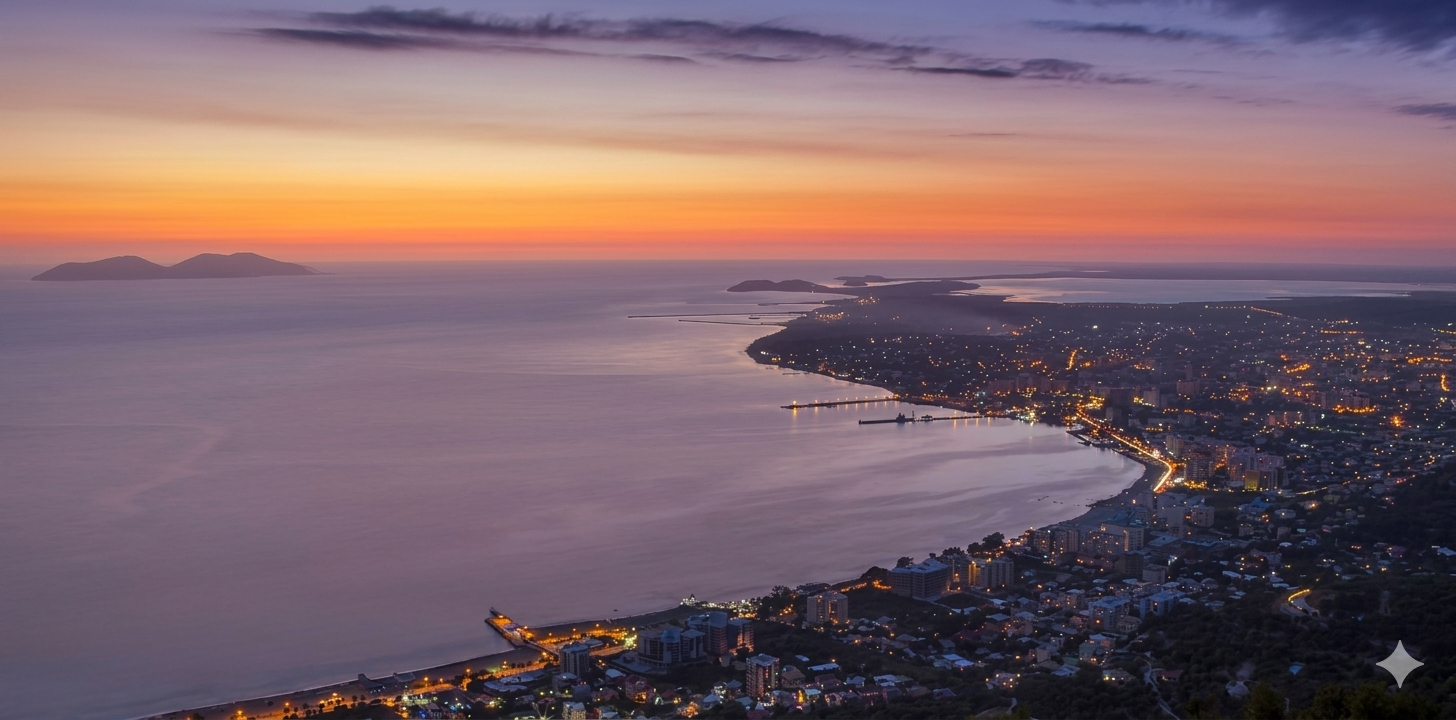
Just south of Vlore, time does not move faster than it should. It slows down naturally between sea, light, and daily life.
Slow tourism here is not a concept. It is a rhythm already present in how the city breathes, especially in the early morning and late evening.
There is no urgency. The day begins when you decide to meet it.
Morning in Vlore moves between two cultures that coexist naturally rather than replace each other.
Slow mornings and the new seaside culture
In quieter, traditional households, the day still begins with warm homemade kulac me djathë të bardhë, fresh from the oven. Along the coast, a modern rhythm has taken shape with cappuccino and brioche by the sea.
Along Lungomare Vlore and the older pine coastline, both expressions of morning meet the same landscape. Soft light, calm water, and slow movement define the atmosphere.
The old beach and the pine coast
Beyond the modern promenade, the older coastal line near the pine trees still carries a quieter, less structured atmosphere.
Here, the sea feels closer, sound is reduced, and time becomes more noticeable. It remains one of the few places where the morning is defined only by nature and movement of water.
Marmiroi Church: a silent stone witness of centuries
Near Orikum stands Marmiroi Church, one of the most atmospheric early Christian monuments in the region.
Built in a secluded coastal setting, its stone structure reflects early Byzantine architecture. Its position between sea and hills places it along ancient movement routes that connected coastal settlements with inland corridors.
Over time, the site has been associated with overlapping religious influences, reflecting how different historical periods left traces in the same sacred space. It stands today as a quiet witness to continuity rather than change.
Ancient Oricum site: one of the earliest urban footprints on the Adriatic
Below the hills of Orikum lies the archaeological site of ancient Oricum, one of the earliest documented urban centers on the Adriatic coast.
Oricum was an important ancient site that later became a strategic Roman port. Its location made it a key maritime and military point, controlling access between the Adriatic and inland routes of Epirus.
Archaeological remains suggest structured urban planning, defensive walls, and harbor facilities. The site functioned as a strategic hub where trade, naval logistics, and military operations intersected.
Today, its ruins create a direct link between the modern coastal landscape and one of the earliest layers of Mediterranean history.
Orikum wetland: nature, wildlife and the memory of Caesar and Pompey
In the small wetland and lagoon system of Orikum, natural and historical layers coexist in the same landscape.
Today, this wetland is a rich habitat for birds and other wildlife, with shallow waters and marsh vegetation creating an important ecological refuge for migratory and protected species.
At the same time, the wider Orikum bay carries a deeper historical memory. Ancient sources and interpretations link this area to naval movements during the conflict between Julius Caesar and Pompey in the Roman civil war, when control of coastal positions in the Adriatic played a decisive strategic role.
The burned old village of Tragjas: where time stopped
Above the valley near Vlore lies the old village of Tragjas, a settlement heavily affected during the Second World War.
Parts of the village were burned during wartime operations, and over time it was gradually abandoned. Today, ruins are partially covered by vegetation, where stone structures emerge through natural regrowth.
Walking through Tragjas feels like entering a suspended moment. Nature has reclaimed much of the space, but the village layout is still visible beneath the greenery. It is a place where time feels paused rather than erased.
Scuba diving and the hidden history of the bay
The Gulf of Vlore holds deeper layers beneath the surface. One of the most unique experiences is scuba diving to WWII shipwrecks resting at around 16 meters depth.
These wrecks, believed to include Italian military vessels, have become artificial reefs over time, now integrated into marine ecosystems.
Here, history transitions into nature without separation.
Paragliding above the city
From the mountains behind Vlore, paragliding reveals a complete vertical reading of the region.
The descent passes through layered geography: mountains, urban expansion, coastline, and open sea.
It creates a physical understanding of how the city is structured across elevation and water.
Kuzum Baba: a viewpoint between earth and meaning
Above the city sits Kuzum Baba, a site connected to the Bektashi tradition and local spiritual practice.
It functions as both a place of reflection and a geographic overview of the entire coastal system.
Karaburun Peninsula and Grama Bay: where time slows to its minimum
The Karaburun Peninsula remains one of the most untouched coastal environments in the region.
In places like Grama Bay, overnight stays on the shore in remote coves create direct contact with nature.
Waves move stones along the beach, and mornings begin without infrastructure or interruption.
Ancient inscriptions carved into rock surfaces by Greek, Roman, and Byzantine sailors remain visible. These markings served as navigation records, prayers, or expressions of safe passage.
Grama Bay functioned as a maritime shelter for centuries, connecting the Adriatic to wider Mediterranean routes.
Culture, independence and identity
Vlore is also the symbolic center of Albanian independence. In 1912, the Albanian flag was raised here, marking the declaration of independence.
Albanian Declaration of Independence remains a defining moment in national identity.
This historical layer remains embedded in the city’s identity as open, coastal, and resilient.
Retreats, wellness and group experiences in Vlore
Vlore supports structured slow tourism experiences including wellness retreats, creative residencies, corporate retreats, staff training activities, and group travel programs.
The environment allows movement between sea, mountain, and quiet urban spaces, creating flexible programs shaped by rhythm rather than schedule.
These experiences can include hiking, cycling routes, ATV exploration, coastal meditation sessions, cultural workshops, and nature-based group activities. This makes the region suitable for international groups seeking both focus and restoration.
Things to do in Vlore
Slow tourism in Vlore can be experienced through a wide range of activities:
- Sunrise or sunset walks along the coastline
- Coffee culture experience with sea view cafés
- Visit to Marmiroi Church and Orikum archaeological site
- Birdwatching at Orikum wetland
- Exploration of the burned village of Tragjas
- Scuba diving in WWII shipwrecks
- Paragliding over Vlore and coastline
- Boat trips to Karaburun Peninsula and Grama Bay
- Cultural tasting of local traditions and hospitality
Each activity connects to a different layer of the same landscape.
A city as a layered timeline
Slow tourism in Vlore is an encounter with overlapping time.
Ancient Oricum site, Marmiroi Church, Orikum wetland with Caesar and Pompey historical memory, the burned village of Tragjas, Ottoman maritime and administrative influence, Cold War coastal restrictions, Roman naval routes, Byzantine religious layers, WWII shipwrecks, and modern coastal life exist within the same geography.
The result is not a collection of sites, but a continuous historical landscape.
What makes slow tourism in Vlore different
Slow tourism here is not about slowing down activity. It is about entering a place where different times coexist.
A morning kulac, a cappuccino by the sea, ancient sites, living wetlands, abandoned villages, submerged wrecks, and mountain views all belong to the same day.
In that overlap, Vlore becomes less a destination and more a living timeline.


