What Makes Eden Different from Other Restaurants in Vlora?

A restaurant reveals its character through decisions that guests may not notice immediately.

The length of the menu. The way a kitchen handles a familiar ingredient. The order in which dishes arrive. Whether the waiter recommends more food than the table needs, or understands when enough has been ordered. Whether the setting supports the meal or attempts to compensate for it.

These details explain Eden by Valza more accurately than the view alone.

Eden differs from many restaurants in Vlora through the consistency between its kitchen, service and setting. Its identity is based on modern Albanian cooking, Mediterranean technique, seasonal ingredients and a rooftop environment that allows dinner to develop at a measured pace rather than functioning only as a scenic background.

A Culinary Identity Built Through Selection

Many restaurant menus try to demonstrate value through quantity. More pages, more cuisines and more options are presented as greater choice.

A focused kitchen works differently.

Its identity is shaped not only by what it places on the menu, but also by what it decides to leave out. This is the first important distinction at Eden.

The restaurant does not attempt to represent every form of Albanian cooking or every popular international dish. Its menu moves through a narrower field: seafood, vegetables, meat, pasta, risotto and Mediterranean ingredients interpreted through a contemporary Albanian perspective.

This creates discipline.

A kitchen cannot develop a recognisable point of view if every possible dish must remain available. A shorter, seasonal direction allows ingredients, techniques and combinations to relate to one another.

This is also where the Slow Food approach becomes practical rather than theoretical. Seasonality means accepting that some ingredients change, disappear or perform differently during the year. It requires the menu to respond to availability rather than pretending that every product has the same quality in every month.

The result should not be unpredictability for the guest. It should be greater clarity about what the kitchen is trying to do.

Modern Albanian Cooking Is a Method, Not a Decoration

The phrase “modern Albanian cuisine” can easily become vague.

It should not mean placing a local ingredient beside an international recipe and calling the result contemporary. It should describe a method of working.

At Eden, that method begins with ingredients familiar to southern Albania and the Mediterranean: olive oil, aubergines, tomatoes, herbs, grains, citrus, seafood and seasonal vegetables.

The contemporary element comes from proportion, technique and presentation.

A smoked aubergine, for example, can remain recognisably Albanian and Mediterranean without being served in a traditional format. Smoke gives depth. Tahini or another rich component adds body. Acidity restores balance. Fresh herbs prevent the plate from becoming heavy.

The dish becomes modern not because it is made unfamiliar, but because every component has a clear function.

This principle applies equally to seafood.

A pasta with clams should not need many elements to feel complete. The difficulty lies in controlling salinity, cooking the pasta correctly and allowing the shellfish liquid to become part of the sauce.

The apparent simplicity is the technique.

This is an important culinary “aha” moment: complex cooking is not always the cooking with the most ingredients. Often, the fewer elements a plate contains, the more visible every mistake becomes.

Restraint Is Part of the Cooking

Restaurant food often becomes overworked because the kitchen wants every plate to appear important.

Too many garnishes, sauces or textures can weaken the ingredient that should lead the dish.

Eden’s stronger plates follow a different logic. The main ingredient remains identifiable, while the supporting elements provide contrast.

Octopus needs tenderness before it receives direct heat. The grill should create character without making the exterior dry. A chickpea preparation can provide weight and softness, while acidity or fresh vegetables keep the plate from becoming monotonous.

Risotto requires a different discipline. It should carry the flavour of its stock or seafood base while preserving the structure of the rice. Richness without control quickly becomes heaviness.

These are not decorative technical details. They determine whether a guest wants another bite after the first impression has passed.

This is where Eden’s gastronomic identity should be judged most seriously. Not by whether a plate photographs well, but by whether its balance remains convincing until the plate is finished.

Service Changes the Way Food Is Experienced

Cooking does not end when a plate leaves the kitchen.

Timing, explanation and sequencing influence how the guest experiences it. In this sense, service is part of the preparation.

A hot dish loses part of its intention if it waits too long before reaching the table. Several rich plates arriving at once can make each one less enjoyable. Shared starters require space and coordination. A family may need a different rhythm from a couple having a long dinner.

The service team therefore has to read the table.

This does not mean creating a complicated performance. It means understanding what type of meal is taking place.

A couple may prefer to begin slowly and order the main course later. A group of friends may need guidance on how many starters to share. A family may value direct recommendations and a more predictable sequence.

One of the most revealing signs of good hospitality is restraint. A useful recommendation is not always the most expensive dish or the largest possible order. Sometimes it is telling a table that what they have chosen is already enough.

That honesty builds trust more effectively than formal language.

The human element at Eden should come from these small decisions. Guests remember when they felt understood, even when they cannot identify exactly which service detail created that feeling.

The Rooftop Has a Function Beyond the View

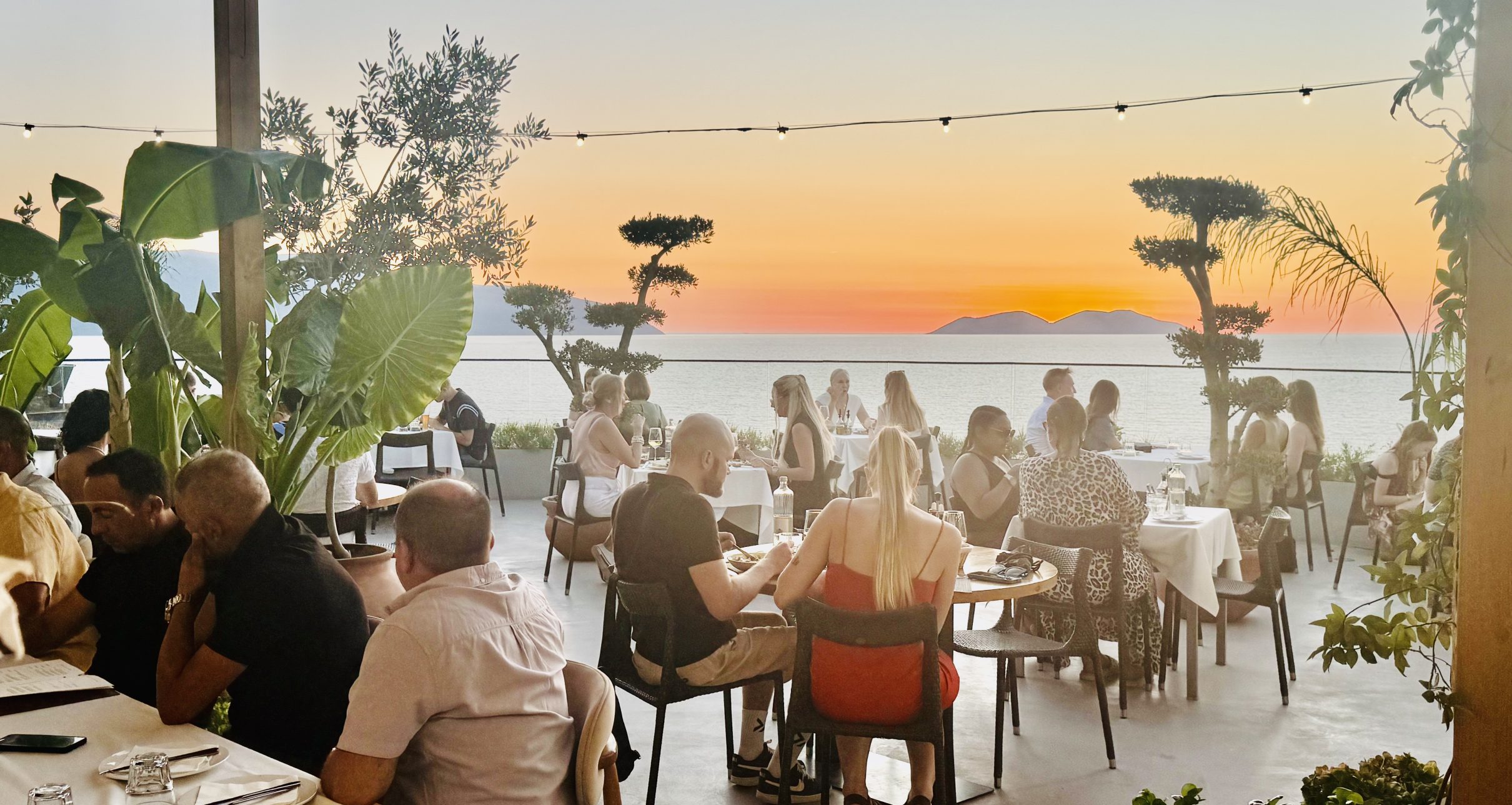
Eden’s position above the Bay of Vlora is its most visible feature, but visibility alone does not create differentiation.

The rooftop changes the tempo of the meal.

Guests are physically removed from the immediate movement of the coastal road. The city remains present, but it does not occupy the table in the same way as it can at street level.

This gives the kitchen and service more time to establish the evening.

The setting is particularly effective during the transition from afternoon light to night, but the restaurant should not depend entirely on sunset. Once the light disappears, the menu, service and atmosphere still need to hold the guest’s attention.

That is the real test of a restaurant with a view.

A panorama may influence the decision to reserve. It cannot carry the entire dinner.

Eden is strongest when the view and the food operate at the same level: neither ignored nor allowed to replace the other.

What Guests Take Away from the Experience

The difference between restaurants is often clearer after the meal than during it.

Guests may remember a particular dish, but they also remember whether the menu felt coherent, whether the service understood their table and whether the evening developed naturally.

At Eden, the intended experience is not based on one dramatic feature.

It comes from accumulation.

An ingredient treated with restraint. A menu that does not try to become everything. A waiter who understands the pace of the table. A rooftop that gives the evening space without demanding constant attention.

These elements create a more serious form of differentiation than decoration or claims of exclusivity.

Eden by Valza is different when the guest can recognise one consistent idea from the first recommendation to the final plate: food connected to place, prepared with control and served at the rhythm the table requires.

Is Eden by Valza a fine-dining restaurant?

Eden offers an elevated and carefully considered dining experience, but its identity is based more on modern Mediterranean hospitality and contemporary Albanian cooking than on formal fine-dining rituals.


What defines the cooking at Eden?

The kitchen focuses on seasonal ingredients, seafood, vegetables, meat and Mediterranean techniques, with an emphasis on clarity, balance and recognisable flavours.

Is the experience mainly about the rooftop view?

No. The rooftop is an important part of the setting, but the restaurant’s identity also depends on the menu, kitchen technique, service and pace of the meal.

A Difference Built Through Consistency

What separates Eden from other restaurants in Vlora is not that every individual element exists nowhere else.

Seafood, local ingredients, panoramic views and contemporary cooking can all be found in different places.

The distinction comes from how these elements are edited and brought together.

A serious restaurant is not defined only by what it offers.

It is also defined by the decisions it makes repeatedly, even when the guest does not see them.

To experience the current menu at Eden by Valza, reserve by telephone or WhatsApp at +355 69 602 2022.