The last swimmers do not leave the water at the same time.
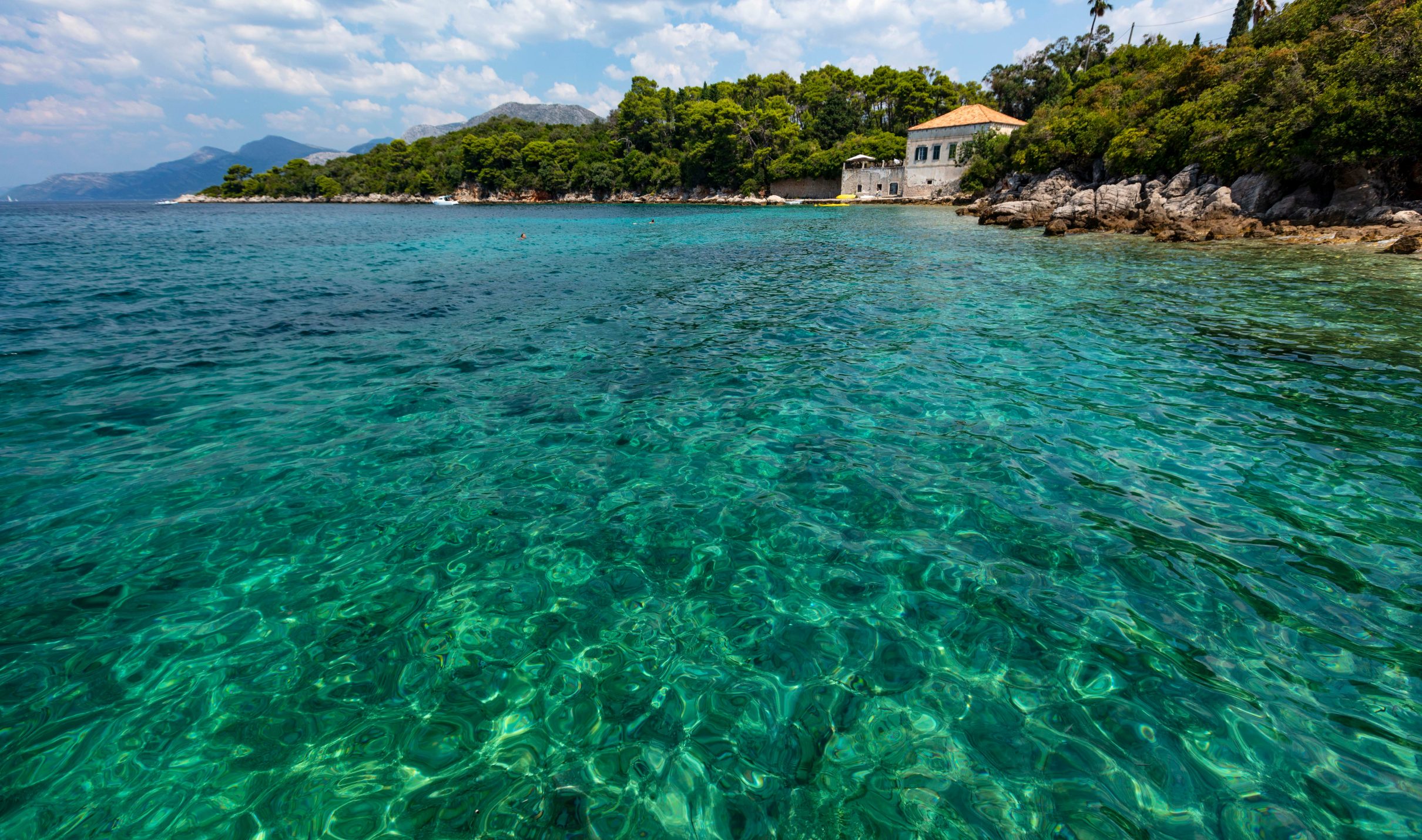
Families begin gathering towels while the Sun is still above the horizon. Children are called back from the shallows, umbrellas close one after another, and the voices that filled the afternoon slowly move towards the promenade and the first tables being prepared for dinner.
A few people remain.
An older man swims parallel to the shore with the measured rhythm of someone who knows where the sand ends and the submerged stones begin. Not far from him, a child negotiates for one final minute in the water, as though sunset were a rule that adults had invented and might still be persuaded to change.
Above them, the sky begins to warm. Yellow becomes orange, orange deepens towards copper, and red spreads across the surface until the bay appears to carry fire. Beneath the swimmers, however, the rocks are already losing colour.
This is the first paradox of evening in the Bay of Vlora:
While the sky grows warmer in colour, the underwater world loses its warm colours first.
The swimmers see sunset above them. The sea experiences the disappearance of light below.
The older man reaches the shallows and stands. Water falls from his shoulders while he looks towards the horizon. The child has stopped splashing. For several minutes, both watch the same bay becoming two different worlds at once.
By the time the final swimmer steps ashore, the water has not become empty. It has changed which animals move, which senses matter and which stories are able to begin.
Sunset does not end the day in the sea.
It changes the shift.
The Sunset Above and the Evening Below
A sunset begins with distance. When the Sun approaches the horizon, its light travels through a longer path in the atmosphere. More of the shorter blue wavelengths are scattered away, allowing orange and red light to dominate the direction in which people are looking.
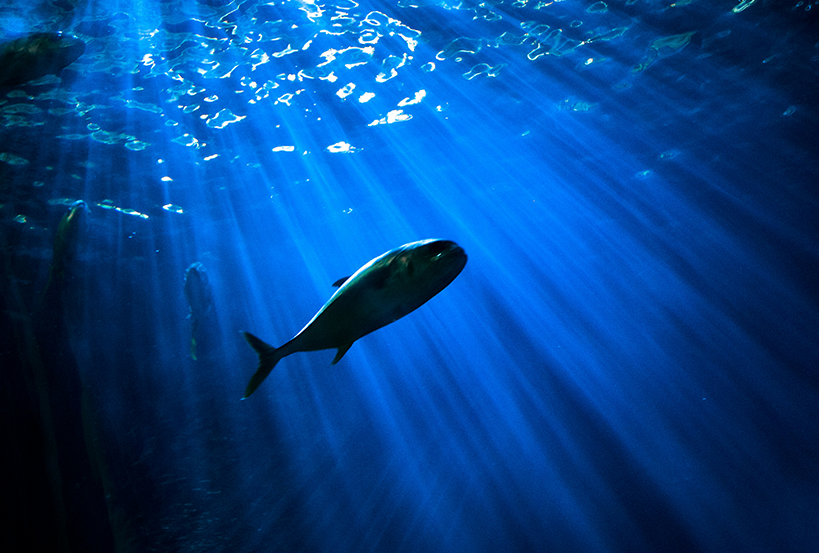
The same light behaves differently after entering seawater. Red and orange wavelengths are absorbed relatively quickly, while blue light penetrates farther. A red object beneath the surface can begin to appear brown, grey or almost black while the sky above it is becoming intensely red.
The change is easy to miss from land. It becomes unmistakable when a swimmer lowers their face into the water during the final minutes of daylight.
Above the surface, the horizon still glows. Below it, the seabed has already entered evening. Green algae become darker. Pale stones lose their edges. Familiar depths feel less certain, even though the water has not moved and the bottom remains exactly where it was.
Sunset does not reach every part of the bay at the same moment.
For the child, this is a new discovery. Each time he lifts his face, the world is orange. Each time he looks down, it is blue-grey.
The older swimmer tells him that evening always arrives beneath the water first.
He does not explain the physics. He has learned the sequence by entering the same bay at the same hour over many summers.
Science can describe why the colours disappear.
Experience remembers the order.
The Swim Between Two Times of Day
An evening swim feels different before the swimmer has travelled more than a few metres.
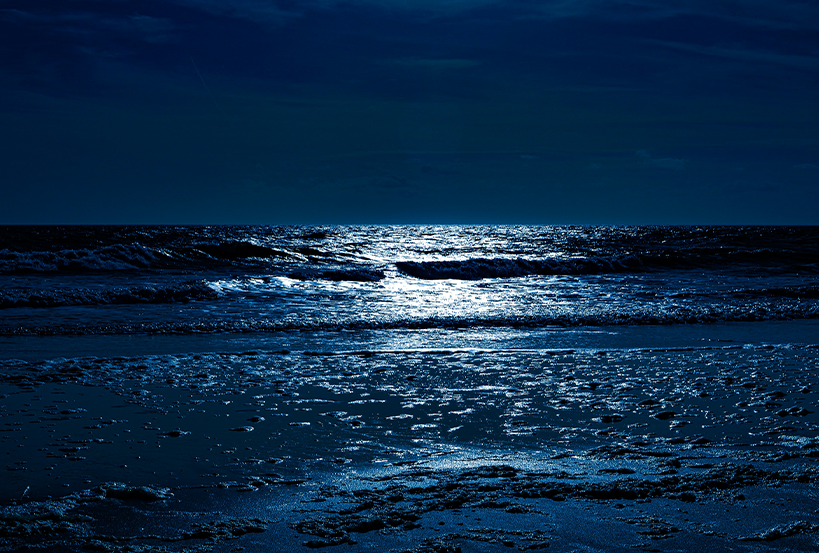
The heat stored in the skin during the afternoon meets water that suddenly seems cooler. The air has changed, the sunlight is weaker and the shore no longer appears as sharply defined. Voices carry clearly across the surface, while details below become uncertain.
During the day, swimming is often an outward experience. People look towards boats, other swimmers, the beach and the visible bottom. At dusk, attention returns to the body: the rhythm of breathing, water passing across the shoulders and the moment when the feet can no longer reach the sand.
The older man does not swim far. He follows the same route he has used for years, turning before the last clear patch of sand disappears beneath the darkening surface. His confidence comes not from believing that the sea is harmless, but from knowing where his limits are.
The child follows only in the shallows.
He notices that his breathing sounds louder. He notices the small movement of pebbles under each wave. He notices that a person standing only a short distance away appears farther once the light has faded.
This is part of the emotion of bathing at sunset. The sea may not have changed temperature significantly, but the body experiences it differently because light, sound and expectation have changed around it.
In Vlora, late bathing belongs naturally to the rhythm of summer. After the strongest heat has passed, people return to the water for a quieter swim. It is less a planned activity than a way of closing the day.
Some enter alone. Others walk down with children or friends. The swim may last ten minutes and follow the same short path night after night.
No monument records these repetitions.
Their history survives in bodies that remember where to enter the sea.
When the Day Shift Withdraws
The fading light changes more than human perception.
During the day, many marine animals organise their behaviour around visibility. Fish feed while remaining able to detect predators. Small creatures stay close to vegetation, stones or crevices. Camouflage depends partly on patterns created by sunlight across the seabed.
As evening arrives, these relationships begin to loosen.
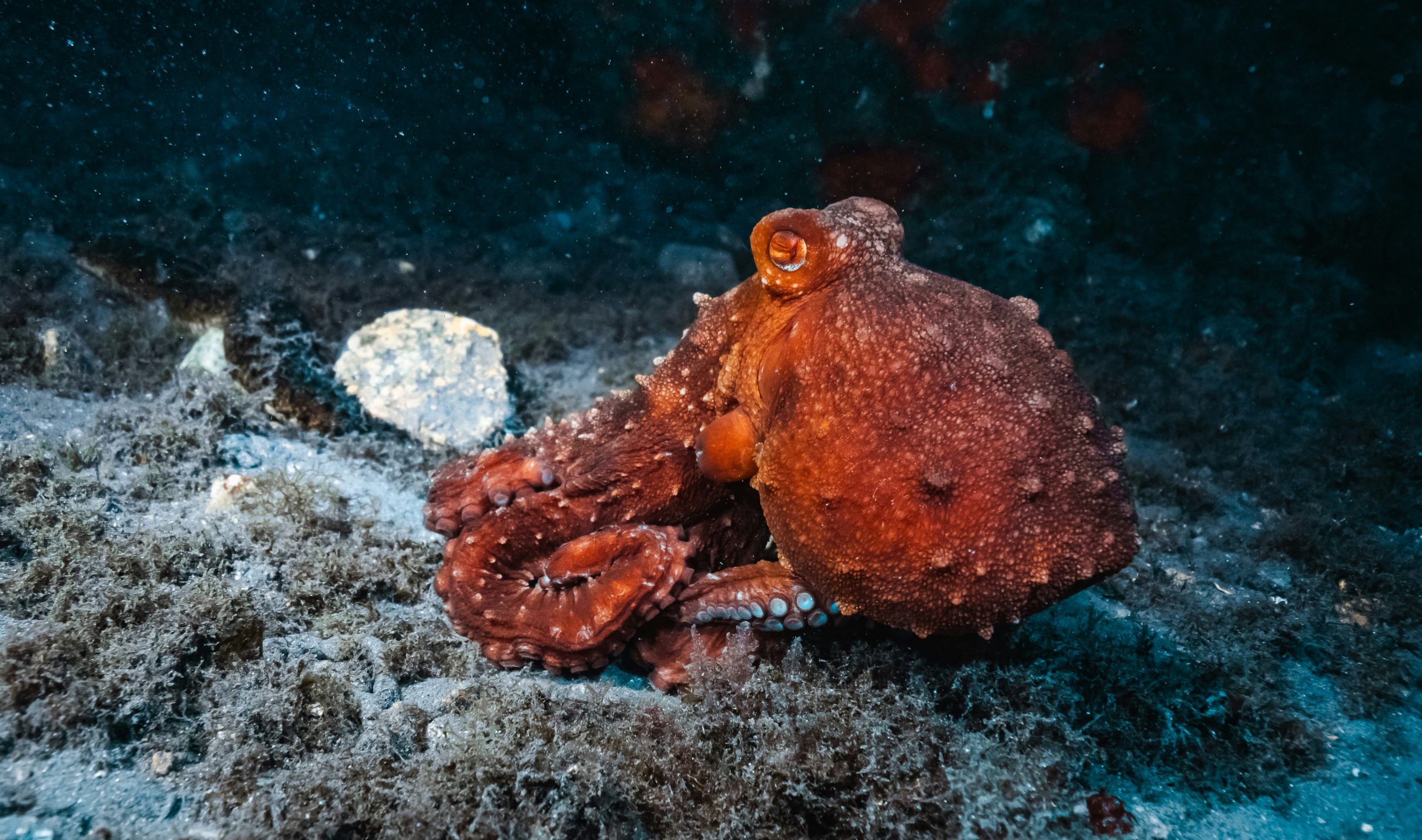
Some fish withdraw into protected spaces. Others become more active. Crabs and shrimps that remained hidden during the brightest hours begin moving beyond the edges of their shelters. The animals visible after dark are not simply the daytime community observed under weaker light.
The change does not happen all at once. One fish disappears beneath a ledge and does not return. A crab emerges from a crack that had seemed empty throughout the afternoon. A nearly transparent shrimp becomes visible only when it crosses a pale stone.
For a short time, the two versions of the bay overlap. Daytime animals are still settling while nocturnal animals begin moving.
The same rock changes function. During the afternoon it was a refuge. After sunset it becomes a doorway.
This is why dusk can reveal more than full darkness. Enough light remains for the human eye to recognise movement, but the rules controlling that movement have already begun to change.
The child sees a crab crossing a patch of sand where he had played earlier. It moves quickly from one stone to another, pauses and disappears.
Nothing dramatic has happened.
Yet the beach no longer feels like a place abandoned by life after people leave.