Part I — When the Landscape Opens Its Eyes
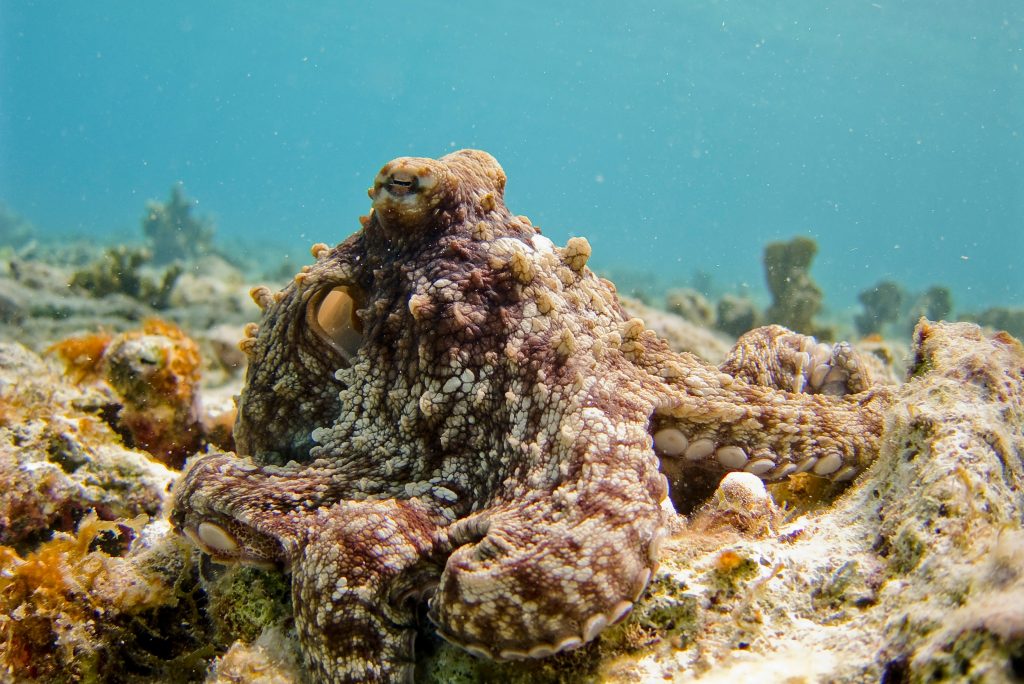
At first, it looks like an ordinary rock.
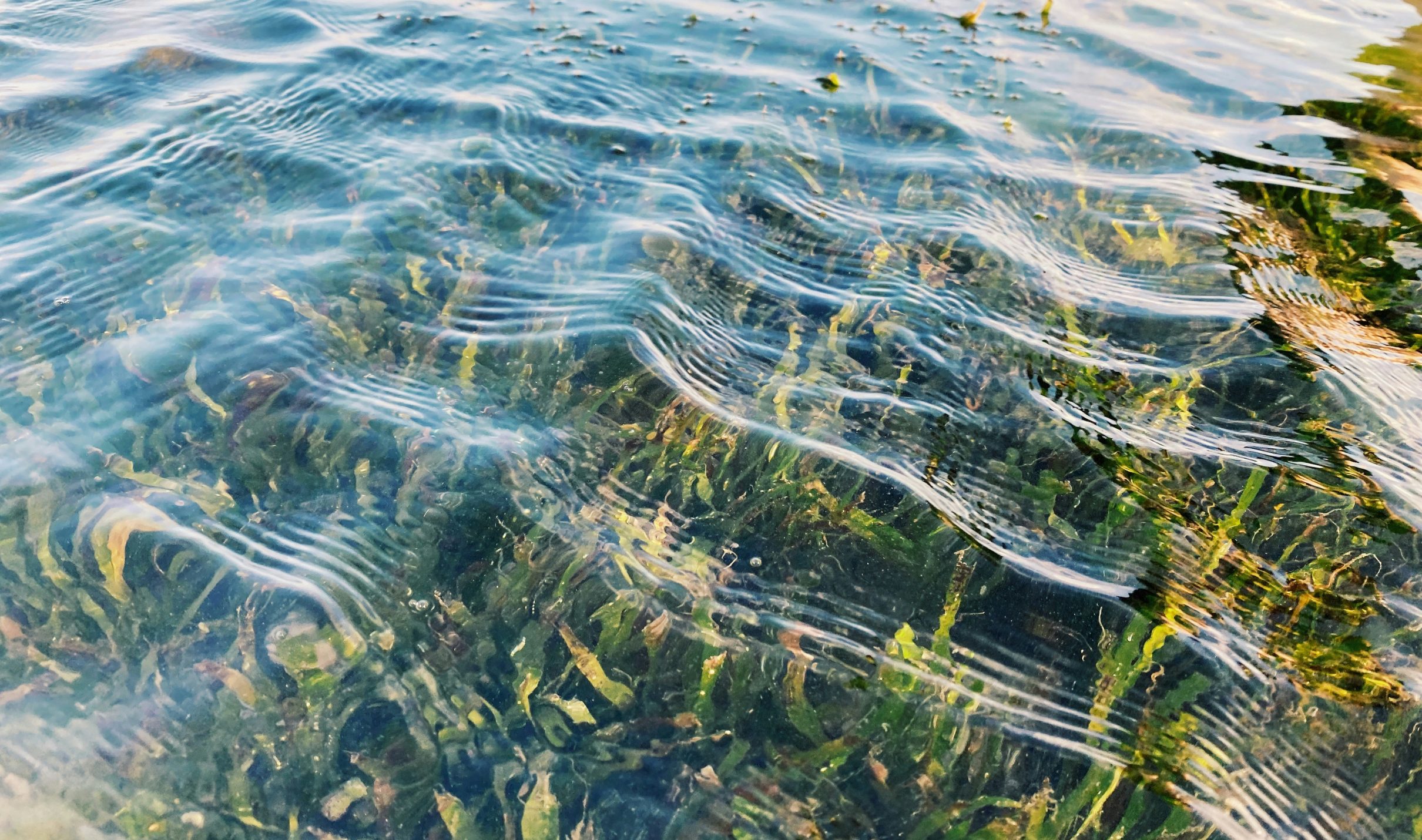
Sunlight moves across its pale surface. A few strands of algae bend near the edge, while the wavering water redraws the shadows every second. Nothing appears unusual until one detail breaks the pattern.
An eye opens.
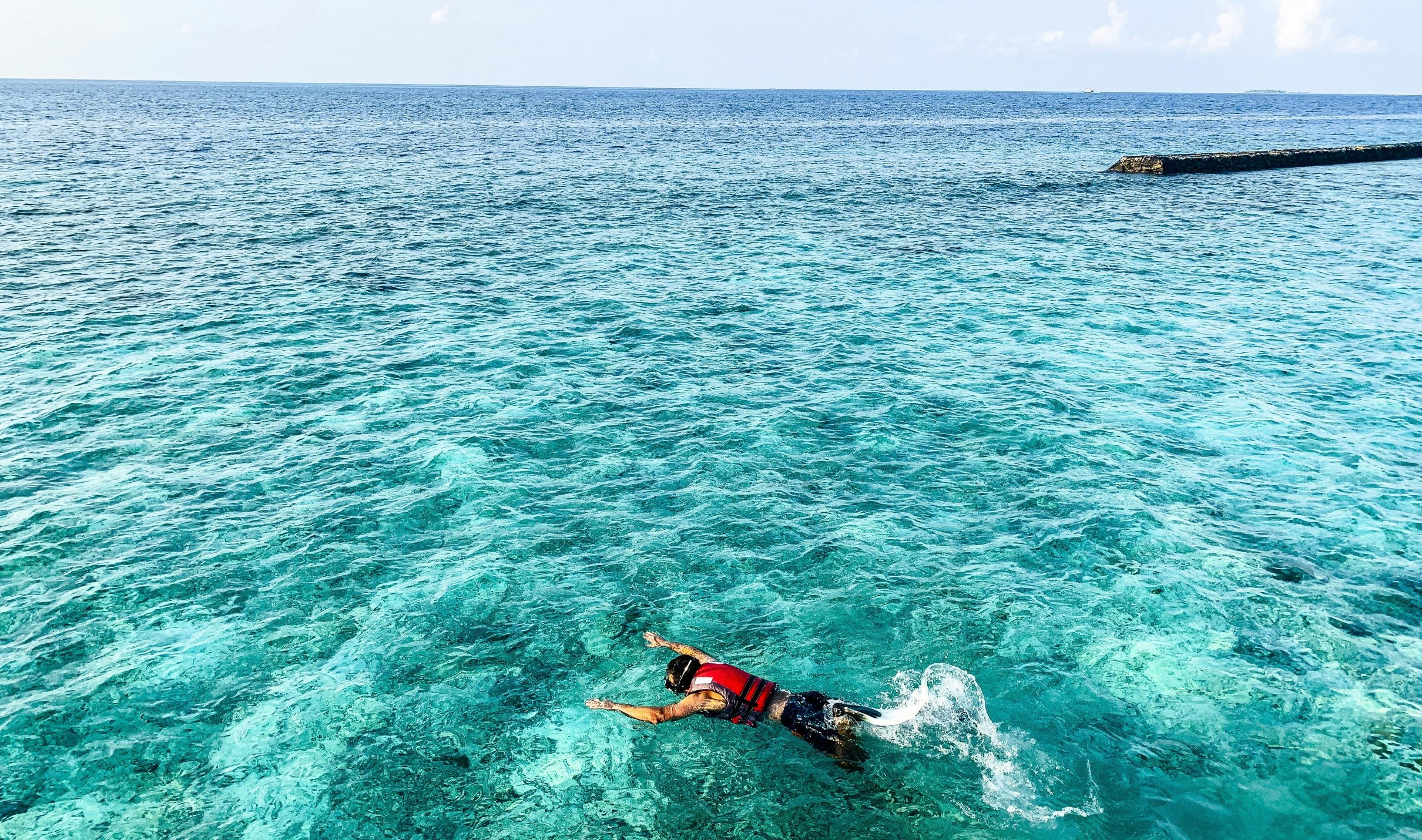
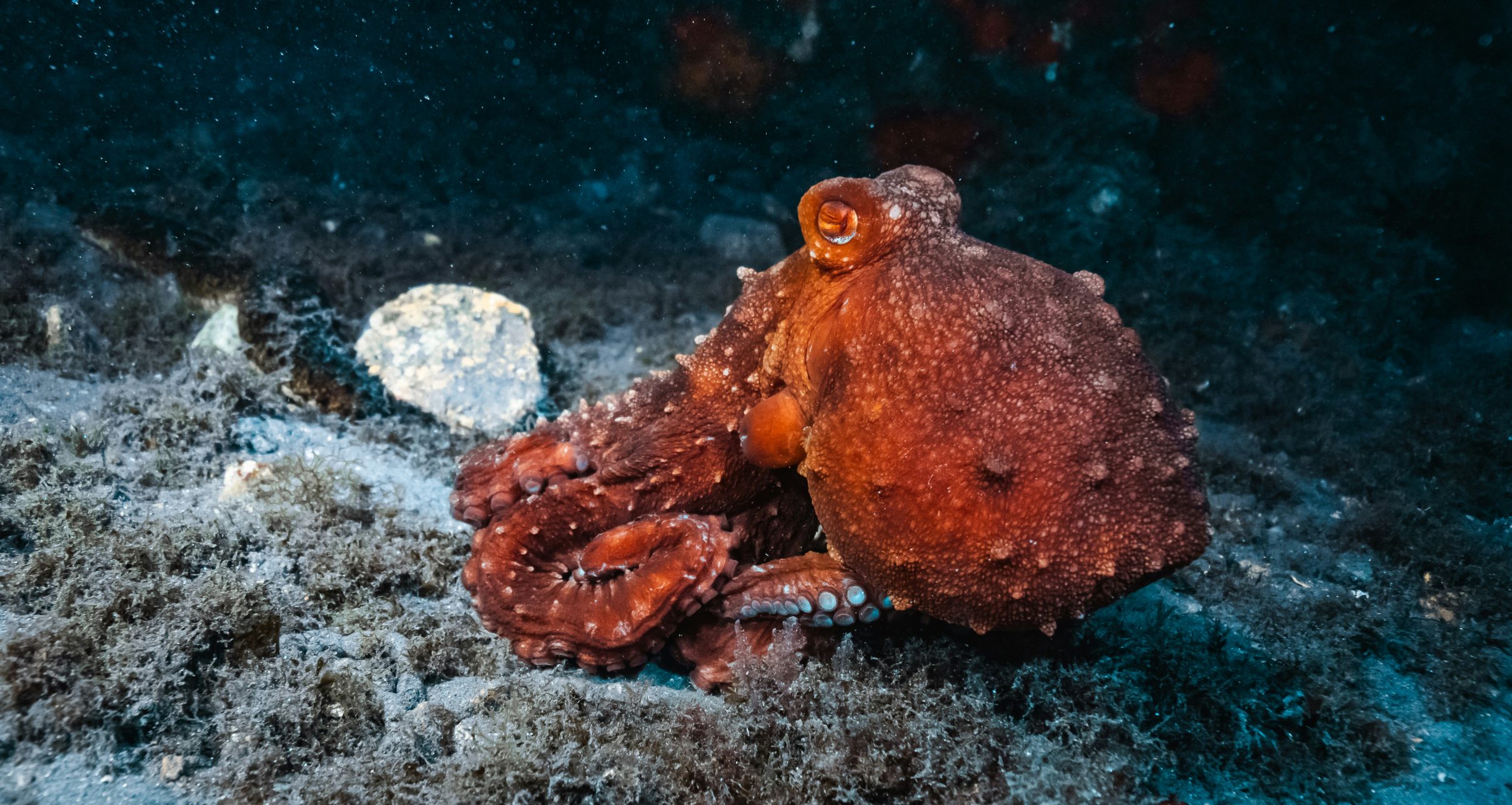
For a moment, the snorkeller remains still, unsure whether the movement was real. Then part of the stone darkens. One side lifts almost imperceptibly, revealing the curve of an arm pressed against the seabed. What had seemed to belong to the landscape slowly separates from it and becomes an octopus.
The animal was not hiding behind the rock.
It was hiding as the rock.
This is the central idea of the secret life along the Bay of Vlora’s rocky shores: much of its most remarkable marine life is not absent. It has evolved specifically to avoid being noticed.
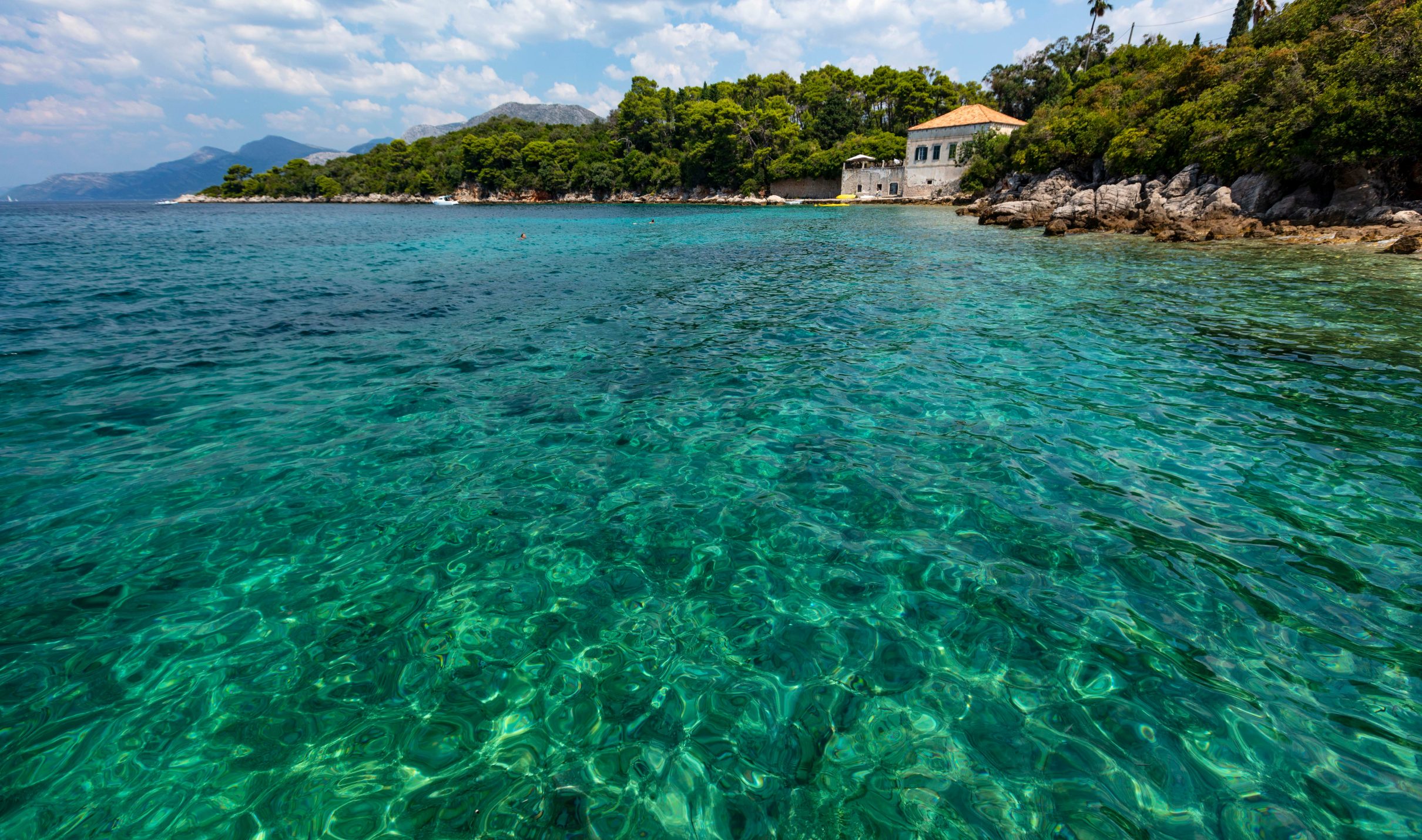
From Uji i Ftohtë and Radhimë to the fractured coast of Karaburun, the seabed is not a smooth, empty platform. Official marine assessments describe the bay as a mosaic of rocky shores, gravel beaches, submerged rock walls, caves, seagrass beds and softer bottoms. On Karaburun’s western side, cliffs continue beneath the surface, forming ledges, cavities and shaded spaces inhabited by algae, sponges, echinoderms and other marine organisms.
To a swimmer, these may look like geological details.
To the animals living there, they are architecture.
A Landscape Made of Doorways
A smooth wall offers few decisions. A broken rock creates possibilities.
One opening receives direct sunlight. Another remains shaded throughout the day. A narrow crack may be too small for a large predator but wide enough for a crab or a juvenile fish. Beneath a ledge, water moves more gently. On its exposed surface, waves deliver oxygen and food.
The rock is therefore not background. It is roof, wall, hiding place, hunting position and escape route at the same time.
Once this becomes clear, the way a snorkeller searches begins to change. Instead of scanning only the open blue for moving fish, the eye starts following edges. It pauses where pale rock meets shadow, where a small hole interrupts a flat surface or where several shells have gathered in a place that does not look accidental.
The hidden world often reveals its presence before revealing its body.
An octopus may occupy a natural cavity, shelter beneath a stone or modify an opening using movable material. Research on common octopuses has shown that suitable den structure can influence where they settle, and that they may use rocks, shells and even human-made objects to create or reinforce shelter. Many octopus species also leave hard remains of prey near their dens, producing small accumulations often called middens. (PMC)
To an inexperienced swimmer, opened shells outside a crevice may appear random.
To a patient observer, they can resemble a doorstep.
This is one of the most satisfying discoveries in Mediterranean snorkelling:
You may find evidence of an octopus before you find the octopus itself.
Arms That Read the Rock
An octopus does not understand its surroundings through vision alone.
Its arms enter cracks where its eyes cannot follow. Hundreds of suckers grip uneven surfaces, examine textures and collect chemical information from what they touch. Scientists have identified specialised chemotactile receptors in octopus suckers that respond to compounds on underwater surfaces—a sensory system often described as a form of “taste by touch.” (Cell)
The idea is difficult to imagine from a human perspective.
We tend to separate touching, tasting and seeing into distinct experiences. For an octopus exploring a rocky seabed, they form part of one continuous investigation. An arm can move around a corner, test a narrow opening and detect traces of possible prey while much of the body remains safely outside.
The animal does not merely reach into the stone.
It reads the stone with its body.
This is why the octopus seems so perfectly suited to the fractured Mediterranean coast. A rigid animal must approach a crevice from outside. An octopus can send part of itself inside, gather information and withdraw without exposing its whole body.
Its softness is not a weakness.
It is a way of entering a landscape that other animals cannot.
Skin That Stops Looking Like Skin
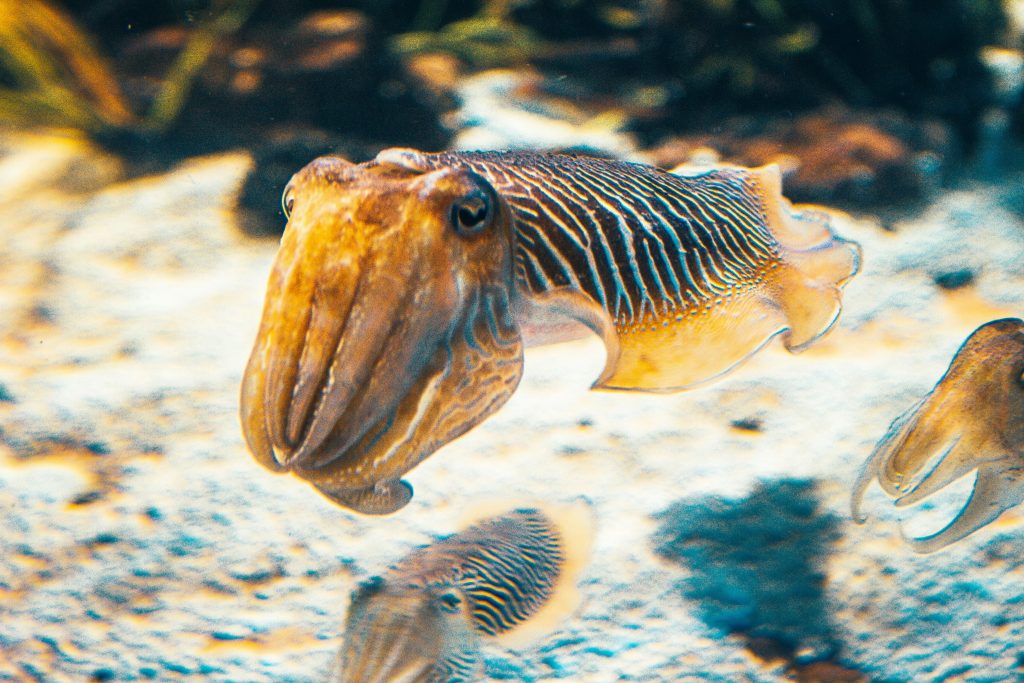
Camouflage is often explained as a change of colour, but octopuses and cuttlefish do something more complex. Pigment cells alter visible patterns, reflective structures influence brightness, and muscular papillae can raise the skin into a rougher three-dimensional surface. The body can become lighter, darker, smoother or more irregular according to the setting around it. Research on cephalopod camouflage shows that colour, contrast, reflection and texture work together to disrupt the animal’s recognisable outline. (PubMed)
The objective is not always to reproduce every detail of the rock.
It is to stop looking like an animal.
Predators and prey search for familiar forms: an eye, a continuous edge, a symmetrical body or movement separating one object from another. Camouflage breaks those expectations. A body becomes a collection of patches, shadows and false boundaries until the observer no longer knows where the animal begins.
Then it moves.
That moment is unforgettable because the transformation happens in reverse. A piece of seabed gathers itself into a living form. Stone becomes skin. Shadow becomes an arm. The landscape appears to wake up.