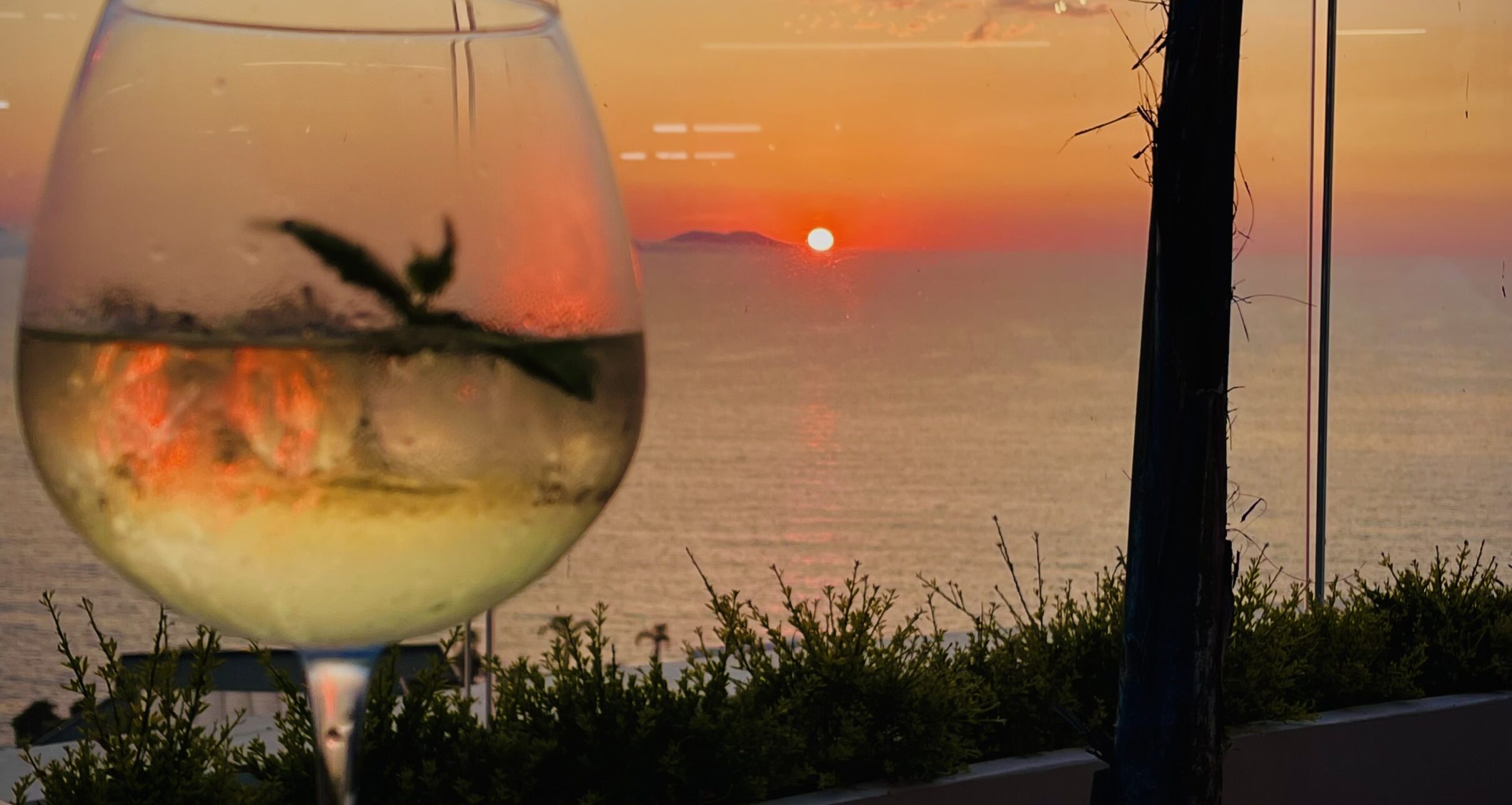
A later table offers a different version of Eden.
The sky is darker, the city is more visible and the rooftop is less focused on the transition of light. The evening becomes more about the people at the table, the pace of service and the atmosphere after sunset.
This can be particularly suitable for couples who prefer a quieter dinner, local guests arriving after work or groups who want the table to continue later into the evening.
Later reservations may also reduce the pressure around securing the most direct sunset-facing position. Once night arrives, table choice becomes more connected to privacy, comfort and group arrangement than to one specific angle over the bay.
The service rhythm changes as well.
A table arriving before sunset often orders in stages: first a drink, then a small plate, followed by the main course once the light has changed. The team must allow enough time for the view without leaving the meal suspended.
A later table usually arrives with a clearer intention to dine, so recommendations, ordering and the sequence of courses can begin more directly.
Neither rhythm is better.
Good service recognises which evening the guests have chosen and adjusts without making that adjustment visible.
This is an important distinction. Eden should remain a restaurant after sunset, not a viewing platform that loses its purpose when the light disappears.
The kitchen, service and company around the table should continue to carry the evening.