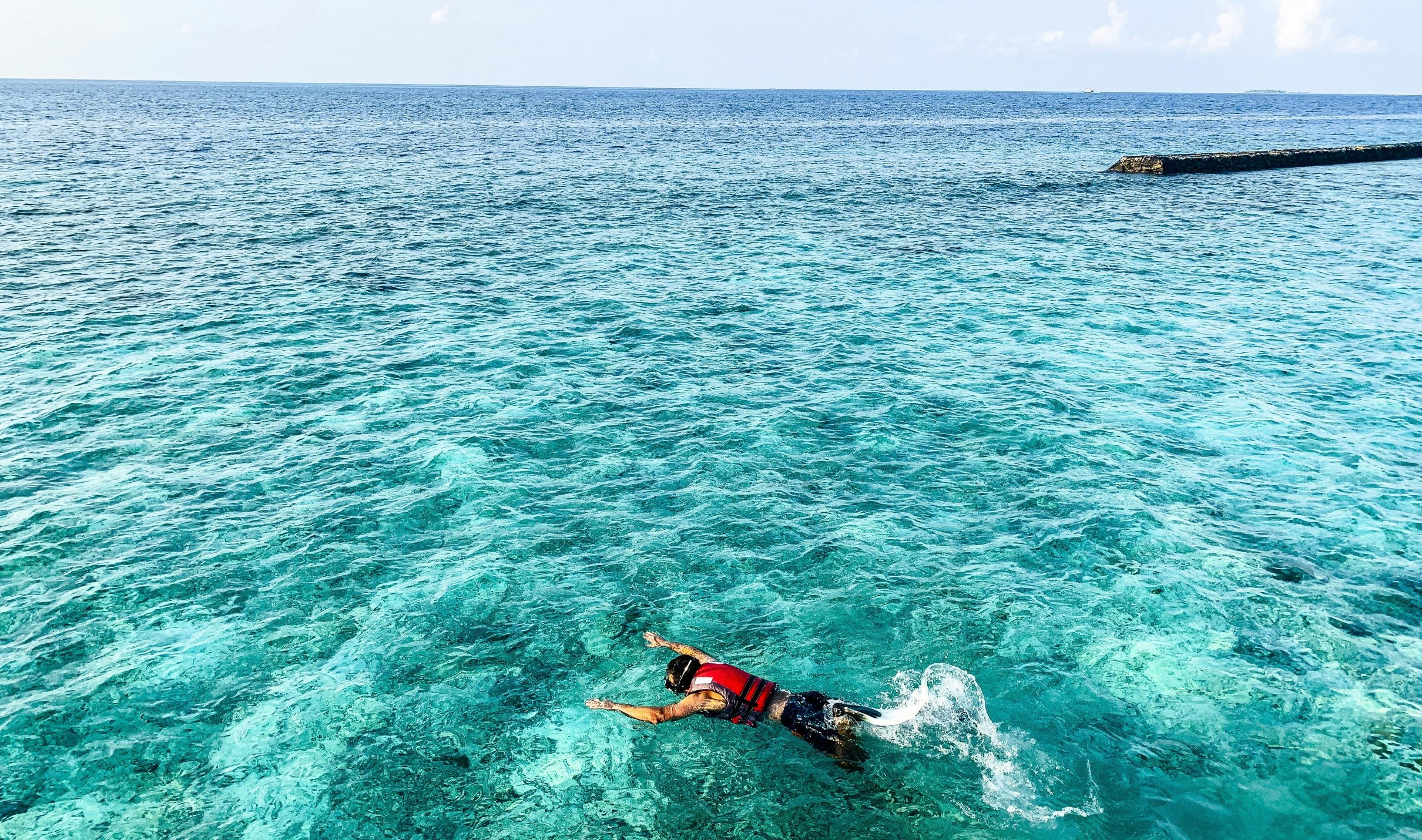
The child places both hands around the stone.
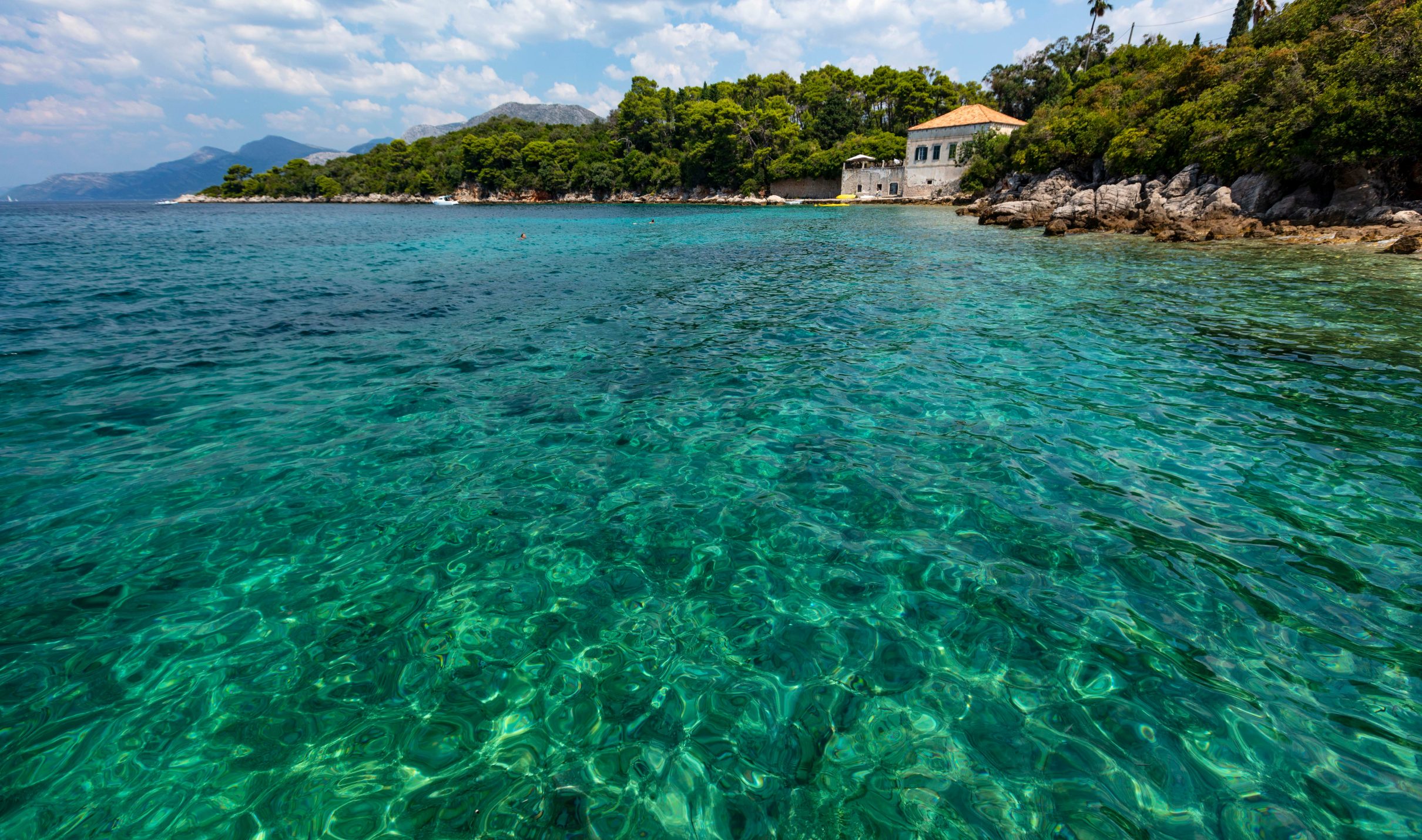
It lies in water barely deep enough to cover his ankles, close to the rocky shore south of Vlora. The upper surface is warm, pale and almost empty except for a thin green stain around its edge.
He begins to lift it.
“Wait,” the older man says.
The child leaves the stone where it is.
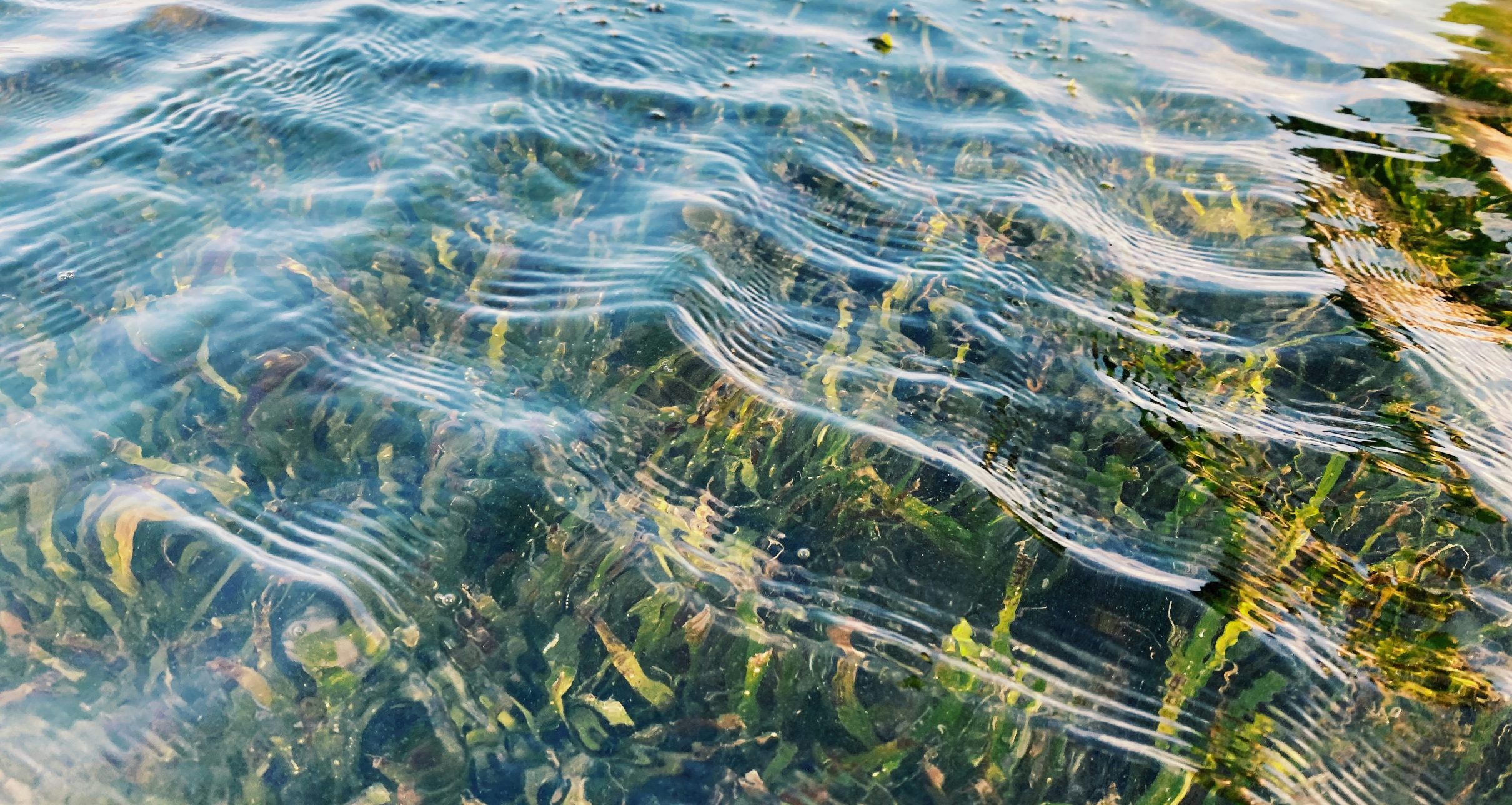
A small wave passes over them. Sunlight moves across the bottom, breaks around the stone and returns towards the shore.
At first, nothing appears.
Then a leg emerges from the shadow.
A crab no larger than a coin moves sideways along the narrow space where the rock meets the seabed. It pauses, raises one claw and disappears beneath the same edge.
The child lowers his face closer to the water.
Something transparent moves behind the crab. A small snail travels across the stone so slowly that its movement becomes visible only when the child looks away and then back again. Farther inside the shadow, two eyes belonging to a tiny fish appear for a second.
The stone has not moved.
The world beneath it has.
During the previous days, the child had watched dolphins cross the surface and a sea turtle travel towards the opening of the Bay of Vlora.
Those animals had been easy to remember because they were large, rare and impossible to confuse with the ordinary coast.
The creatures beneath the stone are different.
Most will never be given names by the people who swim above them. Some are too small to notice. Others are mistaken for part of the rock, a stain in the water or an empty shell.
Yet they graze, filter, hunt, hide, reproduce and recycle the remains of other lives.
The largest animals make the sea memorable.
The smallest ones make it function.
A Coast Made of Small Rooms
From land, a rocky shore appears solid.
Underwater, it is divided into thousands of spaces.
Every crack creates an entrance. Every overhang produces shade. Every rough surface offers a place to attach. The narrow gap beneath a stone may remain cooler and darker than the exposed surface only a few centimetres above it.
One rock can therefore contain several different environments at once.
Its upper surface receives direct sunlight.
Its side meets moving water.
Its underside holds shade and moisture.
The space beneath it may trap sand, fragments of shells and organic material carried by waves.
To a person, these are different parts of the same stone.
To small marine animals, they are different habitats.
Rocky coastal biodiversity depends not only on how much rock exists, but also on its physical complexity. Crevices, depressions, pools, overhangs and transitions between rock, sand and vegetation create separate opportunities for animals with different needs. Research on rocky shores repeatedly shows that these fine-scale habitats can strongly affect which species are present and how many can live in a small area. (Springer Link)
The Bay of Vlora provides a local example of how much life can be concentrated along an apparently familiar shore. Scientific assessments have reported more than 120 species of macroinvertebrates from the shallow rocky coast between Uji i Ftohtë and Orikum, while around 210 mollusc species have been recorded from the wider bay.
These numbers do not mean that every stone contains hundreds of visible animals.
They mean that the coast is a mosaic.
One species needs sunlight.
Another needs permanent shade.
One attaches to exposed rock.
Another survives only where water continues moving through a narrow opening.
A difference measured in centimetres can decide which animal is able to live there.
The child had believed that exploring the shore meant travelling farther along it.
Now he understands that it can also mean looking more closely at the place where he is already standing.
The Pasture Nobody Sees
The upper surface of the stone appears dirty.
A thin brown-green film covers part of it. The child rubs one finger across the surface and leaves a clean line.
The older man tells him to look again.
The film is not simply dirt.
Rocky surfaces in shallow water are colonised by microscopic algae, bacteria and other organic material. Diatoms and cyanobacteria can form part of this living layer, creating a food source for grazing animals such as limpets and small snails.
The Bay of Vlora alone has recorded approximately 130 taxa of diatoms across its different coastal and wetland habitats, revealing a diversity that remains almost completely invisible to an ordinary swimmer.
The stone is carrying a pasture too small for humans to see.
A limpet is attached near the waterline. Its conical shell makes it appear fixed permanently to one place.
It is not.
When conditions allow, limpets move across the rock and feed by scraping the surface with a specialised ribbon of microscopic teeth known as a radula. They remove microalgae and newly developing material from the stone, creating grazing patterns that influence which algae are able to establish. Mediterranean limpet species organise these feeding journeys differently depending on where they live on the shore and how long they can remain active. (ScienceDirect)
The child watches the limpet and sees no movement.
Its work is measured too slowly for him.
This is another problem of scale.
Humans notice the crab because it runs.
They notice the fish because it escapes.
The grazer may reshape the surface without appearing to move at all.
The stone is not simply supporting life.
Its surface is being eaten.