The Secret Life Between the Rocks The Small Creatures That Keep the Bay Alive

The child places both hands around the stone.

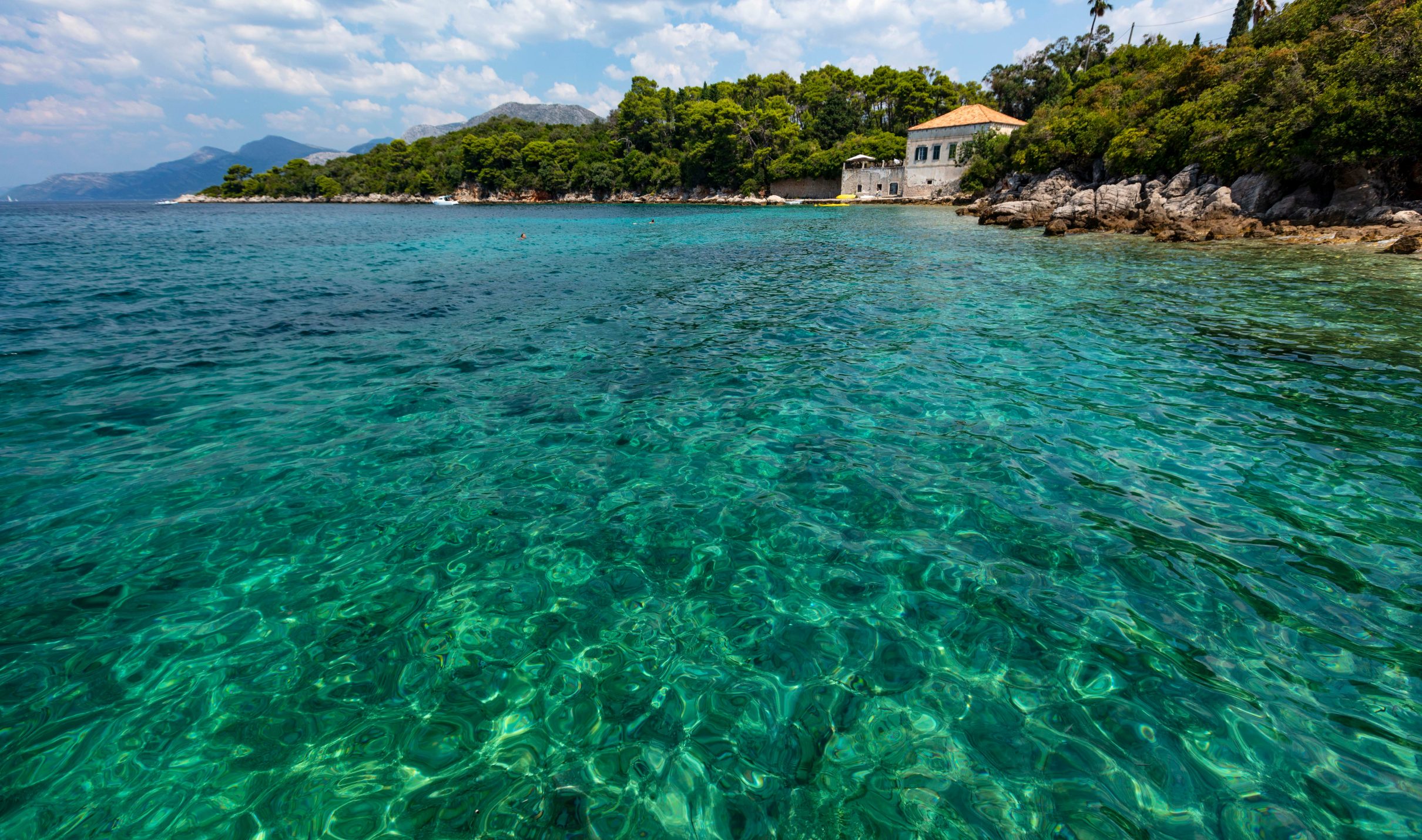
It lies in water barely deep enough to cover his ankles, close to the rocky shore south of Vlora. The upper surface is warm, pale and almost empty except for a thin green stain around its edge.

He begins to lift it.

“Wait,” the older man says.

The child leaves the stone where it is.

A small wave passes over them. Sunlight moves across the bottom, breaks around the stone and returns towards the shore.

At first, nothing appears.

Then a leg emerges from the shadow.

A crab no larger than a coin moves sideways along the narrow space where the rock meets the seabed. It pauses, raises one claw and disappears beneath the same edge.

The child lowers his face closer to the water.

Something transparent moves behind the crab. A small snail travels across the stone so slowly that its movement becomes visible only when the child looks away and then back again. Farther inside the shadow, two eyes belonging to a tiny fish appear for a second.

The stone has not moved.

The world beneath it has.

During the previous days, the child had watched dolphins cross the surface and a sea turtle travel towards the opening of the Bay of Vlora.

Those animals had been easy to remember because they were large, rare and impossible to confuse with the ordinary coast.

The creatures beneath the stone are different.

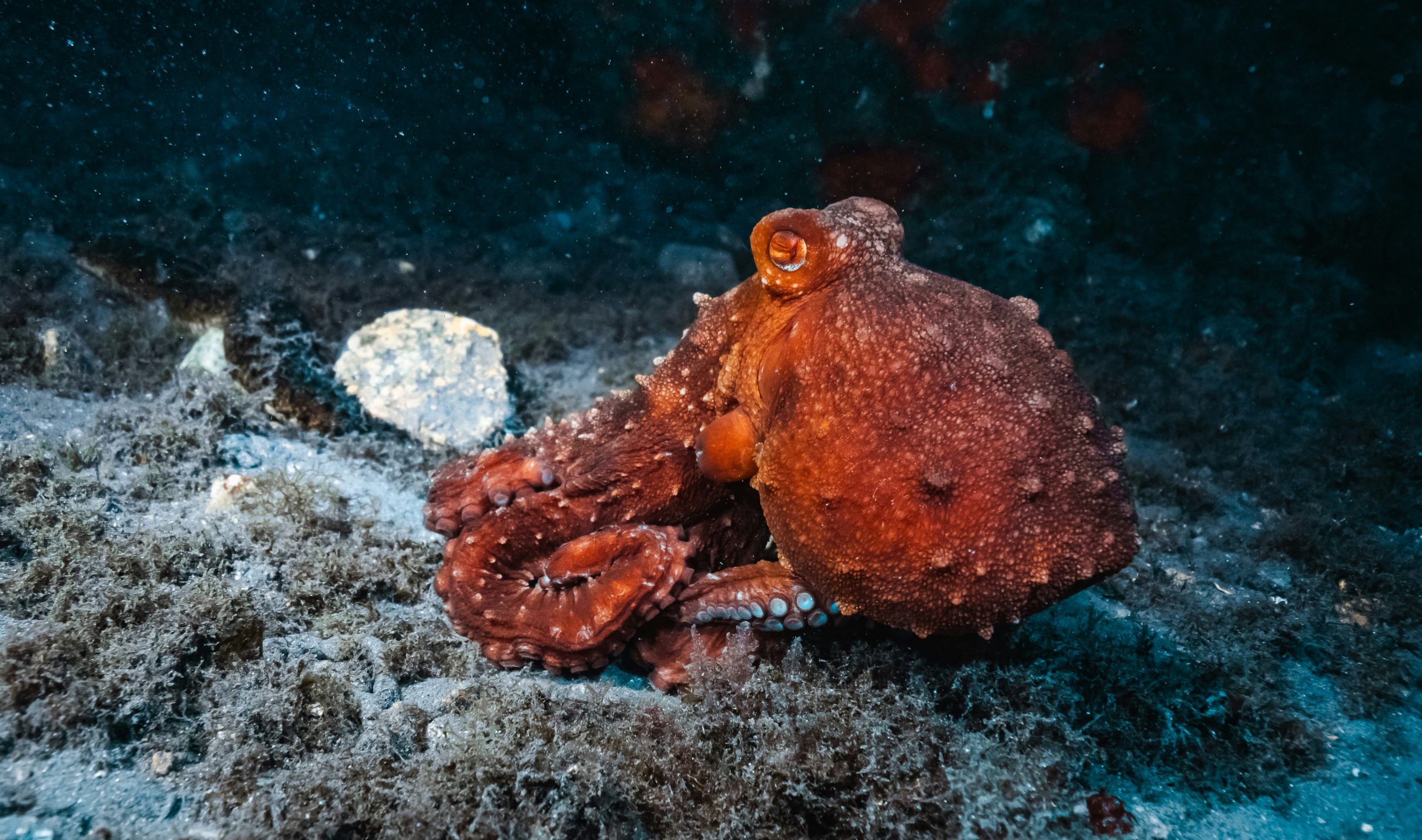
Most will never be given names by the people who swim above them. Some are too small to notice. Others are mistaken for part of the rock, a stain in the water or an empty shell.

Yet they graze, filter, hunt, hide, reproduce and recycle the remains of other lives.

The largest animals make the sea memorable.

The smallest ones make it function.

A Coast Made of Small Rooms

From land, a rocky shore appears solid.

Underwater, it is divided into thousands of spaces.

Every crack creates an entrance. Every overhang produces shade. Every rough surface offers a place to attach. The narrow gap beneath a stone may remain cooler and darker than the exposed surface only a few centimetres above it.

One rock can therefore contain several different environments at once.

Its upper surface receives direct sunlight.

Its side meets moving water.

Its underside holds shade and moisture.

The space beneath it may trap sand, fragments of shells and organic material carried by waves.

To a person, these are different parts of the same stone.

To small marine animals, they are different habitats.

Rocky coastal biodiversity depends not only on how much rock exists, but also on its physical complexity. Crevices, depressions, pools, overhangs and transitions between rock, sand and vegetation create separate opportunities for animals with different needs. Research on rocky shores repeatedly shows that these fine-scale habitats can strongly affect which species are present and how many can live in a small area. (Springer Link)

The Bay of Vlora provides a local example of how much life can be concentrated along an apparently familiar shore. Scientific assessments have reported more than 120 species of macroinvertebrates from the shallow rocky coast between Uji i Ftohtë and Orikum, while around 210 mollusc species have been recorded from the wider bay.

These numbers do not mean that every stone contains hundreds of visible animals.

They mean that the coast is a mosaic.

One species needs sunlight.

Another needs permanent shade.

One attaches to exposed rock.

Another survives only where water continues moving through a narrow opening.

A difference measured in centimetres can decide which animal is able to live there.

The child had believed that exploring the shore meant travelling farther along it.

Now he understands that it can also mean looking more closely at the place where he is already standing.

The Pasture Nobody Sees

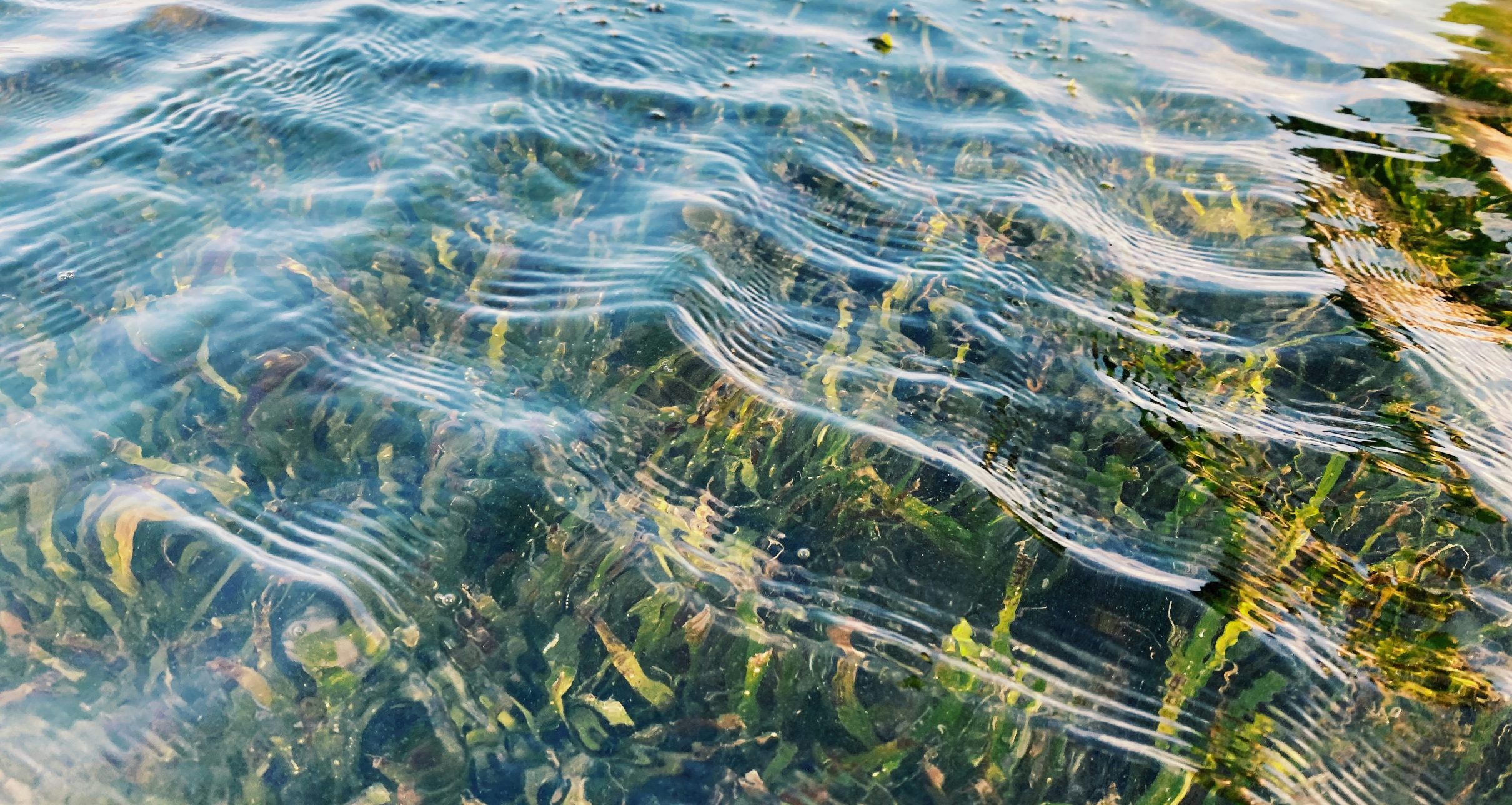
The upper surface of the stone appears dirty.

A thin brown-green film covers part of it. The child rubs one finger across the surface and leaves a clean line.

The older man tells him to look again.

The film is not simply dirt.

Rocky surfaces in shallow water are colonised by microscopic algae, bacteria and other organic material. Diatoms and cyanobacteria can form part of this living layer, creating a food source for grazing animals such as limpets and small snails.

The Bay of Vlora alone has recorded approximately 130 taxa of diatoms across its different coastal and wetland habitats, revealing a diversity that remains almost completely invisible to an ordinary swimmer.

The stone is carrying a pasture too small for humans to see.

A limpet is attached near the waterline. Its conical shell makes it appear fixed permanently to one place.

It is not.

When conditions allow, limpets move across the rock and feed by scraping the surface with a specialised ribbon of microscopic teeth known as a radula. They remove microalgae and newly developing material from the stone, creating grazing patterns that influence which algae are able to establish. Mediterranean limpet species organise these feeding journeys differently depending on where they live on the shore and how long they can remain active. (ScienceDirect)

The child watches the limpet and sees no movement.

Its work is measured too slowly for him.

This is another problem of scale.

Humans notice the crab because it runs.

They notice the fish because it escapes.

The grazer may reshape the surface without appearing to move at all.

The stone is not simply supporting life.

Its surface is being eaten.
The Animals That Become Part of the Rock

A cluster of small cones covers a nearby ledge.

The child thinks they are shells left behind by dead animals.

The older man pours water gently across them.

Several openings appear.

Fine, jointed structures extend briefly into the water and withdraw again.

The cones are barnacles.

Barnacles begin life as free-swimming larvae, but after settling they become permanently attached to a surface. Although their adult bodies look more like small shells than mobile animals, they are crustaceans, related to crabs and shrimps. They feed by extending modified limbs called cirri into the water to capture suspended particles. On Mediterranean rocky shores, barnacles can become major occupiers of the limited space available. (PubMed)

The animal that once travelled through the water eventually becomes part of the coastline.

Beside the barnacles, a red shape is pressed into a shaded crack. It resembles a soft stone or a piece of fruit attached to the rock.

When water covers it fully, the shape opens.

Tentacles appear around a central mouth.

It is a sea anemone.

The form that looks most like a flower is an animal capable of capturing prey. Small marine organisms touching its tentacles can encounter specialised stinging cells used for defence and feeding.

The child moves his hand away.

The older man tells him that fear is not required.

Distance is enough.

Rocky shores are filled with animals that defeat quick identification.

A barnacle resembles a shell but feeds with its legs.

An anemone resembles a flower but hunts.

A sponge may resemble coloured stone while filtering water through a body filled with channels.

A bryozoan colony may appear to be a crust on the rock, although it is constructed from many connected animals.

What people call “the rock” is often partly alive.

The Gardeners of the Shallows

A black sea urchin sits inside a depression beneath the water.

It has covered part of its body with small fragments of algae and shell. Only the movement of its spines reveals that the dark shape is an animal.

The child has been warned about sea urchins because stepping on their spines can cause injury.

He has never been told what they do.

Sea urchins are important grazers on Mediterranean rocky bottoms. By feeding on algae, they influence which plants grow, how much bare rock remains and the structure of the habitat available to other organisms.

This grazing is neither automatically good nor automatically harmful.

At balanced densities, herbivores can help create a mosaic of open surfaces and vegetated areas. When urchins become extremely abundant, particularly where populations of their fish predators have been reduced, intensive grazing can remove large areas of upright algae and help maintain simplified rocky habitats known as urchin barrens. (Frontiers)

The same animal can therefore contribute to diversity in one ecological balance and to its reduction in another.

The difference is not contained inside the urchin alone.

It lies in the relationships around it.

How many predators remain?

How quickly can algae recover?

How much fishing pressure affects the larger fish?

Has warming favoured one grazer over another?

The child sees one animal in a hole.

Ecology sees a negotiation between algae, grazers and predators taking place across the coast.

This is why protecting biodiversity cannot mean choosing only the animals people like.

A healthy system is not built by removing every grazer or protecting every individual from every predator.

It is built from relationships that remain capable of regulating one another.

The sea urchin is not merely living in the garden.

It is helping decide what kind of garden can exist.

A Fish That Needs One Hole

The eyes beneath the stone appear again.

This time, the small fish moves far enough forward for the child to see its head. It rests on the bottom, then disappears backwards into the crevice.

It may be a blenny or another small fish adapted to rocky coastal habitats.

Many small Mediterranean fishes spend most or all of their lives close to the seabed. Blennies, gobies and related groups use holes, shells, vegetation and cracks as shelters, feeding areas and nesting sites. Shallow rocky habitats are not simply temporary hiding places. For some species, they provide almost the entire geography of life. (PMC)

The peacock blenny offers one of the most unexpected examples.

During the breeding season, a male can defend a nest inside a hole, crevice or empty shell. Females deposit eggs on the inner surface, and the male remains to guard them until they hatch. Research has also shown that specialised glands in male peacock blennies produce mucus containing antimicrobial substances, helping protect the eggs developing inside the nest. (PMC)

The child looks again at the dark opening.

A hole that seems empty from outside may contain a parent and an entire layer of eggs.

The largest difference between the child and the fish is not their size.

It is the scale of the world they require.

The child measures the coast through beaches, bays and kilometres.

The blenny may build its reproductive life around a cavity smaller than the child’s hand.

Destroying one small hole would make no visible change to the Bay of Vlora.

For the animal depending on it, the entire landscape could disappear.

The Work Done in Darkness

Something moves beneath the back edge of the stone.

The child sees thin legs, a segmented body and the quick withdrawal of an animal he cannot identify.

Not every creature living between rocks feeds on fresh algae or catches living prey.

Many participate in breaking down what the sea no longer needs in its original form.

Fragments of plants settle between stones.

Dead organisms are pulled apart.

Waste and organic particles collect in quiet spaces.

Small crustaceans, worms, molluscs and microorganisms feed on this material, reducing it into smaller forms that can be reused through the food web.

The coast therefore has no single group responsible for keeping it alive.

Grazers control growth on surfaces.

Filter feeders remove particles from moving water.

Predators regulate prey.

Scavengers consume remains.

Microorganisms complete processes too small to observe directly.

The system works because matter does not remain in one form.

A dead fragment becomes food.

Waste becomes nutrient.

A shell becomes shelter.

A hole created by erosion becomes a nursery.

The child had imagined the sea as a place where animals ate one another.

That is true, but incomplete.

The sea is also a place where almost nothing remains only what it was.

What Happens When the Stone Is Lifted

The child places his hands around the stone again.

This time, he does not lift.

The older man explains why.

The underside of the stone is not an empty surface waiting to be inspected. It is the roof of a habitat.

Turning the rock over changes that roof into an exposed floor.

Animals adapted to shade may suddenly face direct sunlight. Attached organisms can be pressed into sand. Mobile creatures may lose the narrow shelter that protected them from fish, waves and drying. Even when a stone is returned, the disturbance can alter the community living on and beneath it. Experimental research has shown that lifting and sampling beneath coastal boulders can change the abundance and composition of both mobile and attached organisms. (ScienceDirect)

Waves naturally move stones.

Storms have always disturbed rocky shores.

But natural disturbance does not make every additional disturbance harmless.

A single child lifting one stone may create a small effect.

Hundreds of visitors lifting stones, collecting shells, removing crabs and walking repeatedly across the same shallow habitats can turn curiosity into pressure.

The lesson is not that people should stay away from the water.

It is that observation does not always require possession or movement.

Look beneath the edge.

Wait for the animal to emerge.

Lower the face into the water.

Photograph without touching.

The secret life of the coast becomes less secret when the observer becomes more patient.

The child removes his hands.

A few seconds later, the crab appears again.

By leaving the stone untouched, he sees more.

When the Small World Becomes Simpler

The rocky coast between Uji i Ftohtë and Orikum still supports remarkable biological diversity.

It has also changed.

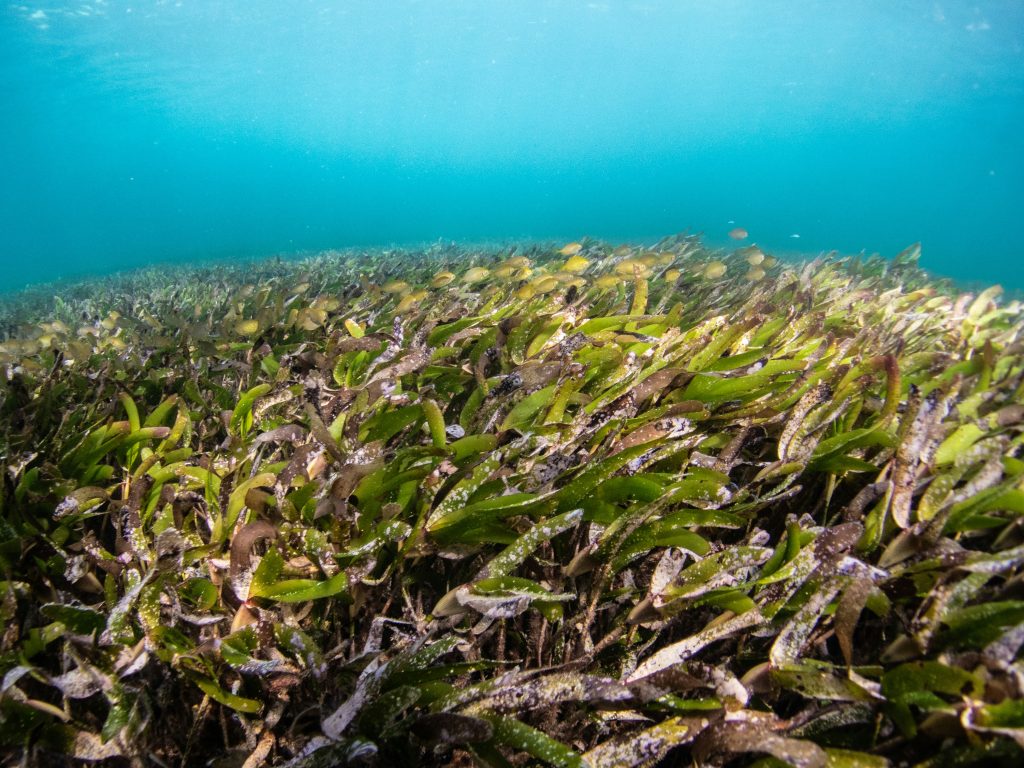
Research in the Bay of Vlora has documented losses and fragmentation in important shallow habitats associated with rapid and poorly controlled coastal development. Declines in seagrass and large habitat-forming algae reduce not only plant cover but also the shelter and feeding opportunities available to many smaller organisms. (ResearchGate)

The disappearance rarely happens as one dramatic event.

A shoreline is built over.

Wastewater changes local conditions.

Sediment covers rocky surfaces.

Plastic collects in cracks.

Large algae become thinner or vanish.

Fish that controlled grazers become less common.

Each change removes part of the physical or biological complexity on which the smaller community depends.

The coast may remain blue.

The water may remain clear enough for swimming.

The rocks may still appear covered with life.

Yet the system beneath the visible surface can become simpler.

This is one of the difficulties of understanding coastal degradation.

People notice when a dolphin no longer appears.

They may not notice when one species of snail is replaced by another, when a shaded surface loses its sponges or when a nursery crack no longer contains young fish.

Large absences create stories.

Small absences accumulate quietly.

By the time the human eye recognises that the coast has changed, many of its smallest decisions may already have been made.

Learning to See the Coast Again

The child remains beside the same stone.

The water reaches his knees now. Each wave changes the reflections enough to hide the crab and reveal it again.

He sees the limpet.

He sees the barnacles opening when water passes over them.

He sees the dark sea urchin beneath its covering of shell fragments.

He sees the small fish watching from a hole.

None of these animals performs for him.

Their value does not come from rarity or beauty.

They matter because each is doing something.

The limpet grazes.

The barnacle filters.

The crab searches.

The urchin changes the algae around it.

The fish guards a territory measured in centimetres.

Microorganisms cover the stone in food and process what larger animals leave behind.

The shore is not a collection of objects.

It is a concentration of work.

The older man begins walking back towards the beach.

The child follows, then turns once more towards the water.

From a standing position, the stone looks ordinary again.

Its secret life has disappeared beneath the reflection of the sky.

Nothing about the surface reveals how many relationships continue below it.

That is not because the coast is hiding them deliberately.

It is because people usually arrive looking for something larger.

Conclusion

The sea teaches scale unevenly.

Dolphins reveal themselves with a breath and a dorsal fin.

Turtles carry migrations across the Mediterranean.

The creatures between the rocks rarely offer such clear stories.

They live within cracks, beneath stones and across surfaces covered by films too thin for the human eye to recognise as food.

Yet this small world performs much of the work that allows the larger one to exist.

Microscopic algae capture energy.

Limpets and snails graze the rock.

Barnacles filter particles from the water.

Crabs, worms and other small animals consume, hunt and recycle.

Sea urchins help determine whether rocky bottoms hold forests of algae or exposed surfaces.

Small fish use cavities as shelters, territories and nurseries.

None controls the coast alone.

Together, they create its function.

At the beginning, the child wanted to lift the stone because he believed discovery required revealing what was hidden.

By the end, he understands that discovery can require the opposite.

The stone remains where it was.

The crab keeps its shelter.

The fish keeps its hole.

The organisms attached beneath it remain in darkness.

The child leaves with no shell, no animal and no object taken from the water.

He carries only a different way of seeing the shore.

The largest animals show that the sea is alive.

The smallest explain how it stays that way.

Editorial Note

This article is part of the MAREOGRAPH Editorial Project, an independent editorial initiative founded and developed by Valza Boutique Hotel to document the landscapes, history, biodiversity, culture and living systems of Vlora and the Albanian Mediterranean through research-based storytelling.

Experience the Place

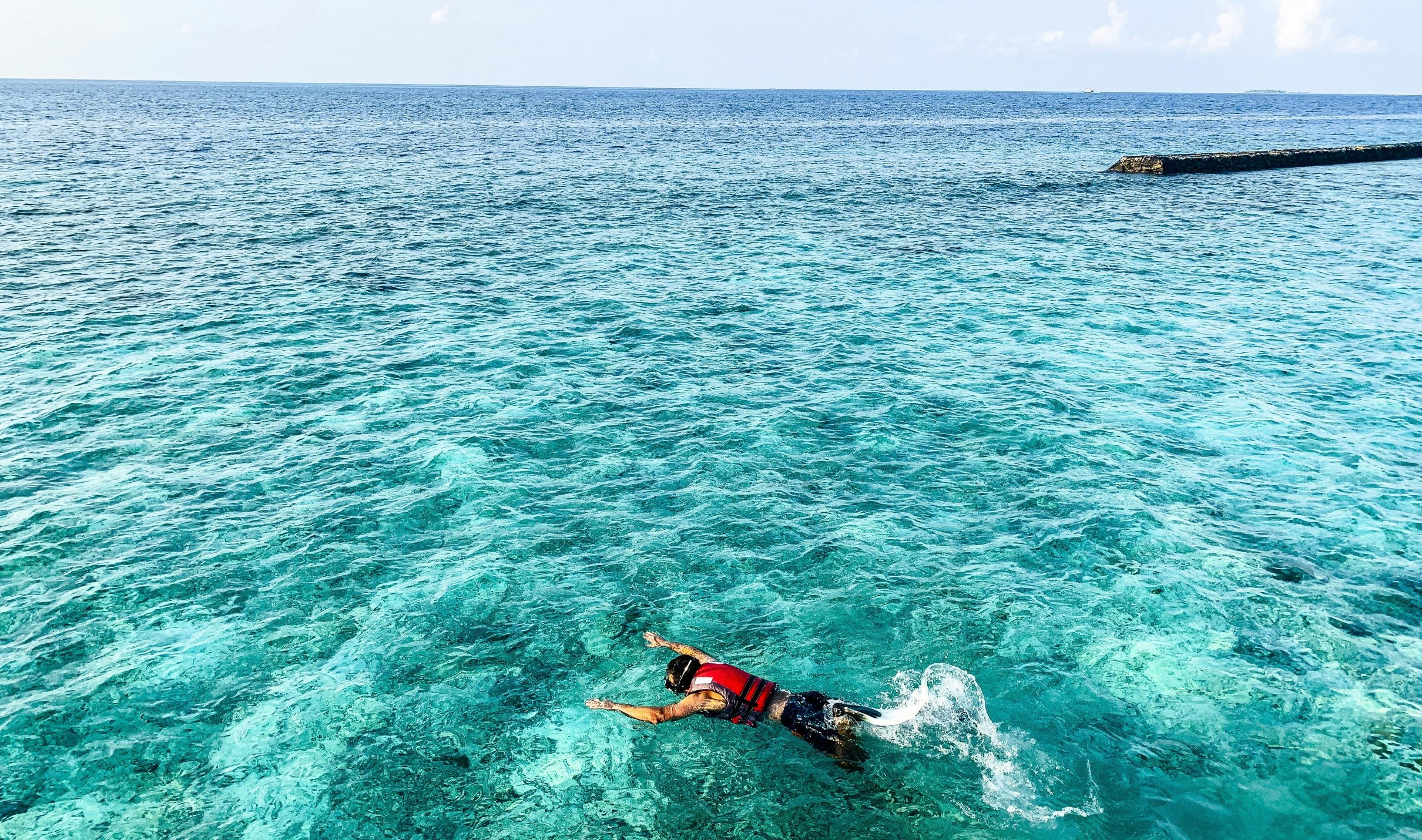
The shallow rocky coast of Vlora can reveal extraordinary marine life without requiring deep water or specialised equipment. Move slowly, look into shaded cracks and observe animals without lifting stones, removing shells or disturbing their shelters. Water shoes can help protect visitors from sharp rocks and sea-urchin spines, while calm observation protects the habitats being explored.

Valza Boutique Hotel overlooks the rocky southern coast of the Bay of Vlora, where the shore between Uji i Ftohtë and Orikum supports one of Albania’s best-documented communities of shallow-water marine invertebrates. Eden by Valza offers a wider perspective across the same bay, while the smallest part of its story continues only a few steps below, between the rocks.

www.valza.al