The Fish You See When You Stop Chasing Them
The easiest way to observe more fish is to become less important.
Fast swimming, repeated diving and direct pursuit make every animal respond to the swimmer. Fish disappear into cracks, tighten into schools or move towards deeper water. The encounter becomes a record of escape rather than ordinary life.
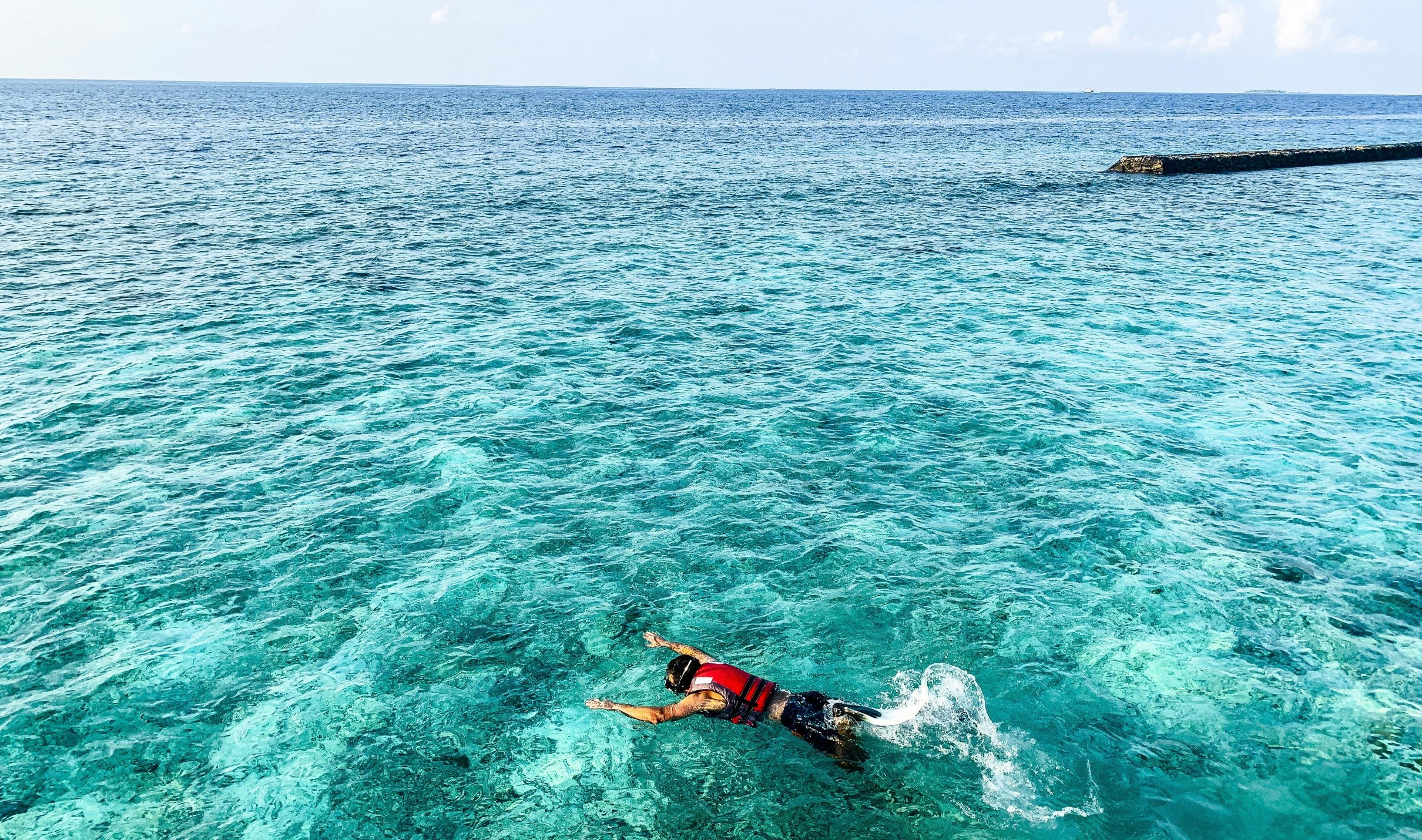
Float quietly instead.
Let the first minute pass without attempting to reach anything. Keep movements small and allow the habitat to settle after your arrival. Gradually, fish return to the edges, continue grazing and cross openings they had briefly abandoned.
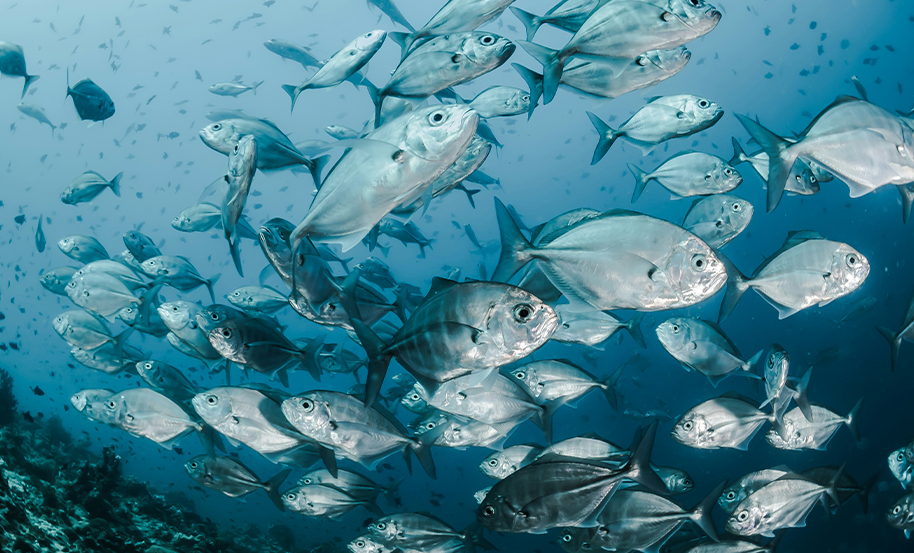
This is when behaviour becomes visible. A sea bream inspects the same section of rock several times. A wrasse disappears beneath a ledge and emerges from the opposite side. Red mullets resume their slow search across the sand. A school that had moved away reforms at a comfortable distance.
The sea does not become fuller.
It becomes less interrupted.
Do Not Ask the Fish to Perform
Feeding fish can produce an immediate spectacle. Within seconds, animals gather around the swimmer and the water appears suddenly abundant.
Yet the behaviour is no longer entirely natural.
The fish begin responding to human food rather than to the landscape. Competition intensifies around the visitor, and the scene reflects an artificial opportunity rather than the ordinary rhythm of the coast.
The more valuable encounter is quieter. Watch the mullet search where food is naturally present. See the wrasse examine the rocks and the school turn according to information passing through the group.
The purpose of snorkelling is not to become the centre of the underwater scene.
It is to witness a scene that would have continued without you.
A Child Learns the First Name
Back near the shore, the child lifts his mask and tries to describe the fish he followed.
“It was silver,” he says.
There were many silver fish.
“It had stripes.”
That narrows the possibilities, but not enough.
“It came out of this rock and went back to the same place.”
Now the behaviour begins to identify it more clearly than colour alone.
An adult may eventually provide the name. But the name is not the most important part of what has happened. The child has already noticed habitat, repetition and choice. He has begun connecting the animal to the landscape.
This is how natural knowledge often begins: not with memorising a list of species, but with caring enough to describe one fish accurately.
The name comes later.
Attention comes first.
The Sea Has More Than One Language
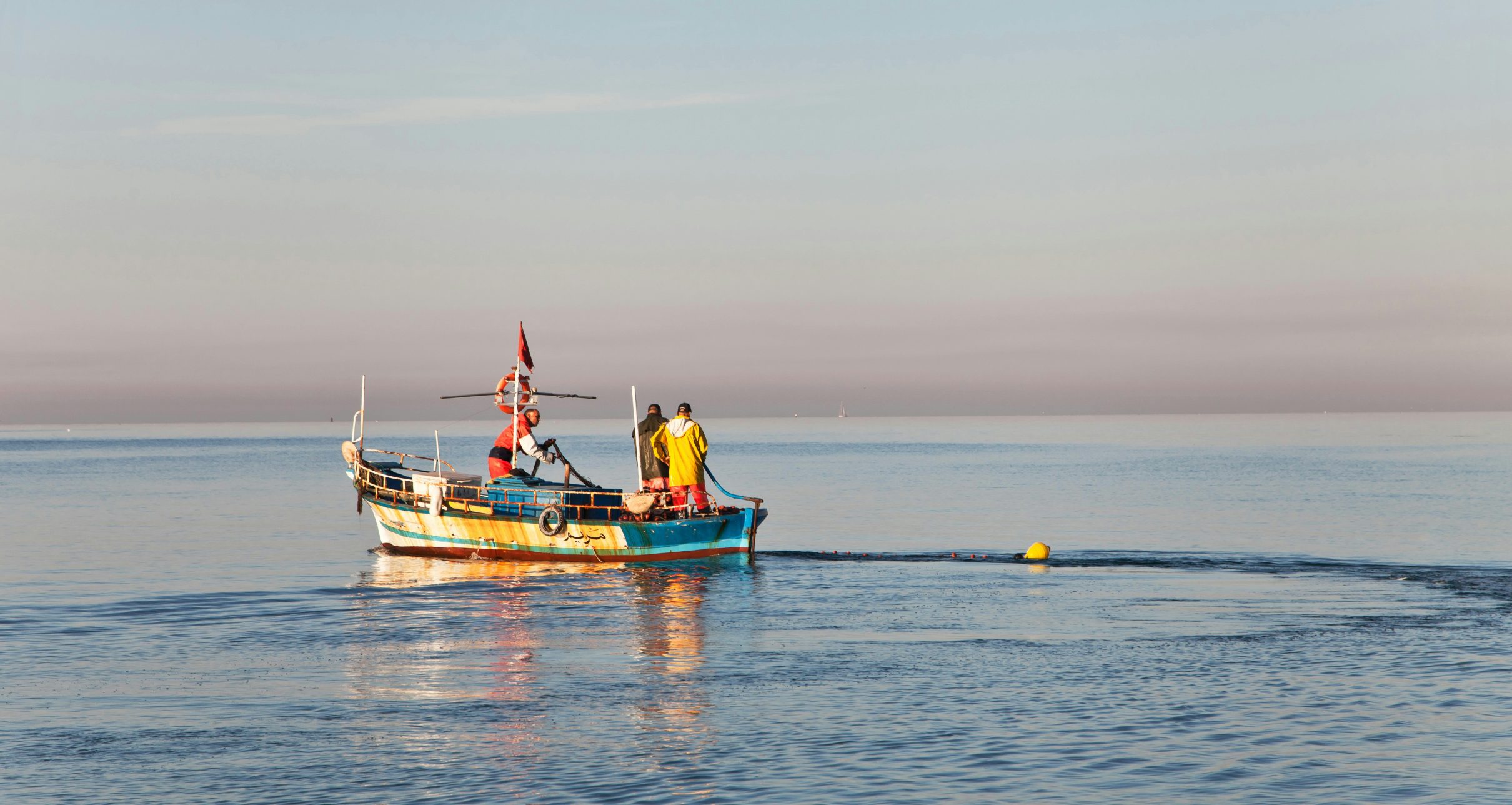
Science reads fish through anatomy, reproduction and collective behaviour. Fishermen read them through weather, season and memory. Swimmers read them through colour, movement and surprise.
None of these ways of knowing is complete alone.
Science explains why a school turns without a leader, why a red mullet searches with sensory barbels and why a wrasse can change sex during its lifetime. Local knowledge connects species to particular grounds and conditions. Direct experience gives those facts a place, a light and an emotional memory.
Together, they turn a fish from an object into a participant in the landscape.
The silver school is no longer simply beautiful. It is a moving system of shared information. The red mullet is no longer disturbing the sand without purpose. The wrasse’s colours are no longer merely decorative. The shallow water is no longer the least important part of the sea.
Understanding does not remove wonder.
It gives wonder more to hold.
Conclusion
From the surface, the Bay of Vlora appears to be one continuous body of water.
Beneath it, every fish lives inside a different map.
The red mullet follows information hidden in sand. The wrasse carries a changing biography in its colours. Juvenile fish use the shallows as the beginning of a much larger life. A school turns without a conductor, while a grouper may remain connected to one familiar section of rock.
The bay is not simply full of fish.
It is full of different ways of understanding the sea.
Once a swimmer recognises this, every position begins to suggest a decision. A fish close to the rock is choosing shelter. A school facing one direction may be reading the current. An animal returning to the same opening is showing that the seabed contains routes and territories invisible to us.
At the end of the morning, the child returns to the beach and the water becomes blue again.
But it is no longer empty blue.
He now knows where the silver fish turn, where the red mullets search and which rock deserves another look tomorrow. The bay has given him no souvenir he can carry in his hand.
It has given him a map.
And perhaps that is the deepest lesson of the fish beneath Vlora: they are not moving randomly through a beautiful landscape. They are reading it continuously.
For a few quiet minutes beneath the surface, they teach us how to begin.
Editorial Note
This article is part of the MAREOGRAPH Editorial Project, an independent editorial initiative founded and developed by Valza Boutique Hotel to document the landscapes, history, biodiversity, culture and living systems of Vlora and the Albanian Mediterranean through research-based storytelling.
Experience the Place
The rocky shallows, seagrass edges and transparent coastal waters around Uji i Ftohtë, Radhimë and the southern Bay of Vlora allow patient swimmers to observe how fish use different parts of the underwater landscape. Valza Boutique Hotel offers a thoughtful base near these shores, while Eden by Valza provides another perspective on the same relationship between sea, season and Mediterranean life.
www.valza.al