“Do Not Look for the Dolphin Yet”
The captain keeps the engine low.
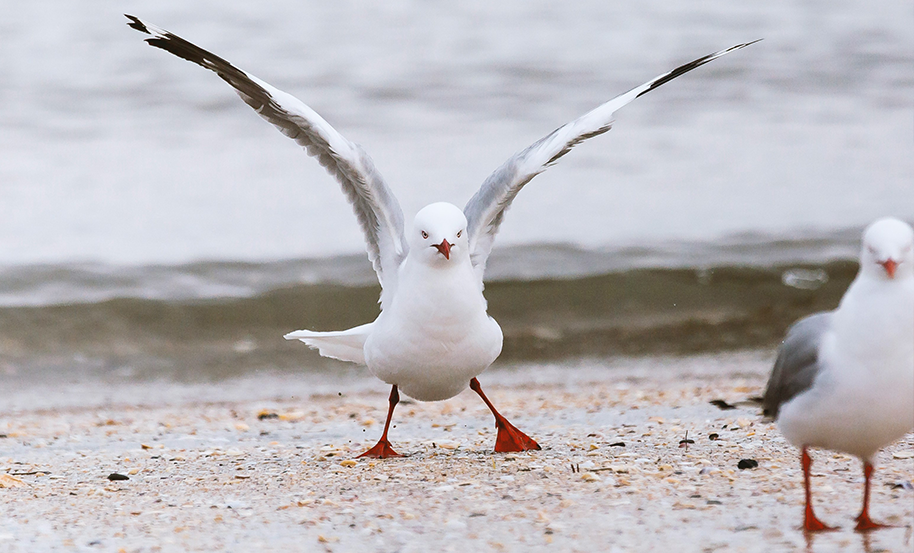
Everyone now watches the gulls. The birds circle more tightly, occasionally touching the water before rising again. A small disturbance appears beneath them, followed by another silver flash.
The child searches too widely, moving his head from side to side.
“Do not look for the dolphin yet,” the captain says. “Look at the water.”
There is no magic in his observation. He has simply spent enough time in the bay to recognise when the surface changes character.
He notices where birds remain rather than where they merely pass. He notices whether small fish are breaking the surface. He reads wind direction, the changing texture of the water and whether the same area continues to attract activity.
A tourist looks for the animal they hope to see.
A person who knows the sea looks for the conditions that might make the animal appear.
The difference is subtle but important. It transforms wildlife watching from impatient searching into attention.
For another minute, nothing happens.
Then the child hears the dolphin before he understands what the sound is.
A short breath breaks the air behind the boat.
The Breath That Changes the Bay
The first dolphin appears farther away from the gulls than anyone expected.
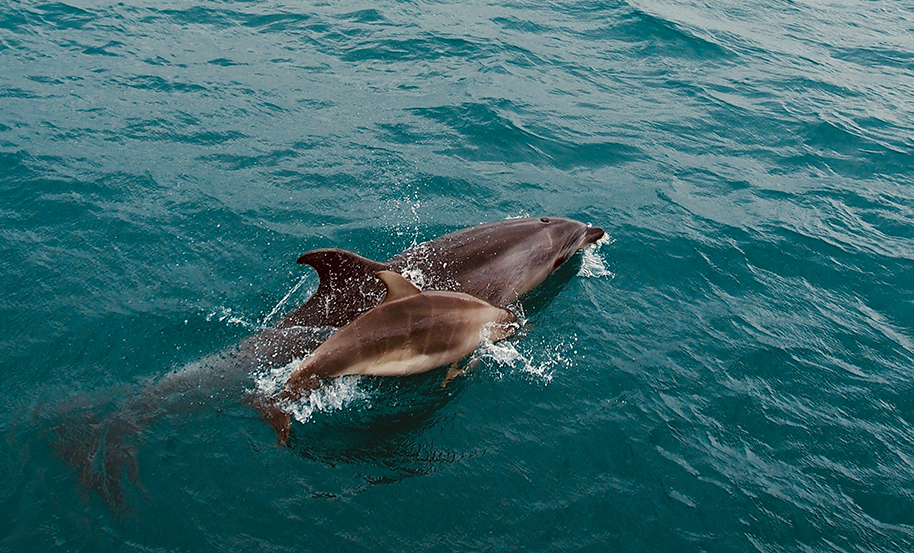
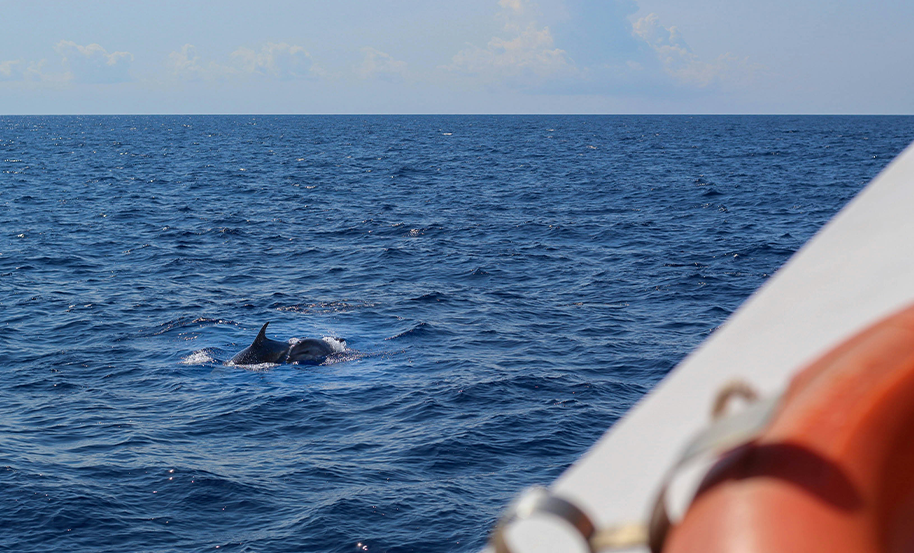
A dark back rises, curves and disappears. There is no leap, no long display and no time for a perfect photograph. Several passengers point after it, although the animal is already somewhere else beneath the surface.
A second dolphin breathes nearby.
The boat becomes quiet.
A dolphin encounter is built from brief interruptions of invisibility. The animal lives almost entirely below the surface, but it must return to the air. What people see is therefore not the whole journey, only the moment when sea and sky meet across the dolphin’s back.
Bottlenose dolphins and short-beaked common dolphins have both been documented in the wider waters around Vlora. Their presence is real, but no responsible journey can promise that they will appear on a particular day. Nor can one brief sighting tell us whether a group lives permanently inside the bay or is simply passing through.
That uncertainty should remain part of the experience.
A dolphin is not late if it does not arrive. The sea has not failed if the surface remains empty.
When an animal does appear, the moment matters precisely because neither the captain nor the itinerary controls it. The dolphin belongs to the conditions of the day, not to the schedule printed for the passenger.
One of the dolphins changes direction and approaches the disturbed water behind the boat. The child begins calling to everyone at once. The animal rises beside the wake, disappears beneath the white turbulence and surfaces again for only a second.
To the passengers, it looks like play.
Dolphins sometimes approach vessels and use bow waves or wakes, but the meaning of an individual approach cannot always be known from the deck. Curiosity, efficient movement and social behaviour may all play a part.
One distinction matters more than assigning a motive:
The dolphin may choose the wake. It has not chosen the itinerary.
A voluntary encounter remains voluntary only while the animal can also end it.
The captain holds his course instead of turning sharply. He does not accelerate to prolong the moment. The dolphin travels beside the wake briefly and then moves away.
This restraint protects more than the animal. It protects the authenticity of the memory.
Had the boat pursued it, the passengers might have obtained more photographs. They would have witnessed less of the dolphin’s freedom.
A Living Scene from Sky to Depth
The gulls descend again as the dolphins move towards the school of fish.
Now the structure of the scene becomes clearer. The birds were not simply decorating the sky, and the dolphins did not appear independently beneath them. Both are responding to a concentration of life that the human eye can barely follow.
The dolphins move below the school. The gulls wait for fish to approach the surface. Every participant experiences the event from a different direction.
For a brief time, the bay becomes vertically connected: birds above, fish near the surface, dolphins below and people watching from the narrow level between air and water.
No single observer can see the complete scene.
The gull cannot know what passengers see beneath the surface. The passengers cannot follow the dolphin after it dives. The dolphin experiences the school through movement and sound unavailable to the people above.
The event exists fully only when all these partial perspectives are imagined together.
This is why the encounter teaches more than the simple fact that dolphins occur near Vlora. It reveals that open water is not an empty distance between coastlines. It is a layered habitat in which birds, fish and marine mammals respond to one another across a surface that both separates and connects them.
By late morning, the wind begins to strengthen. The smooth surface breaks into smaller patterns. Reflections fragment, and every wave briefly resembles a fin. The gulls must work harder to hold their position. The dolphins become more difficult to follow, even when they remain nearby.
On a calm sea, the first dolphin may be a sound—a breath heard before the eye finds its source.
In stronger wind, it may be only a shape that disappears before certainty arrives.
This change explains why two boat journeys across the same bay can feel entirely different. Wildlife may not be the only variable. The conditions controlling what people can detect have also changed.
A flat surface allows the smallest disturbance to become visible. Wind introduces thousands of competing movements. The animal has not necessarily disappeared, but the human ability to read the water has weakened.
The captain does not fight the change. He accepts it as part of the day.
The bay is not a stage where the lighting remains fixed for an audience. Wind, surface and visibility participate in every encounter.
What the Child Learns to Ask
The dolphins surface several more times and then begin moving away.
Nobody recognises the final breath as the final one. The passengers continue watching the place where the animals disappeared, expecting another dark curve to rise. Ten seconds pass, then twenty.
The engine slowly returns to its normal rhythm.
At the beginning of the journey, the child had asked only one question:
“Will we see dolphins?”
Now he points towards another group of gulls much farther away.
“Is something happening underneath them?”
The captain smiles again.
This is the emotional centre of the journey. The child came hoping to see one famous animal. He leaves having learned that the entire surface can contain clues.
The gull is no longer simply a noisy bird near the beach. The flash of silver is no longer random sunlight. A quiet patch of water may be moving, and a breath can reveal an animal whose journey remains hidden below.
The dolphin was the highlight.
Attention was the real discovery.
A responsible encounter requires less action than passengers often expect. When dolphins appear, a boat should slow, maintain a predictable direction and avoid cutting across the group. It should not separate animals or repeatedly follow them when they move away. If several boats are present, the need for restraint becomes even greater.
This is not an argument against boat tourism.
It is an argument for thoughtful boat tourism.
A careful captain can transform wildlife observation into a lesson in respect. Passengers learn that closeness is not the only measure of value, and that a wild animal moving freely at a distance can offer a more meaningful encounter than one surrounded by engines.
The finest dolphin sighting is not necessarily the closest.
It is the one that ends because the dolphin chose to leave.