A walled Illyrian city on a hilltop above the Vjosa, with a theatre for thousands and mosaic churches, an easy day trip from Valza.
Byllis (Bylis in Albanian) is the ruined Illyrian city on a hilltop above the Vjosa valley, near the village of Hekal, about an hour and ten minutes by car from Valza in Vlorë. You walk through its walls, theatre, agora and early Christian churches with mosaic floors. Allow two to three hours, or a full day with Apollonia.
Why build a city this high above the river?
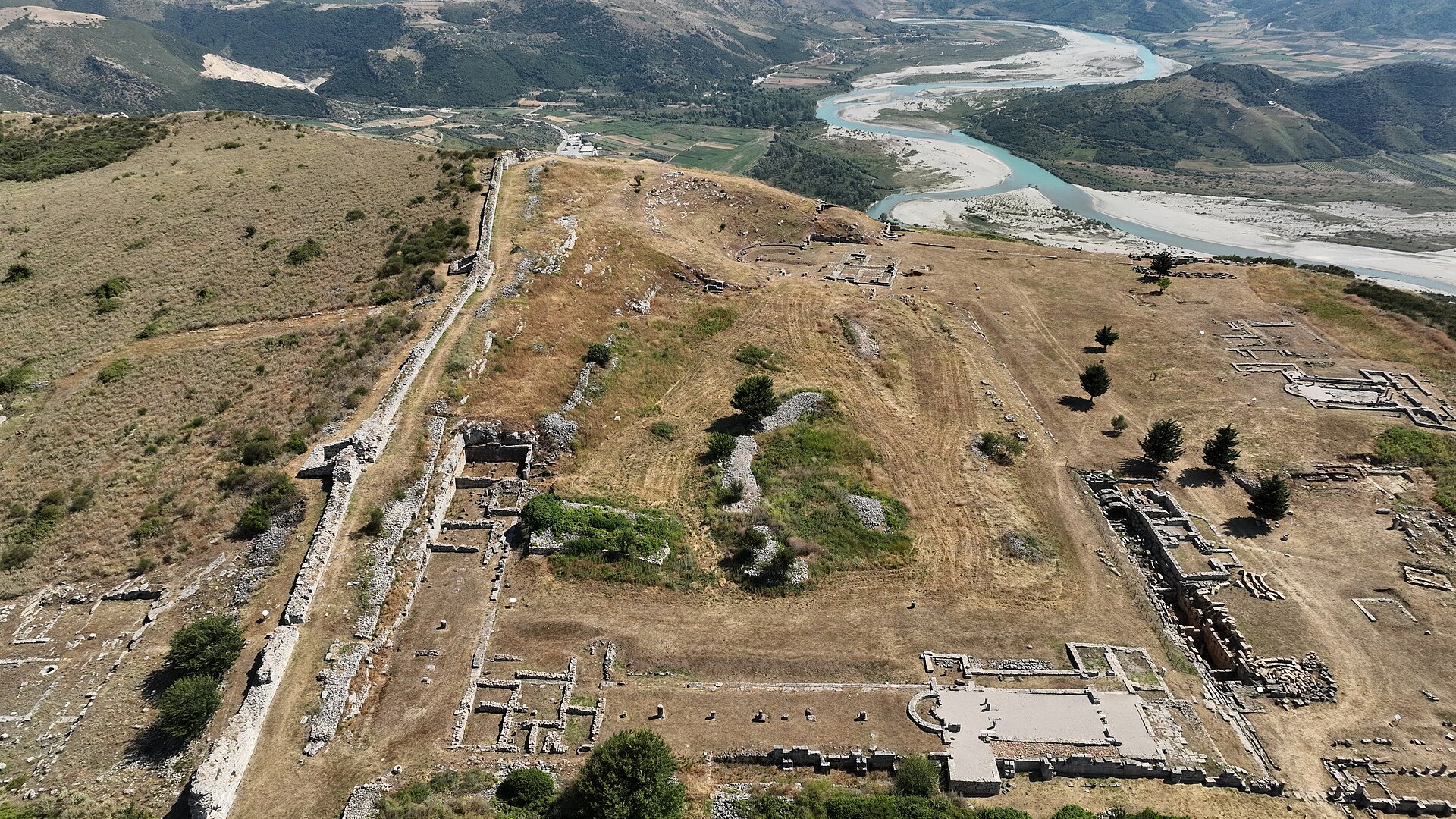
Byllis sits on Gradishta e Hekalit, a 524-metre hill on the right bank of the Vjosa, looking over the river and the roads that followed it. The Illyrian Bylliones founded the city around the middle of the 4th century BC and closed it with walls 3.5 metres thick and 8 to 9 metres high, around some 30 hectares. Seven gates have been found, and one still stands 9 metres tall.
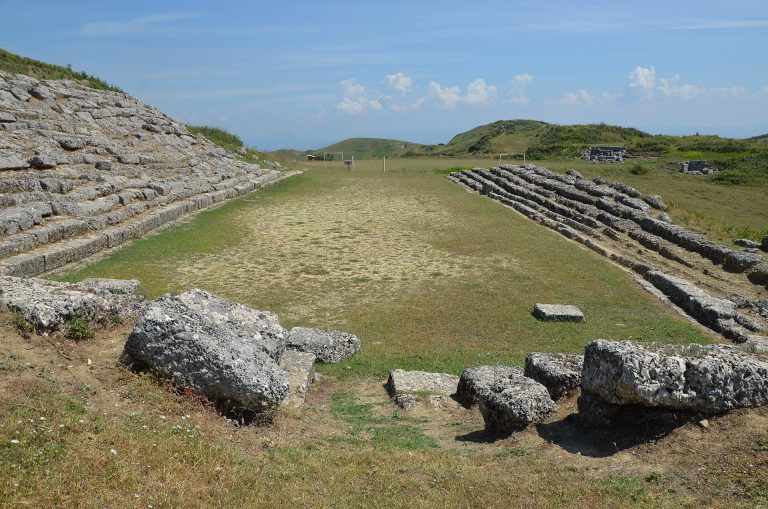
In the 3rd century BC the city built itself a centre to match: an agora with a stoa 60 metres long, a stadium of about 190 metres with a cistern beneath its seats, and a theatre 78 metres across with about 40 rows of seats. The archaeologist Neritan Ceka calculated that it could hold about 7,500 people. Byllis later became a Roman colony, recorded by Pliny the Elder.
By the 5th century Byllis had its own bishop, separate from Apollonia’s, and in the 6th century it was counted among the eight most important cities of the province of Epirus Nova. Five churches with mosaic floors were built. The cathedral, about 67 metres long with its atrium, has scenes of shepherds and fishermen, and the Purple Codex of Berat, a 6th-century Gospel book, is believed to have stood on its altar. In the mid-6th century Justinian’s architect Victorinus built new walls around just a third of the old city, 11 hectares. By around 600 AD Byllis was empty.
Byllis as a day trip from Valza
Leave Uji i Ftohtë after breakfast and you are at Byllis in about an hour and ten minutes, while the hilltop is still cool. Walk the city in the morning, then drive about 40 minutes to Apollonia, Byllis’s richer neighbour, for the afternoon. From Apollonia, Valza is about 45 minutes away, so you are back in Vlorë for dinner.
Our tip: plan lunch at one of the agriturismi in the countryside around Byllis. Several new ones have opened in the last few years, and they make the break between the two ancient cities.
What you’ll see
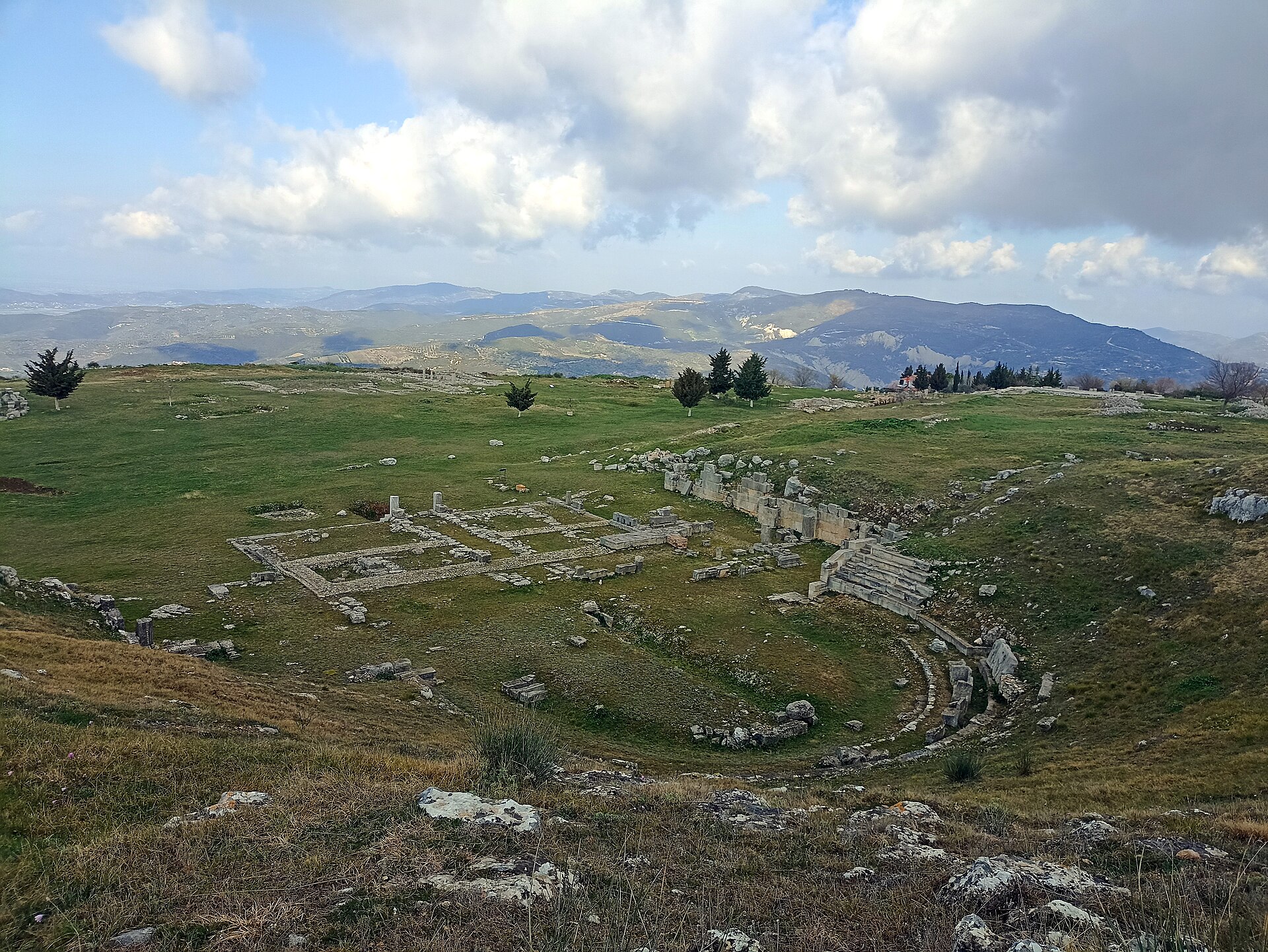
The theatre in the hill
Rows of seats cut into the slope, facing the agora and the open sky.
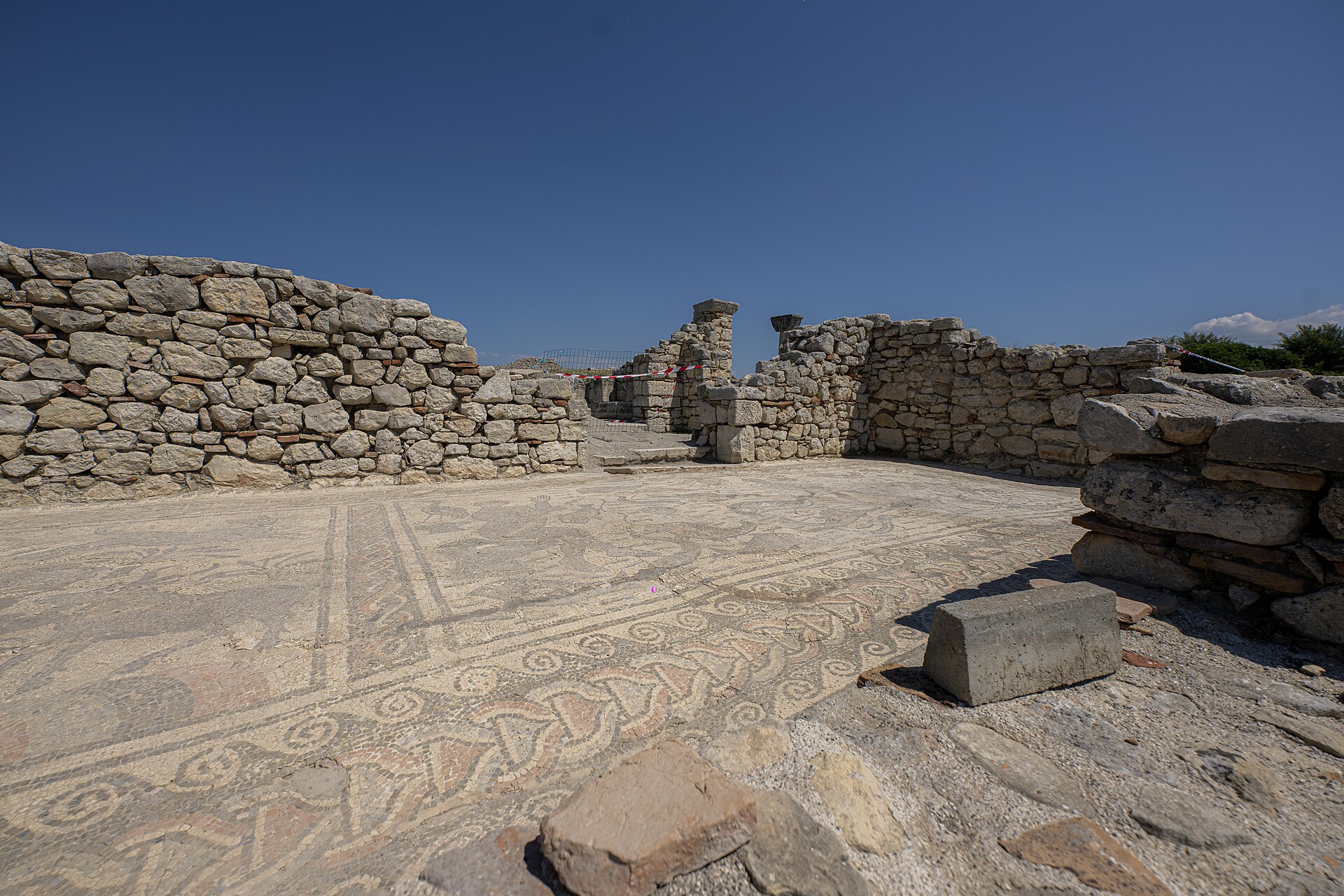
Mosaic floors
The floors of the early Christian churches; one names its donor, Bishop Praisos.
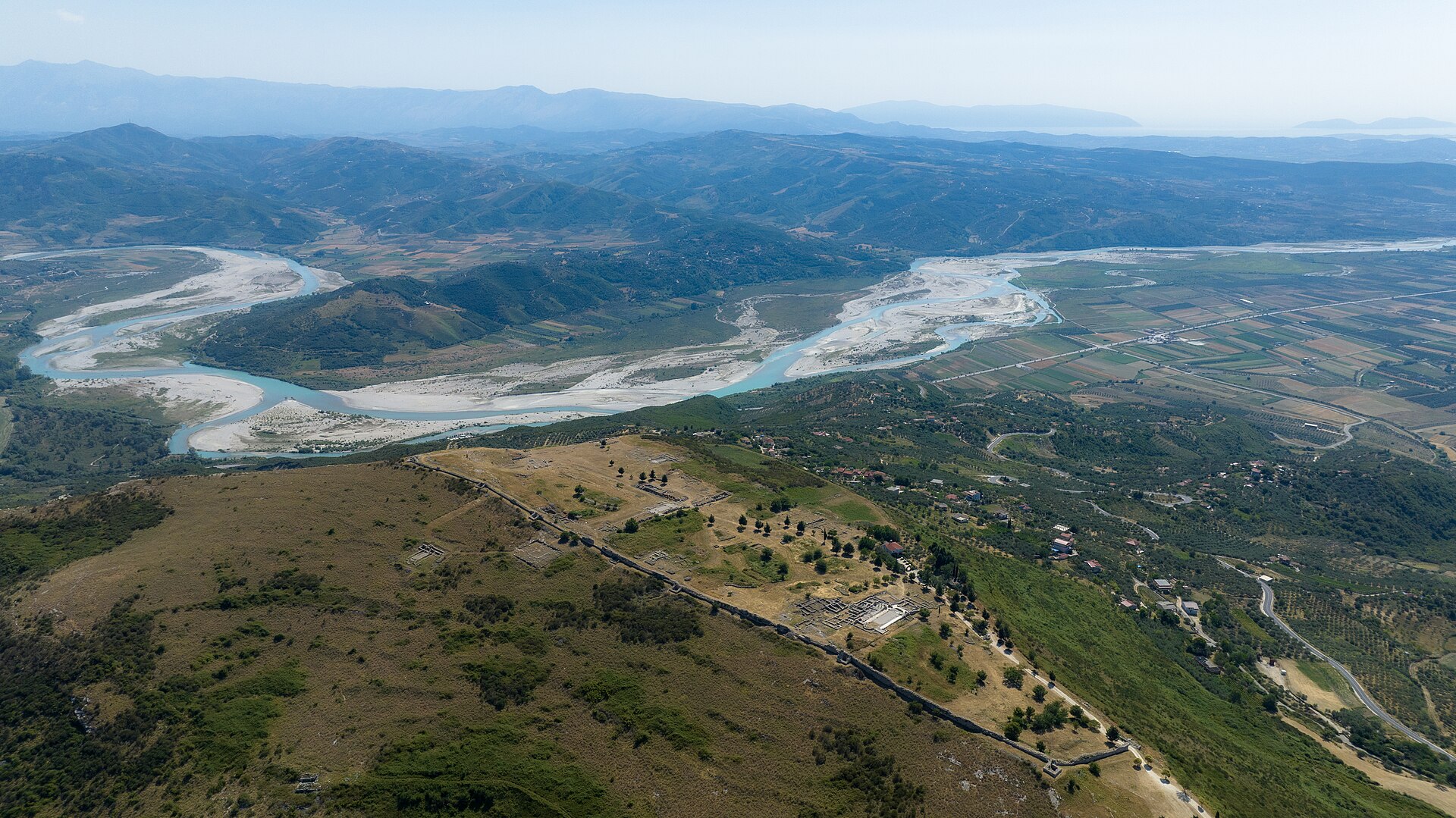
The Vjosa below
From the edge of the plateau, the wild river braids through its wide valley.
-
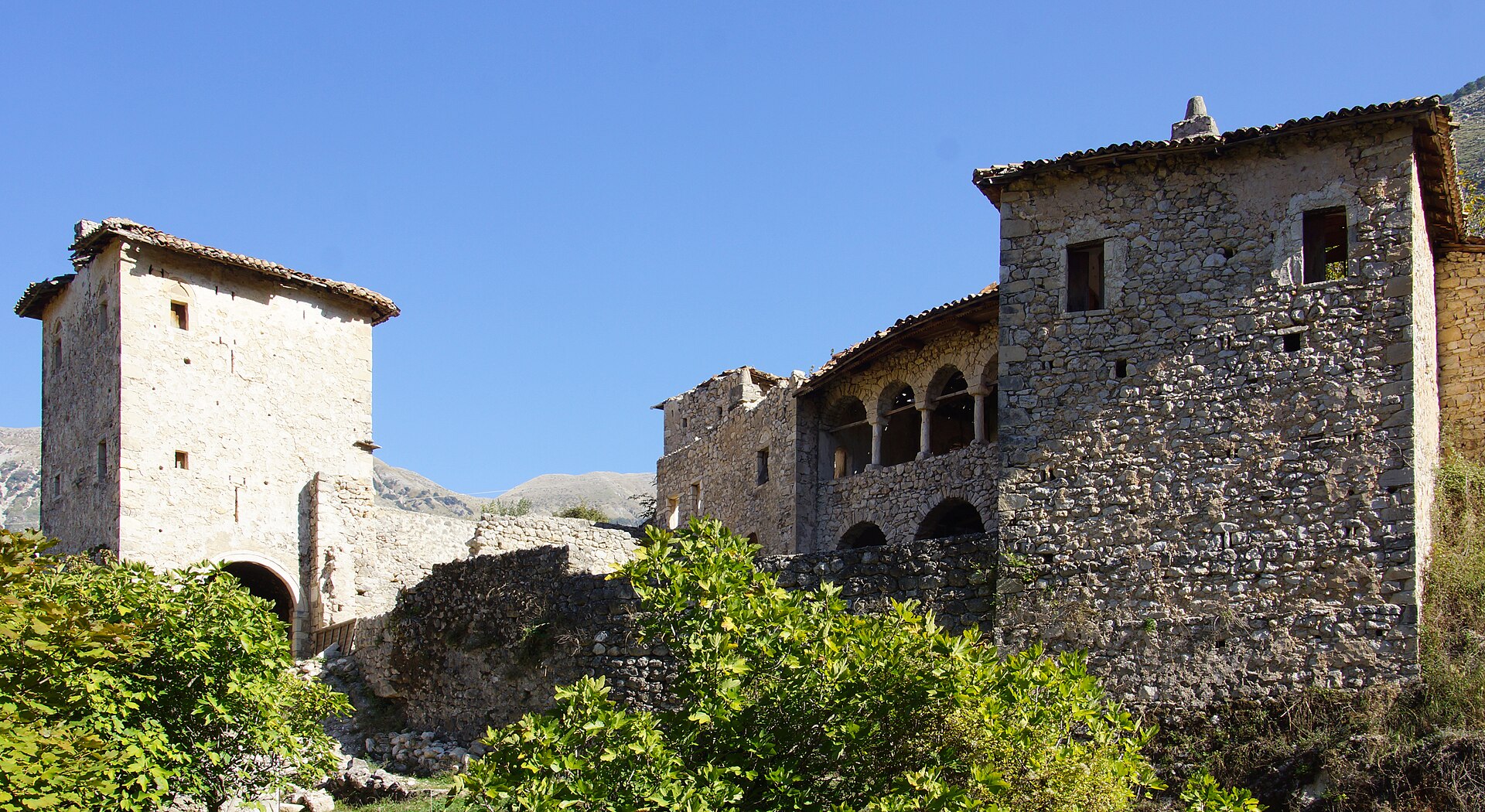
The walls
Illyrian stone 3.5 metres thick, with Victorinus’s smaller 6th-century circuit inside.
Byllis in six dates
- Mid-4th century BC
The Illyrian Bylliones found the city and build its walls.
- 3rd century BC
The agora, the stoa, the stadium and the theatre are built.
- 5th century AD
Byllis has its own bishop, separate from Apollonia’s.
- Mid-6th century
Justinian’s architect Victorinus builds a smaller circuit of walls, 11 hectares.
- Around 600
The city is abandoned.
- 1978
The first systematic excavations begin; today Albanian and French archaeologists still dig here.
How did Byllis end?
Myth“Byllis was wiped out in one great sack.”Tap to see the reality
Reality The excavators of the episcopal quarter link its end, around 600, to the pressure of Avar and Slav raids. The archaeologist Richard Hodges notes that the unworn floors and the few traces of fire do not suggest one catastrophic sack: people may simply have moved to Ballsh, 8 km away.
Byllis in numbers
-
524 metres
The hill of Gradishta e Hekalit, above the Vjosa
-
30 hectares
Inside walls 3.5 metres thick
-
7,500 seats
In a theatre 78 metres across
-
68 km
From Valza, about 1 hour 10 minutes
Where it is
On a hilltop above the Vjosa valley, near the village of Hekal in Fier County, north-east of Vlorë.
What to bring
- Water: the plateau has very little shade
- Sun hat: you walk in the open for two hours
- Sturdy shoes: uneven stones and grassy slopes
- Cash in lek: for the ticket
- Camera: the theatre and the Vjosa from above
- Light layer: the hilltop can be windy
Is it worth it?
Yes, if…
you like ancient sites with few crowds and big views, or you want to pair it with Apollonia for a full day of history.
Maybe not, if…
you want shade and cafés: Byllis is an open hilltop, best in spring and autumn or early in the morning.
Check current prices and opening times before you go.
Combine it with
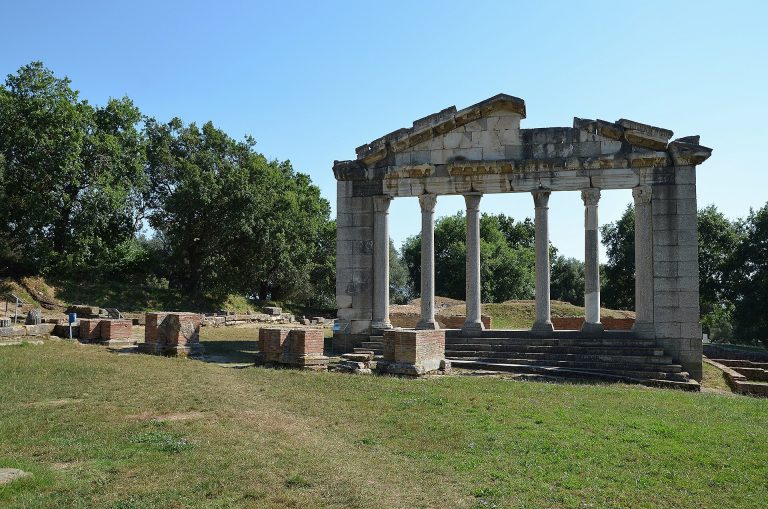
Continue exploring
More places and ideas for your days around Vlorë:
- All attractions around Vlorë
- Archaeological sites in Vlorë
- Oricum Archaeological Park
- Where to stay in Vlorë: our complete guide