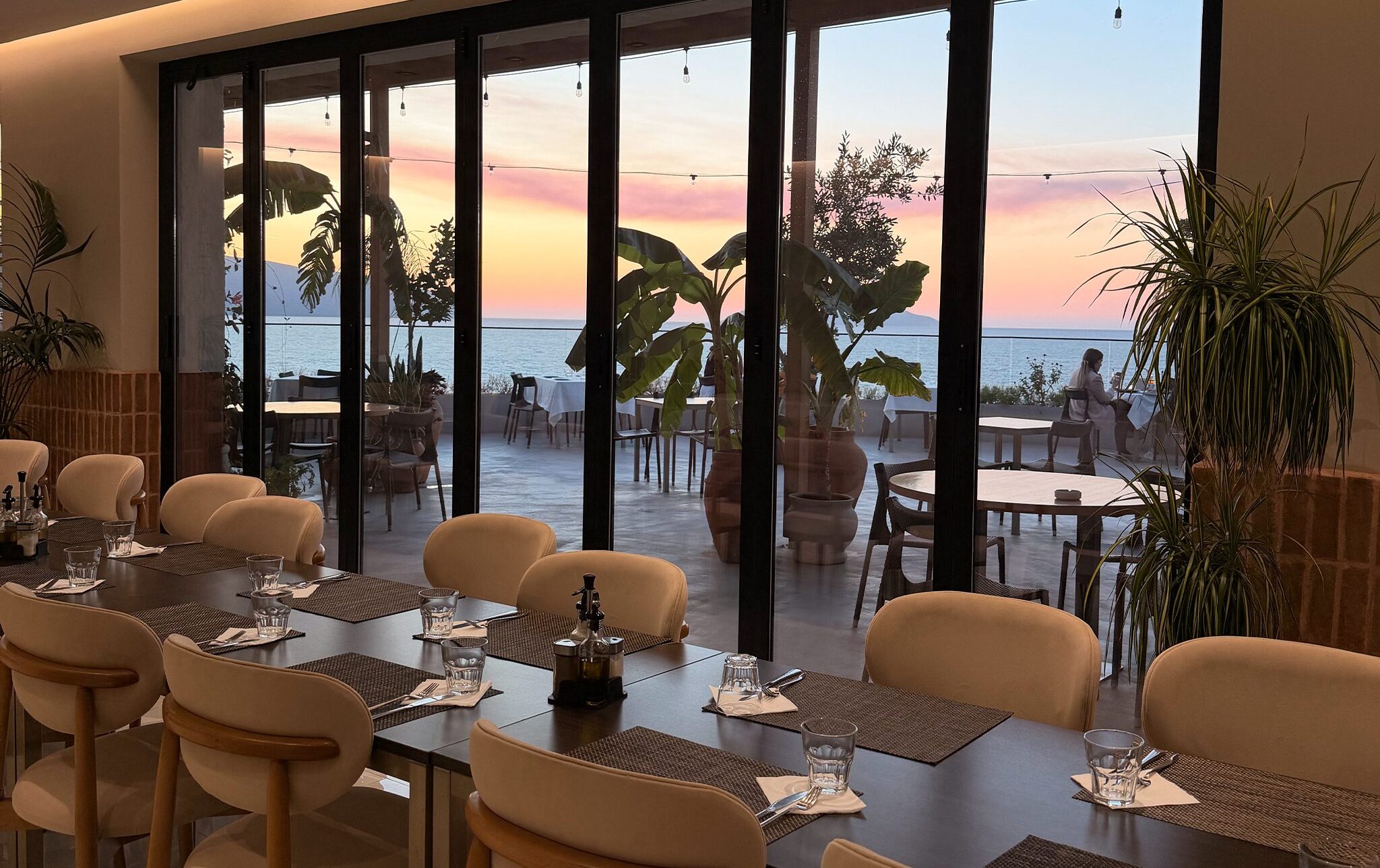
The Bay of Vlora is one of the richest fishing grounds in Albania: a study of local boats counted 100 different kinds of fish and seafood in their nets. Hake is landed most, followed by red mullet and gilthead sea bream. The best fish to order in Vlorë is the one that came in that morning, at a proper size, with a clear answer to one question: wild or farmed?
Most visitors order fish in Vlorë the way they would at home: they point at a familiar name and hope for the best. Locals do it differently. They ask what the boats brought in, they look at the size of the fish, and they know that the same sea bass can cost twice as much depending on where it grew up. This guide is about the fish itself: what lives in the bay, what the Albanian names on a menu mean, how fish is priced, and the few things worth checking before you choose.
Fish in Vlora at a glance
- What it is
- A guide to the fish of the Bay of Vlora: the species, their Albanian names, how they are priced and how to choose well.
- Where the fish comes from
- Mostly small boats fishing with nets in the bay and around Karaburun and Sazan, landing at Orikum and Vlorë, plus fish farms in the bay.
- Best time to buy
- Morning, when the boats come in. What is caught changes a lot from month to month.
- Key question
- Wild or farmed? At the Vlorë market wild sea bass sells for about twice the price of farmed.
- How it is priced
- Whole fish is sold by weight, per kilo. Ask to see the fish and its weight before it is cooked.
- Good for
- Anyone who wants to eat the real fish of the bay, not just the safest name on the menu.
What swims in the Bay of Vlora?
Far more than most menus show. Between April 2019 and September 2021, a team of marine scientists led by Rigers Bakiu photographed and measured the catch of the small boats that fish the Bay of Vlora with nets. In 484 landings they measured 11,747 fish and counted 100 different kinds of fish and seafood.
The single most important fish was the European hake, with almost a quarter of the whole catch by weight. After it came the striped red mullet, the gilthead sea bream, the barracuda and the bogue, a small silver fish that locals love fried. Ten species made up about two thirds of everything landed. The rest was a long tail of less familiar fish: bluefish, little tunny, sardinella, dentex, several kinds of bream.
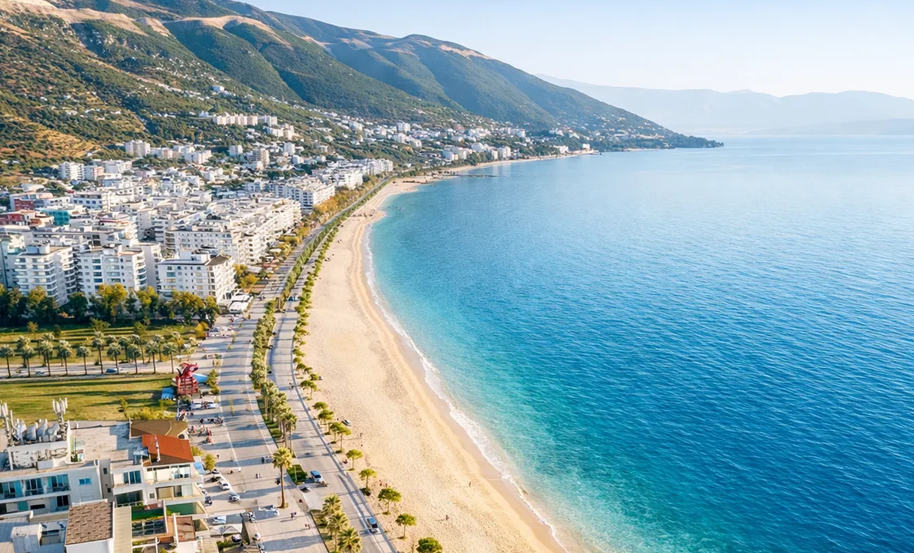
The bay owes this richness to its shape. Karaburun and Sazan close it from the open sea, the seabed changes from sand to rock to sea grass within a short distance, and since 2010 the waters around Karaburun and Sazan have been Albania’s first marine national park. The same study found that boats fishing inside the park caught about 16 percent more per length of net than boats fishing outside it. Our guide to the fish beneath the Bay of Vlora shows how each of these fish uses the seabed.
-
100 kinds
Fish and seafood found in the nets of the bay’s small boats, 2019–2021
-
23 percent
The share of hake in the catch by weight, more than any other fish
-
16 percent
More fish per length of net inside the Karaburun–Sazan marine park
-
2× price
Wild sea bass against farmed at the Vlorë wholesale market, November 2026
The fish you will meet, with their Albanian names
Menus in Vlorë often list fish only in Albanian, or in a mix of Albanian and Italian. These are the names worth knowing. Most are sold whole and grilled, baked or fried; the small ones are fried and eaten almost whole.
-
Merluc
Hake: the most landed fish of the bay. Mild, soft white flesh, usually fried or baked.
-
Barbun
Red mullet: small, rosy and full of flavour, fried whole. The bay’s nets catch mostly the striped kind.
-
Koce
Gilthead sea bream: firm and slightly sweet, grilled whole. Caught wild in the bay and also farmed.
-
Levrek
Sea bass, also sold as branzino: the classic grilled fish. Very often farmed, so always ask.
-
Dental
Dentex: a large, prized bream with firm flesh, one of the most expensive fish at the market.
-
Sardele
Sardines and their larger cousin, the round sardinella, also caught in the bay: cheap, oily and very good grilled or fried.
-
Kallamar · Sepje · Oktapod
Squid, cuttlefish and octopus: cuttlefish is one of the main targets of the bay’s net fishers.
-
Midhje · Karkaleca
Mussels and prawns: mussels arrive steamed in their shells, prawns grilled or fried.
If the menu offers peshk i ditës, the fish of the day, take it seriously: it is usually the fish that the kitchen trusts most that morning, and it is the easiest way to eat what the bay actually gave.
-
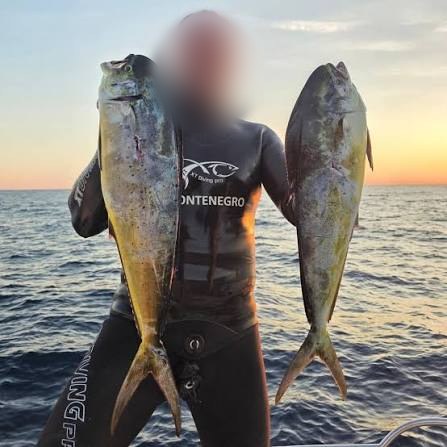
At sea: two dolphinfish (mahi-mahi), caught at sunset -
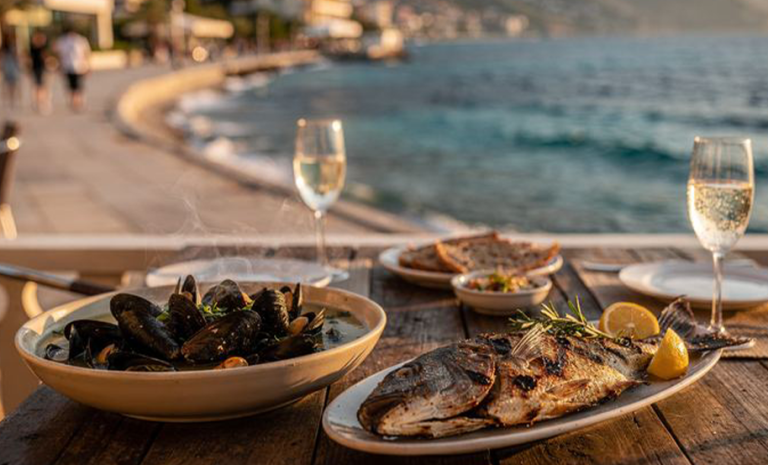
At the table: mussels and a whole grilled fish
Not every fish of these waters lives near the bottom. In late summer and autumn, fast open-sea fish such as the dolphinfish, also called mahi-mahi, pass along the coast and end up in the nets and on the spears of local fishers.
Wild or farmed: why does it matter?
Because it changes the price, not the safety. Sea bass and gilthead sea bream are raised in floating cages all over the Mediterranean, including in the Bay of Vlora itself, where researchers are even testing farms that raise fish, mussels and sea cucumbers together. Farmed fish is good, fresh food. It is simply cheaper to produce than a fish caught at sea.
The numbers make the difference plain. On 4 November 2026 the Albanian government’s market price service listed wild sea bass at the Vlorë wholesale market at 2,000 lekë per kilo, and farmed sea bass at 1,000 lekë: exactly half. A large dentex, which is almost never farmed, sold at 4,500 lekë per kilo in late August. Restaurant prices are higher than market prices, but the ratio between wild and farmed should stay roughly the same.
So the question is not whether farmed fish is acceptable. It is whether the price on the menu matches what you are being served. A polite “I egër apo i kultivuar?” (wild or farmed?) is a normal question in Vlorë, and a good kitchen answers it without hesitation.
| Wild fish | Farmed fish | |
|---|---|---|
| Typical fish | Red mullet, hake, dentex, bogue, wild sea bream | Sea bass and gilthead sea bream |
| Price at the Vlorë market | Wild sea bass about 2,000 lekë per kilo | Farmed sea bass about 1,000 lekë per kilo |
| Size | Varies with the catch | Very even, usually one-portion fish |
| Availability | Changes with the weather and the month | Almost every day of the year |
| Our take | Both are fine. Just make sure you know which one you are ordering, and that the price fits. | |
Why size matters more than you think
This is the part of the study that surprised us most. The researchers compared the fish landed in the bay with the minimum sizes that the European Union sets to let fish breed at least once. For three kinds of small bream, the white sea bream, the annular sea bream and the axillary sea bream, between 61 and 75 percent of the fish landed were below that size, inside the marine park and outside it.
You can help without becoming an expert. A few rules of thumb:
-
A whole bream that fits in the palm of your hand is very likely too young. Choose a bigger fish to share instead.
-
As a guide, the EU minimum sizes are 25 cm for sea bass, 20 cm for gilthead sea bream and hake, 23 cm for white sea bream and 11 cm for red mullet.
-
Ask to see the fish before it is cooked. It is normal in Vlorë, and it lets you check both the size and the freshness: clear eyes, red gills, firm flesh.
-
Ask for the weight too. Whole fish is priced per kilo, so the weight is the bill.
Small fish such as bogue, sardines and red mullet are meant to be small. The concern is with young bream, which would grow much larger if left in the sea a year or two longer.
How do locals order fish in Vlorë?
They ask three things, in this order: what came in today, wild or farmed, and how much it weighs. Then they decide how it should be cooked: the best and biggest fish grilled whole with olive oil and lemon, the medium ones baked in a tavë, the small ones fried, and the bones and heads, at home, into soup.
Weather matters too. When the wind is strong and the small boats cannot go out, the choice of wild fish shrinks, and a short, honest answer from the waiter is worth more than a long menu. In the study, the month of the year explained more of the difference between catches than anything else, so a fish that is everywhere in June may be rare in November.
How we serve fish at Eden by Valza
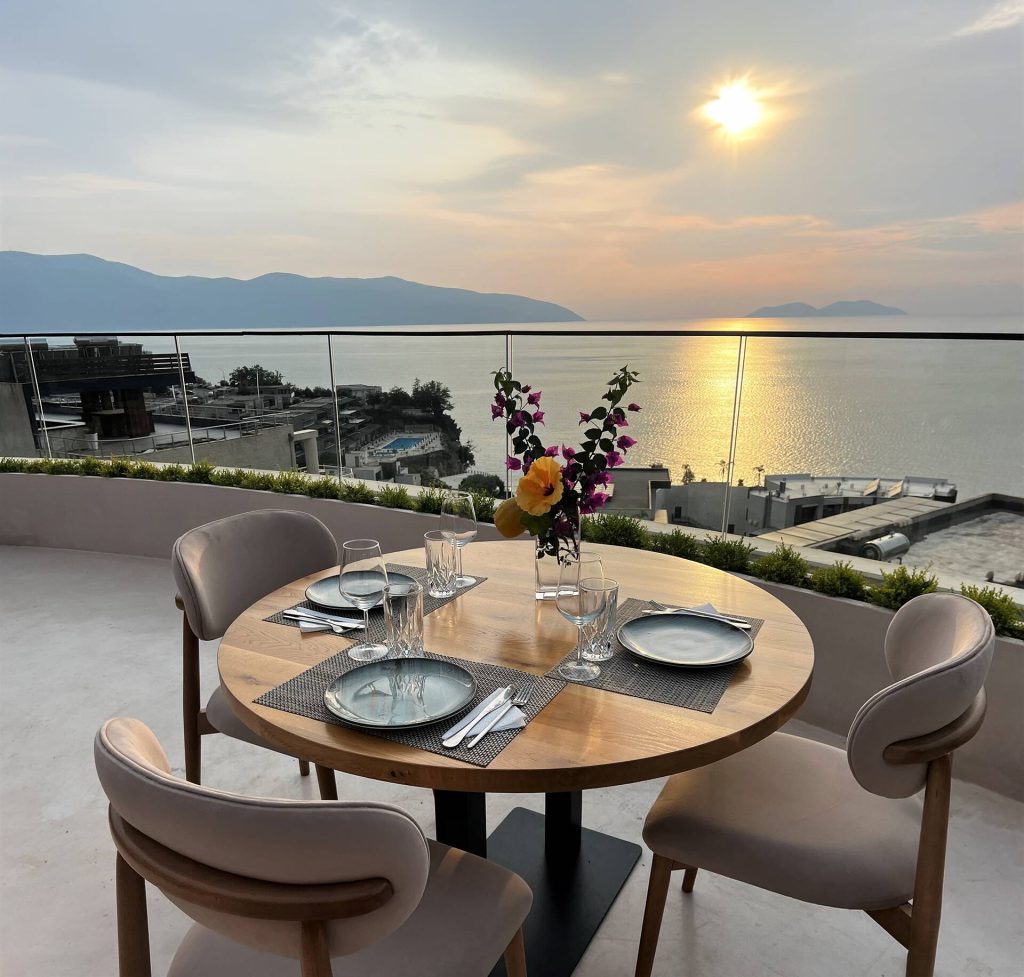
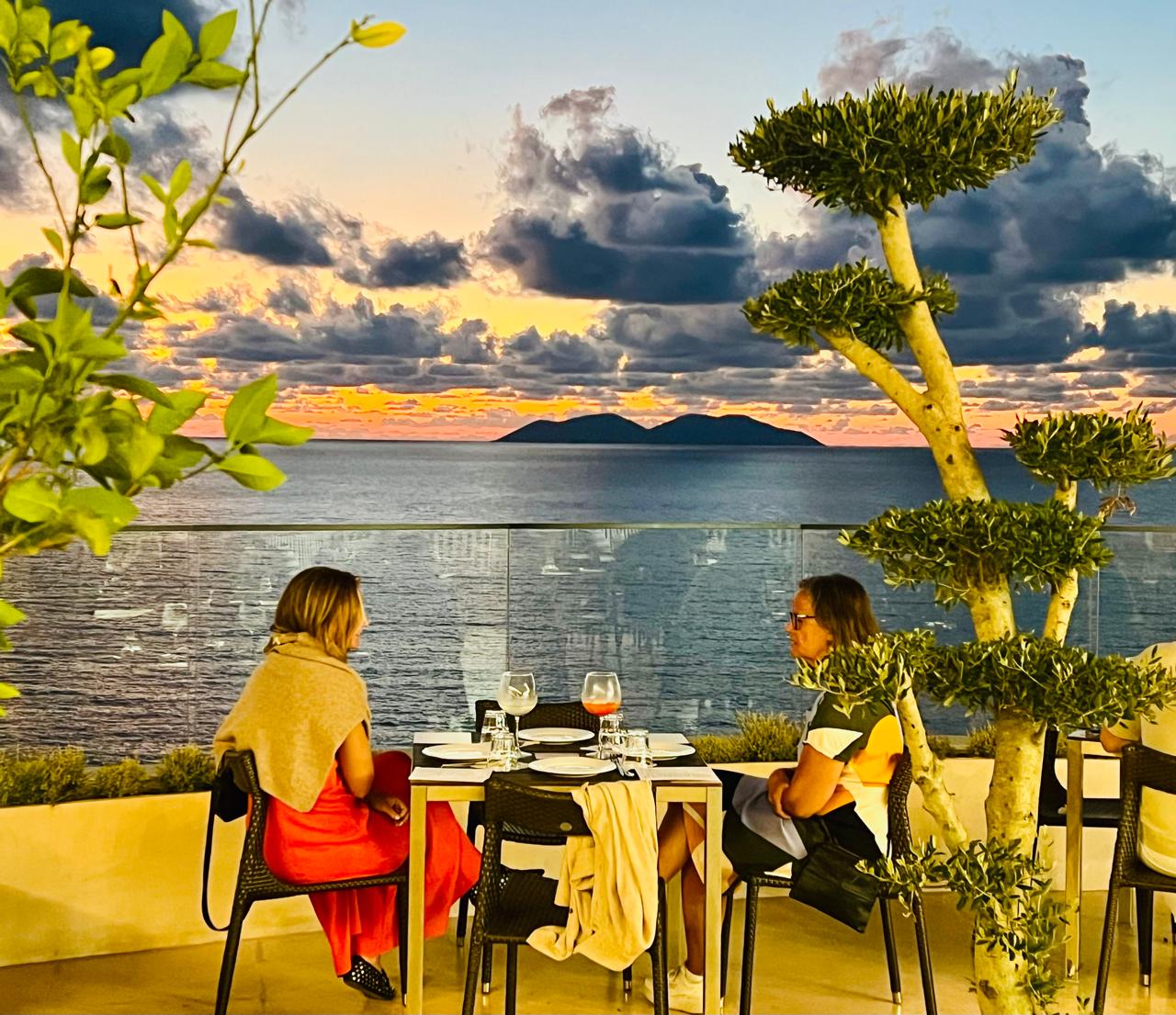
At Eden by Valza, our rooftop restaurant above the bay, we cook wild fish, within a modern Albanian and Mediterranean menu that you can read before you come. It reaches the table in two ways.
A fish for one
Wild fish of individual size are on the menu, so you can simply order one. Ask which fish of the day the waiter recommends, and how the kitchen suggests cooking it.
A large wild fish, on request
A big wild fish costs more, so it stays on ice until someone asks for it. It is meant for a group or a family table, often baked whole in a large tavë to share. Tell us when you reserve, and how many you will be.
Whatever you choose, always ask your waiter for the fish of the day, and what else the kitchen can offer that evening: it is the shortest way to the best fish in the house. To reserve, or to ask for a large fish for your table, contact reception on +355 69 60 22022 (phone or WhatsApp), who can also confirm opening days and hours. Eden by Valza has a children’s menu, and if it rains, dinner moves into the enclosed dining area on the rooftop.