The fish beneath the bay: the species swimmers see and fishermen understand

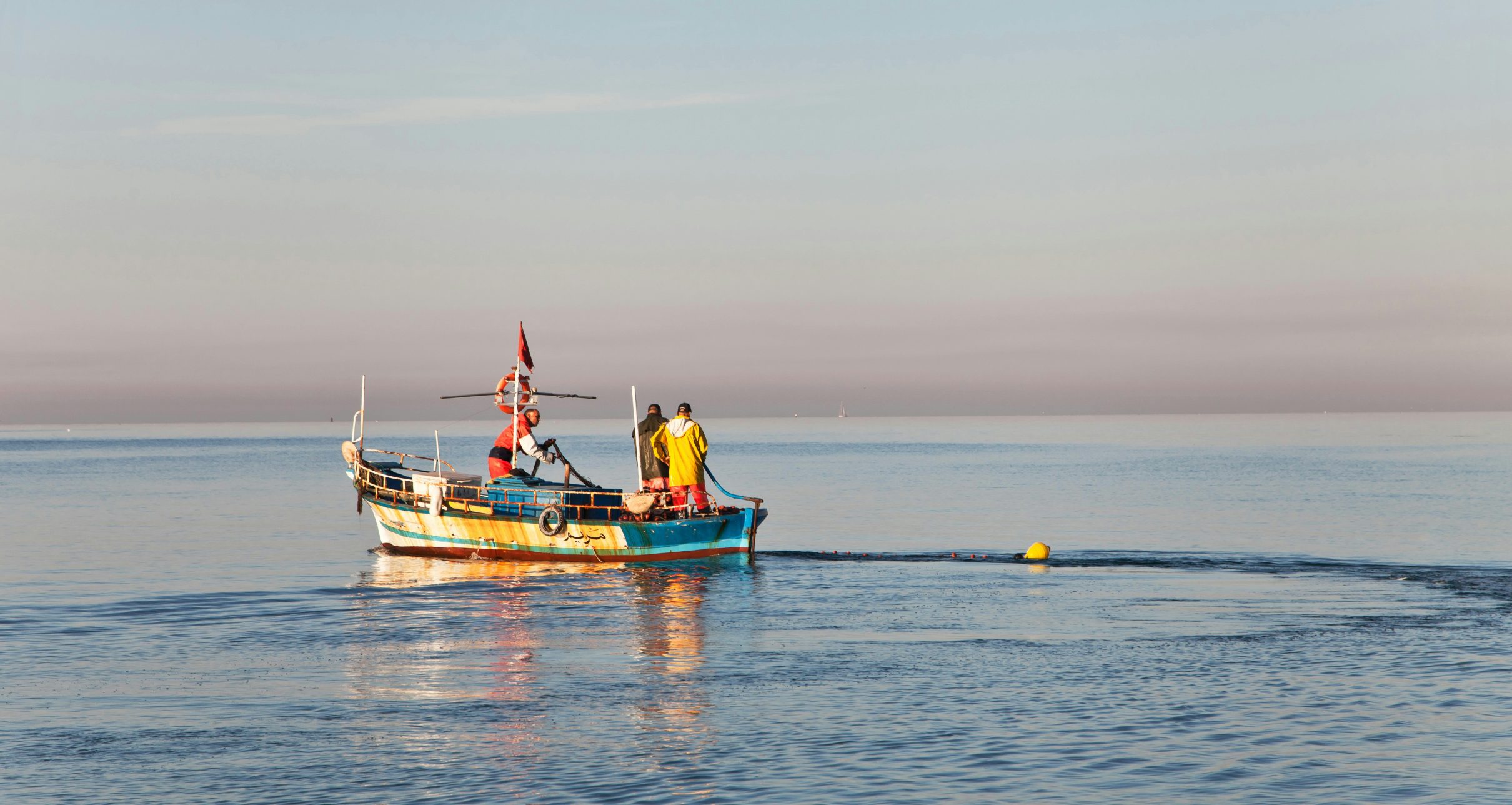
Small blue and yellow fishing boat with three fishermen hauling a net on a calm sea under a hazy sky

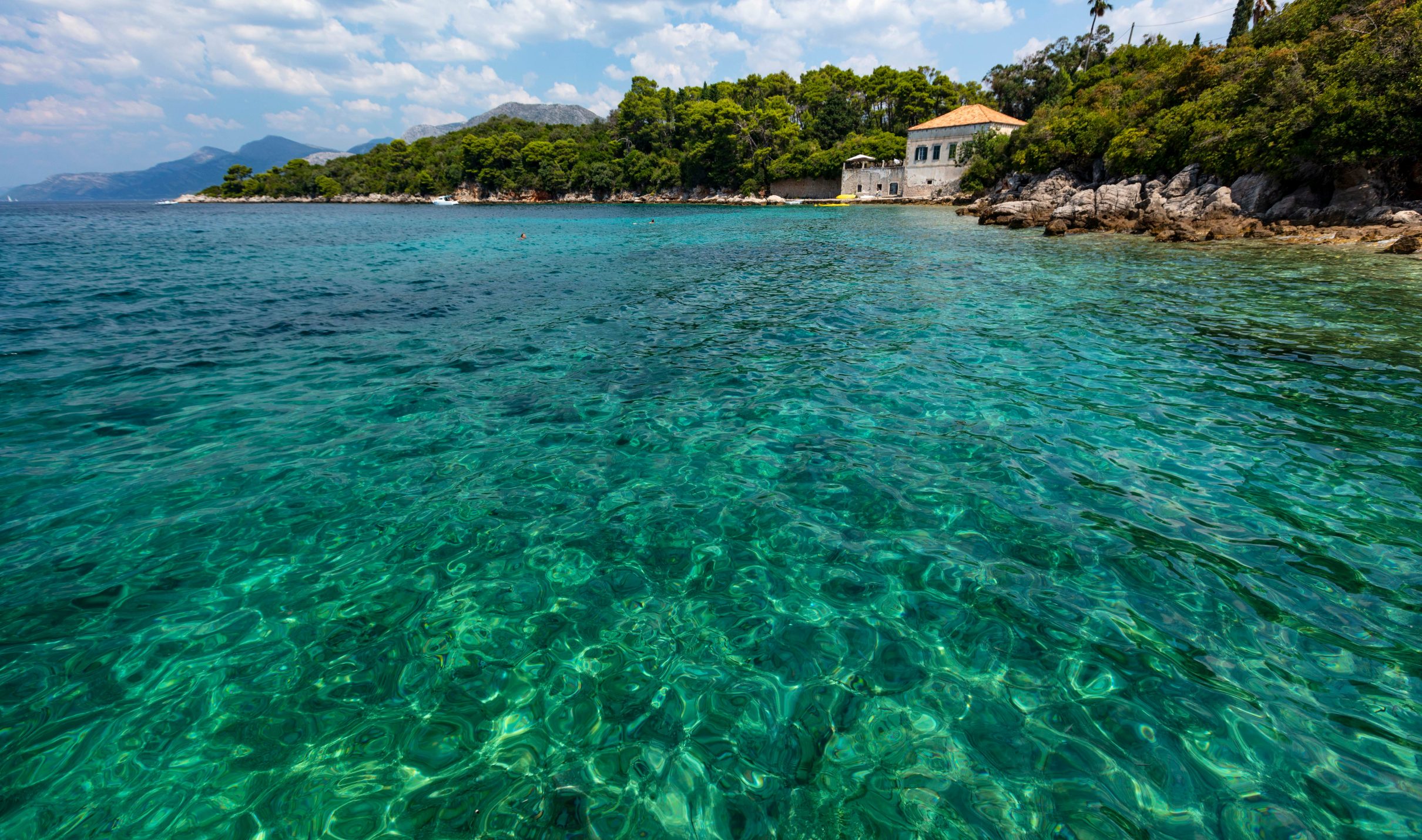
The fish in the Bay of Vlora that swimmers notice include sea bream, schools of silver fish, red mullet searching the sand with their barbels and colourful wrasses such as the rainbow wrasse, Coris julis; a grouper may rest near a rocky cavity. Each species uses the seabed differently, and the shallows can act as nurseries for young fish.

Early in the morning, before the wind reaches the bay, the water near Radhimë can become so still that every stone appears fixed beneath a sheet of glass. A child enters first, wearing a mask that seems slightly too large, and for the first few minutes he lifts his head twice to say that he cannot see any fish. Then a flash passes beneath him. He lowers his face, follows it towards the rocks and raises one hand above the surface, pointing urgently at something nobody on shore can see.

The fish have not suddenly arrived. His eyes have learned how to find them.

Every species reads a different sea

A small sea bream separates from the pale stone. Several silver fish appear farther out, turning together above the seabed, and near the boundary between rock and sand two red mullets move slowly with their heads lowered, leaving faint clouds of sediment behind them. They occupy the same stretch of water, but they do not live in the same landscape.

For one fish, the rock is shelter. For another, safety lies in the group. For the red mullet, apparently empty sand holds a buried world of food. Light, depth, current, vegetation and the shape of the seabed divide the bay into territories that remain invisible from the beach.

Every species is reading a different version of the same sea.

A visitor sees blue water. A fish sees routes, borders, nurseries, feeding grounds and places where one wrong movement can decide whether the day continues.

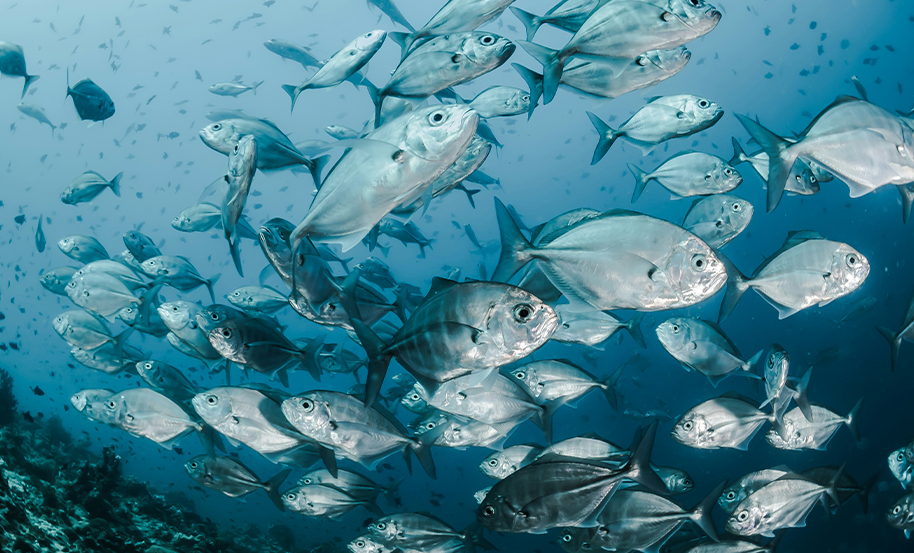
School of silver fish turning together in blue water above a reef

How does a school turn without a leader?

Few underwater sights feel more perfectly organised than a school of fish changing direction at the same instant. One moment, dozens of bodies reflect the sun; then their narrow profiles face the swimmer and the school nearly disappears, until the silver returns as every fish turns again. The movement looks rehearsed, yet no permanent leader directs the group from the front.

The pattern emerges from many small decisions. Each fish adjusts its speed, distance and direction according to the animals closest to it, and a change detected by one individual passes rapidly through the others. This allows the school to bend, narrow or move away without breaking apart.

For a predator, the result is confusion: instead of one isolated target, there is a shifting field of bodies, reflections and sudden turns. For the fish themselves, the group offers information gathered by many eyes rather than one. Farther out in the bay, schools near the surface can attract gulls from above and dolphins from below.

A swimmer who approaches too quickly sees this at once: the nearest fish turns and the reaction moves through the school like wind passing through fabric. No individual sees the complete shape from above, yet together the fish create something more coordinated than any one of them could design.

The red mullet reads the sand

Red mullets offer a quieter discovery. They move close to the bottom, their warm colours visible against pale sand and broken stone, while two slender barbels beneath the lower jaw sweep repeatedly across the seabed. At first the barbels resemble whiskers, but they are sensory instruments.

The fish use them to search the upper layer of sediment for small crustaceans, worms, molluscs and other concealed prey. The head dips, the sand rises in a soft cloud and the barbels keep examining a world the swimmer cannot see. To human eyes, the red mullet appears to be searching almost blindly; in reality, it is the human who has no access to the information.

Sometimes smaller fish follow nearby, waiting for the mullet to disturb the bottom and expose something edible. The scene may last less than a minute, but it changes the meaning of the seabed. The sand is no longer a blank space between interesting rocks. It is a table laid out beneath the surface.

Follow the edges

The most rewarding route through the shallows is rarely a straight line towards deeper water. It follows change: the boundary where rock becomes sand, the place where a seagrass meadow ends and the open seabed begins, a ledge where bright sunlight gives way to shade. These transitions offer fish both risk and opportunity, and movement becomes easier to detect when an animal crosses from one background to another.

A sea bream leaving dark vegetation becomes visible against pale sand. A wrasse crossing an exposed gap briefly loses the protection of colour and texture. Small fish venture out from crevices, feed for a few seconds and return to exactly the same opening.

Once these routes become familiar, the underwater world stops appearing random. A fish holding close to rock is making a different decision from one suspended in open water; a school facing the same direction may be responding to current; an animal returning repeatedly to one patch may be feeding, hiding or defending space. The most active part of an underwater landscape is often the point where one habitat becomes another.

Wrasse: colours that carry a life story

As the morning light strengthens, wrasses move through the rocky shallows with a restless confidence. Some display green, reddish, blue or orange markings that can appear almost tropical against the pale underwater landscape, and those colours do more than decorate.

The Mediterranean rainbow wrasse, Coris julis, is a protogynous species: individuals generally begin reproductive life as females, while some later transition to males, and biological and visible changes accompany the new reproductive role. A swimmer sees a colourful fish; biology sees a life story. The body passing between the rocks may not carry an identity fixed permanently at birth, and its appearance can reflect age, sex, social conditions and a transformation that has taken place during its lifetime.

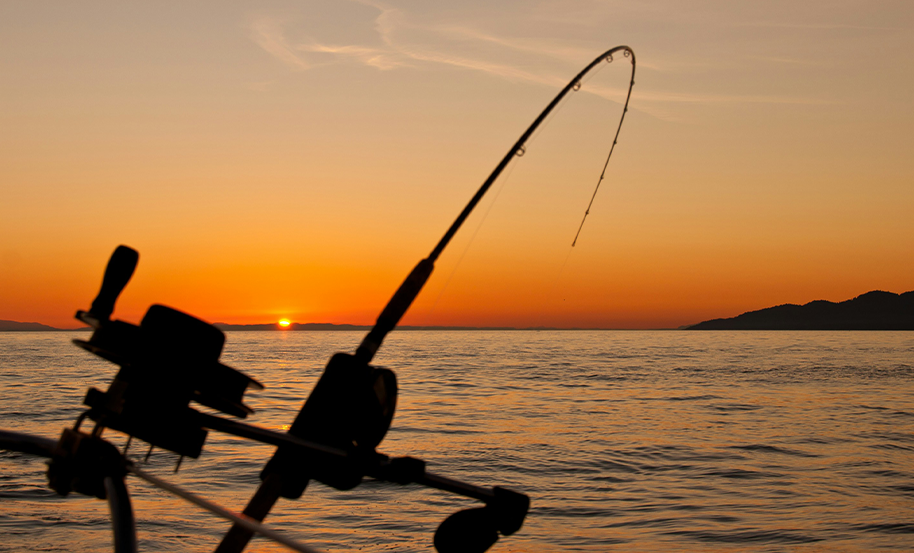
Bent fishing rod silhouetted on a boat against an orange sunset over a calm sea

Why do young fish stay in the shallows?

Near the shore, many of the fish are small. That can make the shallows seem less important than deeper water, where visitors expect the larger animals to live. Ecologically, the opposite may be true: rocky edges, seagrass, sheltered coves and shallow coastal water provide feeding opportunities and refuge during the most vulnerable stages of a fish’s life.

A nursery beneath the sea does not resemble a room filled with young animals. It may be a narrow border between vegetation and sand, a small cavity beneath a rock or water shallow enough for an adult swimmer to stand. Tiny fish gather there because the structure around them improves their chance of surviving long enough to enter the wider sea.

Seen this way, the shoreline is where part of the future sea is learning how to survive. Years later, a fish moving through deeper water – or eventually reaching a coastal table – may have begun life sheltering among leaves and stones within sight of the beach. The distance between nursery and open sea is measured in a lifetime as much as in metres.

What the fisherman sees

Later in the day, a fisherman – a peshkatar, in Albanian – sits beside a small boat and looks towards the bay without appearing to search for anything. Asked where the fish are, he may answer with questions of his own: what the wind has been doing, whether the water is warmer than yesterday, which bottom the visitor has in mind.

He does not carry one map of the bay but many. There is a map for rock, another for sand and another for deeper water; there is a spring map and a late-summer map. Some species are understood through depth, others through season, prey or the direction of the wind, and the same stretch of sea can feel promising on one day and silent on another.

This knowledge is memory rather than romantic instinct, built through repetition: departures before sunrise, unsuccessful days, changes in temperature and the recollection of places that once produced a catch. Researchers call it local ecological knowledge, and studies among the fishing communities of Triport, Radhimë and Marina Orikum show that it still influences everyday fishing decisions.

A visitor sees the fish that happens to appear. A fisherman thinks about the fish that should be present and asks why it is not. That may be one of the most valuable differences between casual observation and local knowledge: the experienced eye recognises what is there, and it also remembers what is missing.

The grouper that belongs to one rock

Some fish move constantly through the shallows; others appear deeply connected to a particular place. A grouper resting near a rocky cavity does not behave like a nervous school crossing open water. It moves with greater deliberation and often remains closely associated with shelter. Research on dusky groupers has documented site fidelity and homing behaviour, showing that familiar rocky areas can form part of a fish’s long-term territory.

A large grouper therefore represents more than size. It may embody years of survival, knowledge of one section of coast and an important reproductive role within the population. Because the species grows slowly and can change sex later in life, the loss of large individuals affects more than the number of fish remaining.

To a swimmer, the cavity may look unchanged after the grouper disappears. Ecologically, it is a different place: the empty opening keeps its shape, but part of its living history has gone.

A beautiful sea is not an invulnerable sea

The clarity of the Bay of Vlora creates a comforting illusion. Because the seabed remains visible, the system can appear complete, but transparent water does not prove that every fish population is healthy. A coast may keep beautiful rock, algae and blue water while losing some of the larger, slower-growing or more heavily targeted species that once gave those habitats their full ecological meaning.

The bay contains environments of high natural value, particularly around the Karaburun–Sazan National Marine Park, but it also faces pressure from fishing, coastal activity, pollution, habitat degradation and invasive species. Both truths must be held together: the underwater world remains rich enough to surprise a child within minutes of entering the sea, and it is not invulnerable.

The absence of a large fish is difficult to recognise, because absence has no colour and makes no movement. This is why memory matters. Scientific observation records habitats and species, fishermen remember frequency, size and season, and visitors contribute attention when they understand that the beauty before them is a living condition rather than a permanent guarantee. Wonder grows deeper when it includes responsibility.

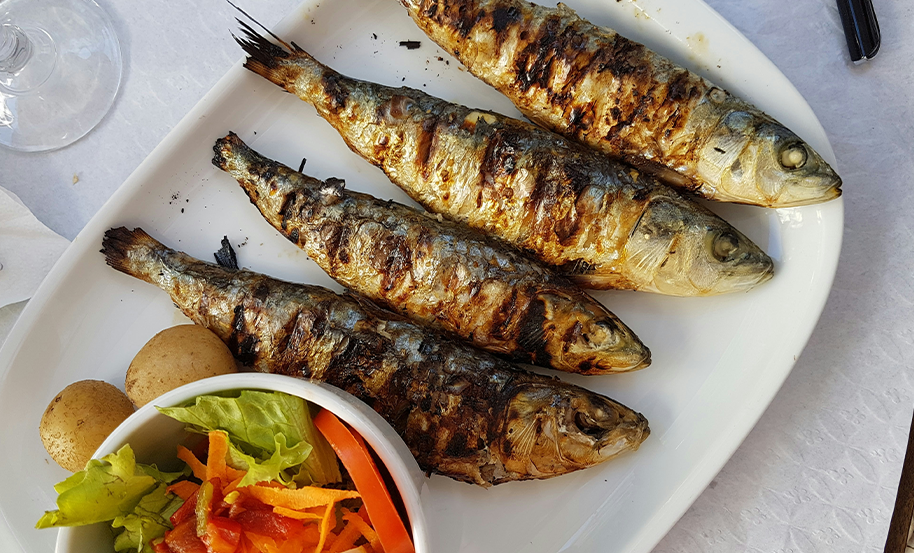
Four grilled whole fish on a white oval plate with boiled potatoes and a small bowl of mixed salad

How to watch fish without chasing or feeding them

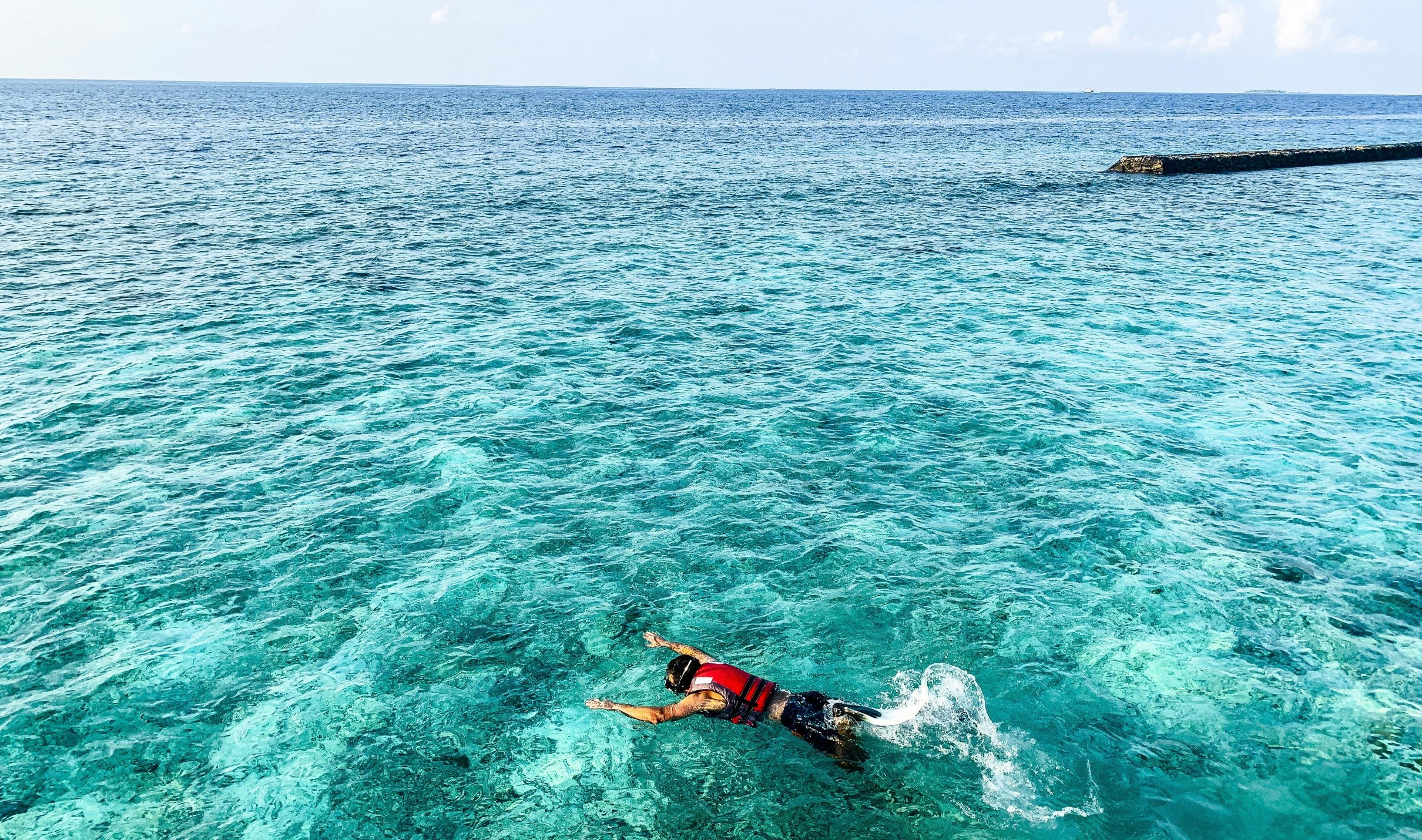
The easiest way to observe more fish is to become less important. Fast swimming, repeated diving and direct pursuit make every animal respond to the swimmer: fish disappear into cracks, tighten into schools or move towards deeper water, and the encounter becomes a record of escape rather than of ordinary life.

Float quietly instead. Let the first minute pass without trying to reach anything, keep your movements small and allow the habitat to settle after your arrival. This slower way of snorkelling in the Bay of Vlora lets the fish return on their own terms: gradually they come back to the edges, continue grazing and cross openings they had briefly abandoned.

This is when behaviour becomes visible. A sea bream inspects the same section of rock several times, and a wrasse disappears beneath a ledge to emerge from the opposite side. Red mullets resume their slow search across the sand, while a school that had moved away reforms at a comfortable distance. The sea does not become fuller; it becomes less interrupted.

Why feeding fish changes the scene

Feeding fish can produce an immediate spectacle. Within seconds, animals gather around the swimmer and the water appears suddenly abundant, yet the behaviour is no longer entirely natural. The fish begin responding to human food rather than to the landscape, competition intensifies around the visitor, and the scene reflects an artificial opportunity rather than the ordinary rhythm of the coast.

The more valuable encounter is quieter: the mullet searching where food is naturally present, the wrasse examining the rocks, the school turning on information passing through the group. The purpose of snorkelling is to witness a scene that would have continued without you, rather than to become its centre.

A map for the next swim

From the surface, the Bay of Vlora appears to be one continuous body of water. Beneath it, every fish lives inside a different map. A fish close to the rock is choosing shelter, a school facing one direction may be reading the current, and an animal returning to the same opening shows that the seabed holds routes and territories that cannot be seen from the beach.

Science reads fish through anatomy, reproduction and collective behaviour; fishermen read them through weather, season and memory; swimmers read them through colour, movement and surprise. None of these ways of knowing is complete alone. Local knowledge connects species to particular grounds and conditions, direct experience gives the science a place, a light and an emotional memory, and together they turn a fish from an object into a participant in the landscape.

Back near the shore, the child lifts his mask and tries to describe the fish he followed. It was silver, he says, and it had stripes – details that narrow the possibilities, but not enough. Then he adds: “It came out of this rock and went back to the same place.”

The behaviour now identifies the fish more clearly than colour alone. An adult may eventually provide the name, but the child has already noticed habitat, repetition and choice, and he knows which rock deserves another look tomorrow.

Natural knowledge often begins this way, with caring enough to describe one fish accurately long before memorising a list of species. The name comes later; attention comes first. Understanding gives wonder more to hold, and for a few quiet minutes beneath the surface, the fish of the bay show a patient swimmer how to read the sea as they do.

Experience the place

The rocky shallows, seagrass edges and transparent coastal water of the southern Bay of Vlora, from Uji i Ftohtë to Radhimë, allow patient swimmers to observe how fish use different parts of the underwater landscape. Valza Boutique Hotel stands in Uji i Ftohtë – literally “cold water” – on the southern side of Vlorë, and the nearest beach is about 300 metres away, a 5 to 6 minute walk. In the evening, Eden by Valza, on the hotel’s sixth-floor rooftop, serves modern Albanian and Mediterranean cuisine with seafood dishes, looking across the bay with a 180-degree view.

This article is part of MAREOGRAPH, an independent editorial project created by Valza Boutique Hotel to document and explain the natural, historical and cultural heritage of the Bay of Vlora and the Albanian Mediterranean. Each article combines scientific research, historical context, local knowledge and human storytelling, to help readers understand what they are seeing and what should be protected as the coast continues to change.

Frequently asked questions about the fish of the Bay of Vlora

Why do red mullets stir up the sand?

Red mullets stir up the sand because they search the upper layer of sediment for small crustaceans, worms, molluscs and other concealed prey. Two slender barbels beneath the lower jaw work as sensory instruments as they sweep the seabed, and smaller fish sometimes follow nearby to take whatever the red mullet exposes.

Can the rainbow wrasse change sex?

Yes. The Mediterranean rainbow wrasse, Coris julis, is a protogynous species: individuals generally begin reproductive life as females, while some later transition to males. Biological and visible changes accompany the new role, so the colours of a rainbow wrasse can reflect its age, sex and social conditions.

Should you feed fish while snorkelling?

No. Feeding fish while snorkelling gathers animals around the swimmer within seconds, but they begin responding to human food rather than to the landscape, and competition intensifies around the visitor. Floating quietly with small movements lets the fish return to the edges and continue their ordinary behaviour instead.