The best places to watch the sunset in Vlorë are the Lungomare, Kuzum Baba, Kanina Castle, a boat on the bay and the beaches of Uji i Ftohtë, where the sun goes down towards Sazan Island and the Karaburun Peninsula. From mid-May to late July it sets between about 19:50 and 20:15; by mid-October, around 18:05.
Sunset in Vlorë at a glance
- What it is
- A slow evening ritual on the Bay of Vlora, with the sun setting beside Sazan Island or behind the Karaburun ridge.
- Where
- The Lungomare, Kuzum Baba, Kanina Castle, a boat on the bay, Uji i Ftohtë and Radhimë.
- Time needed
- Arrive 30 to 45 minutes before sunset and stay for about half an hour of afterglow.
- When
- Clear sunsets are most reliable from June to September; spring and autumn often bring the strongest colours.
- Cost
- Free from the Lungomare and the beaches; check current prices and opening times for boats, cafés and Kanina Castle.
- Who it suits
- Couples, photographers and families.
The hour when Vlorë changes rhythm
About an hour before sunset, the whole city seems to turn west. Families fold their umbrellas and call the children out of the shallows, grandparents take their usual benches on the promenade, and the first tables of the evening are laid along the sea.
Nobody announces it, but everybody knows. Locals describe it as the hour when the city changes rhythm: movement slows, voices soften, and the horizon becomes the thing everyone is looking at. Sunset in Vlorë is not a moment. It is a transition that reshapes the entire coastline.
What makes it different here is the shape of the bay. The sun does not simply drop into an empty sea: it goes down behind a mountain, beside an island or into the channel between them, depending on the month you come.
Where the sun sets over the Bay of Vlora
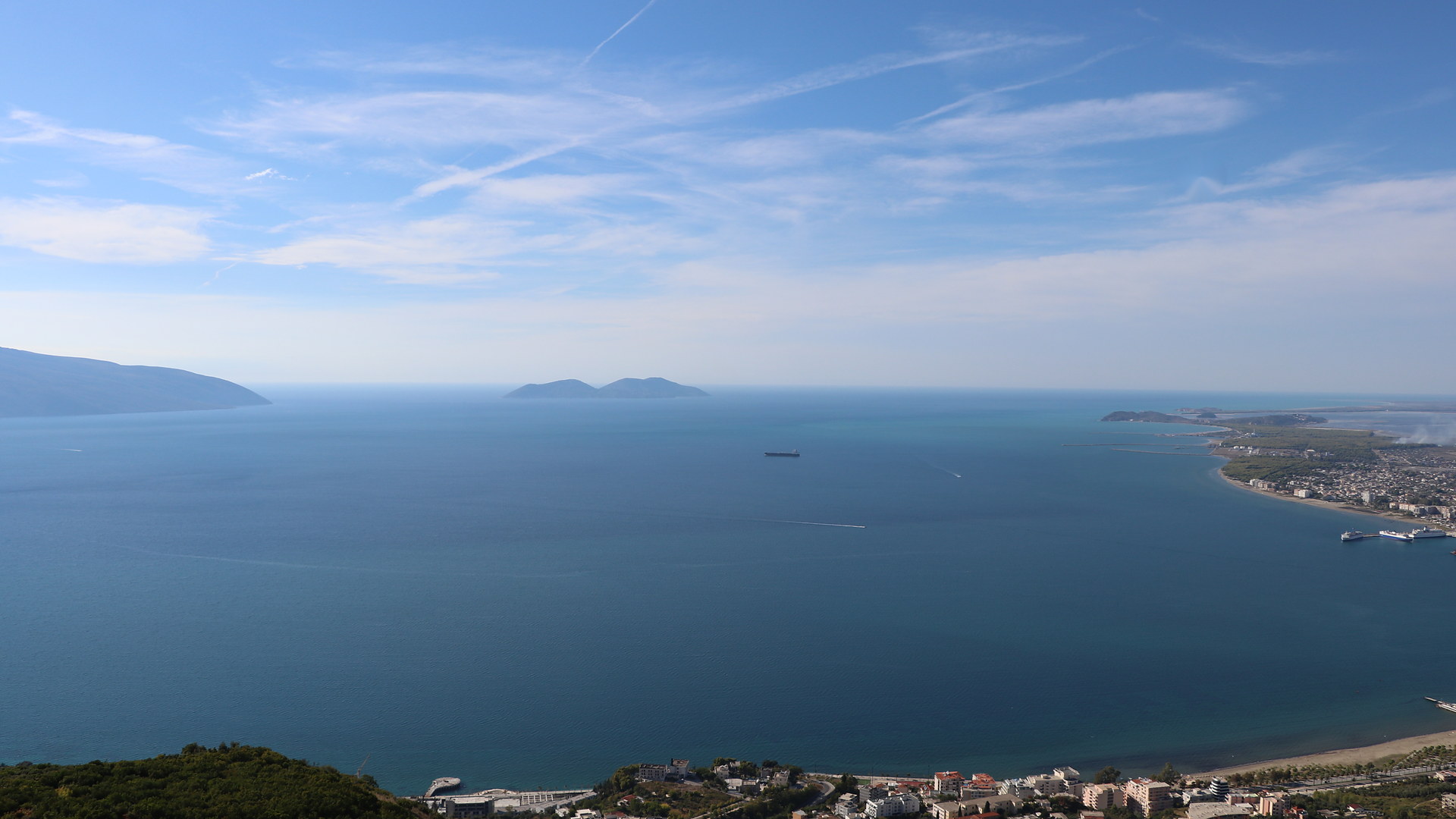
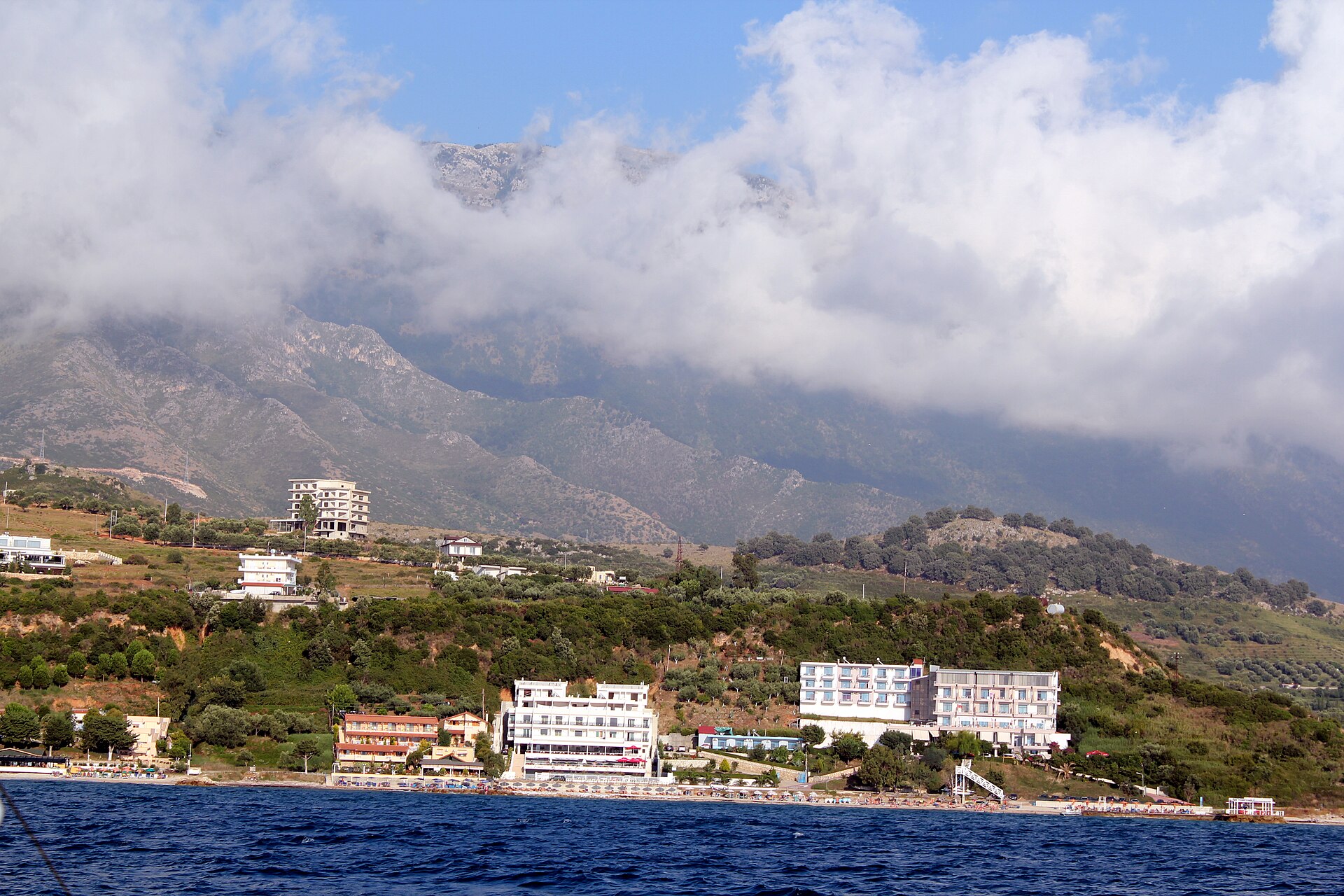
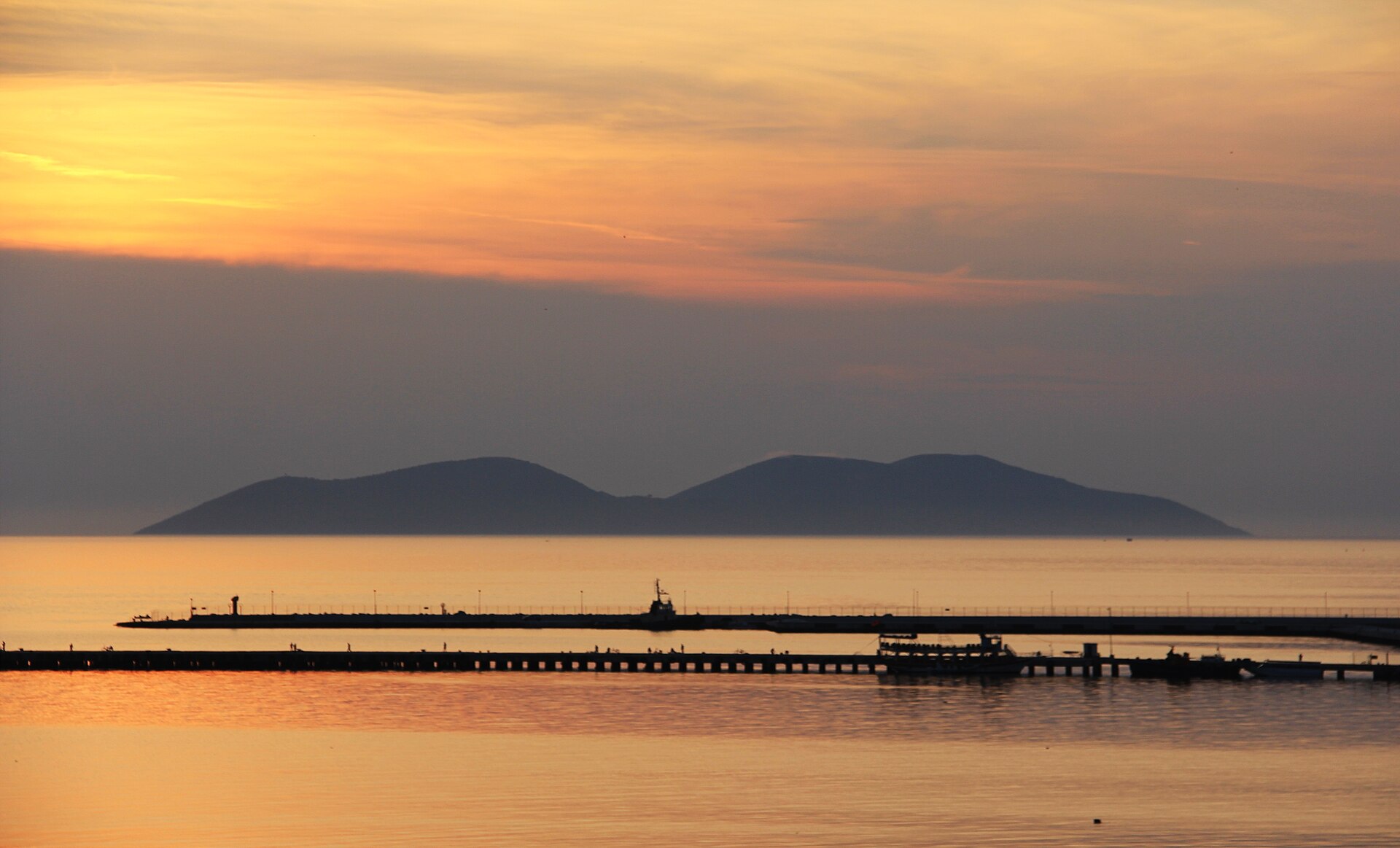
Stand on the shore at Uji i Ftohtë and look out to sea. On your left, the Karaburun Peninsula runs across the water like a long limestone wall. Ahead and a little to the right, at the mouth of the bay, lies Sazan Island, the largest island in Albania. Between the tip of Karaburun and Sazan runs a channel, the Mezokanal, and behind it the open sea.
The sun sets due west only at the equinoxes. Towards the June solstice the sunset point moves north, to the west-north-west, then travels back south through the autumn. Seen from Uji i Ftohtë:
- May to early August: the sun goes down beside or behind Sazan Island.
- Mid to late April, and mid-August to early September: it drops into the open sea of the Mezokanal, between Sazan and Karaburun.
- From September to early April: it slides south along the Karaburun ridge and disappears behind the mountains, so the bay loses the direct light a little before the official sunset time.
From the city Lungomare, a few kilometres north, the angles shift: in midsummer the sun sets to the right of Sazan, straight into open water. The mouth of the bay marks the border between the Adriatic and the Ionian Sea, so on those June evenings you are watching an Adriatic sunset. Our guide to the Strait of Otranto, where the Adriatic meets the Ionian Sea, tells the story of that border.
-
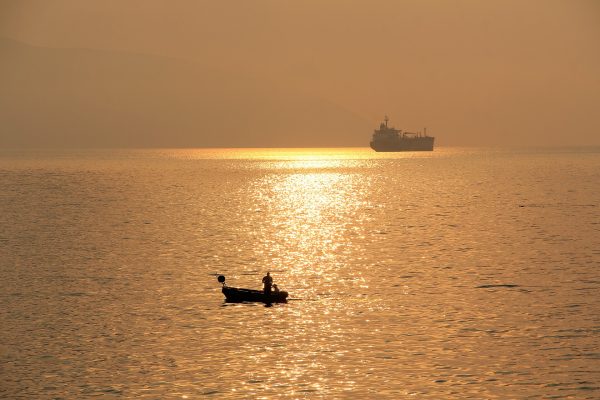
Photo: Anila amataj, CC BY-SA 4.0, via Wikimedia Commons -
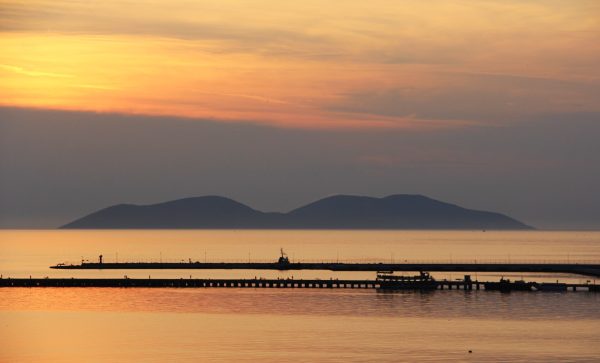
Photo: Anila amataj, CC BY-SA 4.0, via Wikimedia Commons -
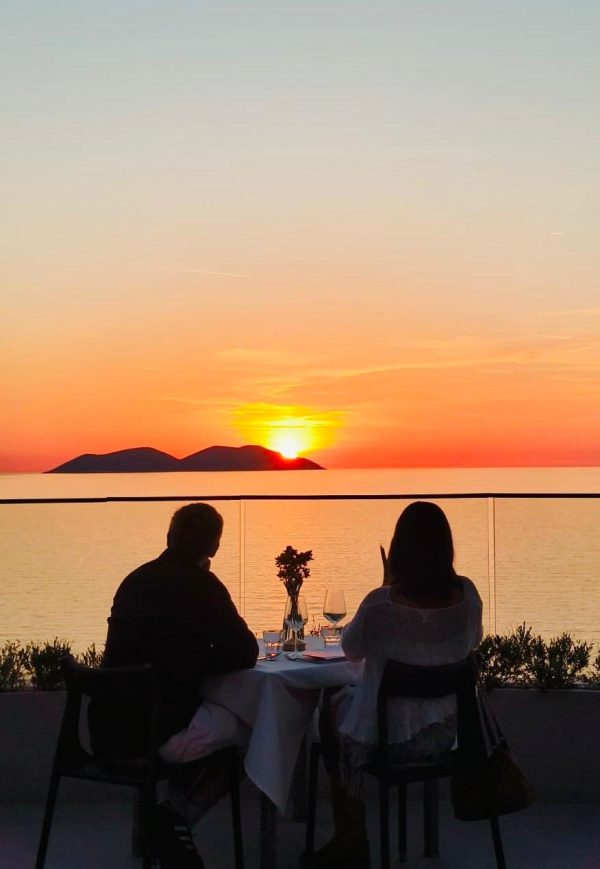
Sunset for two on the Eden by Valza rooftop.
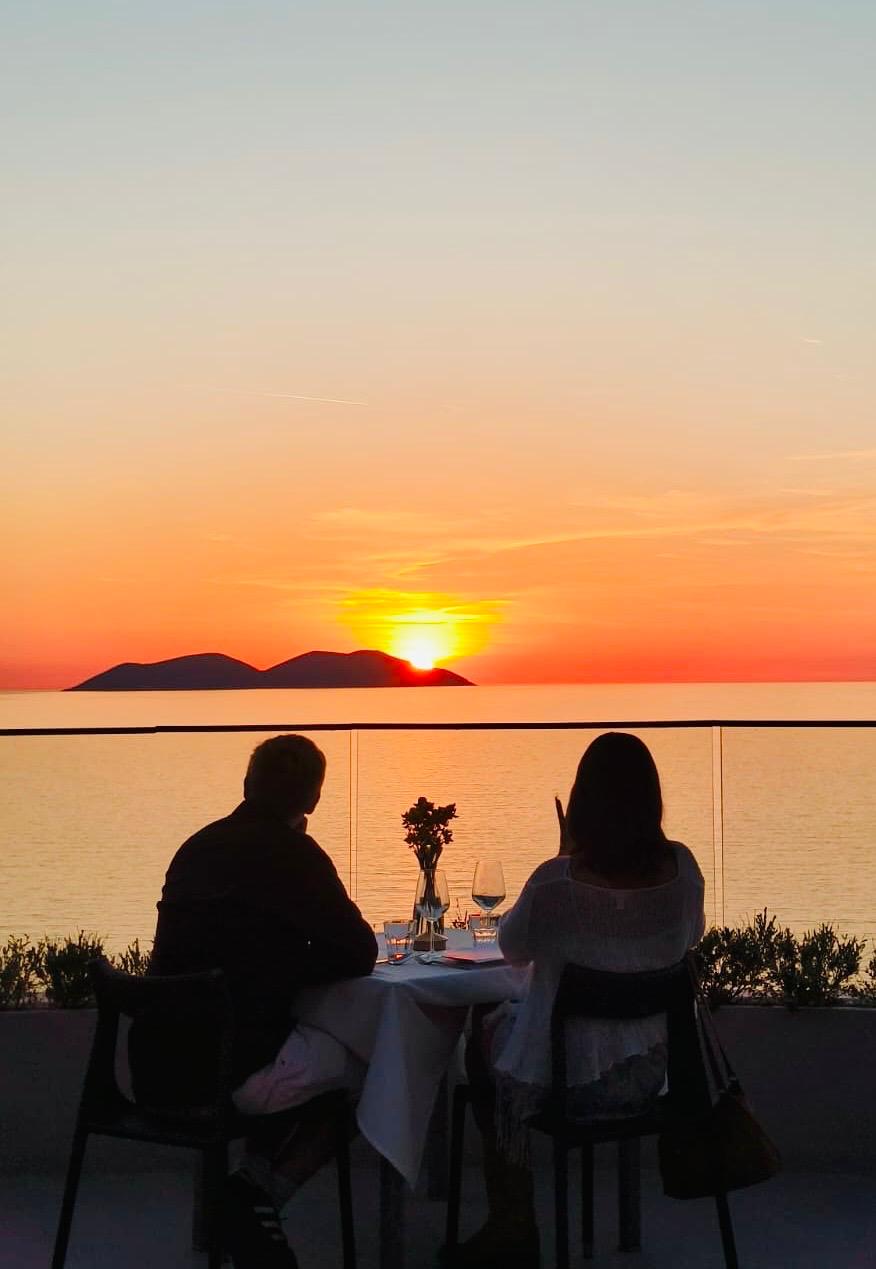
The best places to watch the sunset in Vlorë
From sea level up, every step into the hills widens the frame.
The Lungomare, at sea level
The Lungomare, Vlorë’s seafront promenade, begins in Uji i Ftohtë, and its busier section is about 1 km away. Set off an hour before sunset and walk north as the sky changes colour, with the light reflecting straight off the water beside you. Best for travellers without a car, families with pushchairs and anyone who likes a sunset with people around it. The trade-off: in July and August the city stretch is crowded and loud.
Kuzum Baba, above the old town
The hill behind the city centre is where Vlorë itself goes to watch the sun go down: the rooftops, the long curve of the Lungomare and the bay spread out below you. Kuzum Baba is also a sacred place, home to a teqe, a lodge of the Bektashi order, so keep your voice low near it, then find a seat at one of the cafés on the hill. From Valza it is about 7 km by road, a short taxi ride, or you can walk up from the centre. Best for the widest view of the city and the bay together. The trade-off: it is the city’s favourite sunset spot, so you will not have it to yourself.
Kanina Castle, the high view
Kanina Castle stands about 380 metres above the sea, above the village of Kaninë. From the citadel the bay opens towards Sazan and Karaburun, and late afternoon turns the water gold before the lights of the city come on below. There is a small car park on the north side. Best for photographers, couples and history lovers. The trade-off: it is a hilltop ruin with uneven ground; wear shoes with grip, keep a phone torch for the way back, and check current prices and opening times before you go.
The hills behind the city also carry the Vlorë bypass, the 29 km road from the end of the Levan–Vlorë dual carriageway to the road between Orikum and Himarë. The whole bay opens below it in the evening, but it is a road, not a viewpoint: stop only where you can pull right off it.
Radhimë and the coves to the south
About 11 km south along the coastal road, around 20 minutes by car, Radhimë spends its mornings on the water and its evenings on the view: as the sun goes down, Sazan and the ridge of Karaburun darken against the sky. Best for ending a beach day where you spent it. The trade-off: you need a car or a taxi back.
Llogara Pass, for the Ionian
For a completely different sunset, drive over the mountains. The Llogara Pass crests at 1,027 metres, about 42 km from Valza and around 55 minutes by car, and on the far side the Ionian coast of the Riviera falls away at your feet. The trade-off: the road down is a long chain of hairpins, and you will drive it in the dark.
Sunset from the water
The most dynamic way to follow the sun is from a boat. Trips leave from Vlorë and Orikum, and as you cross the bay the coastline keeps shifting between mountain, city and open sea. Then the engine slows and the sunset unfolds directly over the water.
The sea decides, not the timetable. Ask what happens if the wind rises, check that there are life jackets for everyone, bring a layer for the cooler breeze after sunset, and check current prices when you book. Sazan itself is still a military zone, visited only by day, so at sunset you see it from the water.
When to watch: seasons, times and the light
Vlorë has a hot-summer Mediterranean climate, with dry, hot summers and mild, rainy winters, and July is the sunniest month, with about 12 hours of sunshine a day on average. Clear sunsets are most reliable from June to September. In spring and autumn, scattered clouds catch the last light and often give the strongest colours, and the evenings are milder.
- Mid-March Around 17:50
- Mid-April Around 19:20
- Mid-May Around 19:50
- Mid-June to early July Around 20:15, the latest of the year
- Mid-August Around 19:40
- Mid-September Around 18:50
- Mid-October Around 18:05
- Mid-November Around 16:25, after the clocks go back
Check the exact time for your date, and do not leave when the sun disappears. Civil twilight, the afterglow, lasts about half an hour here, and the sky is often at its most intense in those minutes, when the bay turns from gold to pink to deep blue. On very clear evenings, watch the last sliver of sun: now and then a green flash appears just above it, usually for no more than two seconds.
What fishermen read in the evening sky
Long before anyone photographed it, sunset in Vlorë was a forecast. In oral memory, a deep red sunset over the Adriatic often meant changing winds or a more active sea during the night, and boats came back earlier. Older fishermen also looked towards Karaburun first, where waves breaking against the western cliffs could reveal the wind before it reached the harbour. Generations of fishermen in the Bay of Vlora learned to read wind, waves and seasons in the same way.
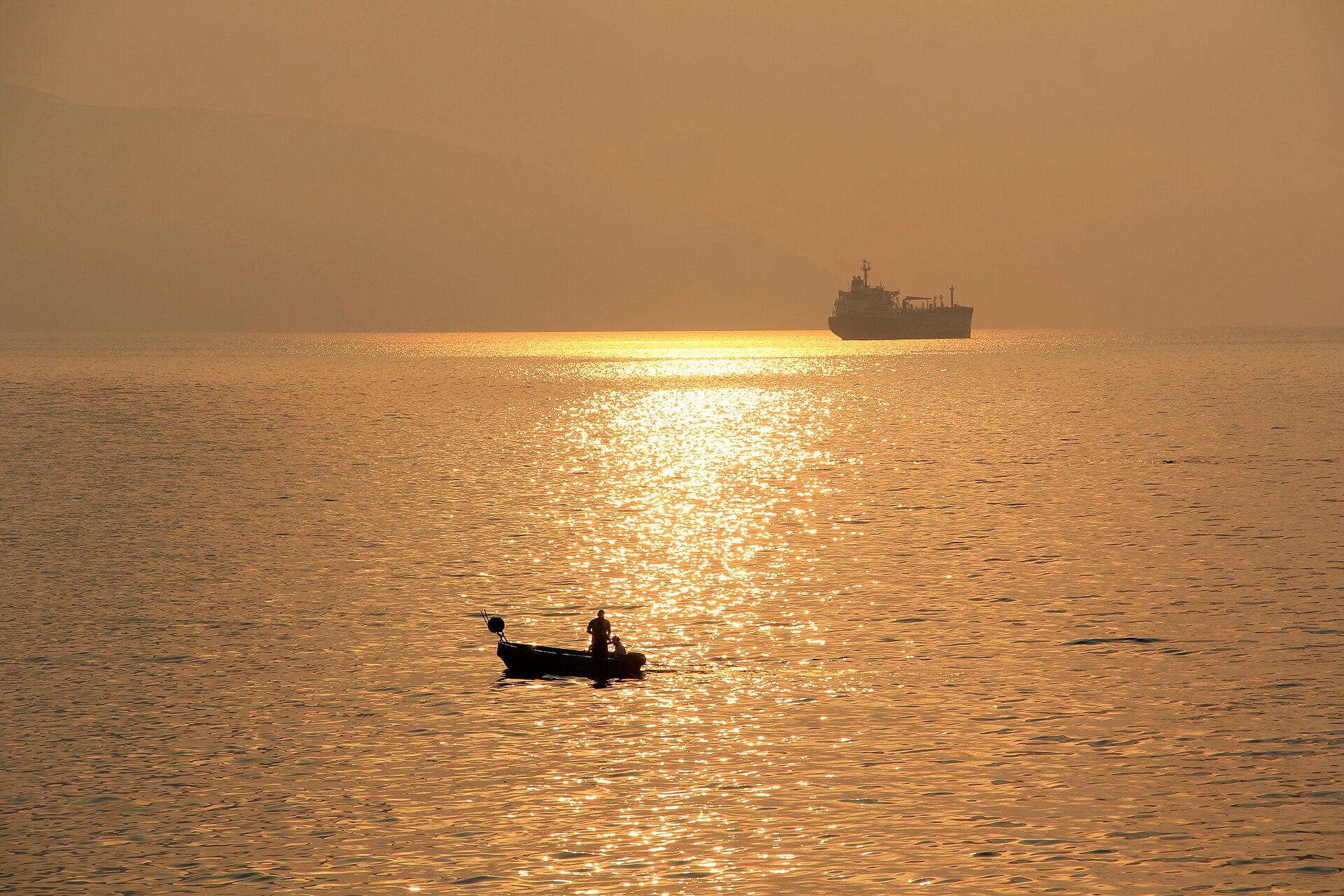
Coastal tradition gave the gentlest sunsets a name. When the sun slowly disappeared and left a golden line across the bay, it was the “hour when the sea rests”, when, as the elders used to say, “the sea becomes calm”. Sunset also marked the end of work: small boats and shoreline anglers still come out as the light fades, keeping a rhythm older than the clock.
Evening rituals by the sea
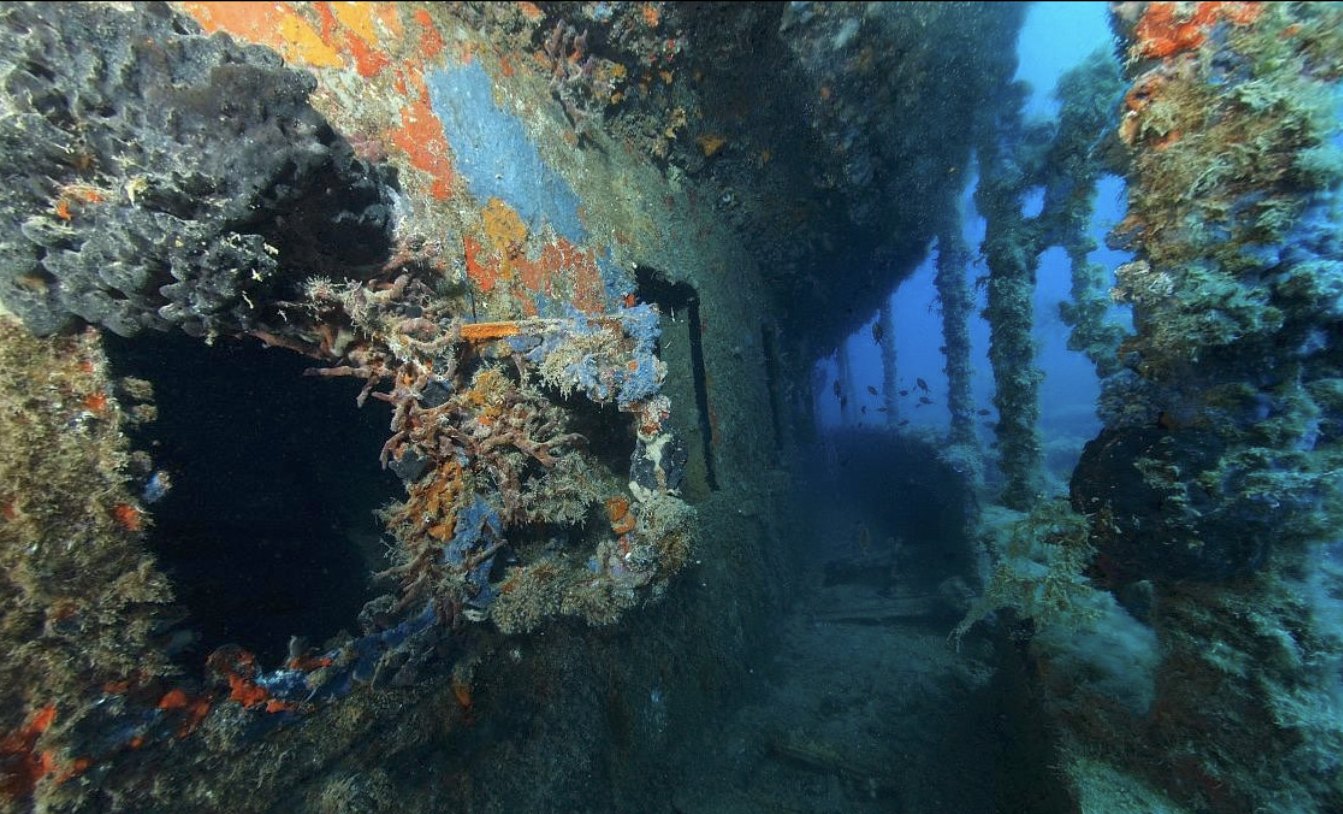
Not every sunset needs a viewpoint. Walk barefoot in the shallows, sit on the warm pebbles, or take the last swim of the day. Below the surface, evening arrives first: red and orange fade underwater while the sky still glows, and the bay changes shift after sunset. Swim at dusk only in calm, familiar water close to the shore, and never alone.
On summer days the young people of Vlorë dive from the tall rock at Kalaja Beach, Te Kalaja to locals, a few minutes’ walk along the shore of Uji i Ftohtë. Stay on the pebbles until the light goes, then choose a seaside restaurant among those with the best recent reviews.
A simple sunset evening from Uji i Ftohtë
-
Late afternoon
A swim. Te Kalaja or Te Vilat, as the beach begins to empty.
-
An hour before sunset
Start walking. Go north along the Lungomare, or take a taxi up to Kuzum Baba.
-
Sunset
Stay for the afterglow. It is the best colour of the evening.
-
Blue hour
Dinner. By the sea or on a rooftop, as the lights come on along the bay.
Did you know?
-
20:15
About the latest sunset of the year in Vlorë, from mid-June to early July
-
30 minutes
Of civil twilight after the sun goes down
-
380 m
Height of Kanina Castle above the sea
-
2 seconds
At most, for the green flash above the last sliver of sun
Test yourself: how well do you know sunset in Vlorë?
1. When does the sun set due west?
Show the answer
At the equinoxes. Towards the June solstice the sunset point moves north, then travels back south through the autumn.
2. Where does the sun set seen from Uji i Ftohtë between May and early August?
Show the answer
Beside or behind Sazan Island. From September to early April it slides behind the Karaburun mountains instead.
3. How long does civil twilight last after sunset here?
Show the answer
About half an hour. The sky is often at its most intense in those minutes, so stay after the sun has gone.
Plan your visit
Arrive early
Be there 30 to 45 minutes before sunset and stay for the half hour of afterglow.
Check the time
Look up the exact sunset time for your date: it moves from about 16:25 in mid-November to about 20:15 in June.
Getting around
Kuzum Baba is about 7 km from Valza by road, a short taxi ride. Radhimë is about 11 km south, around 20 minutes by car.
Boats
Ask what happens if the wind rises, check for life jackets for everyone and check current prices when you book.
Safety
Wear shoes with grip at Kanina Castle and swim at dusk only in calm, familiar water close to the shore, never alone.
What to bring
- A light layer for the cooler breeze after sunset
- Shoes with grip for Kanina Castle
- A phone torch for the way back
- Swimwear for a last swim or the shallows
- Water, if you head up to a hilltop
- A phone or camera for the afterglow
Sunset in Vlorë today
The sun sets to the west, over the Bay of Vlora.
Arrive 30 to 45 minutes early and stay for the afterglow.
Is a Vlorë sunset worth planning for?
Yes, if…
you like slow evenings, golden light over water and a sunset that changes with the month, whether you are a couple, a photographer or a family.
Maybe not, if…
you want the city stretch of the Lungomare quiet in July and August, or a hilltop ruin with uneven ground does not suit you.
Prefer quiet? Choose a pebble beach in Uji i Ftohtë or Radhimë.
Go deeper
Our corner of Vlorë
Valza Boutique Hotel, a 4-star boutique hotel in Uji i Ftohtë, where the city’s seafront turns into coast, looks across the bay, about 300 metres from the nearest beach. A lift takes you to the sixth-floor rooftop, where Eden by Valza faces Karaburun and Sazan with a 180-degree view of the Bay of Vlora. For a sunset dinner, arrive 30 to 45 minutes before; we recommend reserving a table in advance by phone or WhatsApp on +355 69 60 22022,.