A stone village left empty after the war, where olive trees now grow through the houses.
Old Tragjas (Tragjasi i Vjetër) is a village of roofless stone houses among the olive trees, empty since the Second World War. It lies inland from the coastal road between Radhimë and Orikum, with the last stretch on foot, and above it stands the Castle of Gjon Boçari, a Cultural Monument since 1963. Allow half a day, and wear sturdy shoes.
The village that courage emptied
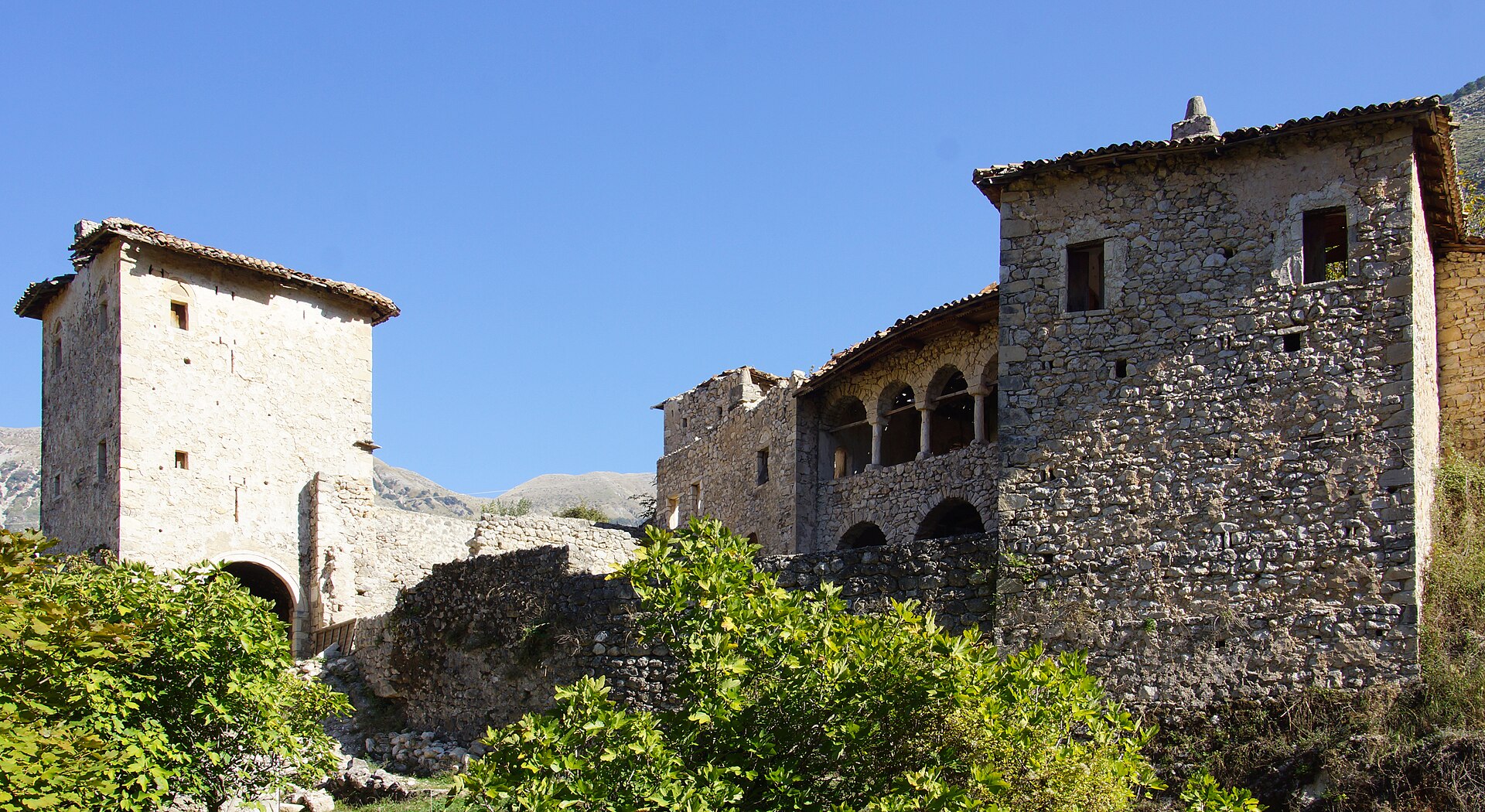
The road climbs away from the coast between Radhimë and Orikum, and the noise of the beaches fades with every bend. Then the ruins appear: roofless stone houses scattered among the olive trees, doorways open to the sky. This is Old Tragjas, Tragjasi i Vjetër, a village that has stood empty since the Second World War.
People have lived on this hillside since antiquity. On the hill of Qyteza e Sofës are the traces of an ancient settlement and several Illyrian burial mounds, with remains of buildings from the 4th to the 2nd century BC; in antiquity it was one of the fortified centres of the Bay of Vlorë, linked to Orikum. In the 15th century Tragjas joined the Albanian revolt of 1432–1436, and the Ottomans destroyed the castle of Sofa in reprisal. The old village was destroyed and later settled again.
The village kept its fighting reputation. Its people took part in the uprising of 1847, the patriot Avni Rustemi taught here in 1913, and many volunteers left Tragjas for the Battle of Vlorë in 1920.
What finally emptied it was its courage. Tragjas fought in the Battle of Gjorm in 1943, when Albanian resistance units defeated Italian troops, and it paid dearly: the village was burned by Italian forces on 7 August 1943 and again by German forces on 5 August 1944, almost a year to the day later. The survivors never rebuilt up here. They moved down towards the plain, and the old village was left to the olives and the silence.
Walk carefully: the walls are unstable, so wear sturdy shoes and keep children close.
The Castle of Gjon Boçari
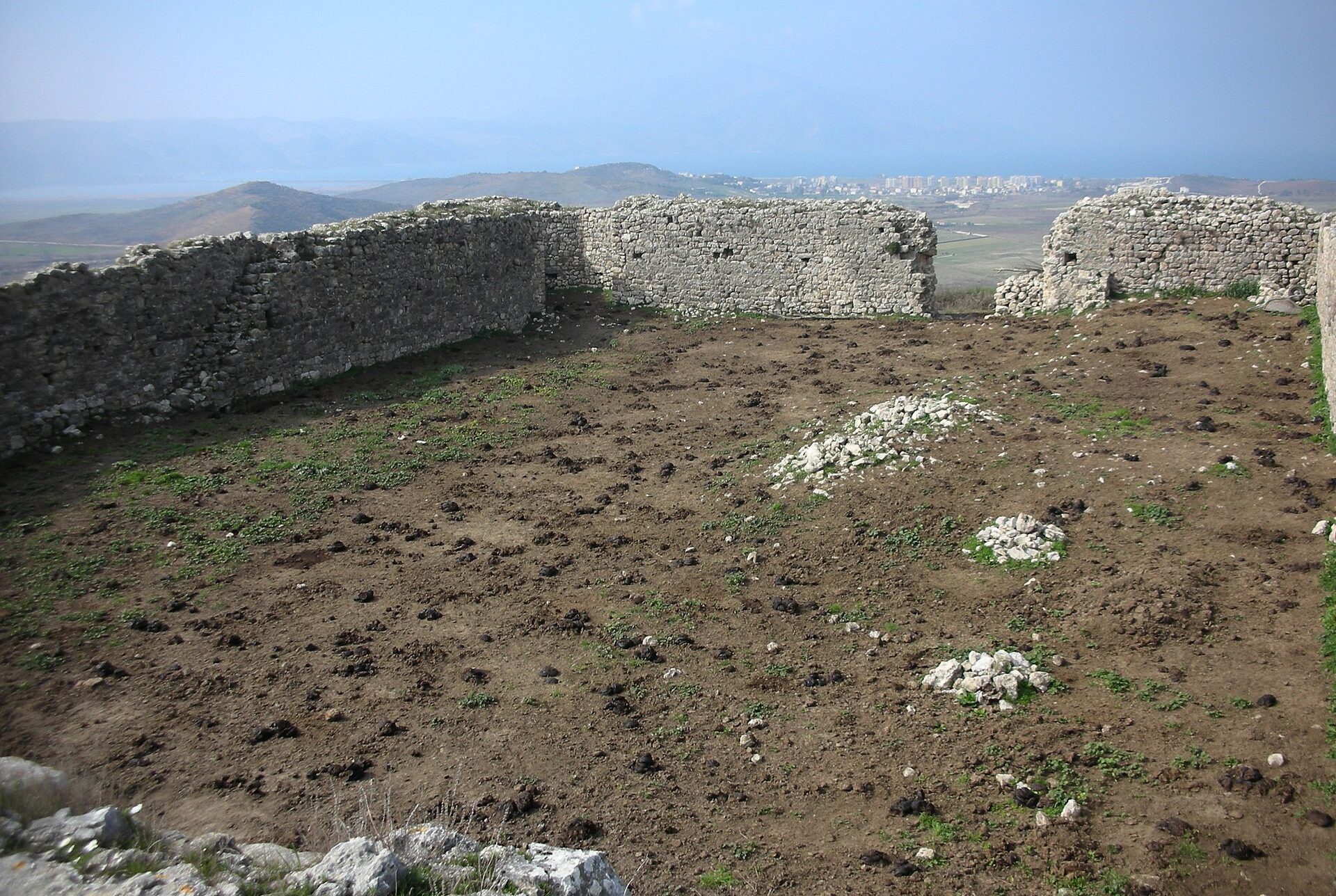
On the hill above the village stands the Castle of Gjon Boçari, named after a local figure who resisted Ottoman rule. It is a rectangle of about 30 by 18 metres, with two polygonal towers at the northern and eastern corners. The towers are open on the inside, so they work as an extension of the walls. The walls are about 1.8 metres thick and stand about 4 metres high up to the walkway. The only gate, about 2 metres wide, sits in the middle of one of the short sides, with gun loops on either side and in the lower part of the towers. From up here the castle watches the Dukat plain, Radhimë and the old roads towards the Llogara and Shën Gjergj passes.
Nobody agrees on when it was built. The Austrian scholar Carl Patsch described it in 1904. One account dates it to the beginning of the 14th century, the Albanian Encyclopaedic Dictionary records it in the 16th century, and others place it in the 16th and 17th centuries; its plan resembles the walled monastery enclosures built in Albania in the second half of the 17th century. Without an excavation the question stays open. What is certain is its status: it has been a protected Cultural Monument since 15 January 1963.
What you’ll see
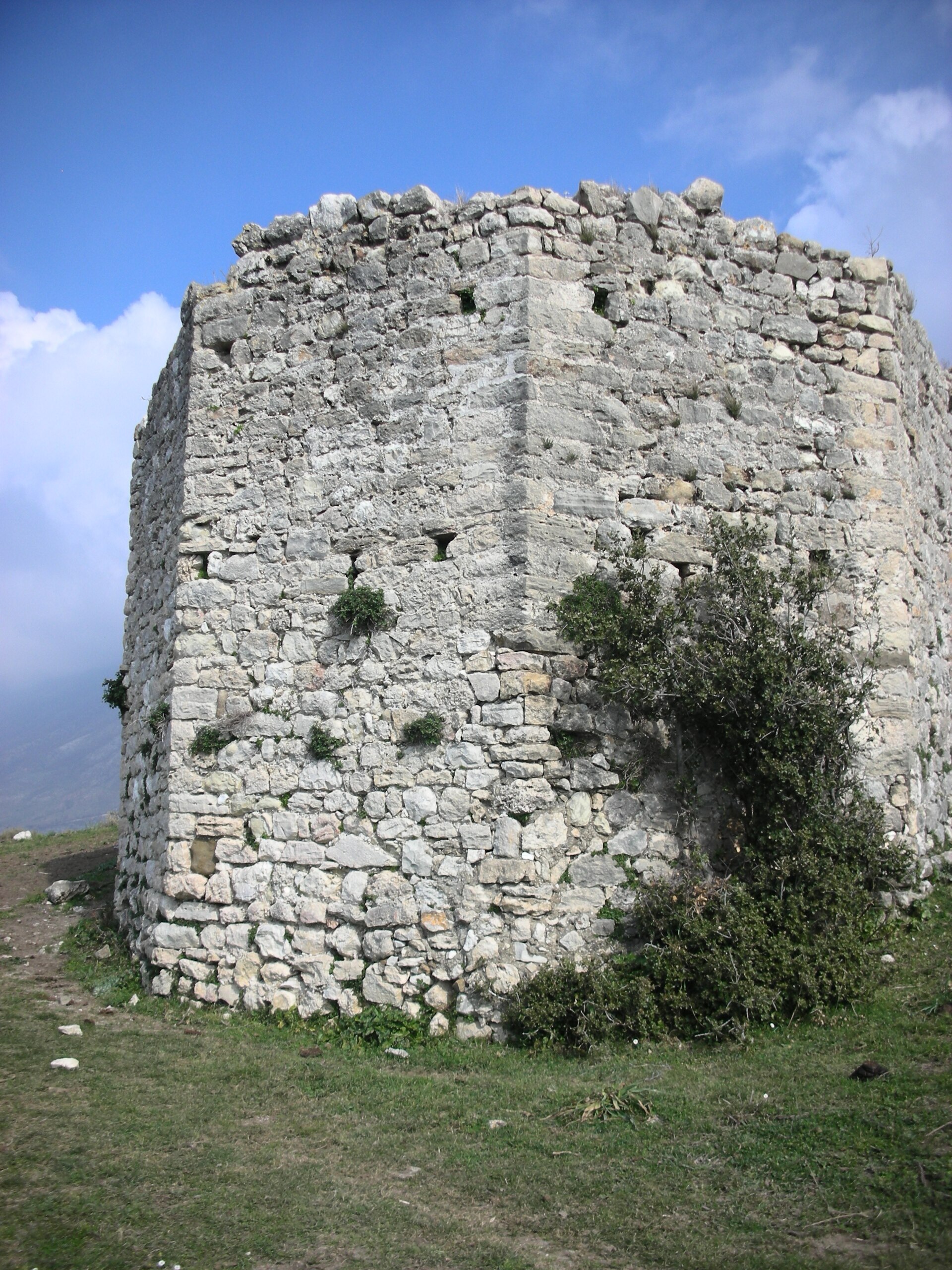
The defensive tower
One of the two polygonal towers of the Castle of Gjon Boçari, with gun loops in its lower part.
-
Roofless houses among the olives
Stone houses with doorways open to the sky, scattered among the olive trees.
-
The view over the Dukat plain
From the castle hill, the plain, Radhimë and the roads towards the mountain passes.
-
Walk carefully
The walls are unstable, so wear sturdy shoes and keep children close.
Old Tragjas in six dates
- 4th–2nd century BC
A fortified settlement stands on Qyteza e Sofës, one of the centres of the Bay of Vlorë linked to Orikum.
- 15th century
Tragjas joins the Albanian revolt of 1432–1436, and the Ottomans destroy the castle of Sofa in reprisal.
- 1847
The people of Tragjas take part in the uprising of 1847.
- 1920
Many volunteers from the village fight in the Battle of Vlorë.
- 1943
Tragjas fights in the Battle of Gjorm, when Albanian resistance units defeat Italian troops. On 7 August the village is burned by Italian forces.
- 5 August 1944
The village is burned again, by German forces, almost a year to the day later.
Old Tragjas in numbers
-
30 × 18 metres
The rectangle of the castle
-
1.8 metres
Thickness of the castle walls
-
1963 year
Declared a Cultural Monument
-
2 burnings
In August 1943 and August 1944
Where it is
Inland from the coastal road between Radhimë and Orikum, on a hillside above the Dukat plain where people have lived since antiquity. The last stretch is on foot.
What to bring
- Sturdy shoes: the old walls are unstable
- Light long trousers: olive trees grow through the houses
- Water: for a half-day outing
- Sun hat: for the last stretch on foot
- Camera: roofless stone houses among the olives
- Snack: to keep you going on a half-day trip
- Offline map: the last stretch is on foot, off the coast road
Is it worth it?
Yes, if…
you like quiet ruins among olive trees, a walk with a story behind it, or photographs of old stone towers.
Maybe not, if…
you have little time or cannot keep children close: it takes half a day, the last stretch is on foot and the walls are unstable.
Go in spring or autumn, in the morning or late afternoon, in sturdy shoes. Visiting is free.
Combine it with
Continue exploring
More places and ideas for your days around Vlorë:
- Dukat and the towers of Dervish Ali
- All attractions around Vlorë
- Vlorë in autumn: a 3-day itinerary from Orikum to Labëria
- Archaeological sites in Vlorë: Amantia, Orikum, Kanina and ancient Aulona
- Where to stay in Vlorë: our complete guide