The Secret Life Between the Rocks Octopuses, Cuttlefish and the Creatures Hiding in Plain Sight

Part I — When the Landscape Opens Its Eyes

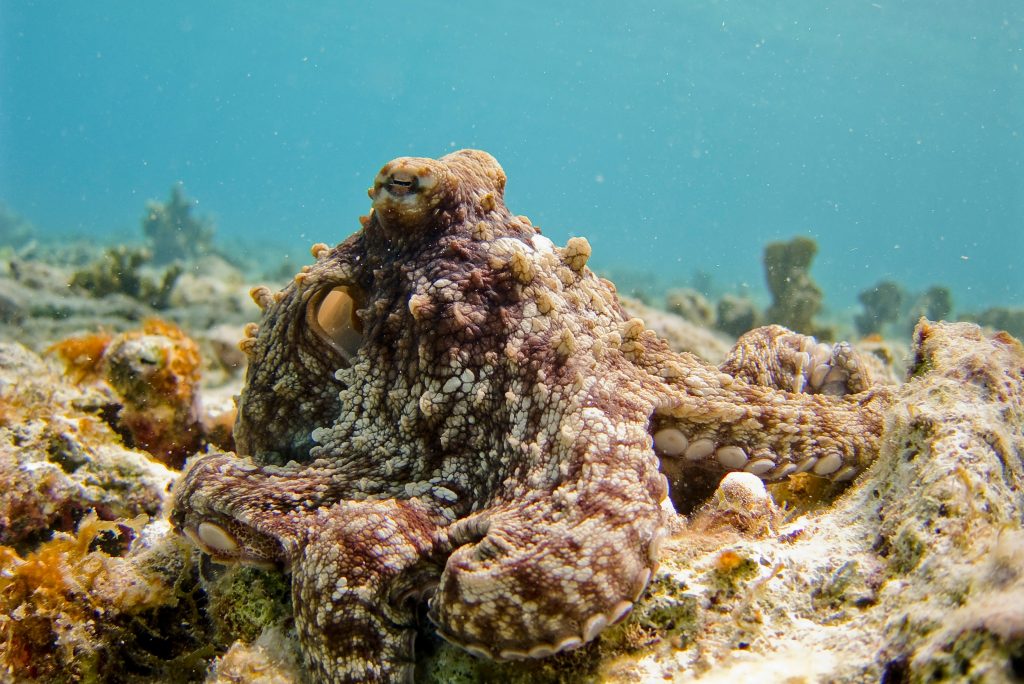
At first, it looks like an ordinary rock.

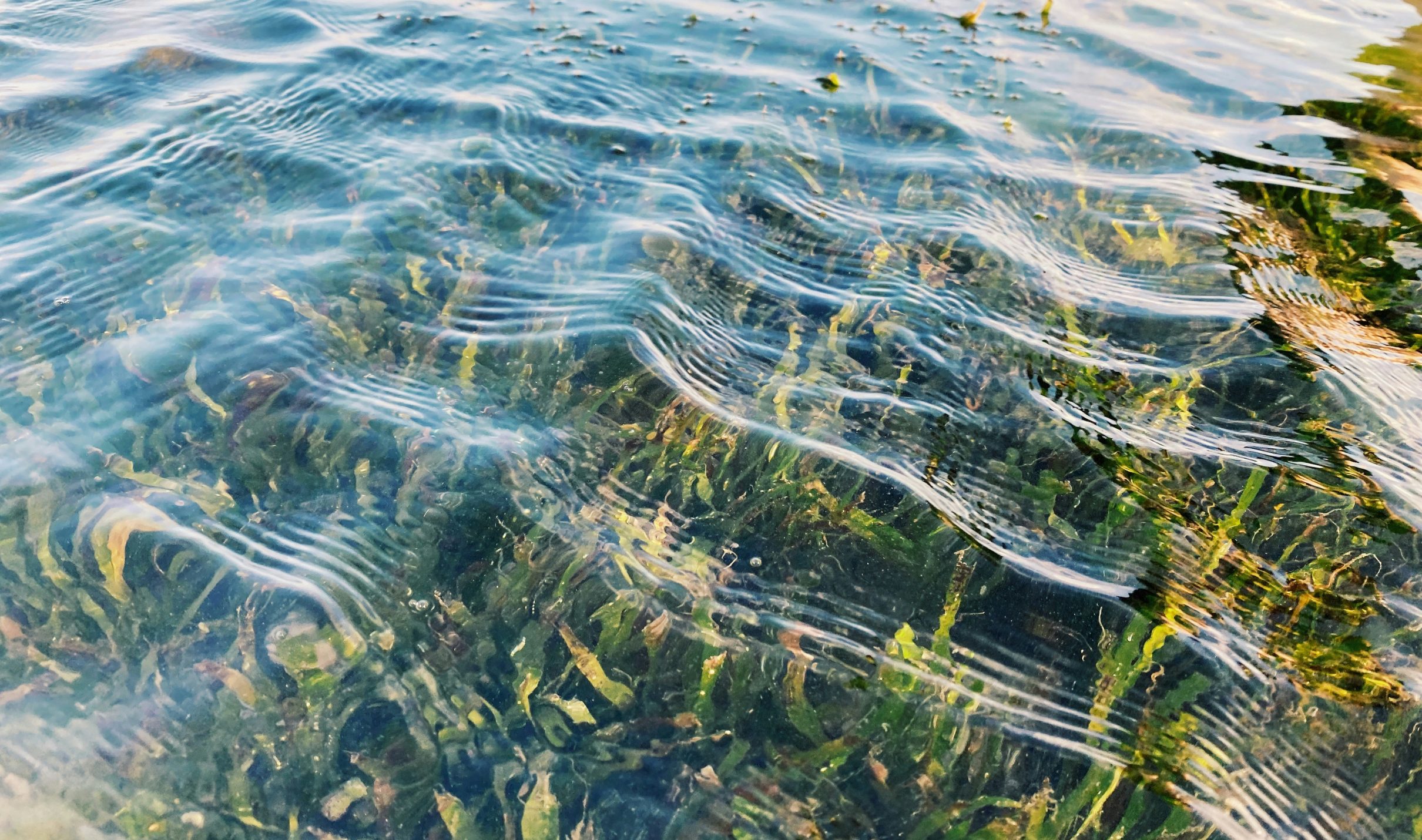
Sunlight moves across its pale surface. A few strands of algae bend near the edge, while the wavering water redraws the shadows every second. Nothing appears unusual until one detail breaks the pattern.

An eye opens.

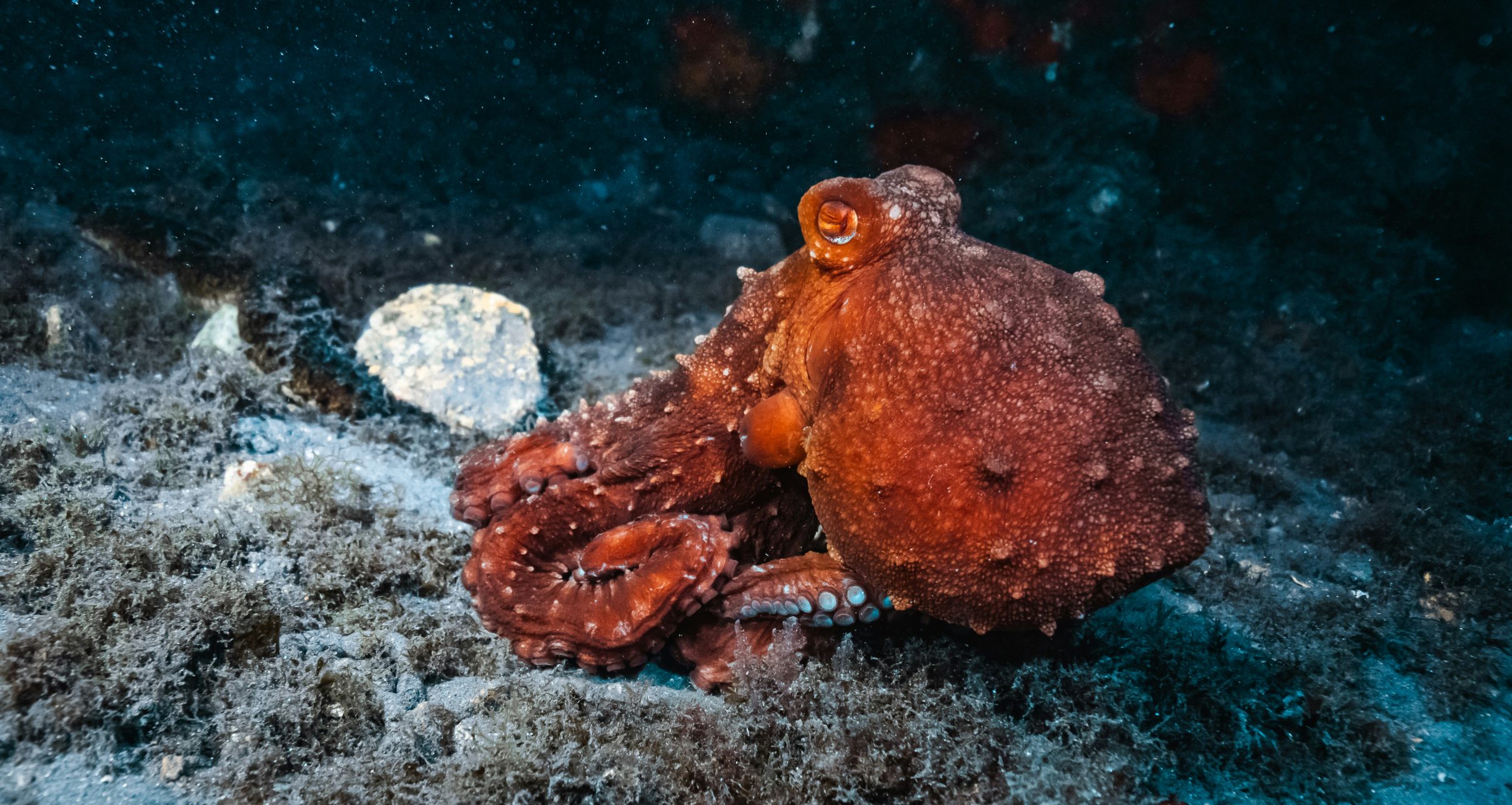
For a moment, the snorkeller remains still, unsure whether the movement was real. Then part of the stone darkens. One side lifts almost imperceptibly, revealing the curve of an arm pressed against the seabed. What had seemed to belong to the landscape slowly separates from it and becomes an octopus.

The animal was not hiding behind the rock.

It was hiding as the rock.

This is the central idea of the secret life along the Bay of Vlora’s rocky shores: much of its most remarkable marine life is not absent. It has evolved specifically to avoid being noticed.

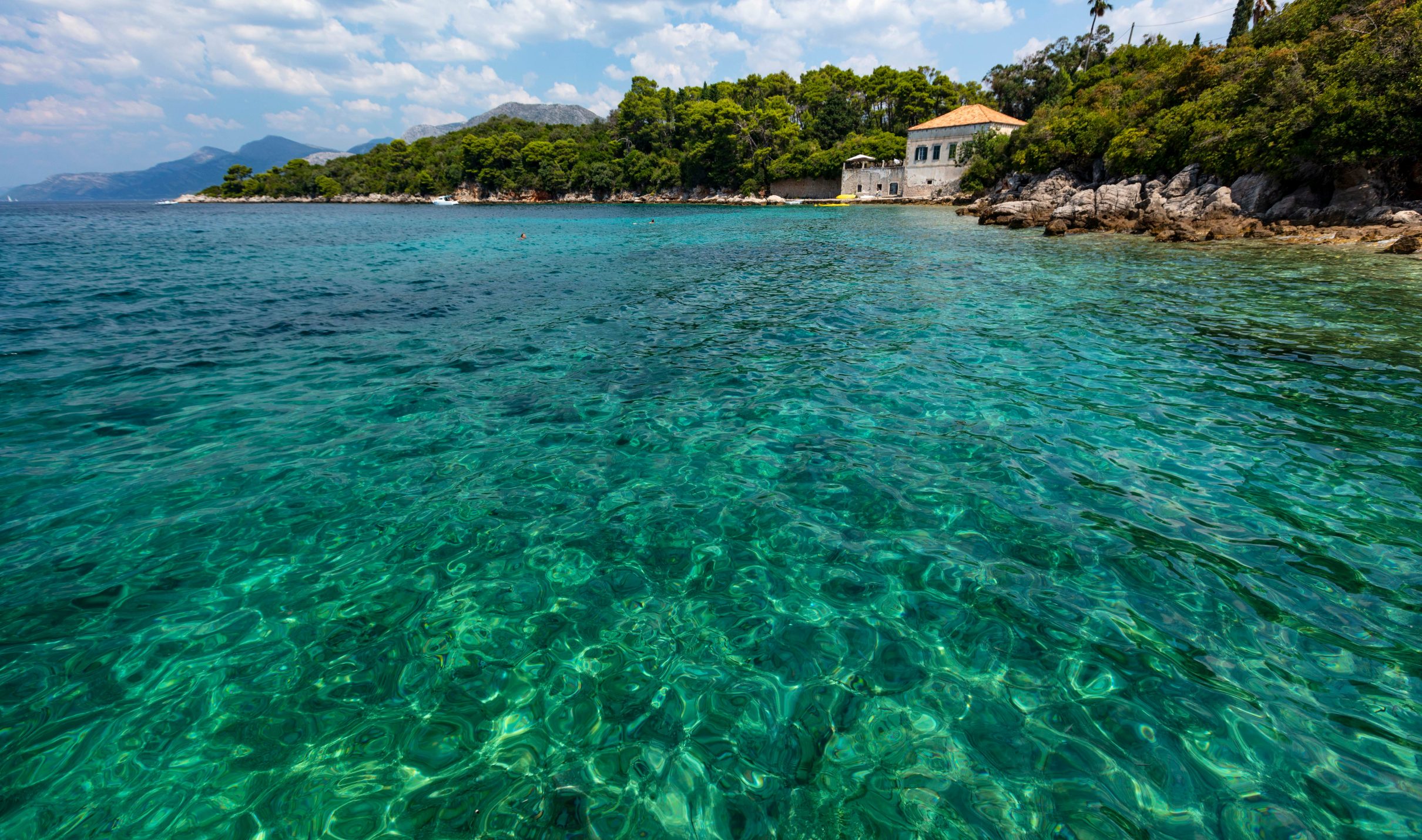
From Uji i Ftohtë and Radhimë to the fractured coast of Karaburun, the seabed is not a smooth, empty platform. Official marine assessments describe the bay as a mosaic of rocky shores, gravel beaches, submerged rock walls, caves, seagrass beds and softer bottoms. On Karaburun’s western side, cliffs continue beneath the surface, forming ledges, cavities and shaded spaces inhabited by algae, sponges, echinoderms and other marine organisms.

To a swimmer, these may look like geological details.

To the animals living there, they are architecture.

A Landscape Made of Doorways

A smooth wall offers few decisions. A broken rock creates possibilities.

One opening receives direct sunlight. Another remains shaded throughout the day. A narrow crack may be too small for a large predator but wide enough for a crab or a juvenile fish. Beneath a ledge, water moves more gently. On its exposed surface, waves deliver oxygen and food.

The rock is therefore not background. It is roof, wall, hiding place, hunting position and escape route at the same time.

Once this becomes clear, the way a snorkeller searches begins to change. Instead of scanning only the open blue for moving fish, the eye starts following edges. It pauses where pale rock meets shadow, where a small hole interrupts a flat surface or where several shells have gathered in a place that does not look accidental.

The hidden world often reveals its presence before revealing its body.

An octopus may occupy a natural cavity, shelter beneath a stone or modify an opening using movable material. Research on common octopuses has shown that suitable den structure can influence where they settle, and that they may use rocks, shells and even human-made objects to create or reinforce shelter. Many octopus species also leave hard remains of prey near their dens, producing small accumulations often called middens. (PMC)

To an inexperienced swimmer, opened shells outside a crevice may appear random.

To a patient observer, they can resemble a doorstep.

This is one of the most satisfying discoveries in Mediterranean snorkelling:

You may find evidence of an octopus before you find the octopus itself.

Arms That Read the Rock

An octopus does not understand its surroundings through vision alone.

Its arms enter cracks where its eyes cannot follow. Hundreds of suckers grip uneven surfaces, examine textures and collect chemical information from what they touch. Scientists have identified specialised chemotactile receptors in octopus suckers that respond to compounds on underwater surfaces—a sensory system often described as a form of “taste by touch.” (Cell)

The idea is difficult to imagine from a human perspective.

We tend to separate touching, tasting and seeing into distinct experiences. For an octopus exploring a rocky seabed, they form part of one continuous investigation. An arm can move around a corner, test a narrow opening and detect traces of possible prey while much of the body remains safely outside.

The animal does not merely reach into the stone.

It reads the stone with its body.

This is why the octopus seems so perfectly suited to the fractured Mediterranean coast. A rigid animal must approach a crevice from outside. An octopus can send part of itself inside, gather information and withdraw without exposing its whole body.

Its softness is not a weakness.

It is a way of entering a landscape that other animals cannot.

Skin That Stops Looking Like Skin

Camouflage is often explained as a change of colour, but octopuses and cuttlefish do something more complex. Pigment cells alter visible patterns, reflective structures influence brightness, and muscular papillae can raise the skin into a rougher three-dimensional surface. The body can become lighter, darker, smoother or more irregular according to the setting around it. Research on cephalopod camouflage shows that colour, contrast, reflection and texture work together to disrupt the animal’s recognisable outline. (PubMed)

The objective is not always to reproduce every detail of the rock.

It is to stop looking like an animal.

Predators and prey search for familiar forms: an eye, a continuous edge, a symmetrical body or movement separating one object from another. Camouflage breaks those expectations. A body becomes a collection of patches, shadows and false boundaries until the observer no longer knows where the animal begins.

Then it moves.

That moment is unforgettable because the transformation happens in reverse. A piece of seabed gathers itself into a living form. Stone becomes skin. Shadow becomes an arm. The landscape appears to wake up.
Part II — The Animal Suspended Above the Sand

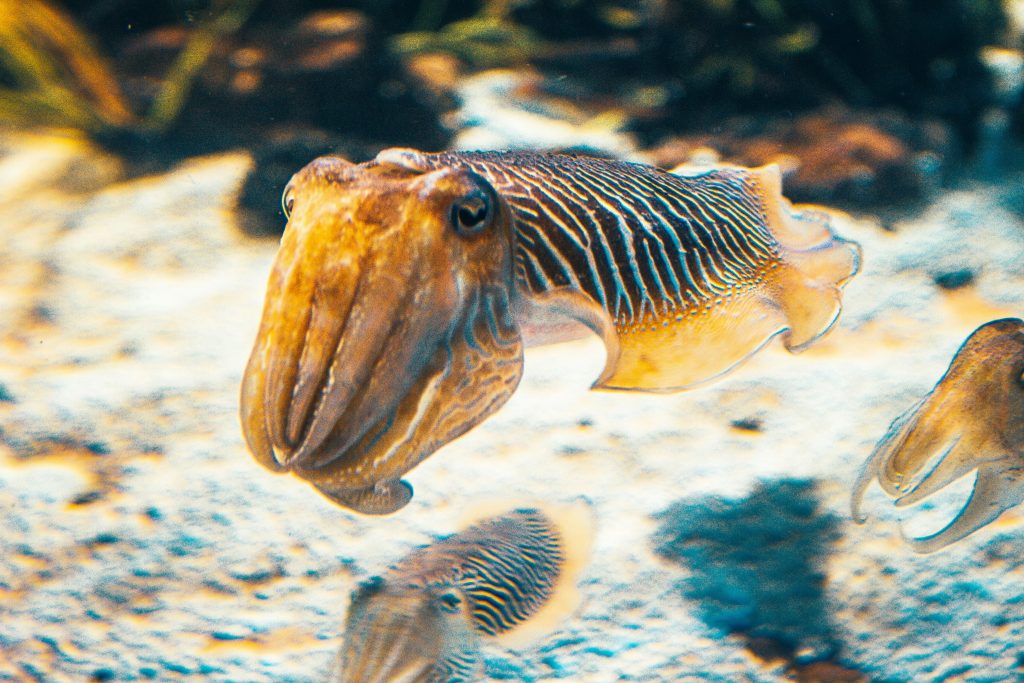
The cuttlefish hides differently.

It is not a fish but a cephalopod mollusc, related to octopuses and squid. Instead of pressing itself into a rocky crevice, it may hover just above sand, shell fragments or vegetation, holding its position with such precision that it appears almost detached from ordinary movement.

A narrow fin runs around the body, producing small travelling waves that allow delicate corrections without the sudden strokes associated with most fish. Inside lies the cuttlebone, a lightweight internal shell built from many chambers. Its complex structure functions as a buoyancy device, helping the animal regulate its position in the water. 

The result can feel unreal.

A cuttlefish remains almost motionless above the seabed, neither resting nor visibly swimming, while soft waves pass along the edge of its body. It seems less like an animal moving through water than a thought held in place.

The common cuttlefish, Sepia officinalis, is recorded among the marine species caught in the wider Vlora region, where fishing communities from Vlora, Radhimë, Orikum and Dukat work both offshore and in shallower coastal waters.

Yet an animal may be present without being obvious. Against pale sand, it can become lighter and smoother. Over broken stones or shells, dark and light areas divide the body into shapes that no longer resemble its real outline.

The empty seabed may be watching you.

A Living Screen

Cuttlefish skin is one of the most dynamic visual surfaces in the sea.

Studies of Sepia officinalis show that the animal uses pigment cells, reflective layers and muscular papillae to change colour, brightness, pattern and physical texture. Visual cues from the surrounding environment help determine the response. (PubMed)

On uniform sand, the body may become pale and relatively smooth. Against high-contrast rubble, its pattern can break into bold patches. Papillae may rise from the skin, reducing the smooth outline that would otherwise betray the animal against a rough surface.

This is camouflage as active interpretation.

The cuttlefish does not carry one disguise. It examines the scene and produces a visual response across its body. When it crosses from pale sand towards darker vegetation, the pattern can begin changing before the animal has completed the journey.

The skin seems to anticipate the landscape beneath it.

But even the most effective disguise may contain one imperfect detail. An eye stands slightly above the sand. A fin ripples along what looked like a flat stone. A shadow remains in the wrong place as the surface light moves.

Animals designed not to be seen are often discovered through the one small part of the illusion that fails.

The Smaller Lives Around Them

Octopuses and cuttlefish become the protagonists because of their intelligence and dramatic transformations. Yet the rocky coastline contains many quieter specialists solving the same problem in different ways.

A blenny watches from a hole barely wider than its head. A goby rests against the seabed until its outline becomes indistinguishable from sand and stone. A hermit crab crosses an exposed area carrying the discarded shell of another animal. Shrimp become nearly transparent against shaded rock, while sea urchins occupy hollows where their spines merge with darkness.

Marine surveys of Karaburun–Sazan have recorded rocky communities containing sponges, sea cucumbers, sea stars, sea urchins, marine worms, gastropods and numerous algae. Some locations contain richly structured habitats, while others show the effects of fishing pressure, pollution, invasive species and overgrazing by sea urchins.

The scene is therefore not a perfect aquarium arranged for visitors.

It is a living coast with abundance, damage, recovery and competition occurring side by side.

Each animal has evolved a different answer to exposure. One becomes the colour of the background. Another disappears inside it. One freezes. Another escapes into an opening too narrow for its pursuer. The hermit crab carries its protection. The sea urchin turns a hollow into permanent defence.

The seabed becomes an entire library of strategies for avoiding attention.

What the Experienced Eye Notices

An experienced coastal observer may not begin by looking for an animal.

They look for what is out of place.

Repeated observation teaches the eye what ordinary rock, sand and algae should look like. Once the pattern becomes familiar, a small irregularity acquires meaning. Several shells lie outside a single opening. A patch of colour does not move with the vegetation. A shadow has an edge that seems too controlled. One stone appears to be breathing.

This kind of knowledge can seem almost intuitive when seen in fishermen or divers who have spent years around the coast. It is not magic. It is accumulated attention.

The experienced observer does not necessarily see more objects than everyone else.

They recognise which object deserves a second look.

That principle transforms snorkelling. Instead of swimming quickly in search of spectacle, the visitor learns to remain beside one promising section of rock. After a minute, small fish return. After another, a crab moves. Then an eye appears inside a crevice that previously seemed empty.

The sea rewards familiarity more often than speed.

A Rock Is Never Only a Rock

Human vision divides scenes into subject and background. The animal becomes the subject; the stone disappears behind it.

Underwater ecology does not recognise that distinction.

The shape of a rock controls how light enters a cavity, how water circulates and which animals can fit inside. Algae and sponges colonise its surface. Molluscs graze across it. Small predators wait near its edges, while prey use the same edges as escape routes.

Remove the animal and the rock remains habitat.

Remove the structure of the rock and many animals lose the conditions that allowed them to remain there.

This is why turning over stones for photographs is more disruptive than it appears. A shaded underside may hold animals or eggs adapted to darkness. Once exposed, the temperature, light and vulnerability of the space change immediately. Official assessments of the Karaburun coast have warned that destructive harvesting and illegal collection can impoverish rocky habitats and fragment species-rich shallow communities.

A snorkeller sees one object.

The marine community experiences a house.

Part III — Learning to See Without Disturbing

The best technique for finding hidden marine life is surprisingly simple:

Stop searching for the whole animal.

Look for one eye, one moving edge or one texture that does not match the stone around it. Follow the boundaries between light and shade. Observe the entrances to crevices from a respectful distance. Notice whether shells have gathered nearby, but do not assume every pile belongs to an octopus.

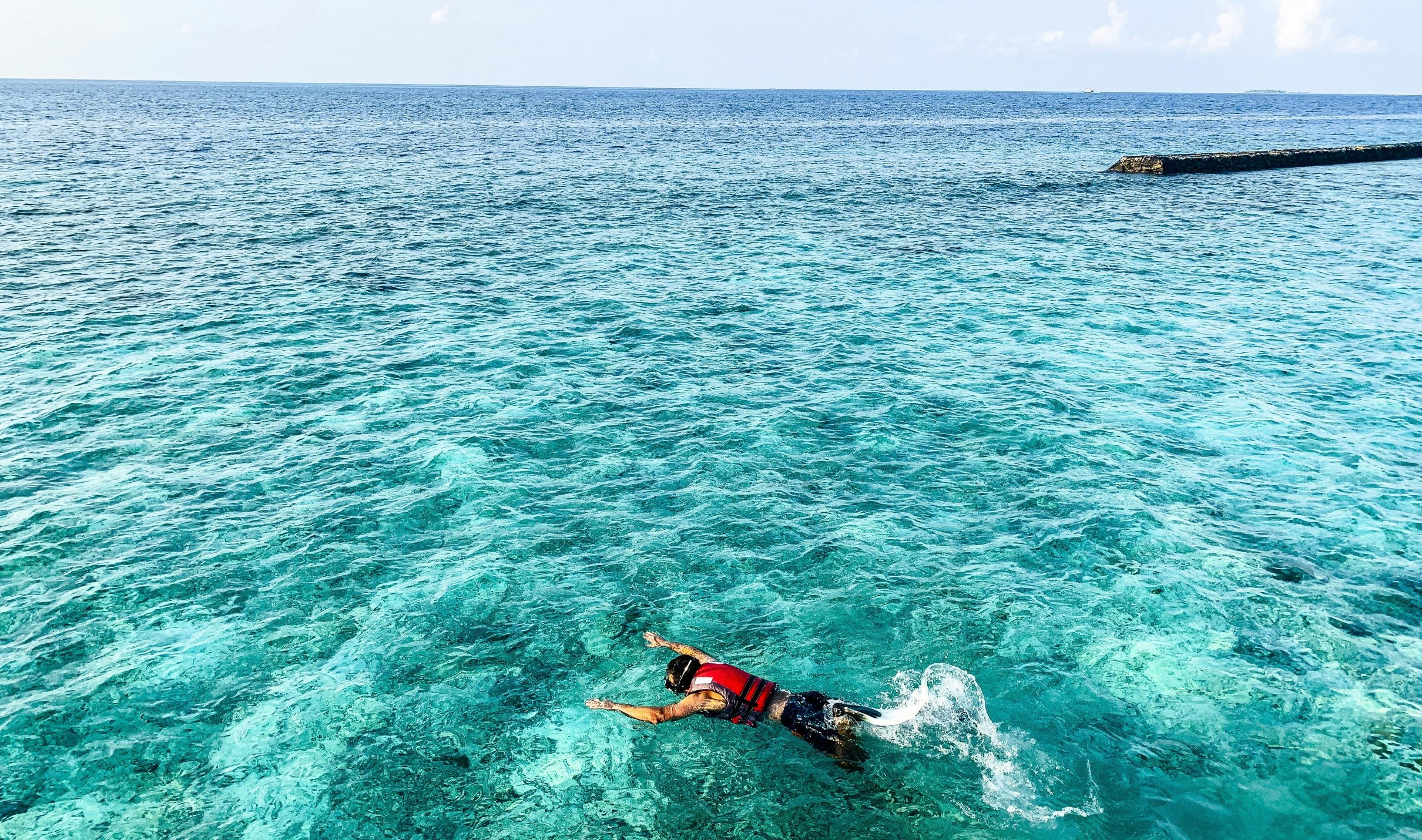
Move slowly enough that your shadow does not repeatedly cross the seabed. Fast fin movements frighten animals and disturb sediment, making the details more difficult to see. Floating quietly beside the rocks is usually more productive than chasing every movement.

Calm mornings often provide clearer outlines and gentler surface light, particularly along sheltered stretches of the eastern Bay of Vlora. Conditions remain more important than the hour, however. A rocky shore that is comfortable during calm weather can become unsuitable when waves begin pushing swimmers towards stone.

Observation begins with respecting both the sea and your own limits.

Never Reach into the Unknown

Rocky habitats invite curiosity, but they should be approached with restraint.

Do not place a hand inside an opening that the eye cannot inspect. Do not lift rocks, draw animals from shelters or try to touch an octopus because it appears calm. Crevices may contain sharp surfaces, sea urchin spines or animals defending the refuge they have chosen.

Octopuses and cuttlefish generally rely on camouflage, concealment or escape. A rapid change of posture, sudden darkening, retreat or release of ink indicates that the observer has come too close.

Ink is not a performance.

It is an emergency response.

The best encounter is not the one in which the swimmer forces the animal to reveal everything. It is the one in which the animal chooses to remain because the swimmer has not become a threat.

Leave the Clues Where They Belong

A patterned shell outside a crevice can feel like a souvenir waiting to be collected.

It may also be shelter for a hermit crab, material used around a den or evidence of feeding. Even an apparently empty shell remains part of the habitat’s physical structure. The official Vlora marine assessment notes that collecting marine curios such as shells can contribute to ecological imbalance, while destructive removal of organisms from rocky shores can deplete the communities living there.

Leave stones in place.

Leave shells where the sea has placed them.

Take photographs without rearranging the scene.

This does not reduce the experience. It deepens it. The visitor is no longer treating the underwater world as a collection of objects available for possession, but as a network of relationships that continues after the swimmer returns to shore.

Intelligence Without a Human Shape

Octopuses fascinate people partly because they show clear behavioural complexity within a body organised very differently from ours.

Their arms explore independently across uneven surfaces. Suckers collect mechanical and chemical information. The body can pass through narrow openings because it lacks a rigid external or internal skeleton apart from the hard beak. Skin changes appearance, while dens may be selected, excavated or modified with available material. 

The cuttlefish offers another form of complexity. Its eyes analyse the environment, its nervous system translates visual information into dynamic skin patterns, and its chambered internal shell helps hold the body at a precise level above the seabed. 

Neither animal needs to resemble a mammal for the encounter to feel profound.

Their difference is the point.

They reveal that sophisticated perception and decision-making can evolve inside bodies built according to completely different rules. When an octopus looks back from a crevice, the emotional force comes from both recognition and distance.

There is awareness behind the eye.

But it belongs to another kind of mind.

Conclusion

Most visitors enter the Bay of Vlora looking towards the open blue.

The secret life of the coast asks them to look closer.

Between the rocks, an octopus may be examining the seabed with its arms while remaining almost indistinguishable from stone. A cuttlefish may hover above the sand, supported by an internal shell while its skin rearranges colour and texture. A blenny watches from a hole smaller than a coin. A sea urchin occupies the same hollow day after day. A hermit crab carries the architecture of another animal across the seabed.

None of them is trying to be discovered.

That is precisely what makes the discovery unforgettable.

The rocky coast appears still because human eyes are trained to recognise movement and obvious forms. Once its patterns become familiar, stillness begins to look different. A shadow may be occupied. A shell may mark a doorway. A stone may open an eye.

The landscape has not suddenly filled with life.

It was already full.

The swimmer has simply learned that beneath the Mediterranean, the most extraordinary creature in view may be the one pretending not to exist.

Editorial Note

This article is part of the MAREOGRAPH Editorial Project, an independent editorial initiative founded and developed by Valza Boutique Hotel to document the landscapes, history, biodiversity, culture and living systems of Vlora and the Albanian Mediterranean through research-based storytelling.

Experience the Place

The rocky shallows around Uji i Ftohtë, Radhimë and the southern Bay of Vlora invite slow, responsible observation of marine life hiding close to shore. Valza Boutique Hotel offers a thoughtful base near this coastline, while Eden by Valza overlooks the same bay whose apparent stillness conceals an intricate world beneath the surface.

www.valza.al