Where the Sea Meets the Lagoon Sea Turtles, Flamingos and the Hidden Nurseries of Narta–Zvërnec

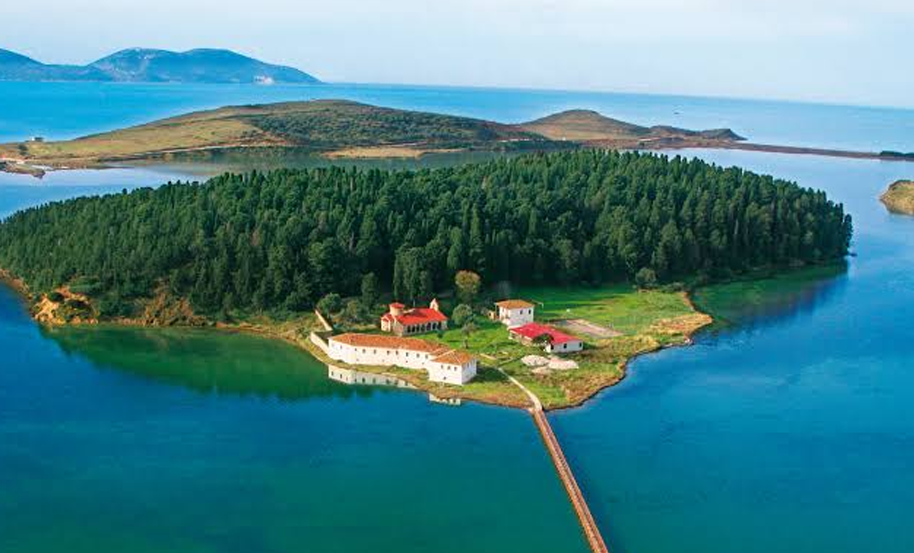
Most visitors arrive at Zvërnec looking towards the wooden bridge. It crosses the shallow lagoon towards an island of dark trees, disappearing beneath the forest before reaching the monastery. In the late afternoon, the water can become so still that bridge, sky and shore seem to exist twice—once above the surface and once inside it.

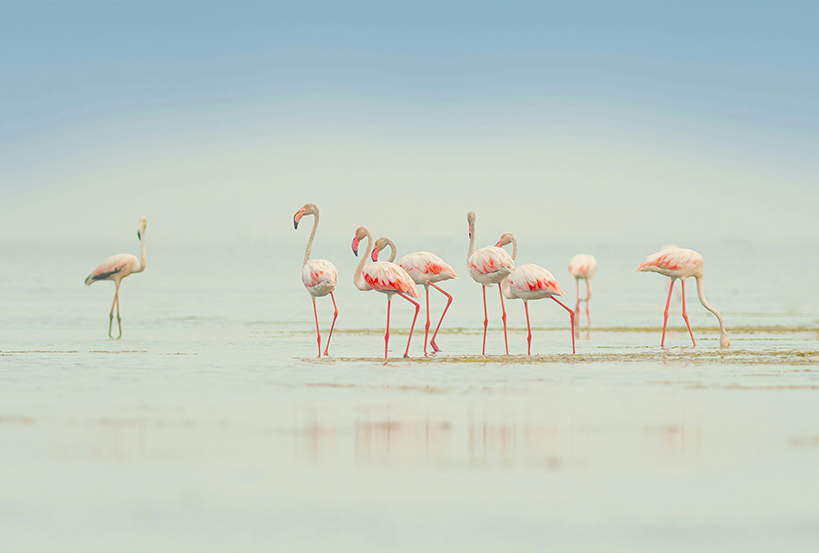
A child walking ahead stops when the flamingos begin to move. At first, only a few birds lift their heads. Then part of the flock runs across the water, long legs touching the surface while broad wings reveal flashes of black beneath the pink. More birds rise behind them until the quiet lagoon appears to loosen from the earth and enter the sky.

The child watches until the flock settles farther away, then asks a question that seems to belong to another landscape.

“Are the turtles here too?”

The answer requires a larger map. Sea turtles do not nest beside the bridge or inside the lagoon. Their story belongs to the outer sandy coast of the wider Vjosa–Narta landscape, where dunes separate wetlands from the open Adriatic. Loggerhead nesting has been documented on beaches north and south of the Vjosa River mouth. A turtle seen swimming through coastal water may later depend on dry sand that visitors at the monastery cannot see. (CMS Convention)

That is the first revelation of Narta–Zvërnec. It is not one attraction surrounded by scenery. It is a connected system of lagoon, salt pan, forest, dune, beach and sea. A flamingo arrives from the sky. A turtle emerges from the water. Both approach land only when they are prepared to trust it with the next generation.

One Landscape, Two Nurseries

From the bridge, the lagoon appears naturally separated from the Adriatic. The forest creates one horizon, the dunes another. Yet these habitats are connected by water, wind, sand and the movement of animals. A bird may feed in the lagoon, rest on a salt-pan embankment and shelter among trees during the same day. A sea turtle may spend almost its entire life in marine water, then require an undisturbed beach for the few hours in which she lays her eggs.

Humans divide the coast into categories: wetland, forest, beach and sea. Wildlife experiences a sequence of places needed at different moments. This is the central idea of Narta–Zvërnec:

A protected landscape succeeds not by preserving one beautiful view, but by keeping the routes between habitats alive.

The wider landscape lies on the Adriatic Flyway and supports more than 200 recorded bird species, including breeding, wintering and migratory populations. Its value comes from the continuity of lagoon, shallow water, salt pans, dunes, forest and coastline. (BirdLife International)

The bridge leads towards the monastery. Ecologically, it also leads towards a larger idea: no place here can be fully understood alone.

The Night Journey from Sea to Sand

In water, a loggerhead turtle appears completely adapted to movement. Broad front flippers pull a streamlined body through the Mediterranean. On land, that grace becomes effort.

A nesting female must leave the support of the water and drag her heavy body across loose sand. She searches above the reach of ordinary waves, turns carefully and excavates a chamber with her rear flippers. The journey may cover only part of a beach, yet it is one of the most demanding passages of her life.

After laying the eggs, she covers the chamber and returns towards the water. By sunrise, the animal may be gone. What remains is a broad track running inland from the surf and another leading back towards the sea.

A marine animal has written its most important message on dry land.

The most vulnerable journey of a sea turtle may happen outside the sea.

Protecting the turtle therefore means more than keeping marine water clean. It means maintaining a beach wide enough to nest, dunes able to store and replace sand, darkness that preserves natural orientation and a route unobstructed by vehicles, buildings or crowds. The beach may be valued by visitors for swimming. The turtle values it because, for one night, the sea is not enough.
The Track Is a Record of a Decision

At dawn, a beach can contain a story that was invisible during the night. A turtle track is wider than a human path, with flipper marks on either side and sometimes a softer line through the centre. Higher on the shore, disturbed sand can indicate where the animal stopped.

But a track does not automatically mean that eggs were laid. A female may emerge, examine the beach and return without nesting. The sand may be wet, compacted or blocked. Bright light, noise, vehicles or human presence may cause her to abandon the attempt.

The track therefore records more than arrival. It records an assessment.

Was the route open? Was the sand suitable? Could she reach a safe elevation? Did the landscape allow her to complete a process repeated by sea turtles for millions of years?

A visitor discovering a suspected track should not follow it closely or disturb the sand. The correct response is to remain at a distance and report the observation to protected-area staff or a qualified conservation organisation.

A single track can reveal that the beach was used as a decision-making landscape while the coast slept.

When Sand Shapes a Generation

After the mother returns to the sea, the nest remains without parental care. The eggs develop beneath the surface, dependent on temperature, moisture, oxygen and protection from flooding.

Temperature plays an even more surprising role. Loggerhead turtles do not determine sex through chromosomes in the same way humans do. During development, cooler conditions generally produce more males, while warmer sand produces more females. The temperature around the nest therefore helps shape the sex ratio of the generation beneath the beach. (NOAA Fisheries)

The sand is not simply holding the eggs. It is participating in their development.

Shade, nest depth, beach composition, season and weather influence incubation. As climates warm, some populations are producing increasingly female-skewed hatchling groups, while extreme heat can reduce survival. Erosion and flooding can remove nests before development is complete.

This gives dunes a biological importance far greater than their appearance suggests. A dune stores sand, responds to storms and allows the shoreline to shift. Flattening it, repeatedly driving across it or covering it with infrastructure weakens the coast’s ability to remain suitable for nesting.

What looks like untouched sand is performing work. It holds the beach in place while a generation develops below.

The Wrong Horizon

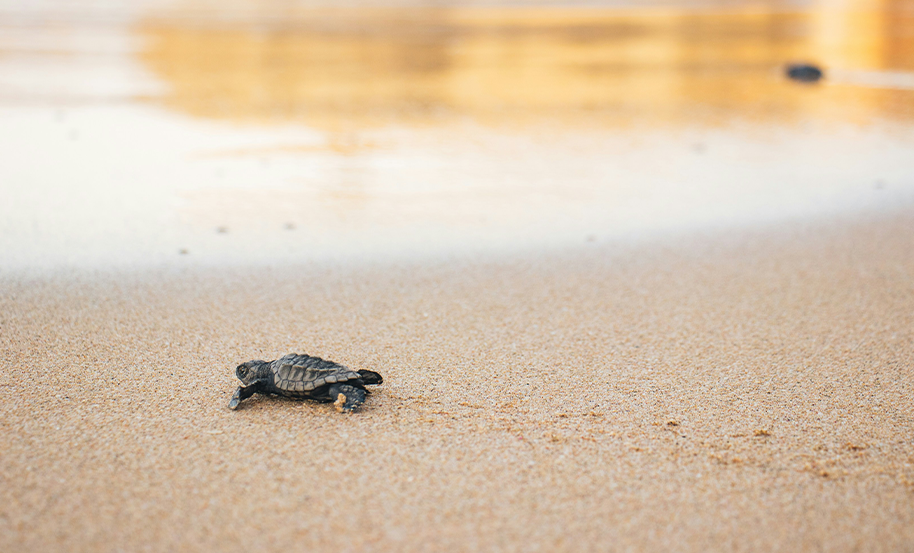
When hatchlings emerge, usually after the upper sand has cooled, their first journey is short and urgent. They must cross the beach and reach the water before heat, exhaustion and predators overwhelm them.

On a naturally dark coast, the open horizon over the sea is generally brighter than the landward side, where dunes and vegetation form a darker silhouette. Hatchlings use this contrast to orient towards the water. Artificial lighting can reverse the signal. A road, vehicle or bright beachfront installation may become more visible than the sea, causing young turtles to move inland or circle until they lose energy. Coastal lighting can also discourage females from nesting. (NOAA Fisheries)

A light installed for human comfort can become a false horizon for an animal only minutes old.

Darkness is not an absence of development. For a nesting beach, darkness is habitat.

Thoughtful tourism therefore includes what visitors choose not to illuminate. Vehicles should remain off dunes and dry nesting beach, flash photography should never be used around turtles or hatchlings, and suspected nests should be left to trained monitors.

When Flamingos Trust the Lagoon with Eggs

The flamingos of Narta tell the same story from the opposite direction. Unlike the turtle, they arrive visibly. Their long necks, pale bodies and collective movement can transform the lagoon into one of Albania’s most recognisable natural scenes.

For years, flamingos used Narta for feeding and resting, while breeding attempts were observed without a confirmed colony of this scale. In June 2025, PPNEA announced that monitoring teams had recorded 281 active greater-flamingo nests, all containing eggs. The National Agency of Protected Areas also publicised the event, presented as the first confirmed breeding colony of greater flamingos in Albania. (LinkedIn)

The number matters. The decision behind it matters more.

A flamingo can leave a feeding area when conditions deteriorate. Nesting requires suitable water levels, stable surfaces, food nearby and enough security to remain exposed in one place for weeks. Once an egg is laid, the bird is no longer simply using the lagoon. It has entrusted the wetland with the future.

The flamingos had not merely returned to Narta. They had begun treating it as a nursery.

This mirrors the turtle’s night journey on the outer beach. One animal rises from the sea and drags itself across sand. The other builds a low nest surrounded by shallow water. Their bodies could hardly be more different, yet both ask the same question:

Is this place quiet enough for life to begin?

The Nests Hidden in Apparently Empty Ground

Flamingos draw attention because they are large and visible from far away. Some of Narta’s most vulnerable breeding birds depend on the opposite strategy.

A peer-reviewed survey based on fieldwork in 2016 estimated about 6,400 breeding pairs across 85 species. The most numerous included little terns, pied avocets and Kentish plovers—birds that rely on shallow water, salt-pan edges and open ground where eggs blend into sand, shell fragments or pale soil. (Paradigm)

Their nesting places may appear almost empty. A plover’s nest can be little more than a shallow scrape, while a tern may place its eggs directly on bare ground. The absence of vegetation or visible structures may be exactly what these birds require.

The emptiest-looking part of a wetland may contain its most vulnerable life.

A person may not see a nest until the adult rises in alarm. A vehicle, an unleashed dog or a photographer approaching too closely can cause parents to leave eggs exposed to heat or predators.

Not every damaged habitat looks destroyed. Sometimes the ground remains intact, but wildlife no longer feels safe enough to reproduce there.

Flamingos help visitors notice the lagoon. The smaller birds teach them how carefully it must be noticed.

A Protected Landscape Is a Promise Between Places

Protected-area boundaries are drawn on maps, but animal lives rarely remain inside them. A turtle nesting on the outer coast may spend most of its life elsewhere in the Mediterranean. A flamingo born in Narta may later appear in another country. A migratory bird resting in the forest may have travelled from northern Europe and continue towards Africa. Migratory birds depend on networks of stopping places rather than on one protected destination alone. (BirdLife International)

Protection cannot require animals to remain. It can only help ensure that the habitat is functional when they return.

That is why Narta–Zvërnec depends on connection. Lagoon water supports feeding birds. Salt-pan margins offer nesting and resting surfaces. Forest gives shelter. Dunes maintain the sandy barrier. Beaches allow turtles to leave the sea. Darkness completes the route between nest and water.

Damage to one part can spread through the system. A lagoon may retain water while losing the isolated ground breeding birds require. A beach may remain attractive after its dunes have been weakened. A forest may still stand while disturbance reduces its value as refuge.

The habitats are not interchangeable. A turtle cannot nest in the lagoon because the beach has been lost, and a flamingo cannot replace shallow saline water with forest.

Protection matters because some relationships cannot be reconstructed quickly once broken.

How to Visit Without Interrupting the Story

The most rewarding visit begins with distance. Early morning and late afternoon bring softer light, cooler temperatures and active birdlife. Binoculars reveal more than approaching a flock. Visitors should remain on established paths near the bridge and island and avoid exposed lagoon margins or salt-pan ground where birds show alarm.

The outer coast requires the same restraint. Vehicles should remain off dunes and dry sand. Suspected turtle tracks should be left untouched and reported. At night, unnecessary lights should be minimised.

These limits do not diminish the experience. They change what makes it valuable.

The flamingo is no longer interesting only because it is pink. It is a bird that has judged the lagoon safe enough to hold an egg. The empty beach becomes a possible entrance to a turtle’s reproductive journey. A bare patch beside a salt pan becomes meaningful because a nest may be almost impossible to distinguish from the ground.

The visitor begins by looking for animals. The protected landscape teaches them to recognise the conditions that allow animals to remain.

Conclusion

As evening returns to Zvërnec, flamingos gather across the lagoon. Some feed with their heads beneath the water; others stand almost motionless, reflections extending below them. Beyond the bridge, the forest darkens around the island and the first shadows reach the dunes separating wetland from Adriatic.

The child who asked about turtles cannot see one, and that absence is honest. Most visits will not include a turtle emerging from the sea. Most nests remain hidden. Their survival depends partly on privacy, darkness and the fact that people are not always present to witness them.

Yet the beach beyond the lagoon no longer feels empty. It may contain sand whose temperature shapes a generation. The lagoon may hold flamingo eggs on low nests surrounded by shallow water. Open ground that looks unused may shelter terns, plovers and avocets whose camouflage works almost too well for human eyes.

Zvërnec is more than a bridge, an island and a monastery. It is the visible entrance to a landscape of hidden nurseries.

A turtle teaches us that protecting the sea may begin on land. A flamingo teaches us that a wetland becomes more than a feeding place when a bird trusts it with an egg. A tiny shorebird teaches us that habitat does not need to look spectacular to be irreplaceable.

One traveller arrives from the sea. Another descends from the sky. Between them lies a narrow coast of water, forest, salt and sand where both may become parents.

That connection—not any single view—is what the protected landscape of Narta–Zvërnec must keep alive.

Editorial Note

This article is part of the MAREOGRAPH Editorial Project, an independent editorial initiative founded and developed by Valza Boutique Hotel to document the landscapes, history, biodiversity, culture and living systems of Vlora and the Albanian Mediterranean through research-based storytelling.

Experience the Place

Zvërnec and Narta are best experienced as one connected landscape. The wooden bridge, island forest, monastery, lagoon, salt pans, dunes and outer coast reveal different parts of the same ecological system. Early morning and late afternoon offer quieter conditions for thoughtful observation. Valza Boutique Hotel provides a considered base for exploring this side of Vlora, while Eden by Valza offers a place to return to the wider Mediterranean story through the landscapes, seasons and food of the bay.

www.valza.al