Dhërmi is two places at once: a white village 200 metres up the mountain, where pirates once destroyed a church, and a long beach below it, with some of the clearest water on the Riviera.
Dhërmi is a village on the Albanian Riviera, about 40 minutes from Valza Boutique Hotel in Vlorë through the Llogara Tunnel, or 1 hour 20 minutes on the scenic road over the Llogara Pass. Below it lie two of the longest beaches of the coast, Dhërmi Beach and Drymades. Above it are the old village, painted churches from the 13th to the 18th century, an old mill path down to the sea and, in the cliffs to the south, the Pirates’ Cave.
Why does Dhërmi feel like two different places?
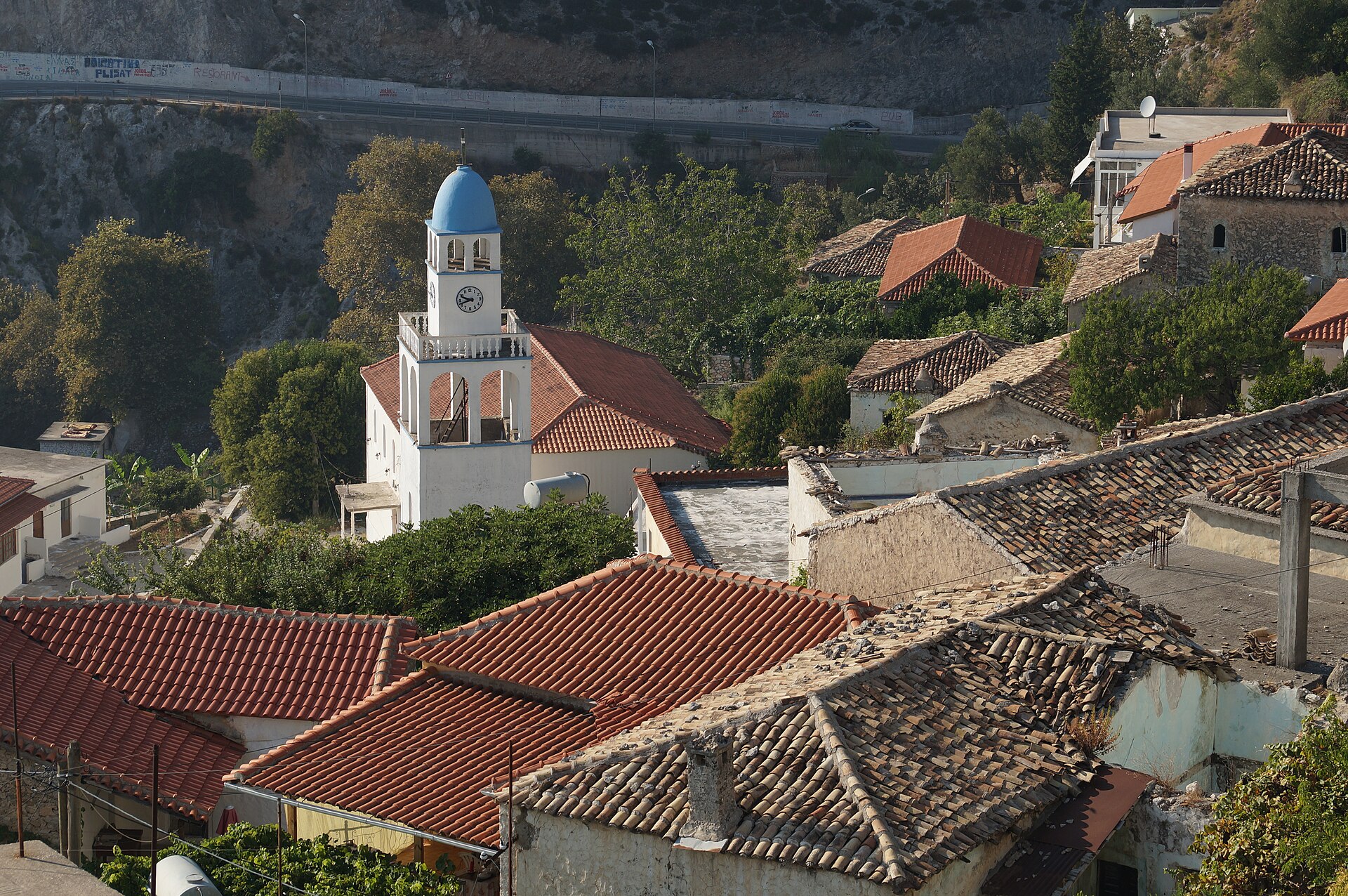
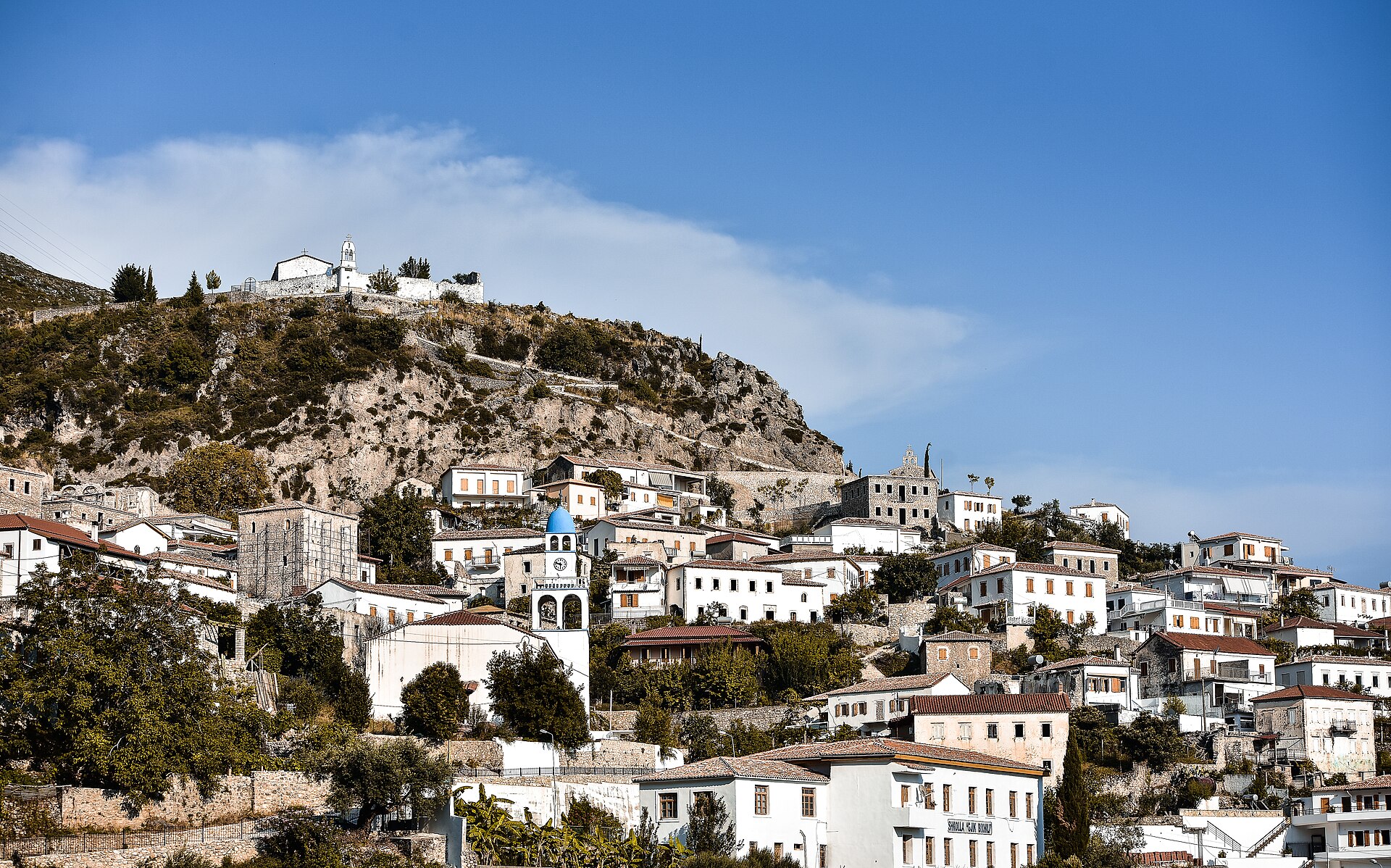
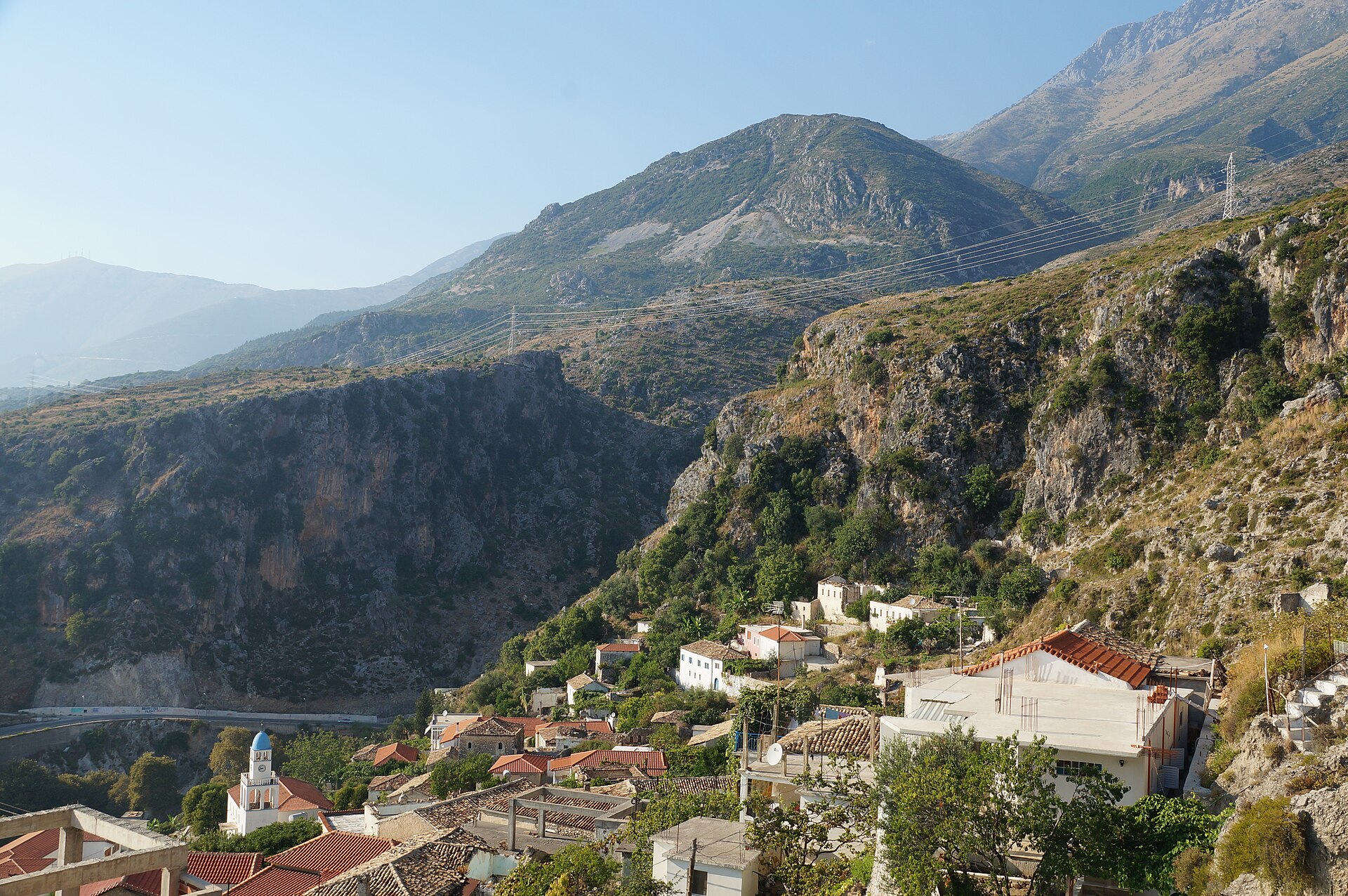
Because it is built on two levels, and most visitors only see one. The old village sits about 200 metres above the sea, on the mountain slope under a steep cliff, its white facades and tiled roofs recently restored. The beach is about 1.2 km away in a straight line and 200 metres lower down, reached by a road of hairpins or, far better, by an old path along the stream.
There are two ways to get there, and they make two different days. The fast one is the Llogara Tunnel, about 6 km long and open since 2024: from Valza you are in the village in about 40 minutes. The beautiful one is the old road over the mountain, about 1 hour 20 minutes, which climbs through the pine forest of Llogara National Park to the pass at 1,027 metres, where the whole Riviera suddenly opens below you. Take the pass on the way there, when the morning light is on the coast, and the tunnel on the way back.
Which beach in Dhërmi should you choose?
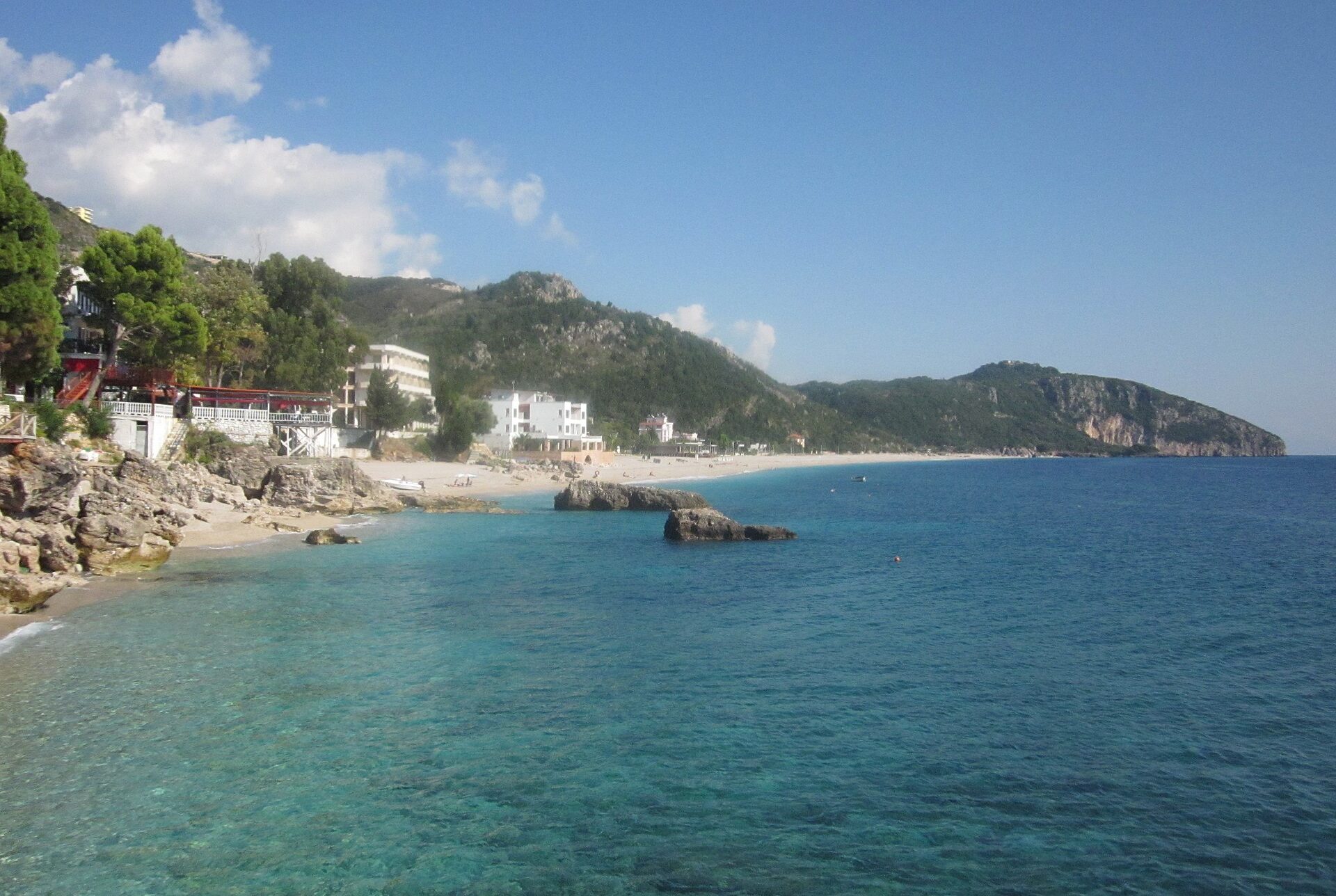
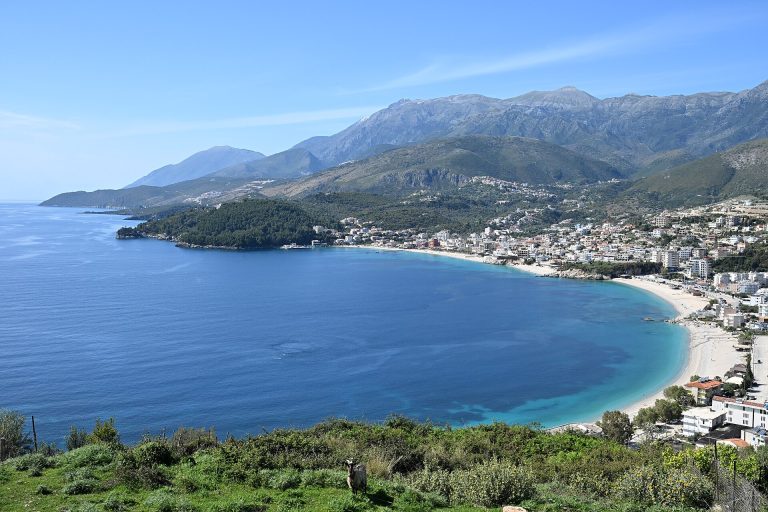
It depends on what you want from the day. Dhërmi Beach, right below the village, is about 1.4 km of pale shingle and sand with very clear water, a busier northern end and quieter stretches towards the south. Drymades, just to the north, is longer, about 1.8 km, more open and less built up, with the mountains of Llogara rising straight behind it.
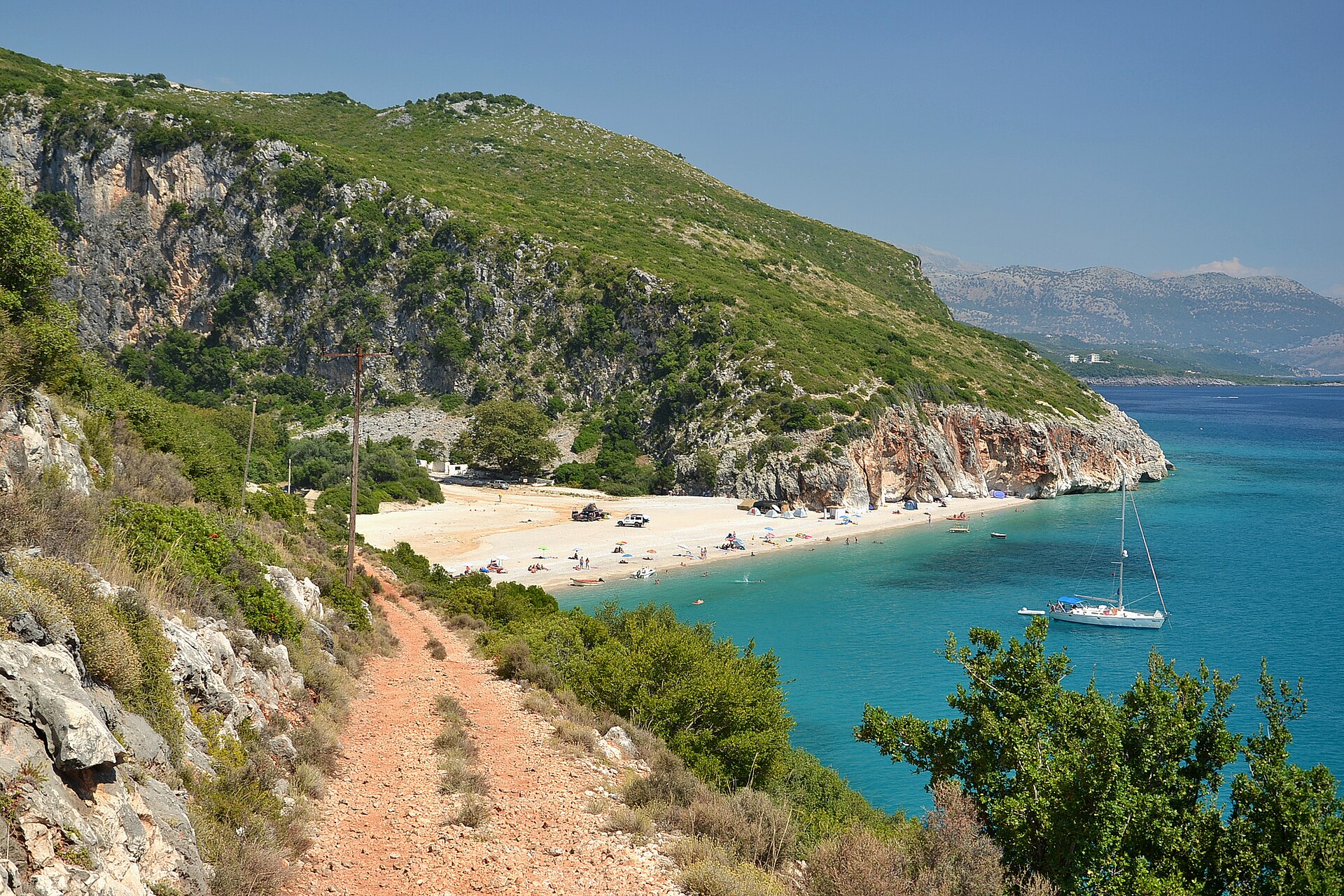
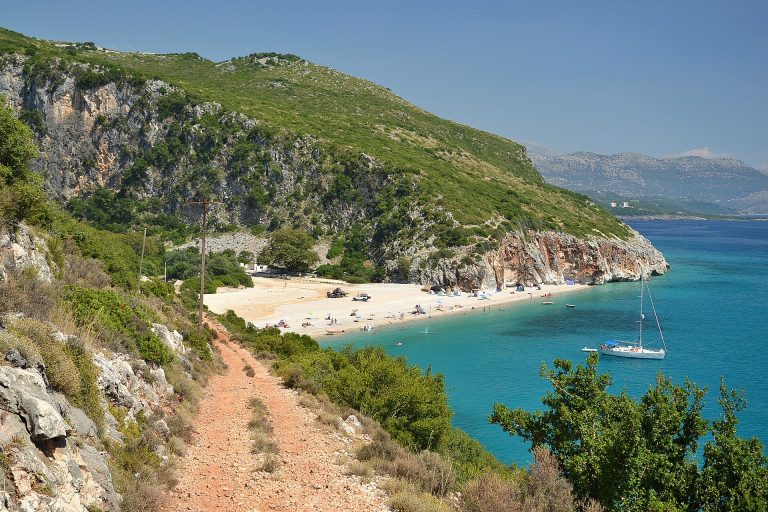
For a calm day, go to the southern end of Dhërmi Beach. A marked trail starts there and climbs past holly oaks and sage to the Monastery of St Theodore, with views back over the whole bay, and continues on foot to the canyon beach of Gjipe. In July and August arrive before ten; in June and September the beaches are almost empty after lunch.
How do you get into the Pirates’ Cave?
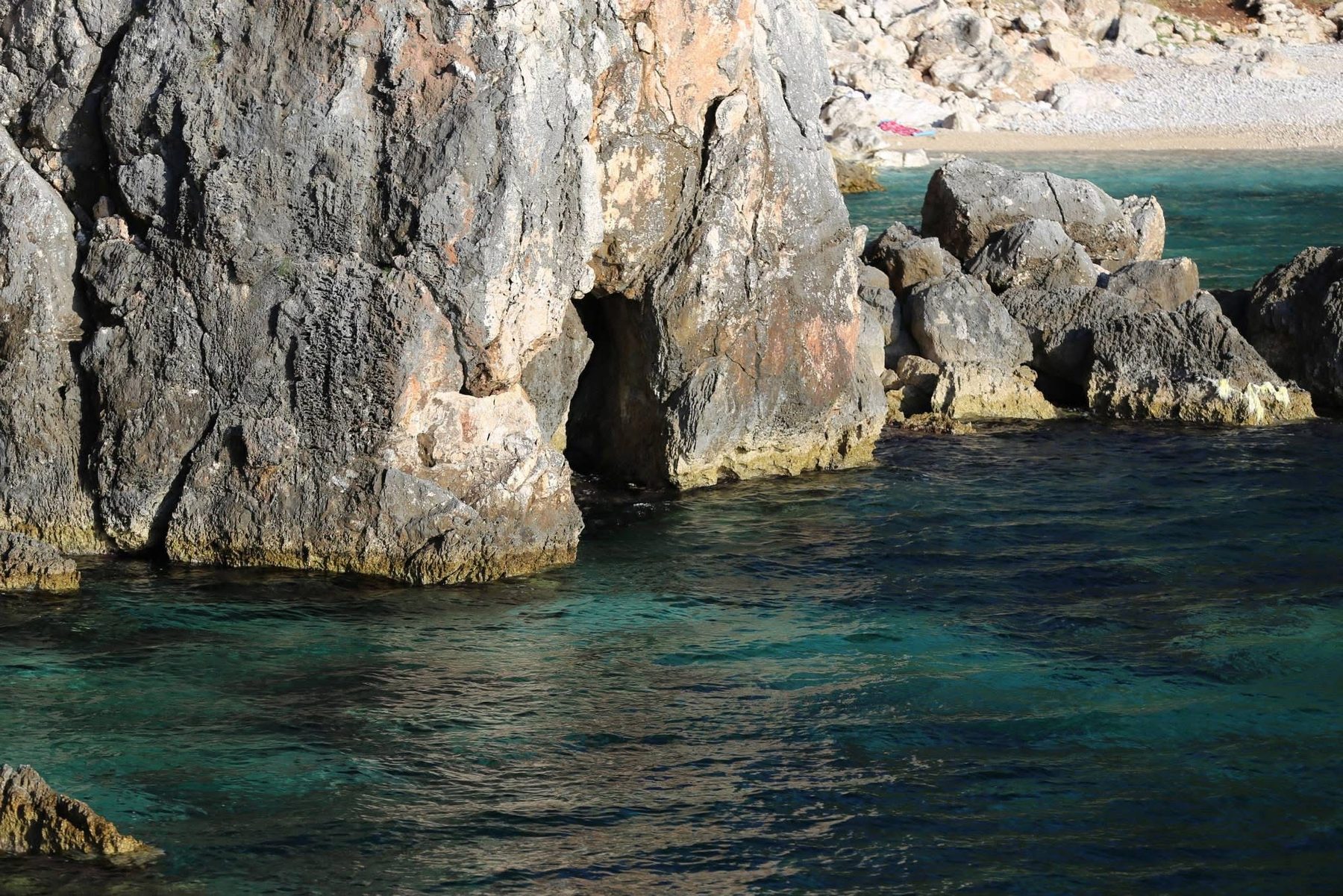
Only from the sea. The Pirates’ Cave, Shpella e Piratëve, is in fact two sea caves in the white cliffs south of Dhërmi Beach, about 200 metres and 800 metres from its southern end. They began as karst caves inside the limestone and were opened to the sea by the waves. Boats and kayaks leave from the northern end of the beach; on a calm morning a small boat can glide straight in under the arch.
The name comes from a book. The writer Petro Marko (1913–1991) was born in Dhërmi, and his children’s novel Shpella e Piratëve tells of five children who take a boat without permission and go looking for adventure along this coast. In 1990 the Albanian film studio Kinostudio turned it into a film, shot around Vlorë. His statue stands in the village today.
The pirates themselves were real. When raiders from the sea destroyed the old church of St Stephen near the beach, the villagers did not rebuild it: they walled in the altar and covered it as a small chapel, which still stands.
What is there to see in the old village?
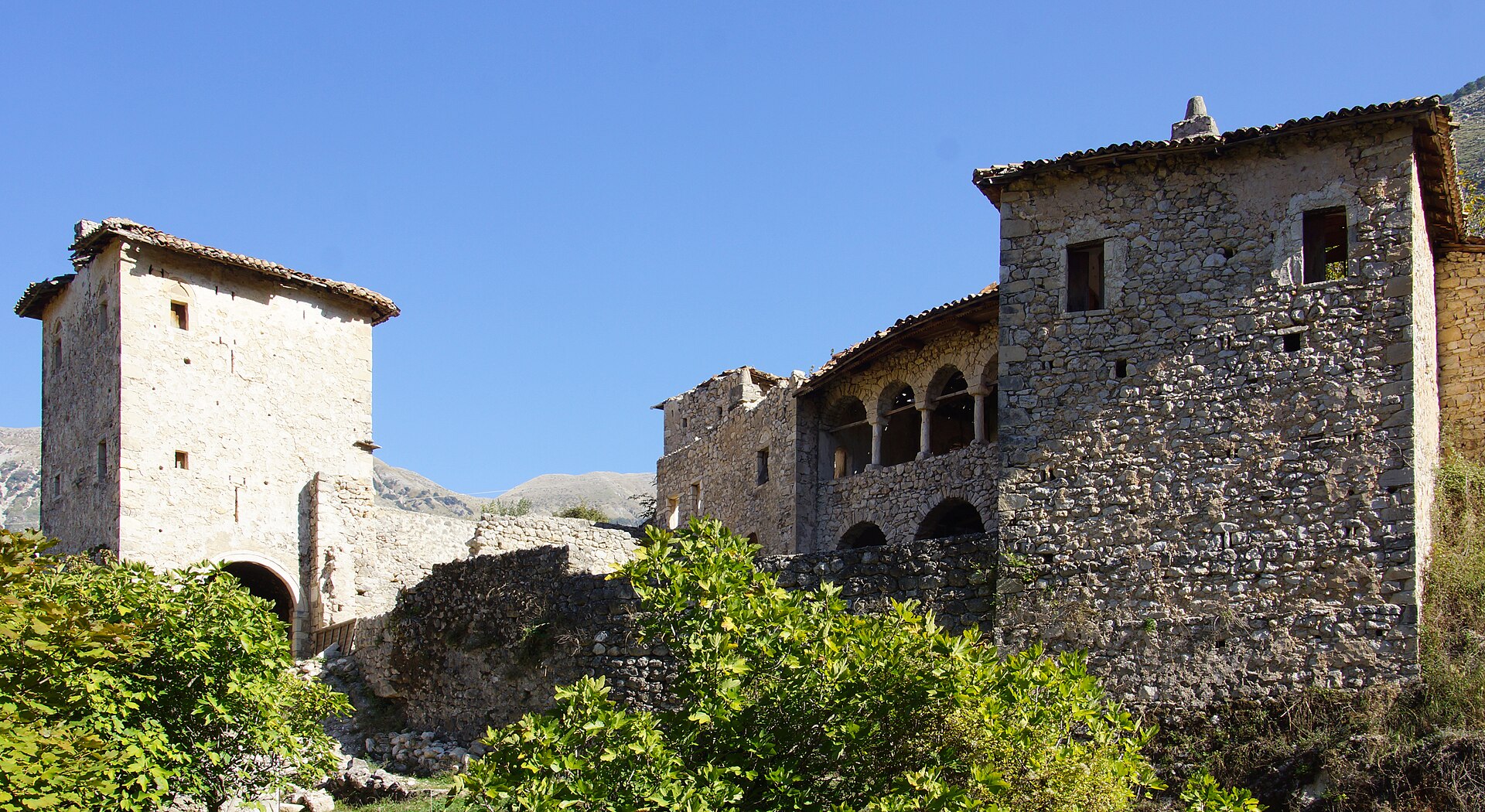
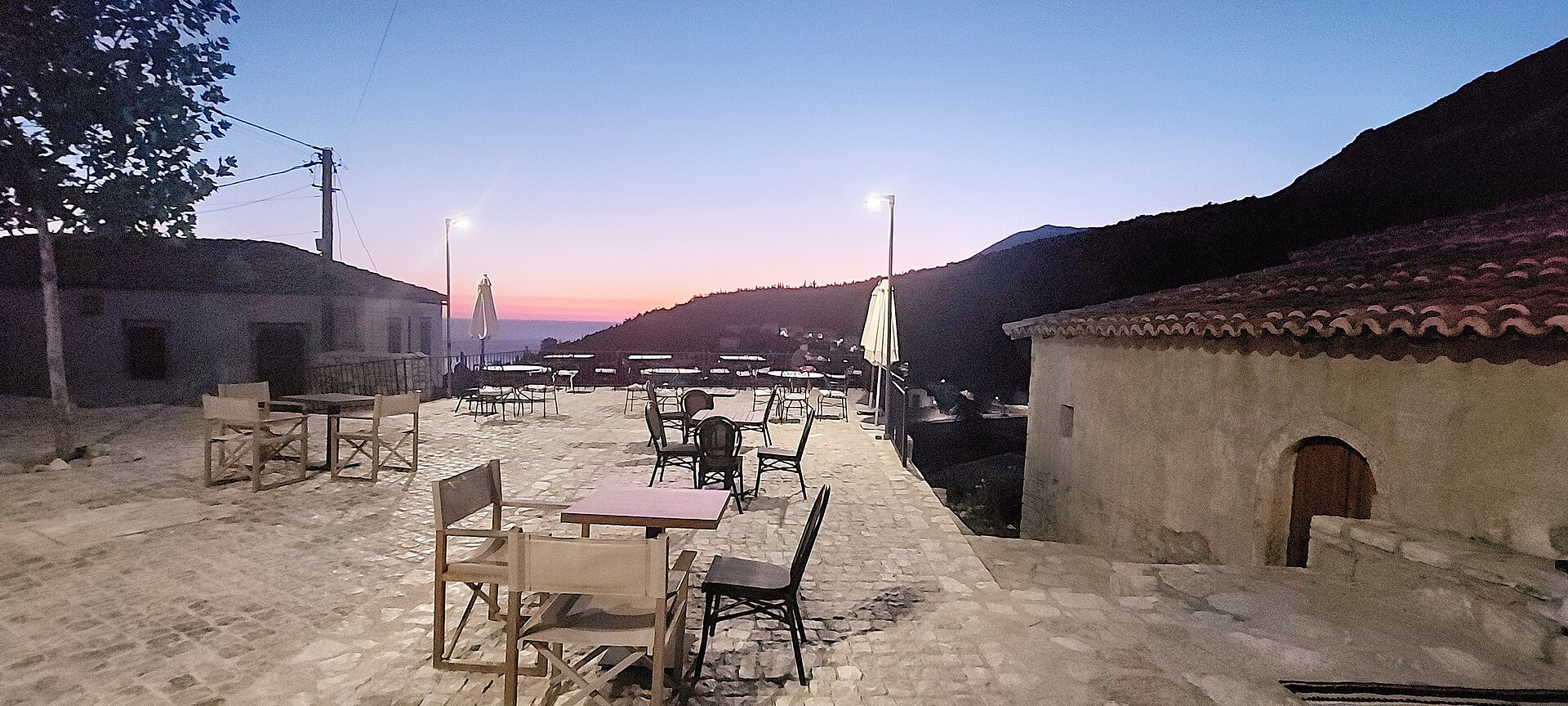
A village that is still lived in. Steep stone lanes and stairs climb between restored houses, small squares and more chapels than seem possible for a place of this size. Leave the car at the main road and walk up: the higher you go, the wider the view over the sea, until you reach the Monastery of St Mary at about 260 metres, above the highest houses.
-
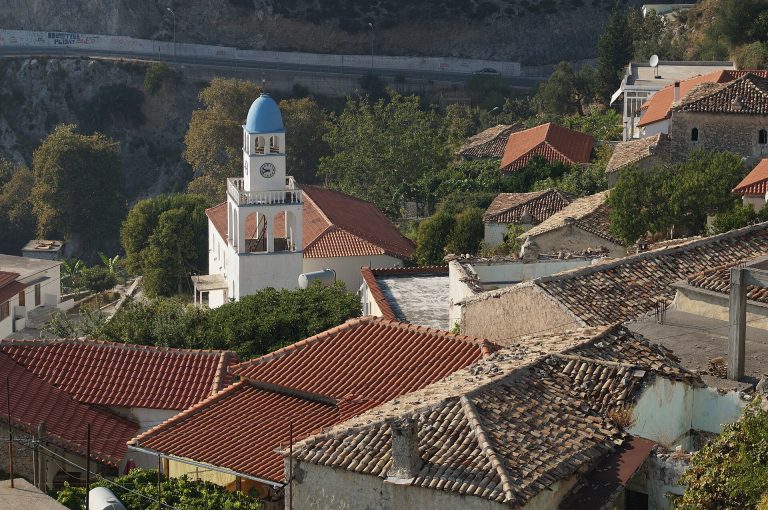
Photo: Albinfo, CC BY-SA 4.0 -
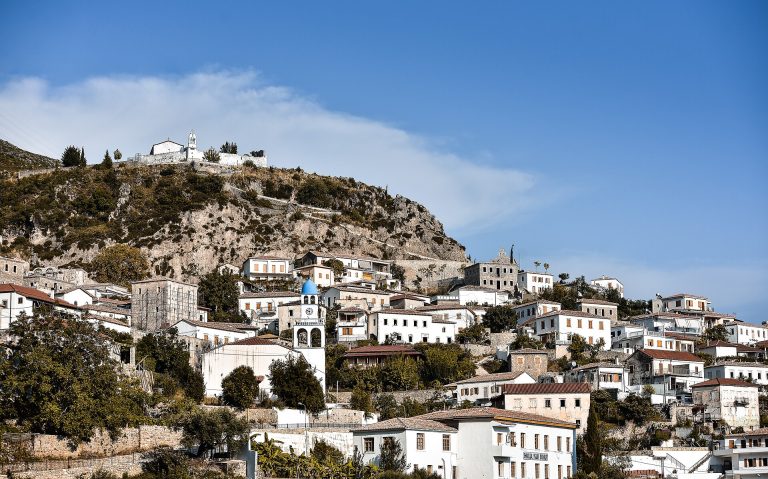
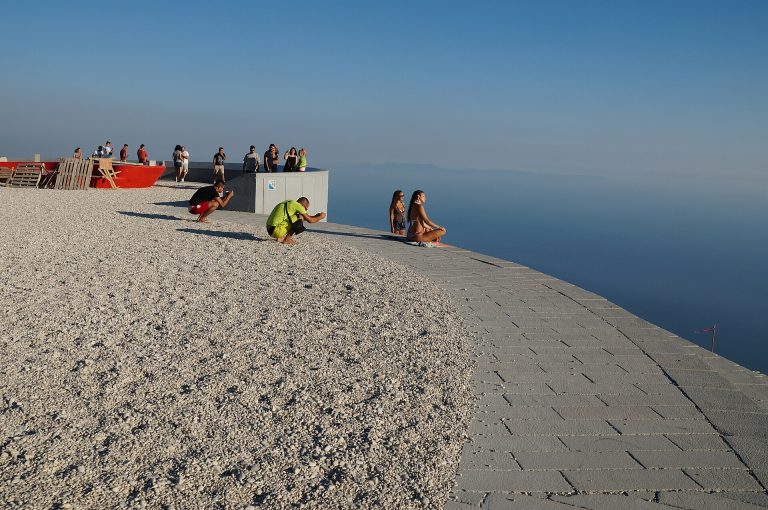
Photo: Gashi Bujar, CC BY-SA 4.0 -
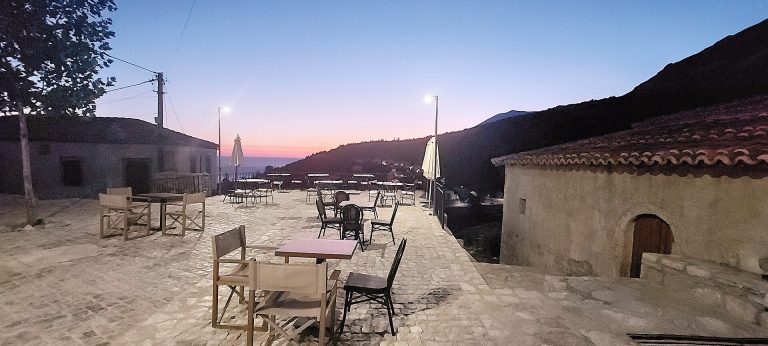
Photo: Leeturtle, CC BY-SA 4.0
Which churches of Dhërmi are worth the climb?
Three, each from a different century.
St Stephen, by the sea
The oldest. A three-aisled basilica stood here in the 11th or 12th century; what survives is its eastern wall and semicircular apse, built of river stones and lime mortar, inside a later chapel of about 21 by 10 metres. In the apse, St Stephen stands in a wide white robe beside a bust of St Demetrius, painted in the first decades of the 13th century. The church has been a Cultural Monument since 1963.
The Ipapandi church, on the Mills Trail
A 15th-century church on the terraces between the village and the sea, which you pass if you walk down the old mill path.
The Monastery of St Mary, above the village
The Panagia monastery is dedicated to the Birth of the Virgin and celebrates its feast on 8 September. Its church is a single-nave basilica of about 18.5 by 8 metres. An inscription on the north wall carries the date 1576, and the whole interior was painted in April 1781, in the time of Bishop Ioannikios of Himarë and Delvinë. Look for the portrait of St Cosmas, martyred in 1779 and painted here only two years later. It is also a Cultural Monument since 1963, and the terrace in front is the best viewpoint in Dhërmi.
What is the Mills Trail?
The old way from the village to the sea, called Shtegu i Mullinjve in Albanian, about 1.5 km long and all downhill. It starts at the main road, at the bend where the road crosses the ravine, by a small round stone square with a red railing. A few steps down and the noise of the road is gone: the path follows the stream under large plane trees, past several old water mills, a small waterfall and two springs, with benches and signboards on the people, customs and songs of Dhërmi.
Further down, a small bridge crosses the stream, the valley opens into terraces, and the path passes the Ipapandi church before it ends at a red metal gate near the beach. Walk it down in the late afternoon, swim, and arrange a lift back up: climbing it in the heat is not the point.
Moments worth planning your day around
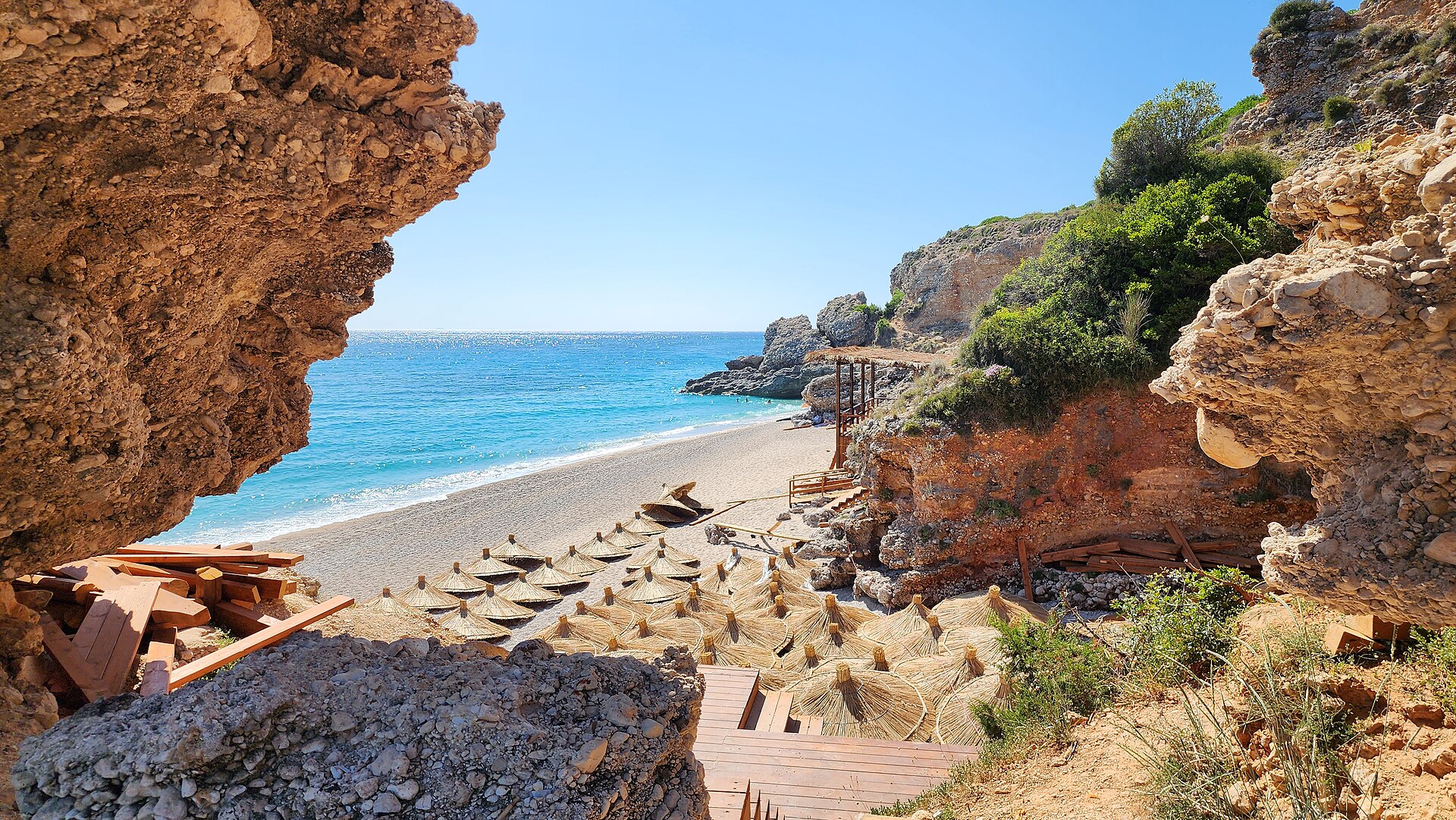
Drymades before ten
Almost two kilometres of beach, the mountains behind you and the water still glassy.
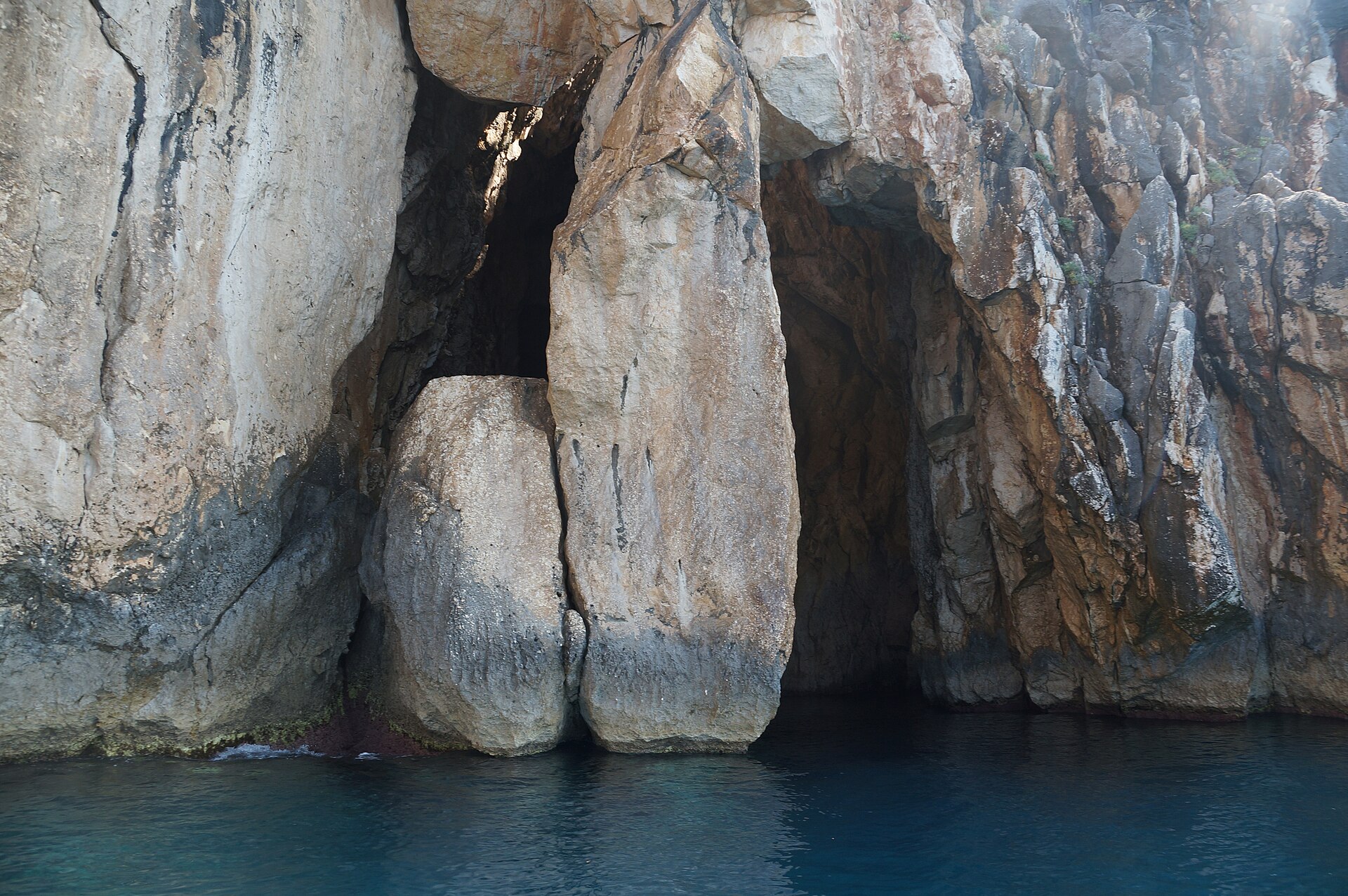
Under the arch of the Pirates’ Cave
On a calm morning, by boat or kayak, the light inside turns the water blue-green.
Down the Mills Trail
Plane trees, old mills and a waterfall, from the village road to the sea in about 1.5 km.
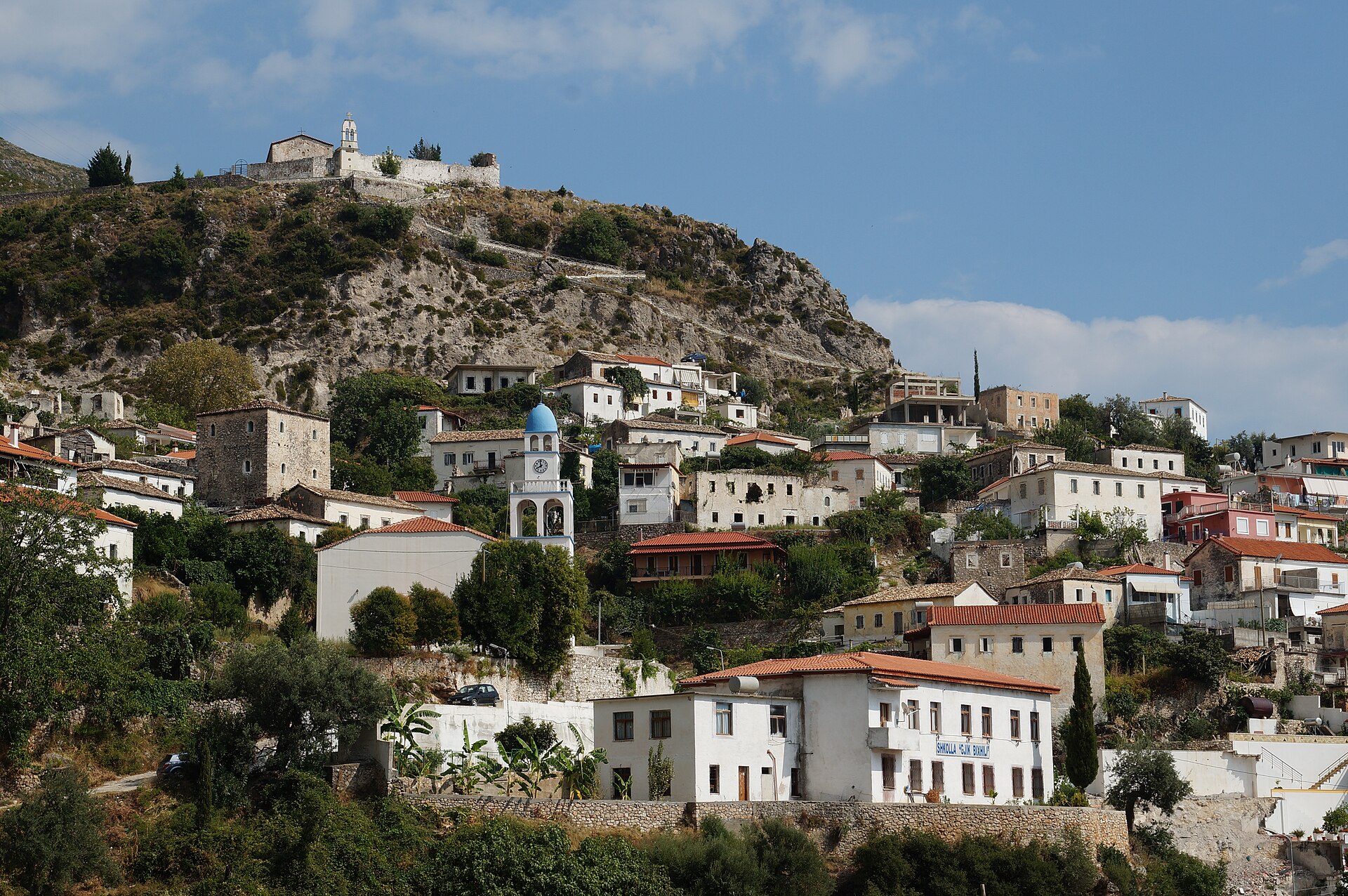
The lanes of the old village
Stone stairs, small squares and a chapel at almost every turn.
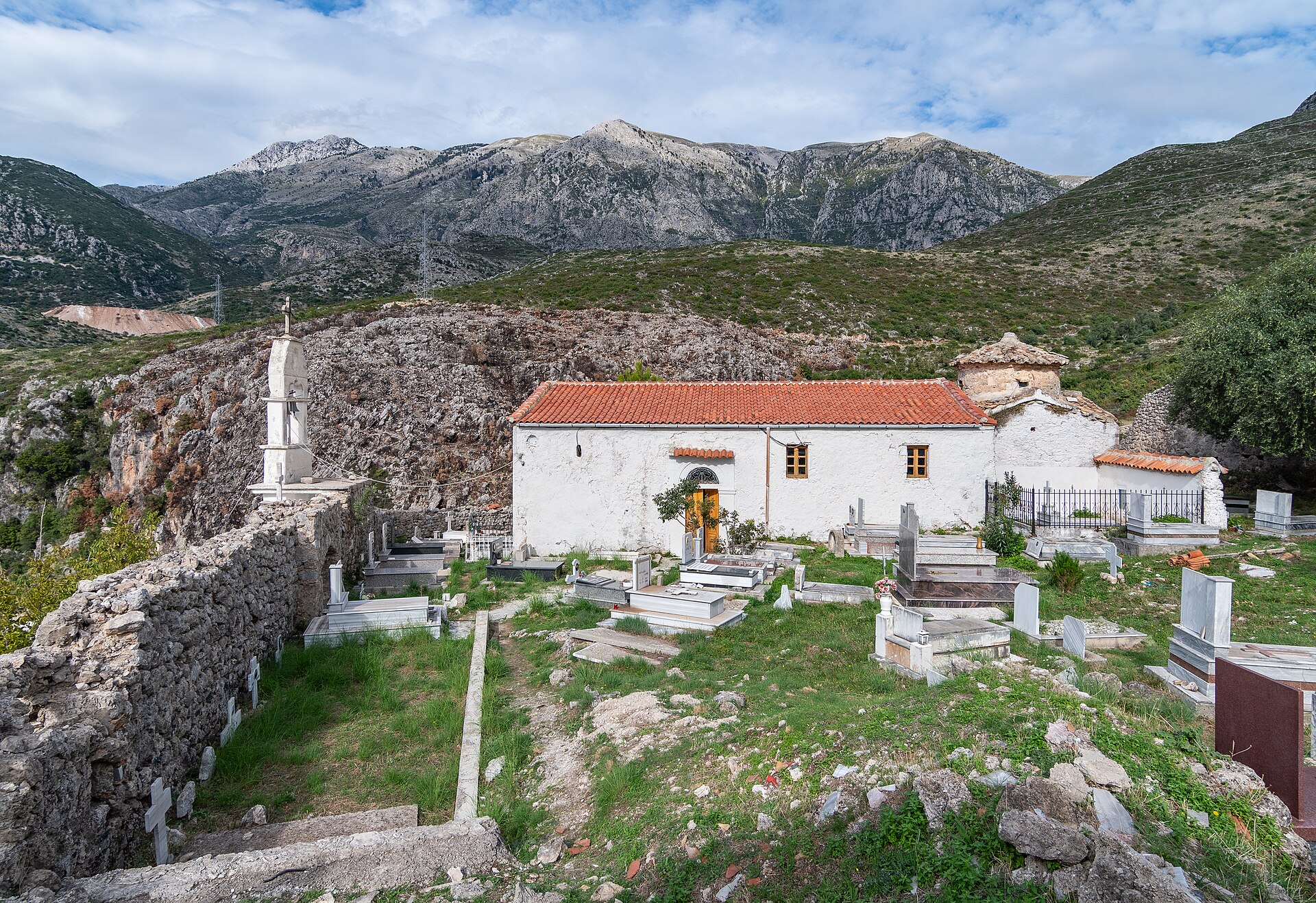
Late light at the monastery
The terrace of St Mary at about 260 metres, with the whole coast below.
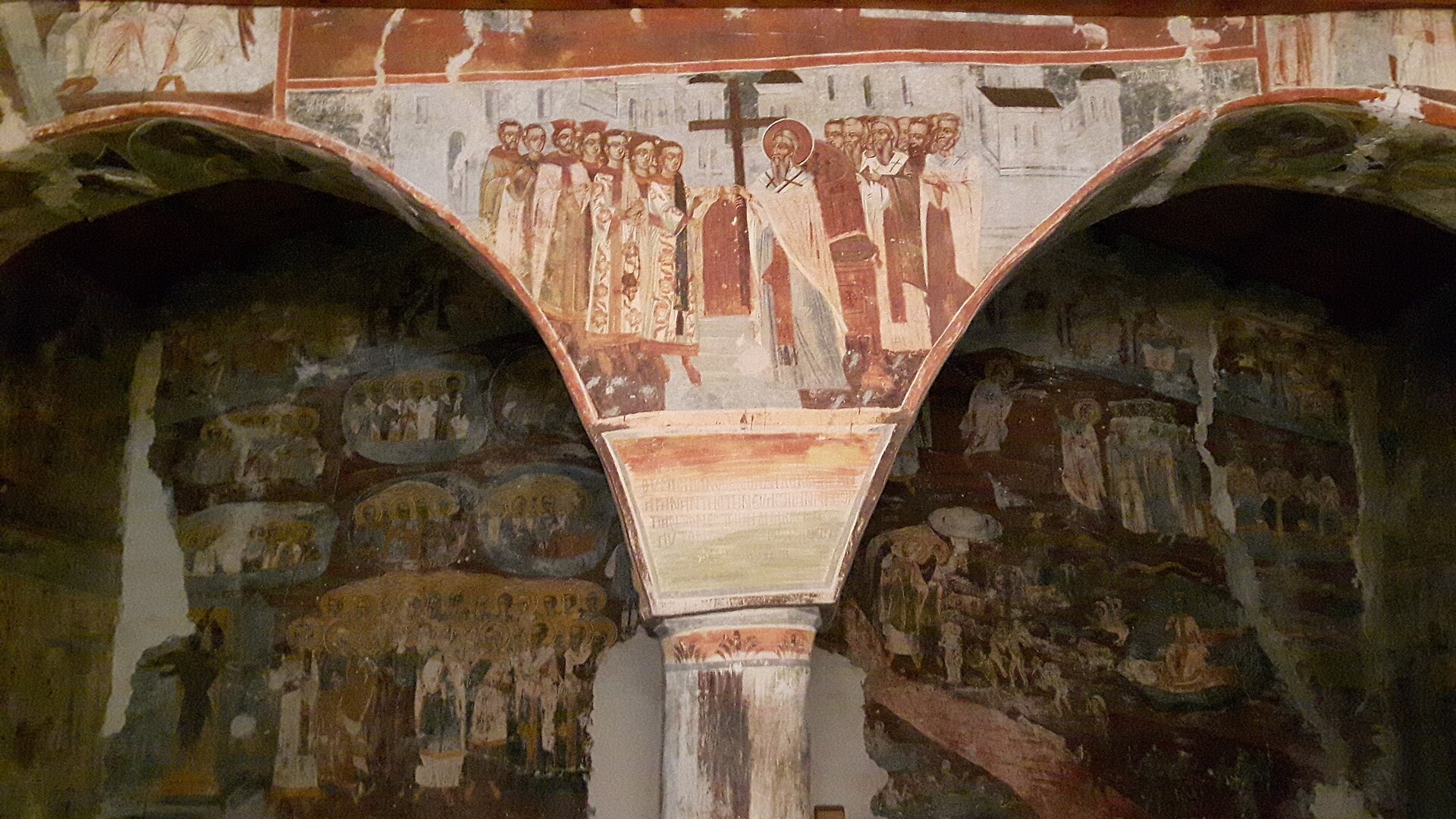
A church painted in 1781
Saints in red and ochre on every arch, and an inscription that dates them to the month.
Dhërmi in numbers
-
1.4 km
Length of Dhërmi Beach
-
1.8 km
Length of Drymades Beach, just to the north
-
200 metres
Height of the old village above the sea
-
1.5 km
The Mills Trail, from the village to the beach
-
1576 year
The oldest date inscribed in the Monastery of St Mary
-
40 minutes
From Valza through the Llogara Tunnel, about 39 km
-
1 h 20 minutes
From Valza on the scenic road over the Llogara Pass, about 47 km
Where everything is
-
Dhërmi Beach
About 1.4 km of shingle and sand below the village.
-
Drymades Beach
The longer, more open beach to the north, about 1.8 km.
-
The Pirates’ Cave
Two sea caves in the cliffs south of Dhërmi Beach, reached by boat or kayak.
-
The old village of Dhërmi
Stone lanes, squares and chapels about 200 metres above the sea.
-
Monastery of St Mary (Panagia)
The painted church of 1781 and the best viewpoint in Dhërmi.
-
Church of St Stephen
The oldest church of Dhërmi, with 13th-century frescoes.
-
The Ipapandi church and the Mills Trail
The 15th-century church on the old path from the village to the sea.
Where it is
On the Ionian coast of the Albanian Riviera, just south of the Llogara Pass, in the municipality of Himarë, between Palasë and Gjipe.
A day in Dhërmi, done well
Leave Vlorë at eight and cross Llogara while the air is still cool. Swim at Drymades before the beach wakes up, then take a boat or a kayak from the northern end of Dhërmi Beach to the Pirates’ Cave while the sea is calm. Have a long lunch in the shade, drive up to the village in the afternoon, walk the lanes to the Monastery of St Mary for the late light, and walk the Mills Trail down to the sea for a last swim. Then take the tunnel back, and you are at dinner in Vlorë 40 minutes later.
What to bring
- Shoes with grip: the village is all stone steps and the trails are rough
- Water shoes: for the shingle and the rocks at the caves
- Swimwear and a towel: there is always a reason to swim
- Small torch: the Pirates’ Cave is not lit
- Shoulders and knees covered: for the churches and the monastery
- Some cash: for boats, kayaks and small cafés
- Water and a sun hat: little shade on the beaches at midday
Is it worth it?
Yes, if…
you want a beach day with more to it: a sea cave, an old village and painted churches, all within an hour of Vlorë.
Maybe not, if…
you only want to lie on a beach: in August the main beach is busy, and the bays closer to Vlorë are quieter.
Go in June or September, start early, and save the village for the late afternoon.
Combine it with
Continue exploring
More places and ideas for your days around Vlorë:
- All attractions around Vlorë
- The Riviera from Vlorë in one day: what to keep, what to leave out
- The Julius Caesar Trail, from Llogara down to Palasë
- Where to stay in Vlorë: our complete guide