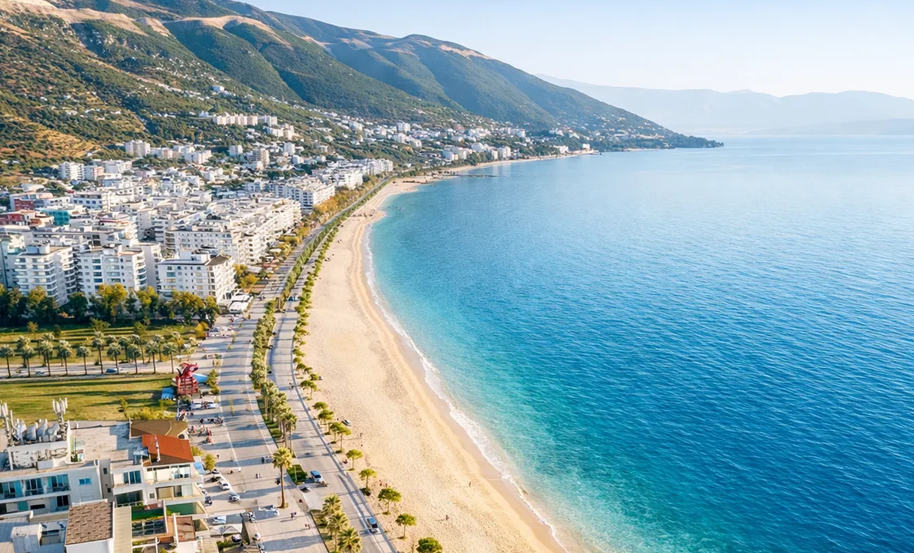
Mediterranean food culture in Albania is at its clearest around Vlorë, where the sea, the olive hills and the mountains of the south meet within a short drive. The table follows the calendar: Kalinjot olive oil in autumn, fish and octopus in summer, cheese, lamb and wild herbs from the hills, raki and honey for winter.
Radhimë, Kaninë and Nartë all lie within about 30 minutes of Uji i Ftohtë, and each tells part of the story. It suits travellers who like to ask what is good this week.
Written by the Valza team, who live and work in Vlorë.Updated October 2026.
Albanian food culture at a glance
What it is
A cuisine shaped by sun, sea and seasons: olive oil, seafood, white cheese, lamb, wild herbs, figs and honey, prepared simply and shared at the table.
Where
Around Vlorë: the Bay of Vlora, the olive hills of Kaninë and Radhimë, and the lagoon village of Nartë.
Time needed
A day of eating and short drives of 20 to 30 minutes from Uji i Ftohtë covers the main stops.
Best time
Late autumn for the olive harvest and new oil; summer for fish and octopus; September for figs and grapes.
Cost
Tasting at village stalls and tables costs little; check prices and opening days before you go.
Good for
Travellers who like slow meals, local producers and asking what came in today.
The table comes before the conversation
Visit a family in a village above Vlorë and something happens before anyone asks why you came. A plate arrives. Bread, a few cubes of white cheese, black olives, a spring onion, a thread of olive oil. Perhaps a small glass of raki, perhaps a spoon of honey in warm water.
None of this is a performance for visitors. In Vlorë the table has always been a place of gathering, where news was shared, decisions were made and a guest was welcomed with whatever the house had that week. Hospitality here is not optional: it is a cultural expectation.
That plate also explains the whole cuisine. Almost nothing on it was cooked, and almost everything on it came from within a few kilometres. Good ingredients, very little intervention, and time: that is the Mediterranean in one sentence.
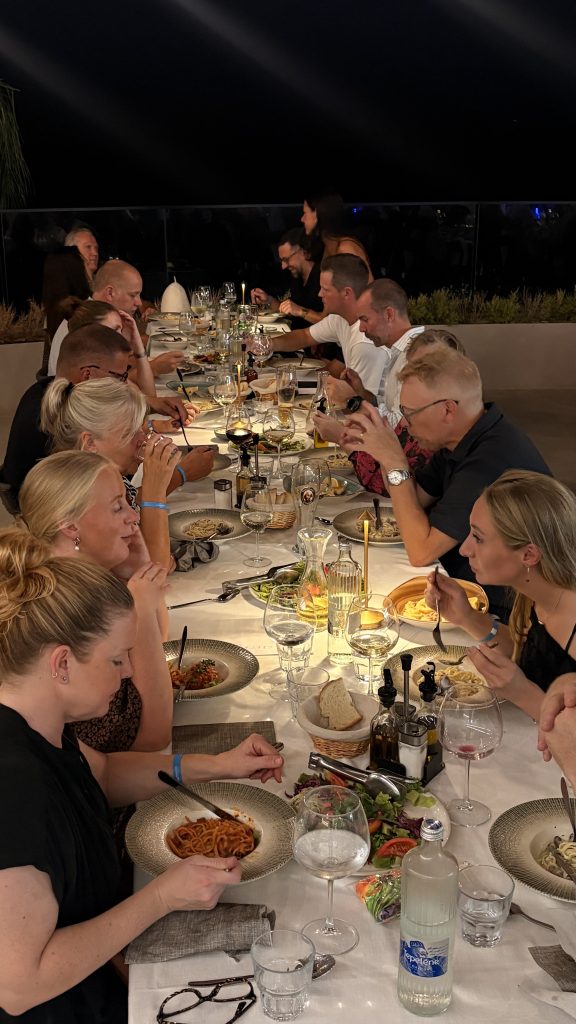
A long table at Eden by Valza: in Vlorë, food is meant to be shared.
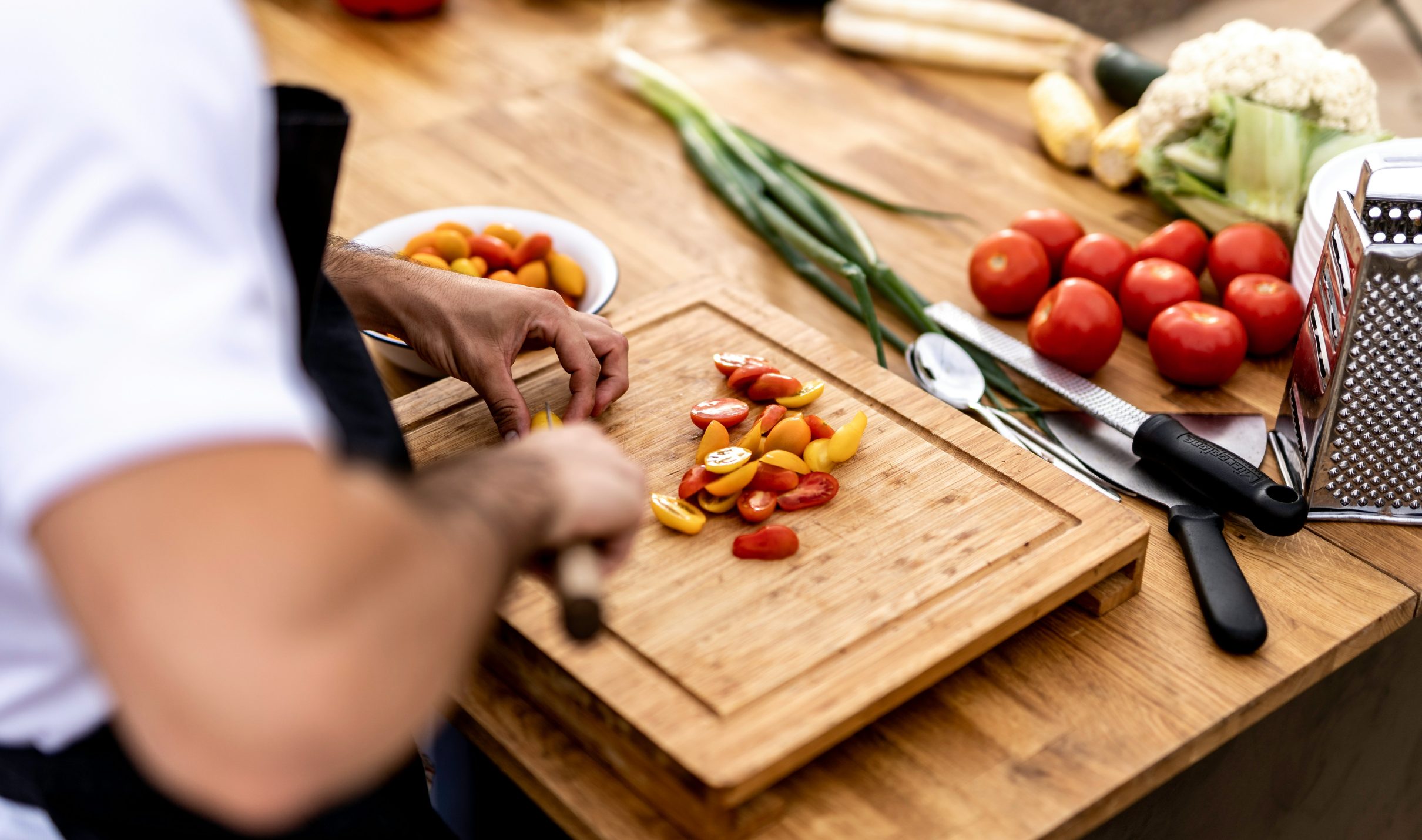
Mediterranean food culture is defined by geography rather than by borders. In southern Albania four principles are easy to see on any table: ingredients that change with the season, olive oil as the base of cooking, fresh local products with minimal processing, and meals shared, never rushed. Our kitchen explains how this works in practice in what seasonal cooking means on the Albanian coast.
Olive oil: the Kalinjot olive and the hills of Kaninë
If one ingredient holds this coast together, it is olive oil. An agricultural study counts 10.28 million olive trees out of 13.82 million fruit trees in Albania, about 74 per cent, with Vlorë among the main growing regions.
The local hero is the Kalinjot, the most important native olive variety in Albania. It is thought to have originated in Kaninë, the hill village better known for Kanina Castle above the Bay of Vlora, about 7 km from Valza by road. Kalinjot grows on about half of Albania’s olive land, and on about 70 per cent of the plantations around Vlorë and Mallakastër. It ripens medium-late and gradually, so the harvest belongs to late autumn.
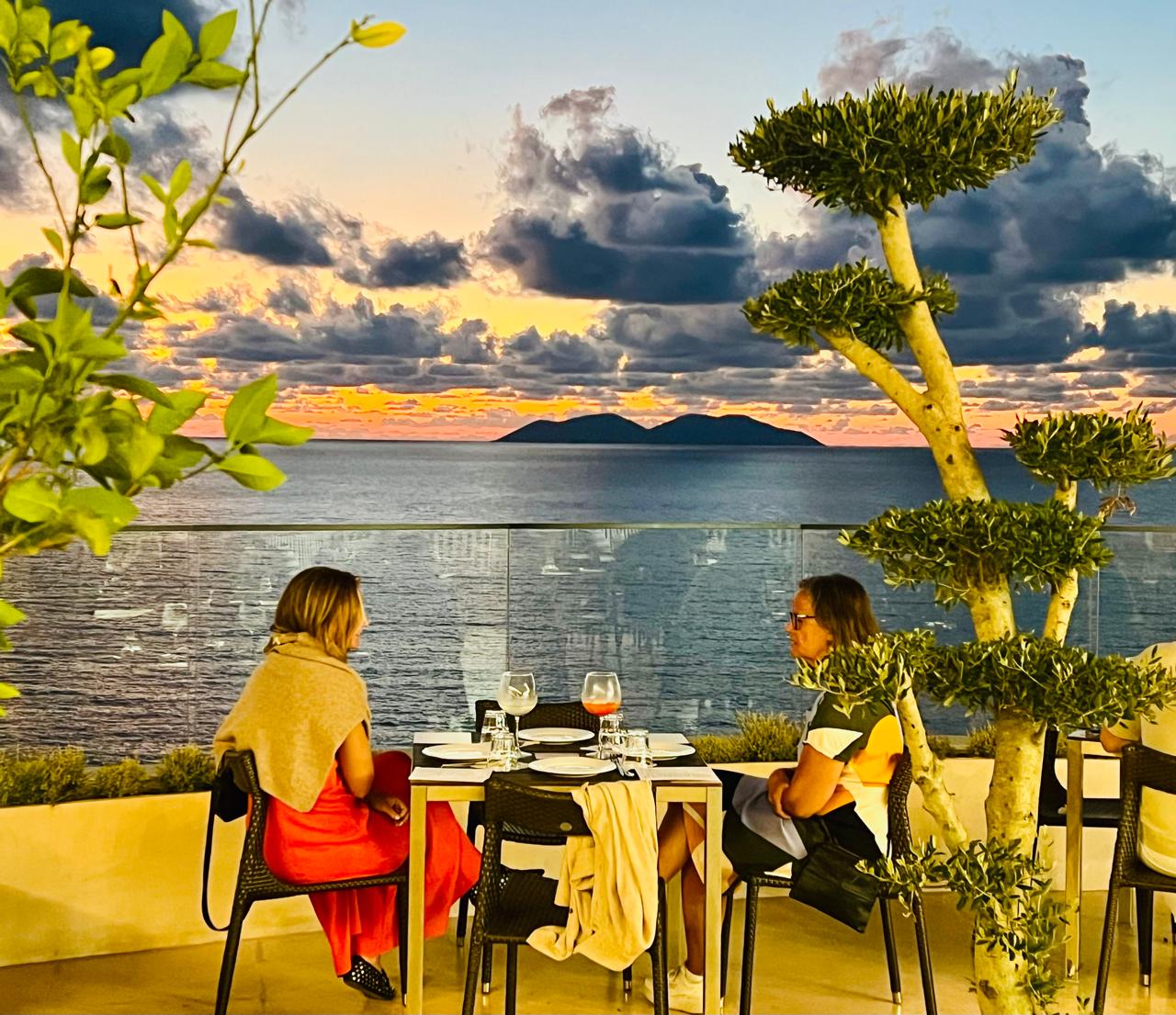
Dinner at Eden by Valza: the produce of the bay and the hills, on one table.
South of the city the groves run almost to the water. In Radhimë, the first village south of Vlorë, 11 km and about 20 minutes from Valza, the hillsides are a patchwork of olive groves, citrus orchards and vines above a chain of pebble coves. Local tradition says the first oil of the season is shared within the family before it is used in cooking. In late autumn, ask in the villages for new oil: freshly pressed, it is usually greener and sharper, with a peppery finish.
The sea on the plate
Vlorë has always looked to its bay, and it is still one of Albania’s main fishing ports: of the 833 licensed fishing vessels in the country in 2024, about 31 per cent were registered in Vlorë, second only to Durrës. Our guide to the fish beneath the bay shows which species live where, and how each one feeds.
Seafood has not always been everyday food. During the communist period, fishing was controlled and fish was not part of daily meals for most families. After that period it gradually returned to the local table, and with it part of the coastal identity. In summer, look for grilled octopus and squid with olive oil and lemon. Do not ask whether the fish is fresh; ask what came in today.
One dish deserves a second thought. The lagoons north of the city are home to the eel, long valued in local cooking, but the European eel is a critically endangered species. Our guide to the Narta Lagoon and its salt pans shows the lagoon at its best: for flamingos, not for the plate.
Nartë: wine, raki and honey
On the road north towards Zvërnec, the village of Nartë is known nationally for its cultural and natural heritage and for a wine made from a local grape variety called vlosh. In October 2021 the conservation group PPNEA organised a wine festival there, opening with a fair of local dishes.
Raki belongs to social ritual. It is prepared in autumn, offered to guests and sipped slowly; if you are driving, wait until the car is parked for the night. Honey sits on the other side of that line. It belongs to the household: stirred into warm water, added to herbal infusions, given to someone who is tired or unwell. Alcohol is for company; honey is for care.
Herbs, honey and the mountain pantry
Behind the coast, the limestone hills are covered in aromatic scrub. Oregano, thyme, rosemary and sage grow wild, with wild fennel, capers and, in spring, wild asparagus. An FAO report on the years up to the early 1990s notes that about 130 species of medicinal and aromatic plants were collected solely from the wild, and that Albania was then Europe’s largest exporter of medicinal plants.
Higher up, the pantry turns to cheese, yogurt and honey. In the villages of the Riviera, local families often sell olive oil and honey, as our guide to the stone village of Vuno describes, and the slow drive through the inside roads of Vlorë and Labëria leads to small producers. Buy from the person who made it whenever you can.
What to eat in Vlorë, season by season
Food changes completely through the year. A summer table and a winter table share bread and olive oil, and very little else.
SpringWild asparagus, slow-cooked lamb, fresh cheese, first honey
SummerFish, grilled octopus, salads, melon, light white wine
AutumnFigs, grapes, new oil, wine-making, raki for winter
WinterStews, harapash, dried fruit, red wine and raki
Grilled octopus and squid
With olive oil and lemon, and a simple salad of tomato, cucumber and pepper beside them.
Lagoon eel
Long valued in local cooking, but the European eel is critically endangered: choose the day’s catch instead.
Harapash
A corn-based winter dish made with cornmeal.
Slow-cooked lamb
A spring and autumn table dish, cooked slowly in the traditional way.
Figs and grapes
Eaten in late summer, figs straight from the tree.
Honey in warm water
A household remedy and a gesture of care, from the first honey of spring onwards.
Slow Food in Vlorë
Slow Food, the international food movement, fits this coast naturally, because much of what it defends is still everyday life here. In Albania its Presidia, the projects that protect traditional products, include a traditional dairy product and a fruit preserve from Përmet, in the south. In Vlorë the idea is simple: respect for the time food needs. Valza takes part in the Slow Food community of Vlorë, and the same idea guides the hotel’s rooftop kitchen.
A simple day of eating around Vlorë
One day, three short drives and no rush.
Morning
Fruit from a village stall. Figs and grapes in late summer, citrus later in the year.
Late morning
Radhimë. Drive south, about 20 minutes from Uji i Ftohtë, for a swim below the olive groves.
Lunch
Fish by the sea. Choose among the places with the best recent reviews and ask what came in today.
Afternoon
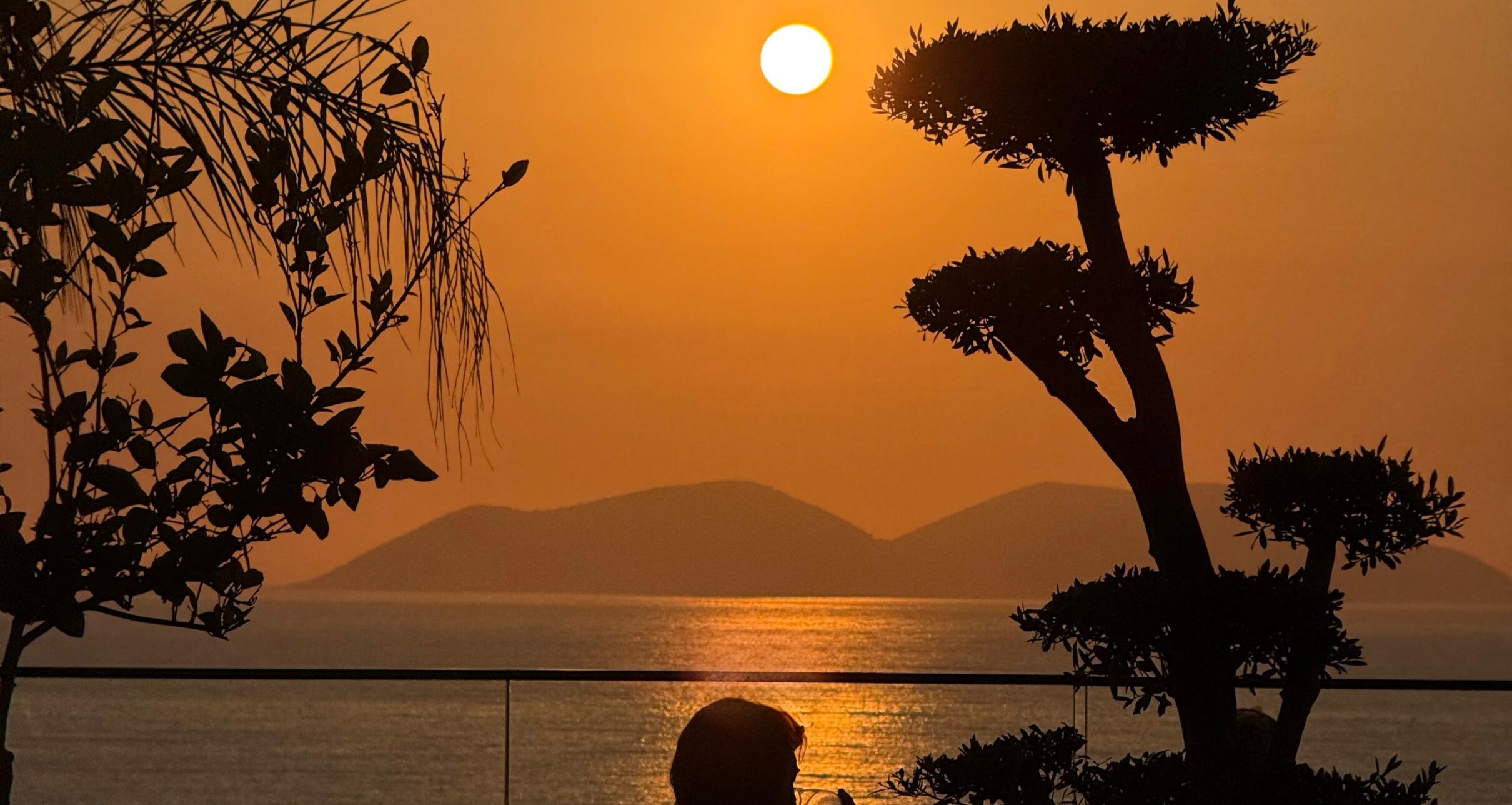
Kaninë. Climb about 15 minutes from Valza, where the Kalinjot olive is believed to have begun, and watch the bay turn gold.
Evening
Dinner with a view. A small glass of raki if nobody has to drive. Our guide to where to eat in Vlorë compares the areas of the city.
Did you know?
74%
Of Albania’s fruit trees are olives: 10.28 million out of 13.82 million
70%
Of the plantations around Vlorë and Mallakastër are Kalinjot
31%
Of Albania’s 833 licensed fishing vessels in 2024 were registered in Vlorë
130species
Of wild plants collected for medicine and aroma in Albania until the early 1990s
Test yourself: how well do you know the food of Vlorë?
1. Which village is the Kalinjot olive believed to come from?
Nartë
Kaninë
Radhimë
Show the answer
Kaninë. The Kalinjot, Albania’s most important native olive, is believed to have originated in the village below Kanina Castle.
2. About how much of Albania’s olive land does the Kalinjot cover?
About half
About a tenth
Almost all
Show the answer
About half. Around Vlorë and Mallakastër the share rises to about 70 per cent of the plantations.
3. What is honey used for in local tradition?
A drink for parties
Only a dessert
Care for the household
Show the answer
Care for the household. Honey is stirred into warm water or herbal infusions and given to someone tired or unwell. Alcohol is for company; honey is for care.
Plan your visit
Distances are from Valza in Uji i Ftohtë.
Radhimë
11 km south of Valza, about 20 minutes by car or taxi, for olive groves and pebble coves.
Kaninë
About 7 km by road, about 15 minutes. Come in the late afternoon, when the bay turns gold.
Nartë and Zvërnec
About 30 minutes along the road from Vlorë towards the lagoon.
New oil
Visit in late autumn and ask in the villages for freshly pressed oil.
Buying
Buy olive oil, honey and dried herbs from the producer. Check your airline’s rules for liquids.
Is it worth planning your trip around the food?
Yes, if…
you like simple food, local producers, slow meals and asking what is good this week.
Maybe not, if…
you want a fixed tasting menu or a restaurant for every hour: much of this food lives in homes, villages and seasons.
The fix is simple: follow the season, ask locally and leave time between meals.
Go deeper
Our corner of Vlorë
We are Valza Boutique Hotel, a 4-star boutique hotel in Uji i Ftohtë, a short walk from the beaches locals prefer. We work with local suppliers and use our own organic vegetables, herbs and olive oil. On the sixth-floor rooftop, Eden by Valza looks across the Bay of Vlora with a 180-degree view and serves modern Albanian and Mediterranean dinners. Please contact reception to confirm opening days and hours, and to reserve: +355 69 60 22022 (phone or WhatsApp).
Frequently asked questions about Vlorë food
What defines Mediterranean food culture?
Mediterranean food culture is shaped by sun, sea and seasonality. It rests on olive oil, seafood, vegetables, grains, wild herbs and seasonal fruit, prepared simply and shared at the table. Food follows natural cycles rather than industrial timing, and meals are about company and rhythm as much as nourishment.
Why is Vlorë important in Mediterranean cuisine?
Vlorë keeps sea, olive hills and mountains within a short drive. The Kalinjot, Albania’s most important native olive, is believed to come from nearby Kaninë, Vlorë is one of the country’s main fishing ports, and the hills supply herbs, cheese, lamb and honey. Seasonal eating and hospitality are still part of daily life.
When is the olive harvest around Vlorë?
The olive harvest around Vlorë comes in late autumn. The Kalinjot, the main local variety, ripens medium-late and gradually, and in one recent study its olives were picked in November. It is the best moment to taste new oil, usually greener and more peppery, and to buy it from producers in the villages.
What role does raki play in the food culture of Vlorë?
Raki is a strong spirit that belongs to social ritual in Vlorë. It is prepared in autumn, offered to guests, raised at celebrations and shared more often during winter gatherings. It is sipped slowly with food, and drivers should wait until the driving is done.
How is honey used in local tradition around Vlorë?
Around Vlorë, honey belongs to the household rather than to social drinking. It is stirred into warm water, added to herbal infusions and given as a gesture of care and hospitality. In the villages along the Riviera, local families often sell honey alongside olive oil.
What should you eat in Vlorë in summer?
In summer, look for grilled octopus and squid with olive oil and lemon, fresh fish from the Adriatic and Ionian seas, salads of tomato, cucumber and pepper, and watermelon and melon in the afternoon heat.
Should you order eel at the Narta Lagoon?
Eel has long been valued in the cooking of the lagoons north of Vlorë, but the European eel is a critically endangered species, so it is worth thinking twice. Fish from the day’s catch is an easy alternative, and the Narta Lagoon is at its best for its flamingos and salt pans.
We use necessary cookies for the website and bookings. With your consent we also use statistics and marketing cookies, and show content from YouTube, Google Maps and Tripadvisor, which set their own cookies. Nothing optional runs until you choose, and you can change your mind at any time with “Review your choices” at the bottom of every page. Read our Cookie policy.
Keep the site secure, remember your language and your cookie choice, and make bookings and payments work.
Google Analytics, Jetpack and WooCommerce statistics help us see which pages are useful and how visitors find us.
Let Google measure and personalise the advertising we run for the hotel. Works together with Statistics.
Show YouTube videos, Google Maps and Tripadvisor badges. These services set their own cookies.