
More Than a Place to Fish
Long before the Bay of Vlora became one of Albania’s best-known coastal destinations, the sea
had already shaped the lives of the people who lived beside it.
While today’s visitors admire the bay for its crystal-clear waters, hidden coves and spectacular
sunsets, earlier generations looked towards the same horizon with entirely different expectations.
The sea was their livelihood, their pantry and often their greatest source of certainty in an
uncertain world.
For centuries, before tourism became part of the local economy, these waters sustained families
whose lives followed the rhythm of the seasons rather than the calendar.
Fishing was therefore never simply a profession. It became woven into the cultural fabric of the
bay itself. The departure of boats before sunrise, the return before changing afternoon winds and
the preparation of the day’s catch formed routines repeated for generations.
Along the coastline stretching from Triport and Zvërnec to Radhimë and Orikum, children grew
up believing that understanding the sea was as essential as learning to walk. Knowledge passed
naturally from grandparents to parents, and from parents to children, long before anyone
considered writing it down.
This close relationship remains visible today. The Ethnographic Museum of Vlora preserves
traditional fishing tools alongside household objects, agricultural equipment and examples of
local craftsmanship, reflecting the role fishing played in everyday life rather than presenting it as
a separate occupation.
The nets, hooks and handcrafted equipment displayed there are reminders that for much of
Vlora’s history, fishing stood alongside farming as one of the foundations upon which coastal
communities were built.
One retired fisherman from the Orikum area once remembered the advice his grandfather
repeated before every departure. The older man never began by discussing fish, weather or the
condition of the nets. Instead, he reminded the younger crew of something much simpler.
“Remember, catching fish is never the first job. Coming home is.”
Only many years later did those words reveal their true meaning.
The first lesson every fisherman learned was never how to catch fish.
It was how to respect the sea.
Although deeply personal, this philosophy reflects a tradition shared across much of the
Mediterranean. Fishermen rarely described themselves as men who conquered nature. They
understood that success depended upon patience, careful observation and good judgement.
Every safe return strengthened lessons that could never be learned from books alone, while every
difficult journey became another reminder that experience was accumulated one morning at a
time.
A Bay Designed by Nature
The geography of the Bay of Vlora explains why fishing became such an enduring part of local
life.
Positioned where the Adriatic and Ionian Seas meet, the bay forms one of the finest natural
harbours in the eastern Mediterranean. To the west, the Karaburun Peninsula creates a broad
natural barrier against many of the strongest winds arriving from the open Ionian Sea.
This protection has offered safe anchorage to fishermen, merchants and naval fleets for
thousands of years, making the bay one of the most strategically valuable stretches of coastline in
the region.
Few places demonstrate this relationship between geography and human history more clearly
than ancient Oricum. Established along the southern edge of the bay, Oricum emerged as an
important maritime settlement centuries before the Roman conquest.
Ancient Greek writers, including Hecataeus of Miletus, referred to Orikos as an established
harbour, while Herodotus and later Strabo described its strategic position along one of the
principal maritime routes connecting the Balkans with southern Italy.
Its location allowed ships to shelter before crossing the Strait of Otranto, while the surrounding
waters supplied abundant marine resources that supported daily life alongside commerce and
navigation.
Archaeological excavations carried out over recent decades continue to reinforce this picture.
Anchors, amphorae, harbour structures and evidence of maritime activity reveal a community
whose existence depended upon the sea in multiple ways.
Fishing was not an isolated profession practised by a handful of specialists. It formed part of a
wider maritime economy that connected Oricum with the rest of the Mediterranean while
simultaneously feeding the people who lived along its shores.
It is remarkable to consider how little the essential geography of the bay has changed since those
early centuries.
An experienced fisherman leaving Orikum today still watches the same Karaburun Peninsula that
guided Greek sailors more than two thousand years ago. The mountains remain where they have
always stood. The entrance to the bay follows the same natural corridor. Morning light still
reaches the limestone cliffs in precisely the same way it did when the first merchant vessels
sailed into these protected waters.
The boats have changed.
The horizon has not.
That continuity gives the fishing traditions of the Bay of Vlora a significance extending far
beyond food or commerce. Few professions create such a direct connection between the present
and the ancient world.
A farmer may cultivate different land, and cities may rise and disappear over centuries, yet
fishermen continue to navigate the same waters their ancestors knew in antiquity.
Every generation inherited not only boats and equipment, but also the privilege of working
within one of the Mediterranean’s oldest continuously used maritime landscapes.
The Sea Was the Classroom
Unlike many professions, traditional fishing relied almost entirely on experience rather than
formal education.
There were no manuals explaining how local winds interacted with the Karaburun Peninsula or
how seasonal currents influenced the movement of fish. Instead, every generation accumulated
thousands of small observations through years spent at sea, refining them through experience
before quietly passing them to those who followed.
An elderly fisherman from Vlora once recalled a lesson he received as a young man after several
days of stormy weather.
At sunrise, the harbour appeared perfectly calm. The water reflected the sky almost like polished
glass, encouraging younger crews to prepare their boats immediately. After several days confined
to shore, everyone was eager to fish again.
One older fisherman remained standing on the pier.
He showed no interest in the calm water surrounding the harbour.
Instead, his attention remained fixed on the distant outline of the Karaburun Peninsula.
When one of the younger fishermen finally asked why they were waiting, the old man slowly
pointed towards the cliffs.
Far beyond the calm harbour, barely visible without careful observation, a narrow white line had
begun to appear where waves were striking the western shoreline.
“The wind has already arrived there,” he quietly replied.
“Here, we simply haven’t met it yet.”
Several boats ignored his warning and departed anyway.
Before midday, the weather changed across the bay exactly as he had expected. Strong winds
spread rapidly from the open Ionian Sea, transforming calm water into steep, irregular waves that
forced several crews to abandon their fishing grounds and return early.
The older fisherman never described his decision as intuition.
He called it experience.
Years of observing the same coastline had taught him that the sea rarely changes without
revealing small signs first. The challenge was never predicting the future. It was recognising
those signs before everyone else did.
Modern meteorology now explains many of these observations through atmospheric pressure,
local wind systems and coastal topography.
The Karaburun Peninsula influences airflow across the bay, creating conditions that can differ
dramatically between the protected inner waters and the exposed coastline facing the Ionian Sea.
Long before these processes were scientifically understood, however, fishermen had already
learned to recognise their practical consequences through continuous observation.
Their explanations differed from those of modern science, yet their conclusions were often
remarkably accurate.
A Knowledge That Still Lives
Traditional ecological knowledge survives only if someone continues to practise it.
Around the Bay of Vlora, that continuity remains visible among today’s small-scale fishing
communities, particularly around Triport, Radhimë and Orikum.
Recent research shows that although modern fishermen increasingly rely on GPS navigation,
sonar and digital weather forecasts, many continue to combine these technologies with
observations inherited from previous generations.
Experience remains an essential part of everyday decision-making, especially in coastal waters
where local conditions can change rapidly.
Few people have expressed this relationship more simply than Baçi, a fisherman from Radhimë
who participated in UNESCO’s work documenting life inside the Karaburun-Sazan Marine
Protected Area.
Asked what the sea meant to him after spending most of his life fishing these waters, his answer
consisted of only three words.
“It’s my life.”
There was little more to add.
Behind those words lies a lifetime measured not by calendars but by seasons. Like countless
fishermen before him, Baçi inherited far more than practical skills. He inherited a way of
observing the sea that had been refined over generations.
Every morning offered another opportunity to confirm old lessons or learn new ones. Every safe
return strengthened knowledge that no classroom could fully provide.
Perhaps this explains why fishing in the Bay of Vlora has endured for so long.
It has never been sustained by equipment alone, nor by favourable geography alone. It has
survived because every generation accepted responsibility for passing forward something far
more valuable than boats or nets.
They passed forward a way of seeing the sea.
And that, more than any single catch, became the true inheritance of the Bay of Vlora.
Learning to Read the Sea
The Bay Was Their Calendar
For generations of fishermen in the Bay of Vlora, the sea was far more than a place to work. It
was a calendar, a compass and a daily conversation with nature.
Long before meteorological forecasts, satellite imagery or navigation systems became available,
every journey depended upon understanding a landscape that never truly stood still.
The bay changed from season to season, from week to week and sometimes from one hour to the
next. Success belonged not to those who worked the hardest, but to those who understood these
changes before leaving the harbour.
Unlike farmers, who could walk through their fields before beginning work, fishermen faced an
environment that concealed almost everything beneath its surface.
Fish could not be seen. Currents remained invisible. Even the weather often announced itself first
many kilometres away. Observation therefore became the most valuable tool aboard every boat.
Experienced fishermen never described this ability as instinct or luck. They regarded it as the
reward for thousands of mornings spent watching the same coastline.
Every sunrise became another lesson. Every unsuccessful journey became another correction.
Over decades, these countless observations formed a body of practical environmental knowledge
remarkably similar to what modern marine science now explains through oceanography and
meteorology.
One elderly fisherman once compared the process to recognising the expression on the face of a
close friend.
“After forty years,” he said, “you know something has changed before anyone says a word. The
sea is exactly the same.”
Although expressed simply, his comparison reflects an important scientific concept.
What researchers today describe as Local Ecological Knowledge, or LEK, is the cumulative
understanding developed by communities through continuous interaction with their environment
over long periods of time.
Recent studies carried out among the small-scale fishing communities of Triport, Radhimë and
Marina Orikum confirm that this traditional knowledge continues to influence everyday fishing
decisions alongside modern technology.
Reading the Wind Before Feeling It
Perhaps no element influenced life in the Bay of Vlora more than the wind.
Visitors often imagine the bay as a single body of water. Fishermen know otherwise.
The sea inside the sheltered harbour may remain calm while only a few kilometres away, beyond
the protection of the Karaburun Peninsula, entirely different conditions already exist. This
contrast has shaped fishing traditions for centuries.
Older fishermen were taught never to judge the weather by looking only at the harbour.
They looked towards Karaburun first.
The peninsula itself acted almost like a natural weather station. Waves breaking against its
western cliffs often revealed the arrival of changing winds long before those winds reached the
calmer eastern side of the bay.
To an inexperienced observer, the difference seemed insignificant. To someone whose livelihood
depended on the sea, it could determine whether to continue preparing the boat or postpone the
journey until another day.
Modern meteorology explains why these observations proved so reliable.
The steep relief of the Karaburun Peninsula alters local airflow, creating noticeable differences
between the exposed Ionian coast and the more sheltered waters inside the Bay of Vlora.
Wind acceleration around headlands, changes in wave formation and local pressure gradients all
contribute to conditions that can vary considerably across relatively short distances.
Long before these mechanisms were scientifically understood, fishermen had already learned
their practical consequences through repeated observation.
The sea, in other words, revealed its intentions gradually.
The challenge was recognising them early enough.
Fishing Followed the Seasons
Visitors often imagine that fishermen simply leave the harbour each morning hoping to find
whatever the sea happens to offer.
Reality has always been much more disciplined.
Fishing in the Bay of Vlora followed a seasonal rhythm that reflected the biological cycles of
marine life itself.
Water temperature, spawning periods, migration routes and weather conditions all influenced
which species were likely to appear and where fishermen concentrated their efforts.
Rather than expecting nature to adapt to them, experienced fishermen adapted to nature.
Spring signalled renewed biological activity as warming waters encouraged many species to
become increasingly active.
Summer generally offered calmer seas but also greater fishing pressure as tourism expanded
across the coast.
Autumn frequently became one of the most productive periods, while winter demanded patience,
shorter journeys and careful attention to changing weather.
These seasonal changes also influenced the equipment fishermen selected before leaving
harbour.
Rather than relying upon a single technique throughout the year, artisanal fishermen traditionally
adjusted their methods according to habitat, target species and prevailing environmental
conditions.
Trammel nets became particularly effective over rocky bottoms where species such as red mullet,
sea bream and other demersal fish were common.
Gill nets proved suitable under different circumstances, while longlines allowed fishermen to
target larger predatory species.
Recent scientific studies continue to identify these traditional methods as the foundation of
small-scale fisheries operating around Triport, Radhimë and Orikum today.
This flexibility reflected something deeper than technical knowledge.
It reflected respect.
Fishermen understood that the sea operated according to rhythms established long before people
arrived.
Their responsibility was not to control those rhythms, but to understand them well enough to
work alongside them.
Nets That Told Their Own Story
For outsiders, a fishing net may appear to be little more than woven rope.
For experienced fishermen, every net tells a different story.
Its mesh size determines which species can be caught and which are allowed to escape. Its length
reflects the conditions in which it will be deployed.
Even the way a net is repaired reveals the experience of the person who owns it.
Older fishermen often repaired damaged sections by hand during quiet afternoons, regarding
maintenance as carefully as the fishing itself.
Research carried out around the Karaburun-Sazan Marine Protected Area shows that artisanal
fishing remains fundamentally different from industrial fishing.
Small boats operate close to the coastline using selective gear that generally produces far less
disturbance to marine habitats than bottom trawling.
Hooks, trammel nets, gill nets and longlines continue to define much of the traditional fishery,
while large commercial trawlers are prohibited from operating within protected waters because
of their impact upon sensitive seabed ecosystems.
This distinction has become increasingly important.
Healthy marine ecosystems support healthier fisheries.
Fishermen themselves understand this relationship better than anyone because declining fish
populations immediately affect their own livelihoods.
Recent collaborations between local fishing communities, scientists and protected-area managers
have demonstrated that fishermen who actively participate in conservation efforts frequently
achieve better catches per unit of effort than those who remain outside these collaborative
approaches.
Conservation and fishing, once viewed as opposing interests, increasingly depend upon one
another.
“It’s My Life”
Scientific studies explain how fishing works.
People explain why it matters.
Among the fishermen interviewed during UNESCO’s work inside the Karaburun-Sazan Marine
Protected Area was Baçi from Radhimë, whose family has lived from the sea for generations.
Asked what the sea meant to him, he answered without hesitation.
“It’s my life.”
There was no elaborate explanation.
None was needed.
Those three words contain the experience of countless mornings spent leaving the harbour before
sunrise, reading changing winds across Karaburun, repairing nets after difficult days and
returning home knowing that tomorrow the sea would offer another lesson.
Technology has changed almost everything surrounding fishing.
Boats are faster.
Navigation is more accurate.
Weather forecasts are available on every phone.
Yet conversations with fishermen like Baçi suggest that one essential element has remained
remarkably constant.
The sea still rewards those who are willing to observe before they act.
That lesson connected the fishermen of ancient Oricum with the small-scale fishing communities
of today’s Bay of Vlora.
After more than two thousand years, it continues to define what it truly means to know the sea.
Keeping a Living Heritage Alive
More Than a Profession
For centuries, fishing shaped the identity of the Bay of Vlora because it connected people
directly with the natural rhythms of the sea.
Today, however, that relationship is changing.
Modern technology has transformed navigation, communication and safety at sea, while tourism
has become one of the region’s most important economic activities.
Younger generations often find opportunities on land that previous generations never had, and
fewer families depend entirely upon fishing for their livelihood.
This transformation reflects broader changes taking place across the Mediterranean.
Small-scale fisheries continue to provide employment, preserve cultural traditions and supply
local markets with fresh seafood, yet they increasingly operate alongside expanding tourism,
recreational boating and coastal development.
The challenge is therefore no longer simply how to catch fish.
It is how to ensure that centuries of accumulated knowledge survive in a rapidly changing world.
The fishing communities of the Bay of Vlora represent far more than an economic sector.
They preserve one of Albania’s oldest forms of environmental knowledge, developed through
continuous observation of the same coastline over hundreds of generations.
Every story passed from an older fisherman to a younger one carries practical information about
weather, seasons, marine life and the behaviour of the sea itself.
Losing that knowledge would mean losing an important part of the region’s cultural identity.
Protecting the Bay Means Protecting Its People
The establishment of the Karaburun-Sazan Marine Protected Area marked an important step
towards safeguarding one of Albania’s richest marine ecosystems.
Covering thousands of hectares of coastal and offshore habitats, the protected area preserves
underwater meadows of Posidonia oceanica, rocky reefs, underwater caves and important
habitats for numerous fish species, dolphins, sea turtles and seabirds.
Its purpose extends beyond protecting wildlife alone. It also seeks to ensure that traditional
activities such as artisanal fishing remain compatible with the long-term health of the ecosystem.
For many local fishermen, conservation was initially viewed with understandable caution.
Restrictions often create uncertainty for communities whose livelihoods depend directly upon
natural resources.
Over time, however, collaboration between scientists, conservationists and fishing communities
has demonstrated that healthy ecosystems and healthy fisheries are not opposing goals.
Productive seagrass meadows provide nursery grounds for juvenile fish. Healthy fish populations
support more resilient fisheries.
What benefits the ecosystem ultimately benefits the people who depend upon it.
Modern marine science increasingly confirms what experienced fishermen have understood for
generations.
The sea can continue providing only if it is first allowed to recover.
Sustainable fishing is therefore not simply a contemporary environmental concept.
In many respects, it represents a continuation of an older philosophy that respected seasonal
rhythms, avoided unnecessary waste and recognised that tomorrow’s catch depended upon
today’s decisions.
From the Boat to the Table
Every fishing journey eventually ends far from the sea.
It ends around a table.
For coastal communities throughout the Bay of Vlora, the relationship between fishing and
gastronomy has always been inseparable.
Fresh fish rarely travelled far before becoming part of family meals shaped by simplicity rather
than complexity.
Olive oil, seasonal herbs, local vegetables and careful preparation allowed the quality of the
day’s catch to remain the central ingredient.
This philosophy continues to define Mediterranean cuisine today.
The fishermen who leave the harbour before sunrise and the chefs preparing seafood later that
evening are part of the same story.
One begins at sea.
The other continues in the kitchen.
Together, they preserve traditions that have linked the Bay of Vlora with the Mediterranean
world for thousands of years.
Visitors often experience only the final chapter of that journey.
A beautifully prepared plate of grilled fish or seafood pasta tells a story that began many hours
earlier, when someone first untied a boat in the darkness and trusted the sea to provide once
again.
Understanding that journey transforms a meal into something far richer than food alone.
It becomes part of the living heritage of the bay.
Respect Never Ends
Few people understand this better than Captain Servet, known throughout Vlora simply as
“Captain Vlora.”
Having first gone to sea as a young boy, he has spent almost an entire lifetime navigating the
Adriatic and Ionian Seas.
During one of the most dramatic moments of his career, severe weather carried him far from the
Albanian coastline, leaving him adrift for two days before he was finally rescued.
Remarkably, when he recounts that experience, he speaks less about survival than about respect.
Years spent at sea had taught him that experience reduces risk but never removes it completely.
The sea can be understood.
It can never be controlled.
His story reinforces the lesson shared by generations of fishermen throughout the Bay of Vlora.
Technology has transformed navigation. Weather forecasts have become extraordinarily accurate.
Modern equipment has made fishing safer than at any point in history.
Yet the most valuable lesson remains unchanged.
Humility has always been the first rule of the sea.
The Horizon Remains the Same
Standing along the waterfront of Vlora today, it is easy to admire the extraordinary beauty of the
bay.
The turquoise water, the limestone cliffs of Karaburun and the distant outline of Sazan Island
create one of the Mediterranean’s most recognisable coastal landscapes.
Yet beneath that beauty lies a far older story.
Ancient sailors entering the harbour of Oricum recognised these same mountains.
Roman merchants sailed through these same waters.
Medieval fishermen trusted this same natural harbour.
Modern fishermen still leave before sunrise beneath the same horizon.
The boats have changed.
The engines have changed.
Technology has changed.
The horizon has not.
Perhaps that is why Baçi’s simple answer continues to resonate so deeply.
“It’s my life.”
In only three words, he captures what centuries of history, archaeology, marine science and lived
experience all reveal.
The Bay of Vlora has never been simply a place where people catch fish.
It is a place where the sea has shaped lives, traditions and identities for more than two thousand
years.
Protecting that relationship may ultimately prove just as important as protecting the remarkable
ecosystem itself.
Looking Ahead
Fishing traditions teach us how generations of people learned to understand the sea.
Yet beneath every successful journey lies another story that cannot be seen from the surface.
Invisible currents transport nutrients, shape marine habitats and help create the exceptional
underwater clarity that has made the Bay of Vlora famous throughout the Mediterranean.
The next Knowledge Unit explores these hidden forces and explains how water itself quietly
shapes one of Albania’s most extraordinary coastal environments.
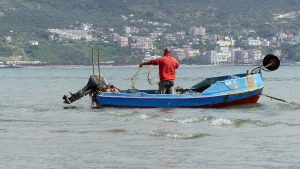
Experience the Bay of Vlora
The Bay of Vlora is best experienced, not simply visited.
Valza Boutique Hotel overlooks one of the bay’s most remarkable natural settings, offering
guests the opportunity to experience the landscapes, traditions and marine heritage explored
throughout the MAREOGRAPH series.
Above the hotel, Eden by Valza continues that journey through Mediterranean cuisine inspired
by the same sea that has sustained local communities for countless generations.
About MAREOGRAPH
MAREOGRAPH is an independent editorial project dedicated to documenting the natural,
historical and cultural heritage of the Bay of Vlora through research-based storytelling.
Each Knowledge Unit combines marine science, history, archaeology, ecology and local
traditions to create a long-term digital knowledge library about one of the Mediterranean’s most
remarkable coastal landscapes.
Rather than serving solely as a travel guide, MAREOGRAPH seeks to preserve, explain and
share the stories, environments and people that have shaped the Bay of Vlora for thousands of
years.


