High above the Shushica, painted human figures that have survived for thousands of years.
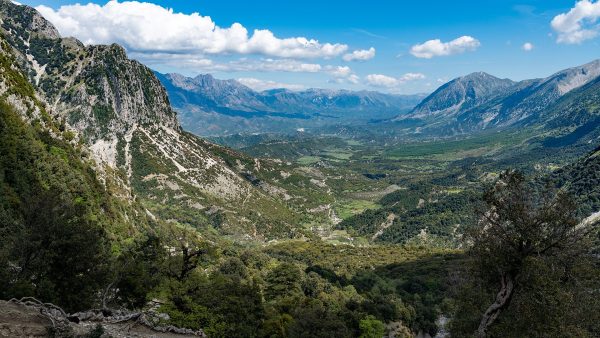
Lepenicë Rock Art Cave is a rock shelter that locals call Shpella e Shkruar, “the Written Cave”, high in the hills of the Shushica valley above the village of Lepenicë. On its wall are 19 human figures and geometric signs, painted in a brownish mineral pigment in prehistory. The final climb is steep and rough: allow 2 to 4 hours.
Who left these figures on the rock?
Above the village of Lepenicë, high in the hills of the Shushica valley, there is a rock shelter that locals call Shpella e Shkruar, “the Written Cave”. Climb up to it, let your eyes adjust to the rock, and the figures appear: human-like shapes and geometric signs painted in a brownish mineral pigment, 19 human figures by the usual count, left there by people who lived in these hills in prehistory.
They were first documented and published by the archaeologist Muzafer Korkuti in the 1980s, who compared them with the post-Palaeolithic rock art of the Alps, and first dated them to the Neolithic. Since 2023 a joint Albanian-Spanish team has been excavating the floor of the shelter to refine that date, and its first results show that people used it not only in prehistory but also in antiquity and the Middle Ages. In March 2025 the paintings were placed under preliminary state protection, the first step towards listing as a first-category cultural monument.
What makes Lepenicë so moving is simply that it has survived. Painted prehistoric art like this is rare in the Balkans, and here it has lasted for thousands of years on an open wall, exposed to wind and rain. Standing in front of it, you are looking at one of the oldest messages anyone has left in this landscape.
The final climb is steep and rough. Ask in the village before you start, and never touch the painted surface.
What you’ll see
-
The climb from Lepenicë
Start in the village and ask there before you set out. The final climb is steep and rough.
-
The Written Cave
A rock shelter high above the Shushica, which locals call Shpella e Shkruar.
-
The painted figures
Let your eyes adjust to the rock: human-like shapes and geometric signs in a brownish mineral pigment.
-
A message from prehistory
One of the oldest messages anyone has left in this landscape. Look, and never touch the painted surface.
The Written Cave in numbers
-
19 human figures
By the usual count, painted in a brownish mineral pigment
-
1984 year
When the archaeologist Muzafer Korkuti documented the paintings
-
2025 year
In March the paintings were placed under preliminary state protection, the first step towards listing as a first-category cultural monument
-
41 kilometres
From Valza, about 55 minutes by car through the Shushica valley, then on foot
Where it is
Above the village of Lepenicë, high in the hills of the Shushica valley, 41 km from Valza.
What to bring
- Shoes with good grip: steep, rough final climb
- Walking pole: steep and uneven ground
- Water: for a two to four hour outing
- Camera with zoom: study the figures without touching them
- Warm layer: cooler months suit the walk
- Snack: for a long walk up and back
Is it worth it?
Yes, if…
you are a history lover or a walker, and want to stand in front of painted prehistoric art that has survived on an open wall.
Maybe not, if…
you want an easy outing: the final climb is steep and rough, on uneven ground.
Come in the cooler months, in morning or late-afternoon light for the paintings.
Combine it with
Continue exploring
More places and ideas for your days around Vlorë:
- All attractions around Vlorë
- Vlorë in autumn: a 3-day itinerary from Orikum to Labëria
- Archaeological sites in Vlorë: Amantia, Orikum, Kanina and ancient Aulona
- Where to stay in Vlorë: our complete guide