Shipwrecks of the Bay of Vlora: the ships that never came home

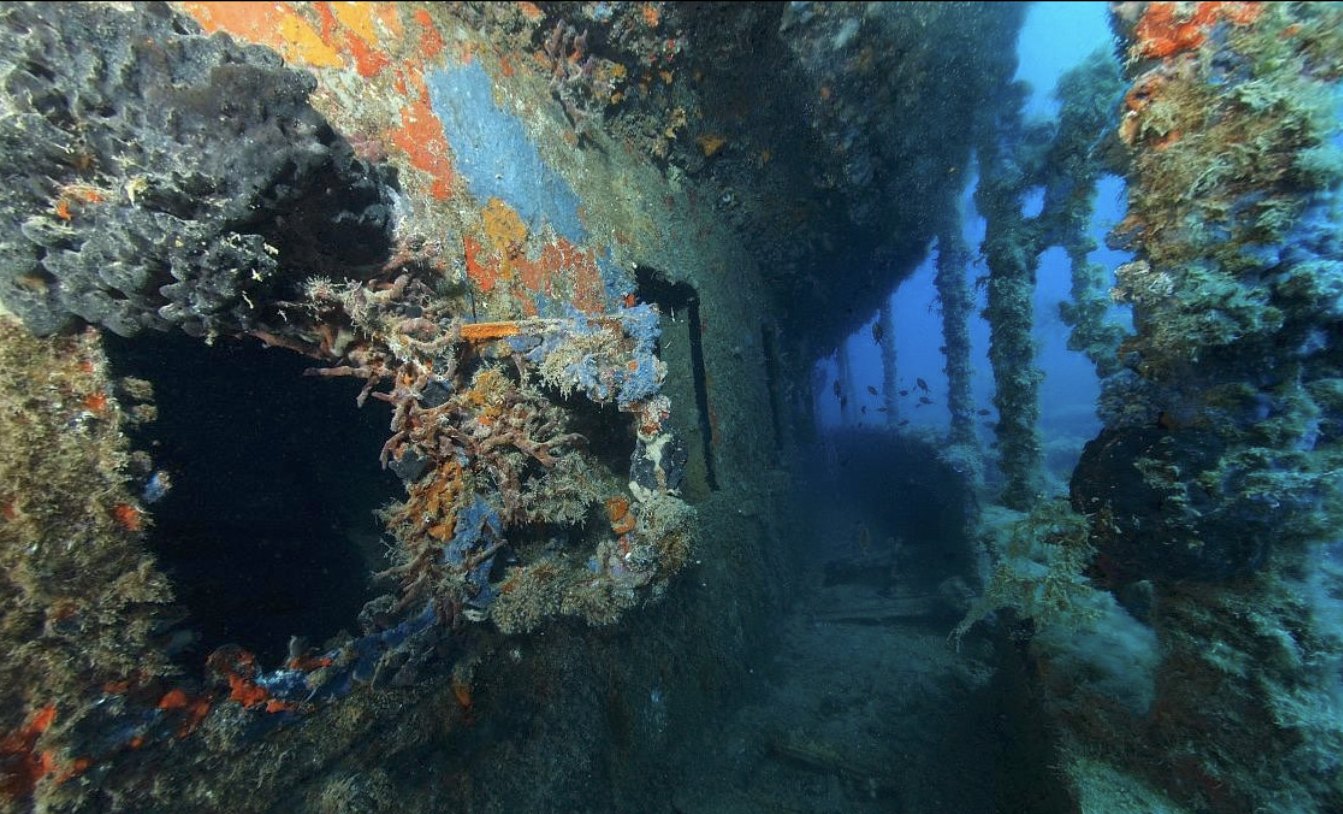
Orange and blue sponges, algae and small fish covering a corridor of the Po shipwreck, 37 metres down in the Bay of Vlora

The Bay of Vlora holds 27 known shipwrecks, from a battleship that sank in five minutes in 1916 to a hospital ship torpedoed under a full moon in 1941. Most lie less than 50 metres down, and the most famous, the hospital ship Po, rests about 1.2 km off Radhimë, roughly 4 km south of Uji i Ftohtë.

Above them the bay looks calm and blue. Below, 806 Italian sailors and soldiers of the two world wars still rest with their ships, and the steel they died in has turned into some of the richest reefs on this coast.

The shipwrecks of the Bay of Vlora at a glance

What it is
Twenty-seven sunken ships and objects mapped on the seabed of the bay, eight of them Italian warships and transports lost in 1915–1943.
Where
Across an area of about 315 sq km; the Po lies off Radhimë, about 4 km south of Valza Boutique Hotel in Uji i Ftohtë.
Time needed
One dive takes a morning with a dive centre; reading this story takes ten minutes.
Best time
June to September, when the surface water is warmest and visibility in good weather can reach 20–25 metres.
Cost
Diving is through licensed dive centres; ask them for the current rates before you book.
Good for
Certified divers, history lovers and anyone who wants to know what lies under the boat on the way to Sazan.
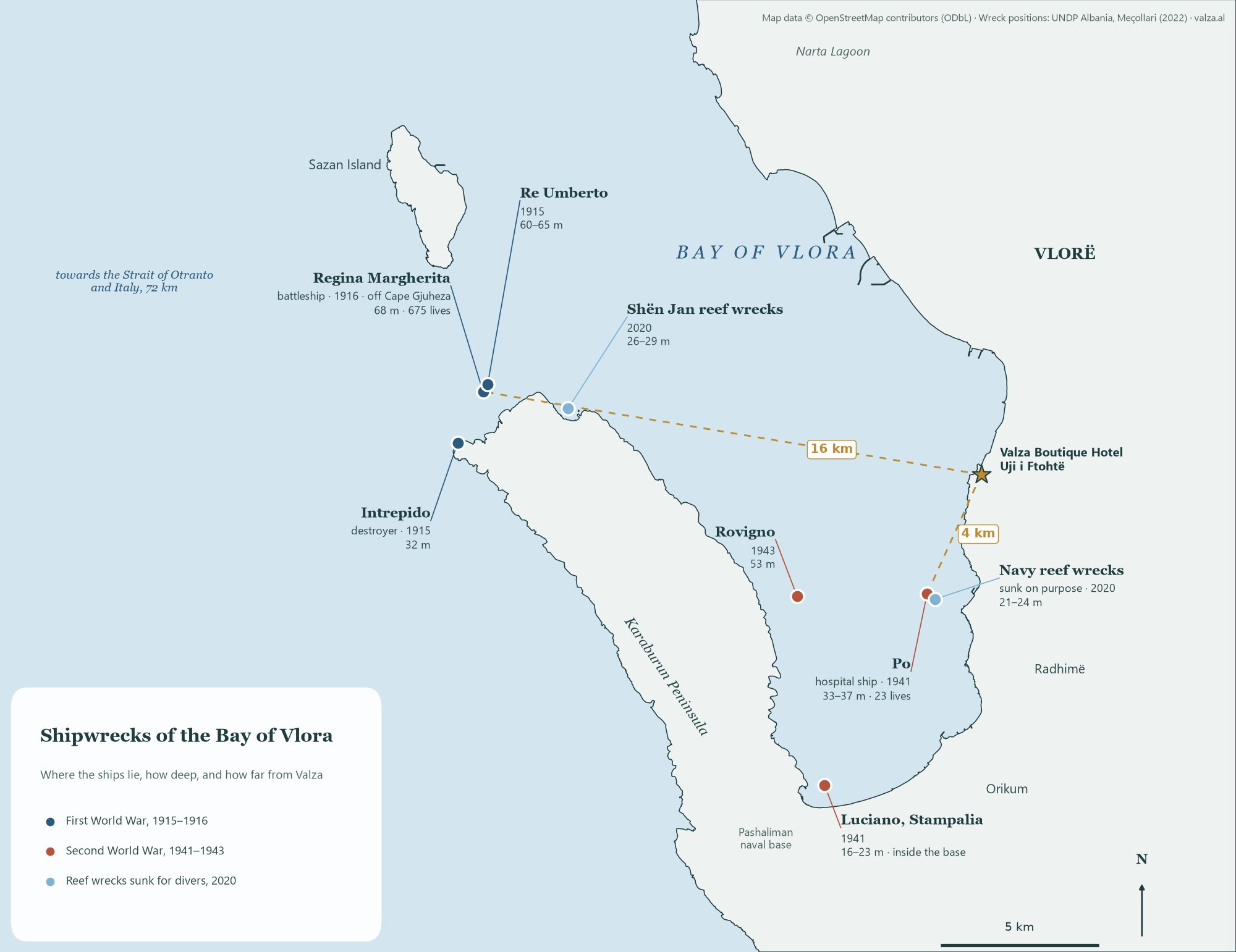
Map of the Bay of Vlora showing where the shipwrecks lie, from the Regina Margherita off Cape Gjuheza to the hospital ship Po off Radhimë, with depths, years and distances from Valza Boutique Hotel

Where the ships lie, how deep they are and how far they are from Valza Boutique Hotel. Map: Valza, with data from OpenStreetMap contributors (ODbL) and wreck positions from the UNDP study of the bay.

Why are there so many shipwrecks in the Bay of Vlora?

Because for a century this was one of the most strategic harbours in the Adriatic. The bay is deep, sheltered and only about 72 km from Italy across the Strait of Otranto, so whoever held Vlorë and Sazan Island could watch the door between the Adriatic and the Mediterranean.

In the First World War Italy occupied Vlorë and Sazan and closed the bay with three lines of naval mines, so no enemy ship could enter. The danger came instead from under the water: a small German submarine, UC-14, slipped in and laid its own mines in the narrow passage off Cape Gjuheza, at the tip of the Karaburun Peninsula. Three Italian ships died on those mines.

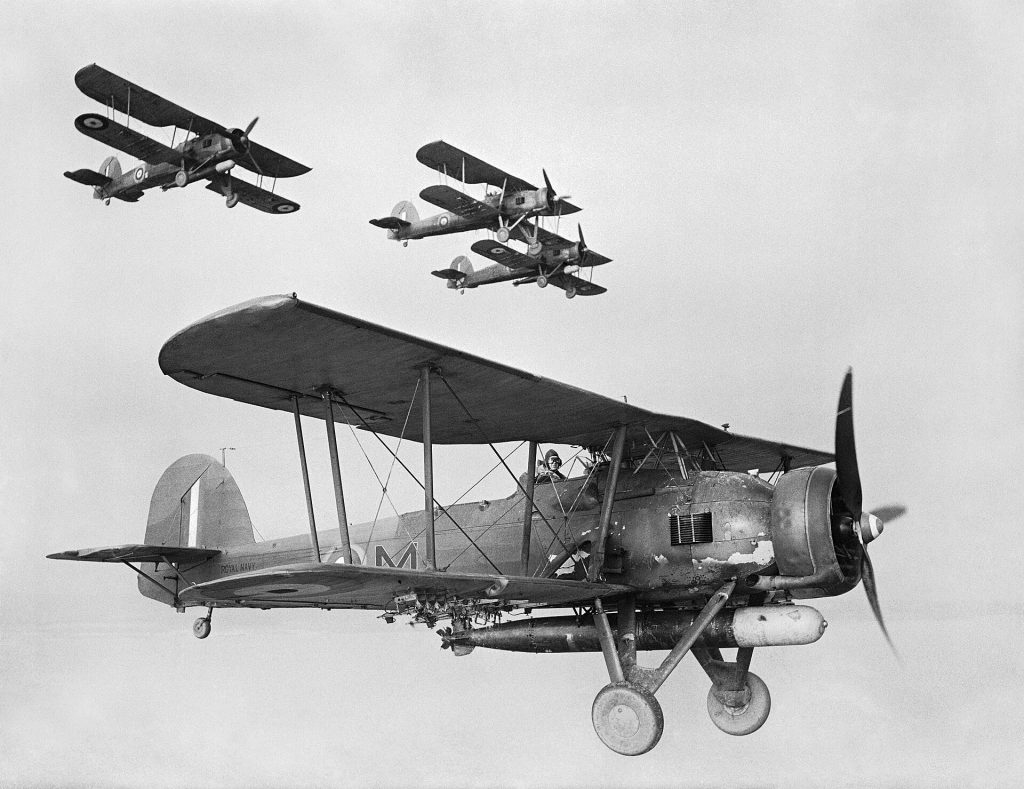
In the Second World War the bay was the Italian navy’s bridge to Albania and Greece. After the British attack on Taranto in November 1940, a squadron of slow British biplanes, the Fairey Swordfish, moved to Paramythia in Greece, close enough to reach Vlorë by night. In two years they and British torpedo boats sank five more Italian ships inside the bay.

The story did not end with the war. In 1997, during the civil unrest, unguarded Albanian navy ships broke their moorings at the Pashaliman base and sank in the north of the bay. In 2020 the navy sank five old ships on purpose, off Radhimë and in the bay of Shën Jan, to give divers new reefs to explore.

A century under the bay, in eight dates

  1. 4 December 1915

    The troop and cargo ship Re Umberto hits a German mine off Cape Gjuheza, breaks in two and sinks in about 15 minutes; about 60 people die. Hours later the destroyer Intrepido, hunting the submarine, hits a mine nearby and runs aground.

  2. 11 December 1916

    The battleship Regina Margherita strikes two mines at 21:34 and sinks in five minutes; 675 of the 945 people on board are lost.

  3. 14 March 1941

    A British torpedo sinks the hospital ship Po off Radhimë at 23:13; 23 of the 240 people on board die.

  4. 17 March 1941

    The destroyer Andromeda, at anchor near Karaburun, is torpedoed by Swordfish aircraft and breaks in two; 50 of the crew die.

  5. 15 April 1941

    Swordfish torpedoes sink the cargo ships Luciano, loaded with ammunition, and Stampalia near today’s Pashaliman base; no sailor dies.

  6. 23 September 1943

    British torpedo boats sink the auxiliary destroyer Rovigno, captured by the Germans two weeks earlier on Sazan.

  7. 30 July 2005

    After 89 years, divers identify the wreck of the Regina Margherita at 68 metres; the same expedition also dives the Po.

  8. July–September 2020

    The Albanian navy sinks five decommissioned ships off Radhimë and Shën Jan as artificial reefs for divers.


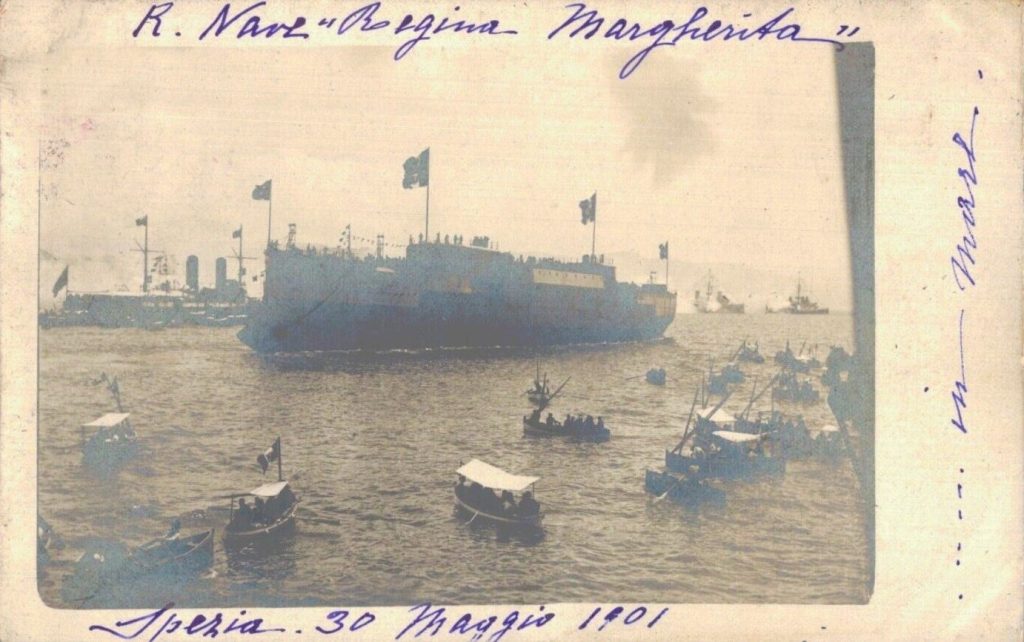
The Italian battleship Regina Margherita in the harbour of La Spezia in 1901, fifteen years before it sank off Karaburun

The battleship Regina Margherita at La Spezia in 1901. Photo: unknown author, public domain, via Wikimedia Commons

The Regina Margherita: five minutes on a winter night

The worst disaster in the bay took less time than it takes to read this section. On the evening of 11 December 1916 the battleship Regina Margherita, 138.65 metres long and 14,319 tonnes, left the port of Vlorë for routine repairs in Taranto. The sea in the southern channel was rough, and two destroyers escorted her.

At 21:34, in the corridor off Cape Gjuheza that was supposed to be safe, she struck two mines, one at the stern and one amidships. The mines had been laid by the same submarine, UC-14, that had sunk the Re Umberto a year earlier. In five minutes the ship was gone.

Of the 945 people on board, 675 went down with her, including her captain, Giovanbattista Bozzo Gravina, and General Oreste Bandini, who had handed over command of the Italian forces in Vlorë just two days before and was travelling home. For 89 years nobody knew exactly where she lay. On 30 July 2005, at 07:20, two divers found her 68 metres down, deeper than most recreational divers are trained to go. In 2016 a joint Albanian and Italian team marked the hundredth anniversary of the sinking.

The hospital ship Po: torpedoed under a full moon

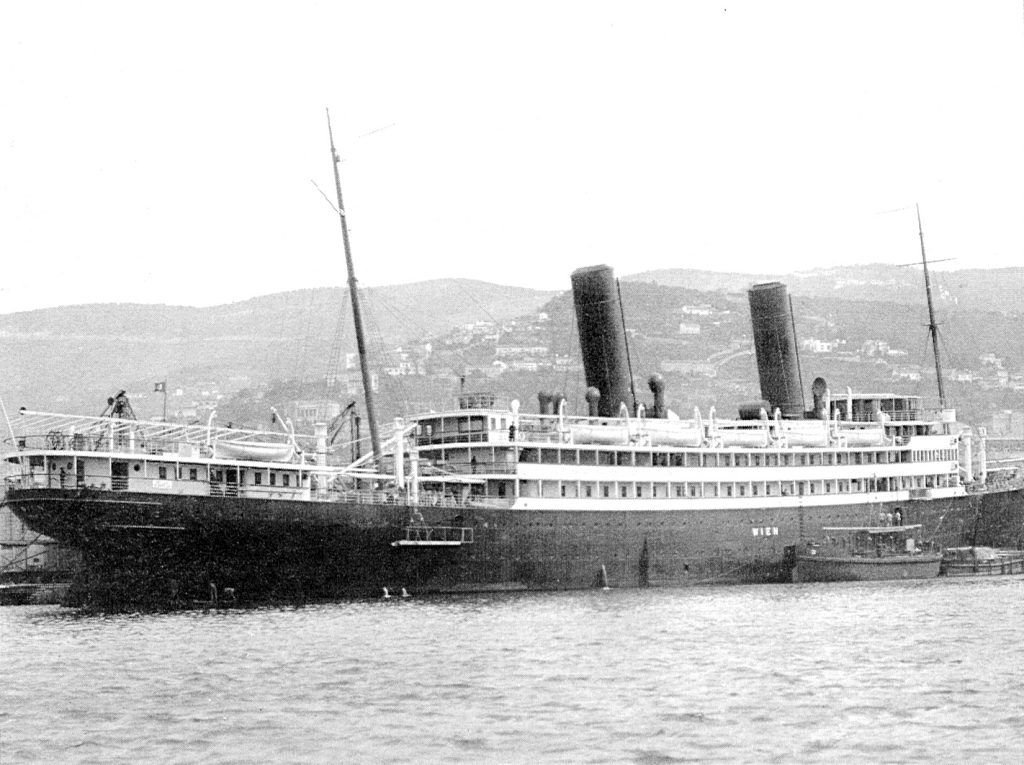
The Po is the wreck everyone in Vlorë has heard of, because of who was on board. She began life in 1911 as the Wien, an elegant passenger steamer of the Austrian Lloyd in Trieste. After the First World War she passed to Italy as the Vienna, and in 1938 she became the hospital ship Po.


The Austrian Lloyd passenger steamer Wien, launched in Trieste in 1911, which later became the Italian hospital ship Po

The Austrian Lloyd steamer Wien, the ship that became the Po. Photo: unknown author, public domain, via Wikimedia Commons

In March 1941 the Italian army was retreating from the Greek front, and its wounded were gathered at a field hospital in Radhimë. The Po anchored about a kilometre off the coast to take them to Italy the next morning. On board was a team of volunteer nurses of the Italian Red Cross, and among them was Edda Ciano, Mussolini’s daughter and the wife of Italy’s foreign minister.

The night of 14 March was lit by a full moon. On orders from naval headquarters, the Po had switched off all her lights, so that British aircraft would not find the other ships in the bay. Shortly after 23:00 five Swordfish came in low from Cape Gjuheza. At 23:13 a torpedo hit the Po on the starboard side, near the stern. Three nurses jumped into the sea in panic, sailors were trapped below, and in ten minutes the ship was on the seabed.

Twenty-three people died, three of them Red Cross nurses. Edda Ciano survived. Was it a war crime to torpedo a hospital ship? The UNDP study of the bay’s wrecks concludes it was not: under the Hague Convention of 1907, a hospital ship that hides its lights or sails with warships loses its protected status.


A formation of British Fairey Swordfish biplane torpedo bombers in flight in 1940, the aircraft type that attacked the Bay of Vlora in 1941

Fairey Swordfish torpedo bombers in 1940, the aircraft type that attacked the Bay of Vlora. Photo: Lt S. J. Beadell, Royal Navy, IWM A 3532, public domain, via Wikimedia Commons

The other ships under the bay

Eight Italian ships lie in the bay, and each has its own story. The table shows how deep they are and how many lives they took, which is also, roughly, who can visit them today.

Sunk Depth Lives lost
Re Umberto, troop and cargo ship 4 December 1915 About 60–65 m About 60
Intrepido, destroyer 4 December 1915 32 m None recorded
Regina Margherita, battleship 11 December 1916 68 m 675
Po, hospital ship 14 March 1941 33–37 m 23
Andromeda, destroyer 17 March 1941 45 m 50
Luciano, cargo ship 15 April 1941 23 m None
Stampalia, cargo ship 15 April 1941 16 m None
Rovigno, auxiliary destroyer 23 September 1943 53 m Not recorded
Our take The Po is the one to dream about: deep enough to need advanced training, shallow enough to visit. The deeper wrecks off Cape Gjuheza are for technical divers only.

The Andromeda broke in two at midnight. On 16 March 1941, two days after the Po, the destroyer anchored near the Karaburun coast with other ships. At midnight six Swordfish appeared; her commander ordered the anchor up, too late. Fifty of her 99 crew died, and 45 of them were never found. Her commander survived and later retired as a rear admiral. Divers identified the wreck only in 2016.

The Luciano still carries her ammunition. She was anchored near today’s Pashaliman naval base with a cargo of shells when Swordfish attacked in the early hours of 15 April 1941. She exploded and sank at 23 metres; the Stampalia, moored at the pier, followed her. Not one sailor died. Shells are still visible on the Luciano’s deck, and the wrecks lie inside a military area, so they are not dive sites.

The Rovigno changed sides without choosing. When Italy signed the armistice on 8 September 1943, she was at Sazan Island and fell into German hands while her twin, the Pola, escaped to Brindisi. Fifteen days later, at 02:10 on 23 September, British torpedo boats crept into the bay and sank her at 53 metres.

What lives on the wrecks today?

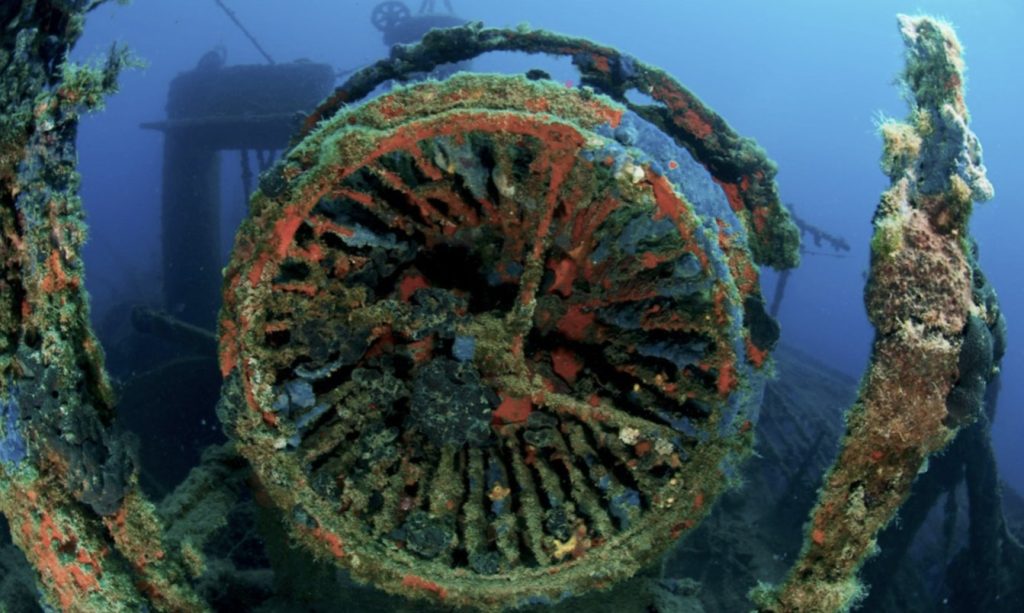
A lot more than rust. Between 2022 and 2024 an Albanian and Italian scientific team made 32 dives on the Po and published the results in 2026. They found the ship sitting upright on a flat seabed at 33–37 metres, as if still at anchor, and more than 80 per cent of her bow covered in living organisms.


A round deck winch of the Po shipwreck in the Bay of Vlora, its spokes coated in red and orange sponges and algae

A deck winch of the Po, coated in sponges. Photo: Modugno and colleagues, Frontiers in Ocean Sustainability (2026), CC BY 4.0

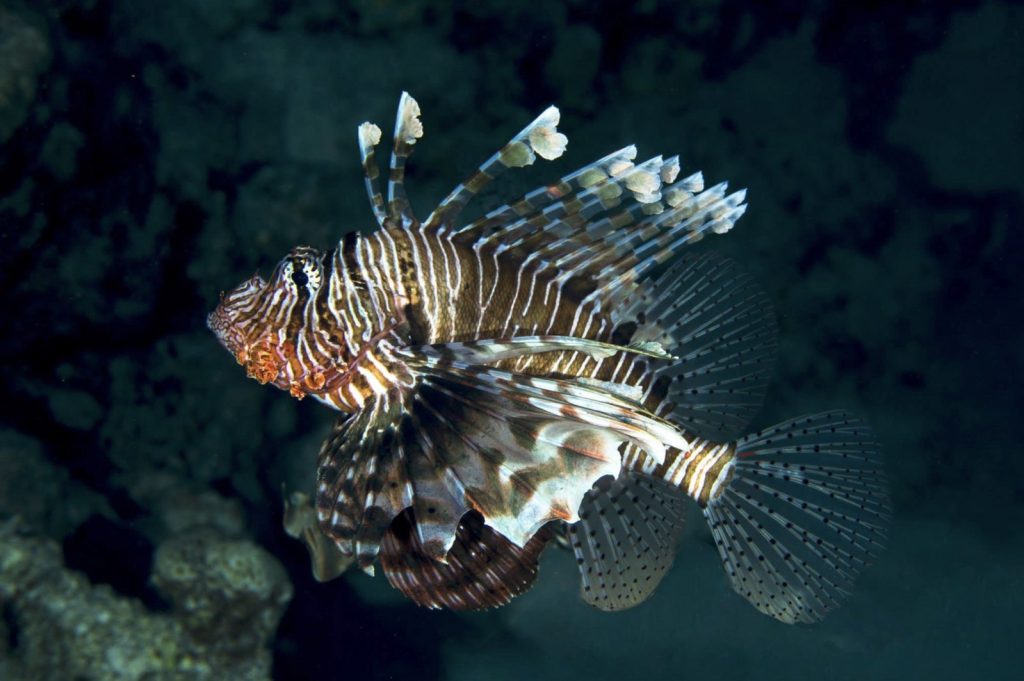
Orange and red sponges, sea squirts and lace-like bryozoans form a crust over the steel plates, and the team counted 28 species of fish living around the wreck. They also recorded the egg masses of flying squid, and the lionfish, a striking but invasive species that has reached the Albanian coast from the eastern Mediterranean.

The most moving find was not on the wreck but near it: a sighting of the Mediterranean monk seal, one of the rarest marine mammals in the world. The scientists think the wreck may sometimes work as a feeding area for the seal. A ship built to carry the wounded now shelters life.

The wrecks are part of something bigger. Since 28 April 2010 the waters of Karaburun and Sazan have formed the Karaburun–Sazan Marine Park, Albania’s first, covering about 125 square kilometres, and the 2026 study places the Po within the protected area. Meadows of Posidonia seagrass grow in the shallows, and common and bottlenose dolphins are regularly reported in these waters. A bay that was a battlefield is now a sanctuary.


A striped lionfish, Pterois miles, with its fins spread, photographed underwater in Albania in 2024

A lionfish photographed in Albanian waters in 2024. Photo: Simone Modugno, in Frontiers in Ocean Sustainability (2026), CC BY 4.0

From naval fortress to dive site: the bay today

For most of the last century nobody could dive these wrecks. After 1945 Sazan Island and the Bay of Vlora became a military fortress: at the height of the Cold War more than 5,000 soldiers served on Sazan, and the Pashaliman base hosted a fleet of submarines. From 1998 to 2012 a small Italian navy unit was based on Sazan to stop trafficking across the Strait of Otranto. Today the island is open to visitors, mainly in summer.

The navy that guarded the bay now helps people explore it. In 2020, with the approval of the Ministry of Tourism, the Albanian navy sank five old ships off Radhimë and in the bay of Shën Jan, to give divers new reefs to visit. Albanian and Italian scientists, together with the Albanian Diving Federation and the Institute for Nature Conservation in Albania, now study the Po as an artificial reef, and in 2024 the CMAS World Underwater Photo and Video Championships brought underwater photographers from around the world to Albania.

And the dead are not forgotten. Albanian and Italian teams have marked the anniversaries of the sinkings together, as they did for the hundredth anniversary of the Regina Margherita in 2016. The UNDP study calls the bay the resting place of 806 Italian sailors and soldiers, and asks for clear rules so that the wrecks can welcome divers and stay protected.

Myths and misunderstandings

Three things visitors often believe about the wrecks of the bay, and what the studies say.

Myth“Shipwrecks are just rusting metal.”Tap to see the reality

Reality On the Po, more than 80 per cent of the bow is covered in sponges, sea squirts and other life, and 28 species of fish live around the wreck.

Myth“Only technical divers can see a wreck in Vlorë.”Tap to see the reality

Reality The ships sunk in 2020 off Radhimë and Shën Jan lie at about 21–29 metres, and the Intrepido at 32 metres. The Regina Margherita, at 68 metres, is for technical divers only.

Myth“The Po was sunk illegally because it was a hospital ship.”Tap to see the reality

Reality The Po had switched off her lights on orders from headquarters. The UNDP study concludes that this cost her the protection of the Hague Convention of 1907.

Did you know?

  • 806 sailors

    Italian sailors and soldiers of both world wars still rest in the bay

  • 27 wrecks

    Ships and objects mapped on about 315 sq km of seabed

  • 135 metres

    The length of the Po, longer than a football pitch

  • 89 years

    How long the Regina Margherita stayed lost, until July 2005

  • In the last 120 years about 120 ships have sunk in Albanian waters, and around 60 per cent of them were lost in the two world wars.
  • The same small German submarine, UC-14, laid the mines that sank both the Re Umberto in 1915 and the Regina Margherita in 1916, and with them about 735 lives.

Test yourself: how well do you know the wrecks of the bay?

1. How long did the Regina Margherita take to sink?

  • About an hour
  • Five minutes
  • Fifteen minutes
Show the answer

Five minutes. She struck two mines at 21:34 on 11 December 1916 and sank in five minutes, taking 675 lives.

2. What was the hospital ship Po called when she was built in 1911?

  • Trieste
  • Valona
  • Wien
Show the answer

Wien. She was a passenger steamer of the Austrian Lloyd, then the Vienna, and became the Po in 1938.

3. Which rare animal was sighted near the wreck of the Po?

  • The Mediterranean monk seal
  • The loggerhead turtle
  • The sperm whale
Show the answer

The Mediterranean monk seal. Scientists think the wreck may sometimes be a feeding area for this critically endangered seal.

A day above the wrecks

You do not need to be a diver to spend a whole day with these stories. Here is how we would plan it, from the first boat to the last light.

  1. Morning

    Out over the wrecks. Divers head out with a dive centre to the Po or the 2020 reef wrecks. Everyone else takes a boat trip towards Karaburun: on the way to Haxhi Ali Cave the boats round Cape Gjuheza, right above the Regina Margherita and the Re Umberto.

  2. Late morning

    A swim in the marine park. The boat trips stop in the bays of Karaburun, inside Albania’s first marine park, where the water is clear enough to see the seabed far below.

  3. Lunch

    Fish by the water. Back on land, have lunch in Radhimë or Orikum, the villages closest to the Po and to the old Pashaliman base.

  4. Afternoon

    Mask and snorkel at Radhimë. Swim off the beaches of Radhimë: the Po lies about 1.2 km out, some 35 metres below the boats you see on the horizon.

  5. Sunset

    Look back across the bay. From the rooftop of Eden by Valza, watch the sun go down towards Sazan and Karaburun, over the cape where the battleship lies.


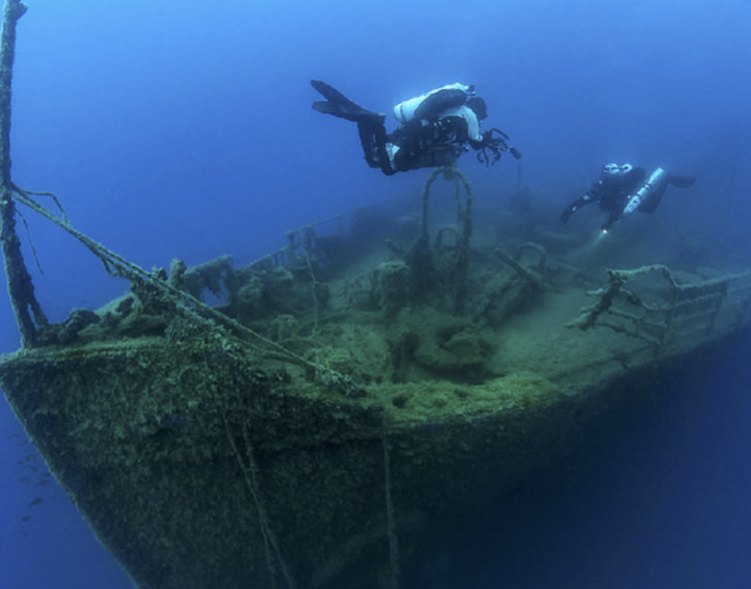
Two technical divers swimming above the bow of the hospital ship Po, lying upright on the seabed of the Bay of Vlora

Divers above the bow of the Po. Photo: Mauro Pazzi, in Modugno and colleagues, Frontiers in Ocean Sustainability (2026), CC BY 4.0

How can you see the shipwrecks of Vlorë?

With a dive centre if you are certified, and with your imagination from a boat or a beach if you are not.

Diving

Book with a licensed dive centre in Vlorë or Orikum and bring your certification card. The Po at 33–37 metres needs advanced training; the 2020 wrecks at 21–29 metres suit most advanced divers.

Without diving

Swim at Radhimë and look out to sea: the Po lies about 1.2 km off that coast. Boat trips to Karaburun pass Cape Gjuheza, above the Regina Margherita.

From Valza

The Po lies about 4 km south of Uji i Ftohtë; the wrecks off Cape Gjuheza are about 16 km west, across the bay.

The sea

Surface water reaches 23–25°C in July and August and falls to 11–14°C in February; it is much colder at the depth of the wrecks.

Respect

Several wrecks are war graves, and the bay is part of a marine protected area. Look, photograph, and take nothing.

Wreck diving in Albania is still loosely regulated, the UNDP study warns, so choose a centre that briefs you properly and dives in small groups.

Where the wrecks are

  1. The hospital ship Po

    33–37 metres, about 1.2 km off Radhimë.

  2. The 2020 wrecks off Radhimë

    Three navy ships sunk as reefs at about 21–24 metres, close to the Po.

  3. The 2020 wrecks of Shën Jan

    A diving tender and a patrol boat at 26–29 metres, on the Karaburun side.

  4. The Regina Margherita

    68 metres, off Cape Gjuheza, next to the Re Umberto.

  5. The Rovigno

    53 metres, in the southern part of the bay.

Positions from the UNDP study of the bay; dive only with a licensed centre.

What can you see of the wrecks from Vlorë?

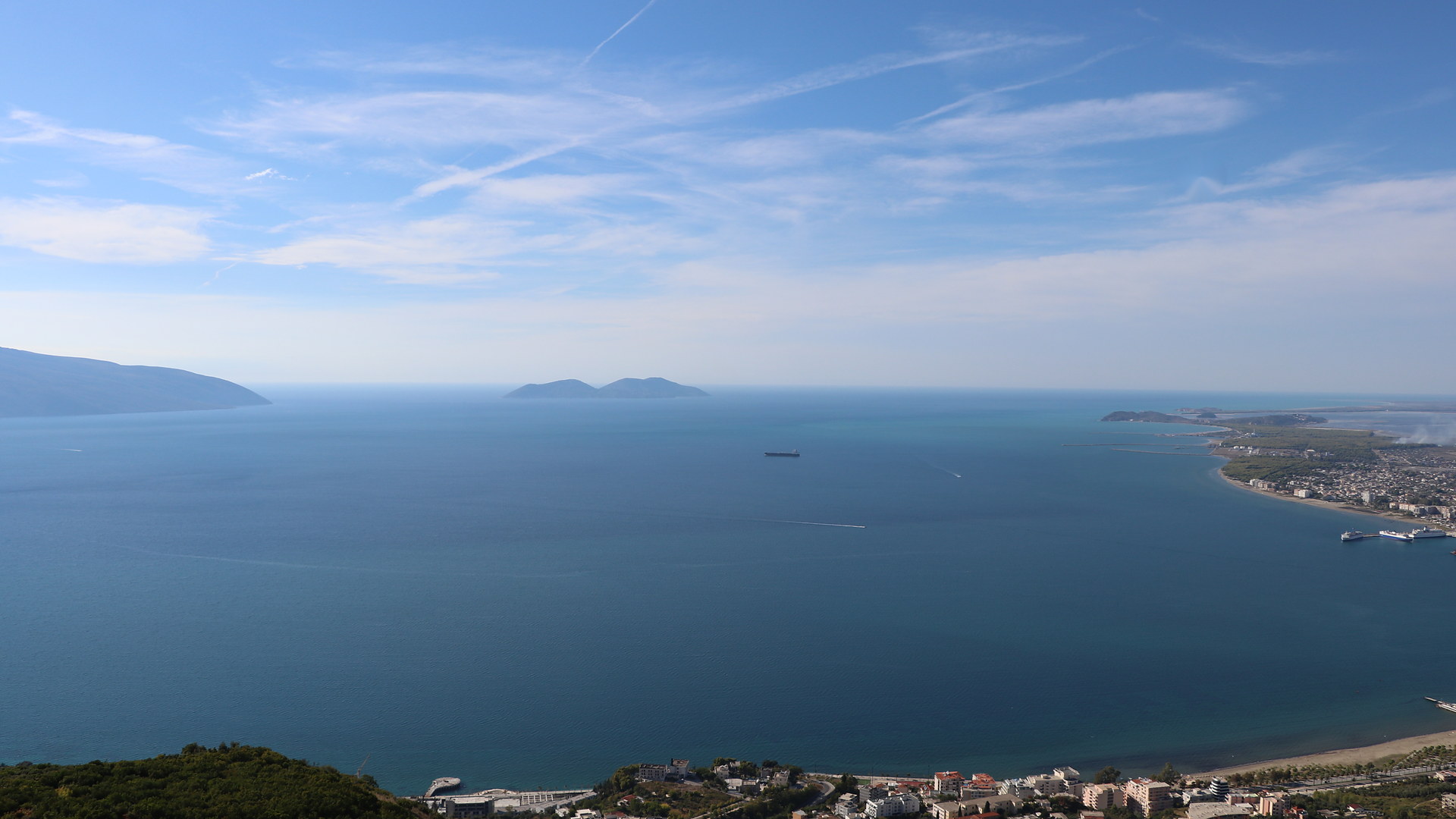
Not the ships themselves, but the whole stage where their stories happened. From Eden by Valza, on the sixth-floor rooftop of our hotel in Uji i Ftohtë, the 180-degree view takes in the Bay of Vlora from the city to Karaburun.

Look west: the long ridge across the water is the Karaburun Peninsula, and its northern tip, Cape Gjuheza, about 16 km away, is where the Regina Margherita and the Re Umberto lie. Sazan Island rises just to the right of it, across a narrow channel. Look south, towards Radhimë: about 4 km away, beneath the fishing boats, lies the Po. In midsummer the sun goes down close to Sazan, in spring and autumn over the ridge of Karaburun, above the same water the Swordfish crossed in 1941.


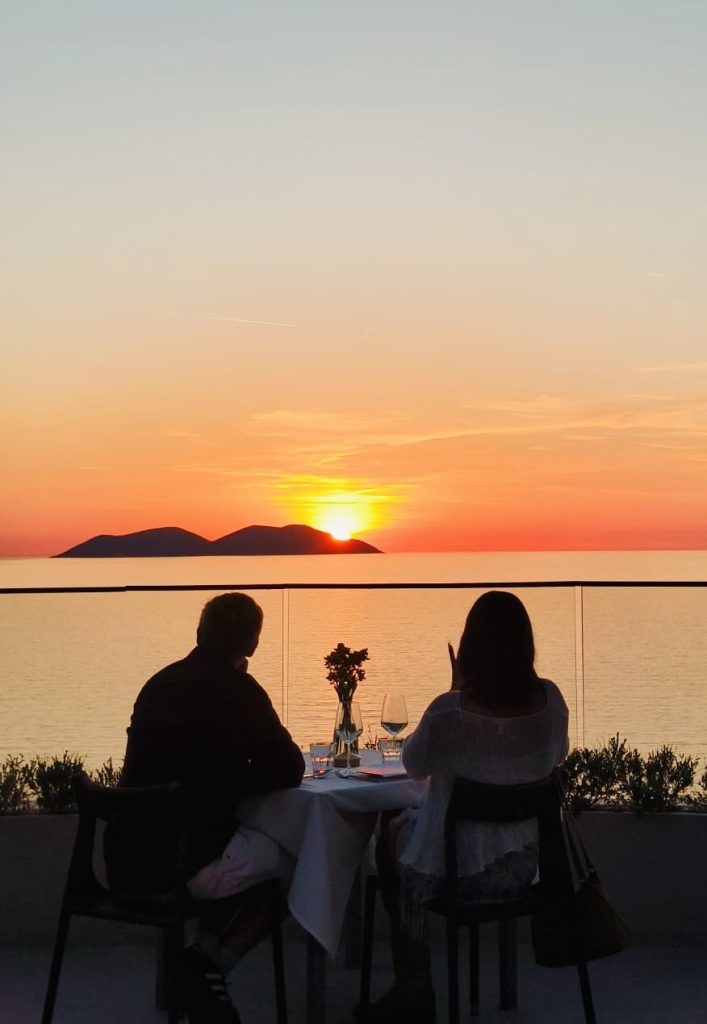
A couple at a table on the Eden by Valza rooftop in Vlorë watching the sun set behind Sazan Island over the Bay of Vlora

The view from Eden by Valza on a summer evening: the sun goes down behind Sazan Island, at the mouth of the Bay of Vlora.

Sunset in Vlorë today

The sun sets to the west, towards Sazan Island and the Karaburun Peninsula.

Ask for a table facing Karaburun: the cape where the Regina Margherita lies is right in front of you.

Are the shipwrecks of Vlorë worth diving?

Yes, if…

you are a certified diver who likes history: few places in the Mediterranean have a hospital ship, a battleship and modern reef wrecks within one bay.

Maybe not, if…

you have only just learned to dive: the famous wrecks lie beyond 30 metres, and the deepest need technical training.

Start with the 2020 wrecks off Radhimë, then come back for the Po.

Not a diver? The bay still tells the story from above. The boat to Sazan Island, the former Italian and Albanian naval base crosses the same water the Swordfish flew over, and the bays of the Karaburun-Sazan marine park hold older wrecks still, from Greek and Roman times. For a beach day above the Po, read our guide to the beaches of Radhimë. Ancient sailors feared this cape too, as we tell in the legends of the mythic south.

Go deeper

Our corner of the bay

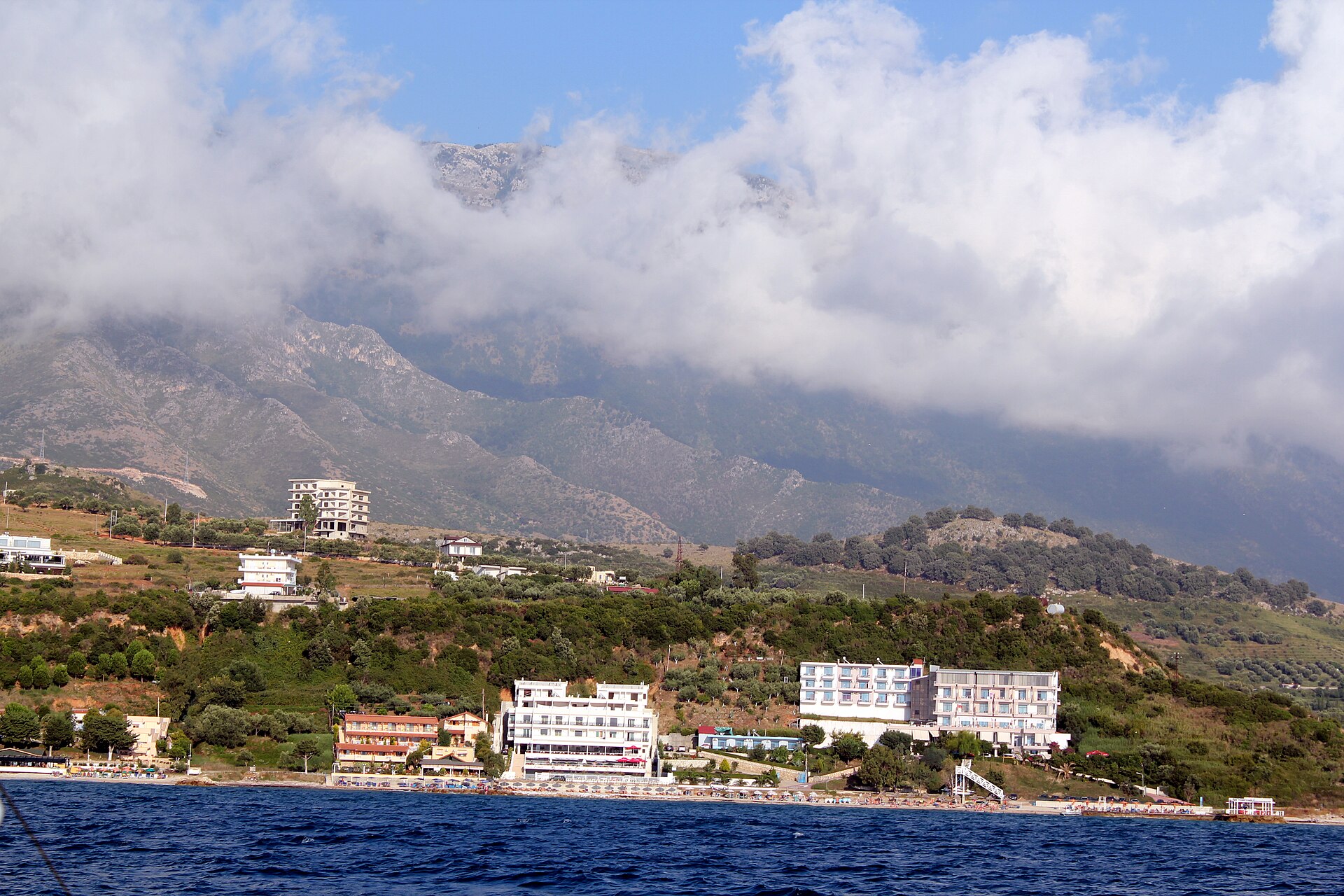
We are Valza Boutique Hotel, a family-run 4-star hotel in Uji i Ftohtë, on the southern side of Vlorë, a few minutes’ walk from the beach and about 4 km from the Po. Our reception helps guests choose and book boat trips to Sazan Island and the Karaburun Peninsula. After a day on the water, Eden by Valza on our sixth-floor rooftop looks out over the whole bay. See our rooms.

Frequently asked questions about the shipwrecks of the Bay of Vlora


How many shipwrecks are there in the Bay of Vlora?

The UNDP study of the bay counts 27 objects on about 315 square kilometres of seabed: 21 explored or identified and 7 still to be identified. Eight are Italian ships lost between 1915 and 1943, others are Albanian navy ships sunk in 1997 or scuttled as reefs in 2020.


Can you dive the wreck of the Po in Vlorë?

Yes, with a licensed dive centre and the right certification. The hospital ship Po rests upright at 33 to 37 metres about 1.2 kilometres off Radhimë, so divers need advanced training and experience at that depth. Several wrecks in the bay are war graves, so nothing may be touched or taken.


Which wreck in the Bay of Vlora is best for less experienced divers?

The navy ships scuttled as artificial reefs in 2020 off Radhimë and in the bay of Shën Jan lie at about 21 to 29 metres. They suit divers with advanced certification better than the Po or the deep wrecks off Cape Gjuheza. Ask the dive centre which site matches your level.


How did the battleship Regina Margherita sink?

On the night of 11 December 1916 the Regina Margherita left Vlorë for Taranto and struck two mines off Cape Gjuheza at 21:34. The mines had been laid by the German submarine UC-14. The battleship sank in five minutes, and 675 of the 945 people on board died. Divers found the wreck at 68 metres only in July 2005.


Can you see the shipwrecks of Vlorë without diving?

Not the wrecks themselves, because even the shallowest lie more than 15 metres down. You can swim at Radhimë, about 1.2 kilometres from the Po, or take a boat trip to Karaburun past Cape Gjuheza, where the Regina Margherita and the Re Umberto lie. The stories and the photos in this guide do the rest.


When is the best time to dive in the Bay of Vlora?

June to September is the usual season. The surface water reaches 23 to 25 degrees in July and August, and in good weather visibility can reach 20 to 25 metres. The water is much colder at the depth of the wrecks, so divers usually wear a full wetsuit even in summer.


Sources

  1. Artur Meçollari, Underwater Naval History and Cultural Heritage in Vlora Bay, UNDP Albania (2022) — the 27 wrecks, their dates, depths, positions and losses, and the stories of each ship.
  2. Modugno and colleagues, Frontiers in Ocean Sustainability 4 (2026) — the 2022–2024 survey of the Po: depth, 32 dives, more than 80 per cent coverage, 28 fish species, the monk seal and the photos of the wreck.
  3. Wikimedia Commons, the Austrian Lloyd steamer Wien — the Po’s first life as a passenger ship, launched in 1911.