A coast where storms were blamed on dragons, sailors carved prayers into the rock, and every ancient city claimed a hero from Troy.
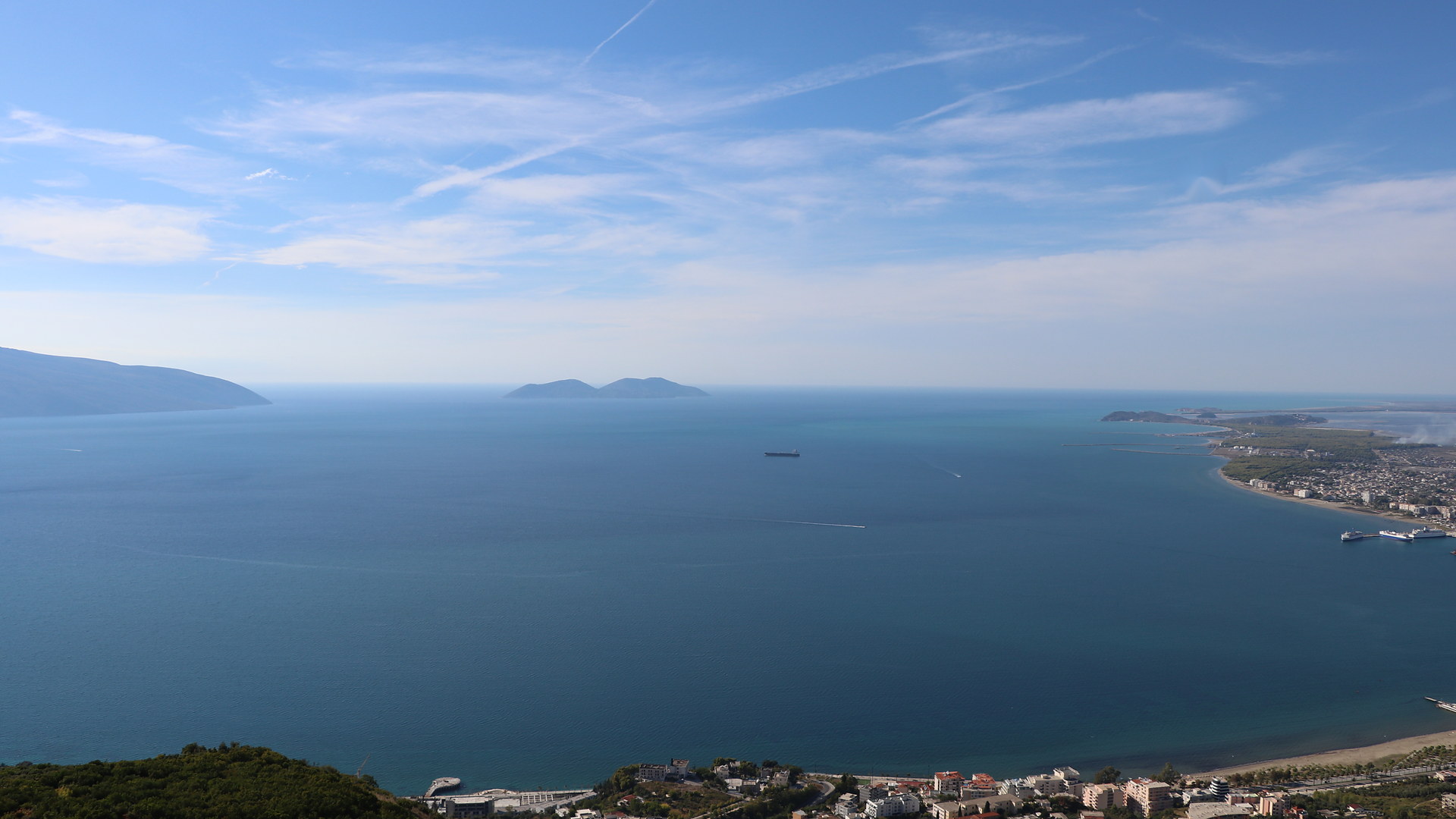
The mythic south of Albania is the coast between the Bay of Vlorë and Butrint, where Greek and Roman writers set some of their best-known stories and Albanian villages kept their own: heroes home from Troy, the people of Medea at Oricum, the twin gods of sailors at Grama Bay, the dragon’s eye of the Blue Eye, Argjiro’s leap at Gjirokastër and the winged drangue fighting the kuçedra in the storm. Every legend has a place you can visit. From Valza, Kanina Castle is about 7 km away.
The mythic south at a glance
- What it is
- The coast between the Bay of Vlora and Butrint, where heroes, sailors and castles meet legend.
- Where
- From Valza in Uji i Ftohtë: Kanina Castle about 7 km, Orikum 20 km, Llogara Pass 42 km, Qeparo 70 km, Borsh 75 km, Butrint 125 km.
- Time needed
- Give the bay one day, the sea one day and the Riviera one more; Butrint is a fourth, early start.
- Best time
- Spring and autumn for castles and walks; June to September for boat trips.
- Cost
- Check the current ticket price and opening hours of Butrint and of the castles before you go.
- Good for
- Travellers who like their history with a story attached.
Eleven legends of the mythic south, and where to find them
Some of these stories were written down two thousand years ago; others were told in village houses until yesterday. Each one comes with the place where it happened, and with what historians, archaeologists and geologists say about it.
The coast in dates
- 3rd century BC
Sailors begin carving prayers for a safe voyage into the rock of Grama Bay; the inscriptions continue until the 15th and 16th centuries.
- January 48 BC
Julius Caesar crosses the Adriatic with seven legions and lands at Palaeste, most often identified with Palasë; Oricum is the first city he takes.
- 1258
The Despot of Epirus gives Borsh Castle, with Butrint and Corfu, as the dowry of his daughter Helena to Manfred, King of Sicily.
- 1414
Rugina Balsha inherits the Principality of Vlorë from her husband, with Kanina Castle as its seat.
- June 1417
The Ottomans take Vlorë before the Venetians finish bargaining; Rugina flees to Corfu.
- 1760
The Church of St Demetrius is built in Qeparo.
- 1804
The fortress of Porto Palermo is built for Ali Pasha of Tepelena.
- 1957
The coastal road reaches Qeparo, and families gradually move down from the old village to the sea.
Caesar’s winter landing
One story here needs no legend. In January 48 BC Julius Caesar crossed the Adriatic with seven legions and landed at Palaeste, beyond the mountains. The Julius Caesar Trail drops about 950 metres from near the Llogara Pass to Palasë: a steep walk for experienced hikers, with a pickup arranged at the bottom.
Kanina Castle: the hill that held the bay
Above Vlorë, on the slope of Mount Shushicë about 380 metres above the sea, Kanina Castle is where history and oral memory meet. In the 14th and 15th centuries it was the seat of the Principality of Vlorë, and its guardian is legend number 6 above.
The castle is about 16 km from Valza, around 30 minutes by car, with a small car park on its north side. Allow an hour or so, wear shoes with a good grip on the old stones, and come in the late afternoon, when the bay turns gold and the lights of Vlorë come on below you.
Llogara: the threshold between two worlds
From Uji i Ftohtë the road south follows the bay through Radhimë and Orikum, then climbs into pine forest. At the Llogara Pass, 1,027 metres above the sea and about 42 km from Valza, around 55 minutes by car, the coast you have been following ends and the Ionian Riviera opens below you. In local perception the pass has always been more than a road. Fog, light and visibility change quickly up here, and travellers often describe a moment of disorientation, as if the landscape were rearranging itself. Llogara is not crossed. It is entered.
There is now a faster way through: a road tunnel of about 6 km that, according to the Albanian government, cuts the drive between Dukat and Palasë from about 30 minutes to around 7. Use it when the beaches are calling; drive the old road over the pass at least once, for the view.
Qeparo and Borsh: villages that watched the sea
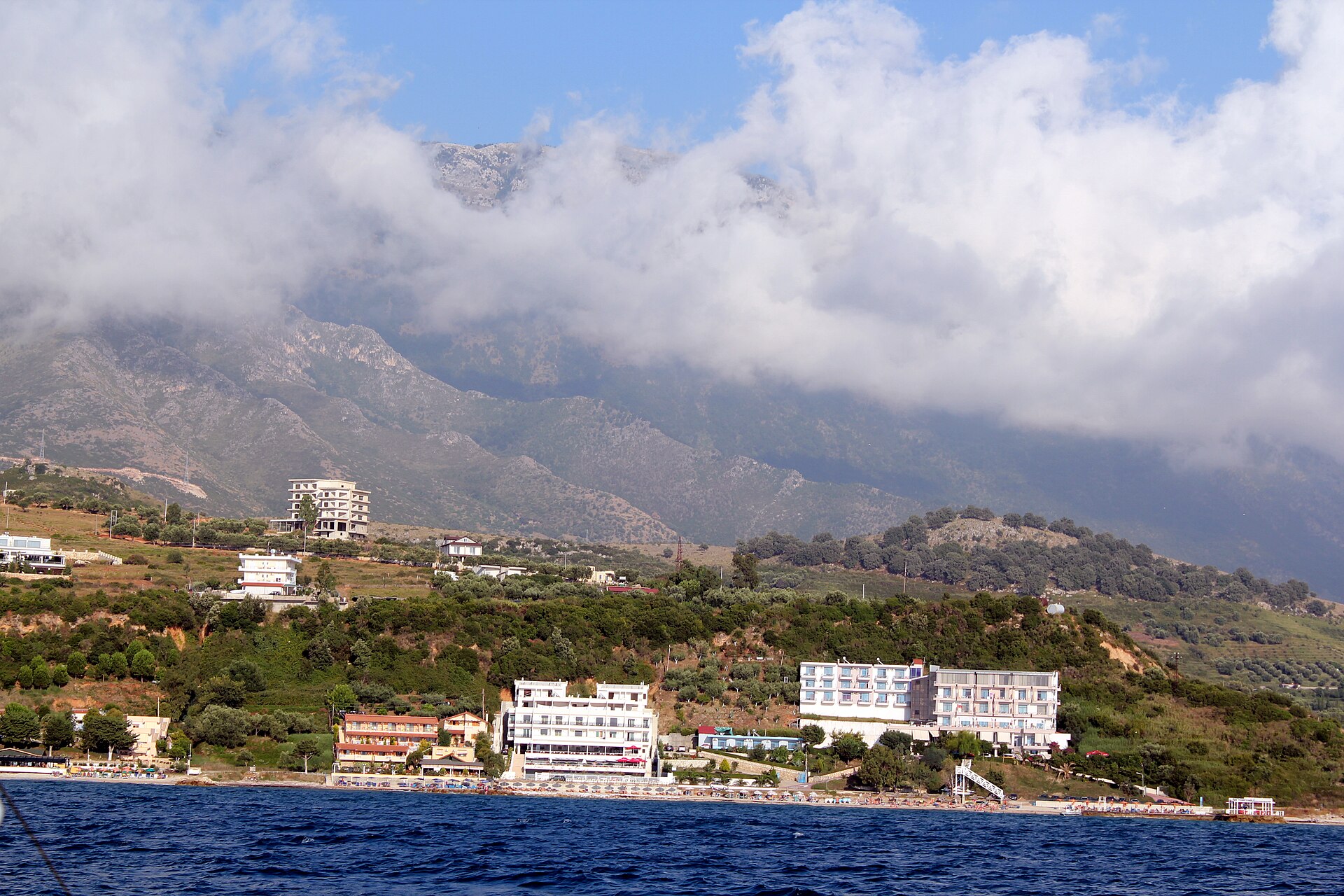
Beyond the mountains the road passes Dhërmi, Himarë and the fortress of Porto Palermo, built in 1804 for Ali Pasha of Tepelena on a narrow peninsula; our day trip to Himarë covers the town and the fortress. Farther south, two villages show how people lived with a sea that could bring trade one year and raiders the next.
Qeparo, upper and lower
Qeparo, about 70 km from Valza through the tunnel and around 1 hour 45 minutes by car, is really two villages: Old Qeparo on the hillside and New Qeparo on the coast. After 1957, when the coastal road was built, families gradually moved down to the sea, and many houses in the old village now stand empty. Its stone houses follow the slope, terrace by terrace. The Church of St Demetrius dates from 1760, and on the hills nearby archaeologists have found Bronze Age fortifications, the earliest known buildings on the Albanian Ionian coast. Oral traditions describe hidden paths between the upper village and the sea, used in times of danger. The lanes are steep and uneven, so leave the car where the road ends and wear proper shoes.
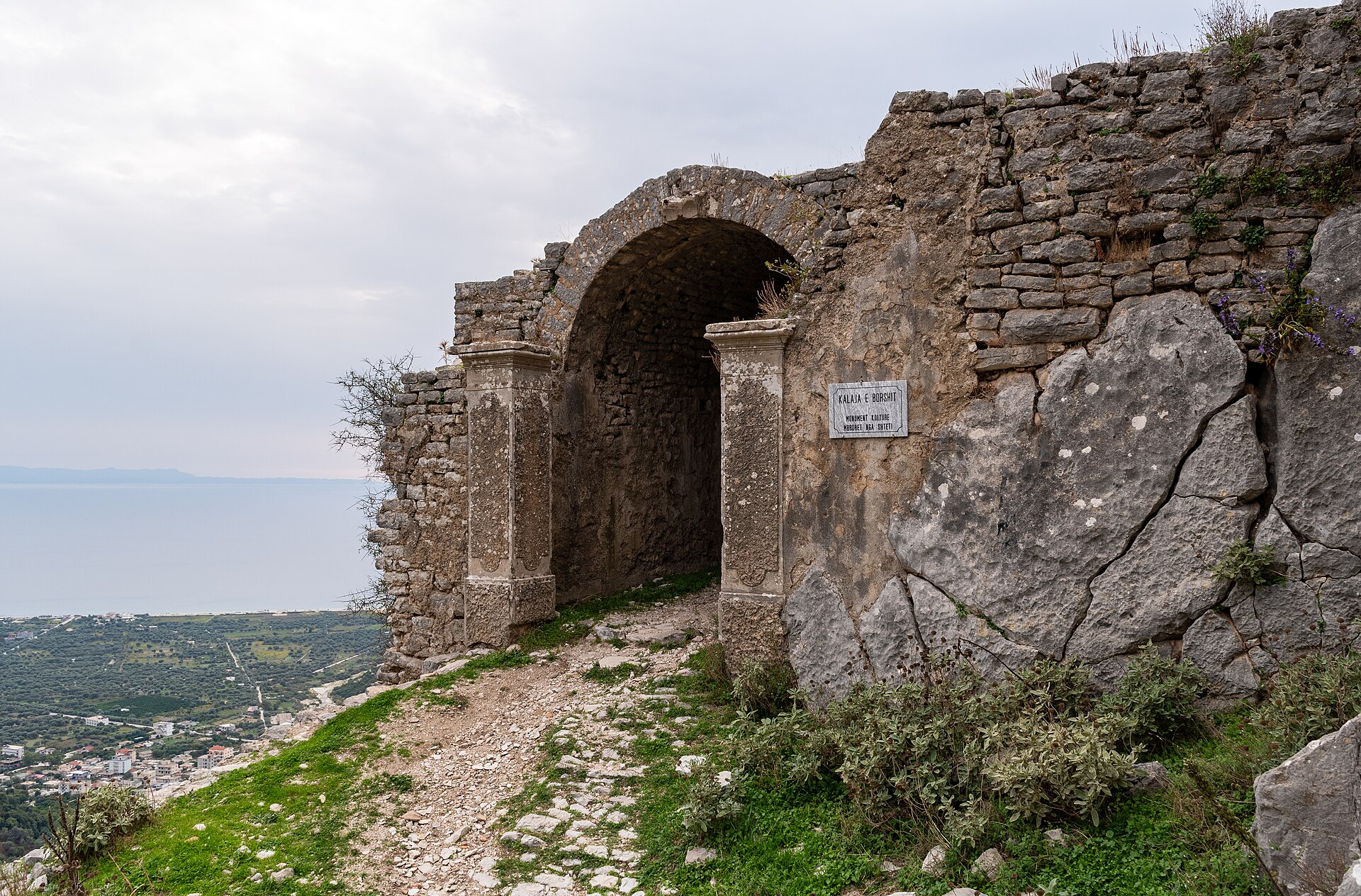
Borsh and Sopot Castle
A few kilometres on, Borsh spreads behind a beach about 7 km long, among olive groves. Above the old village, on a limestone hill about 75 km from Valza, around two hours by car, stands Borsh Castle, also called Sopot Castle: a walk of about half an hour up from the village. The earliest finds here go back to the end of the Bronze Age. In 1258 the Despot of Epirus gave the castle, together with Butrint and Corfu, as part of his daughter Helena’s dowry to Manfred, King of Sicily. Its last ruler was Ali Pasha, and the ruins of the 17th-century Hajji Bendo Mosque survive close by. Local stories speak of hidden routes and underground passages out of the castle; whether or not they existed, survival here depended on knowing the terrain and where to find water.
Butrint: where Virgil sent Aeneas
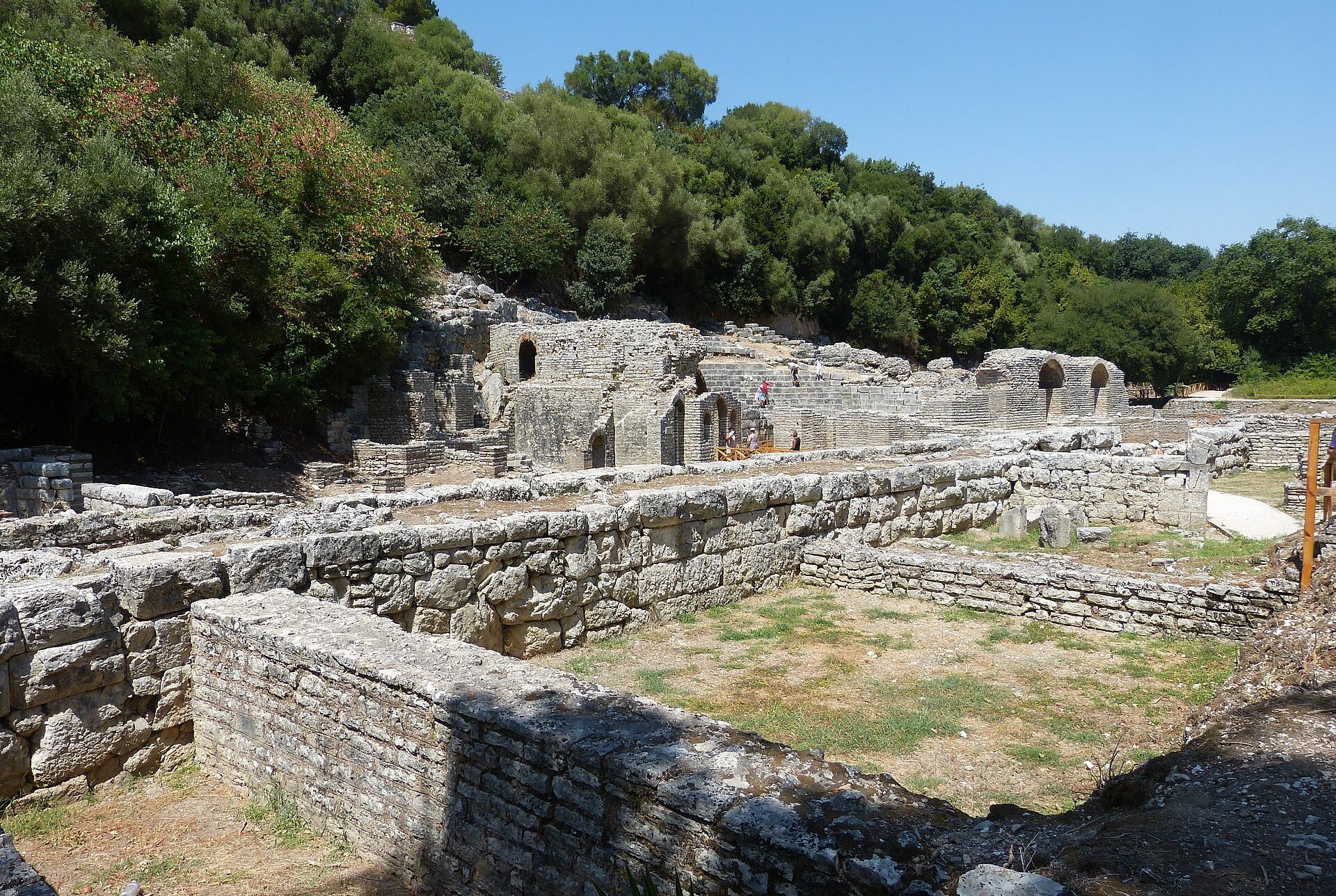
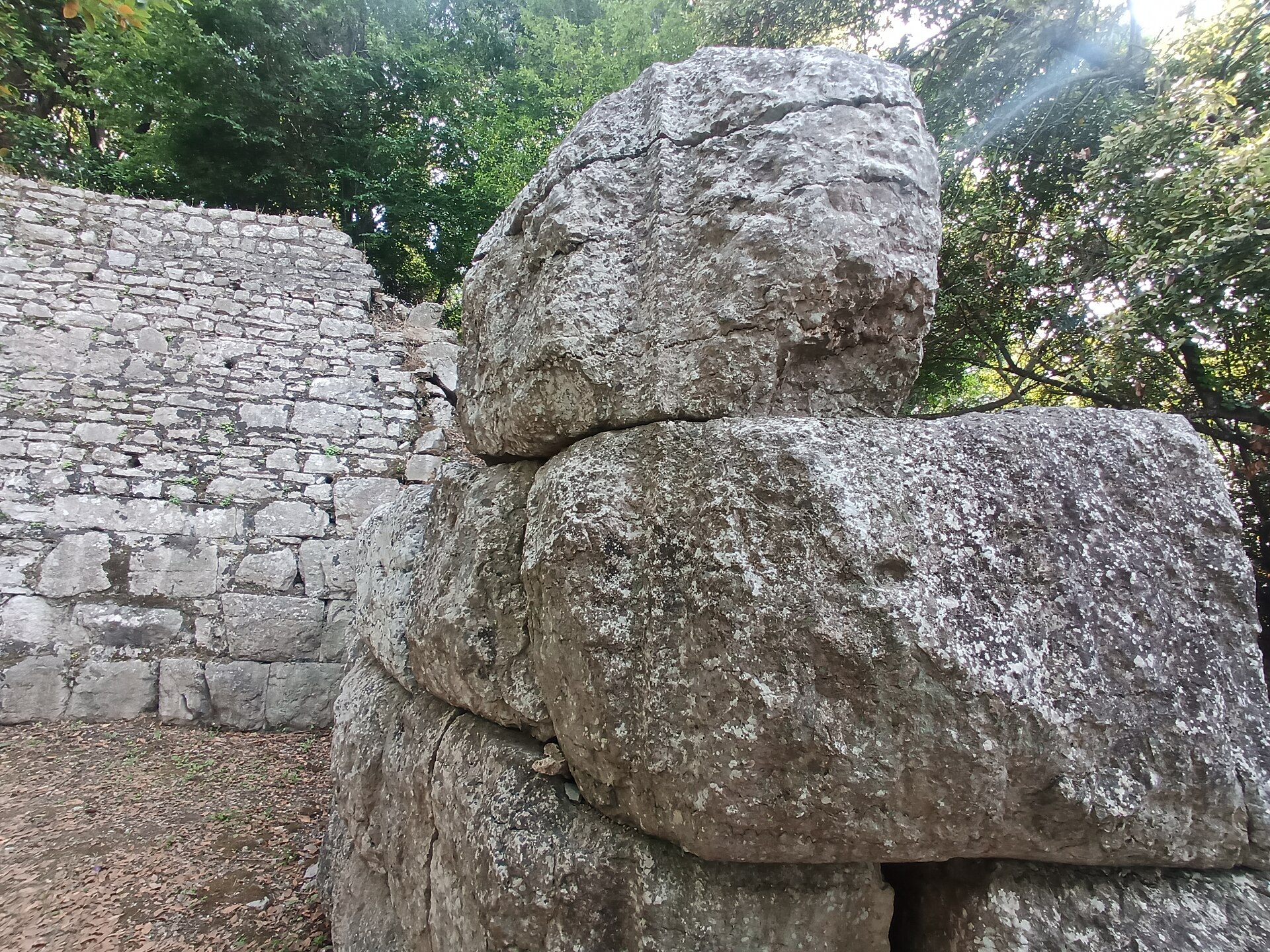
At the far end of the mythic south, about 14 km beyond Sarandë and close to the Greek border, the legends of this coast become literature. In the third book of Virgil’s Aeneid, Aeneas, escaping the fall of Troy, lands at Buthrotum and finds two other survivors: Helenus, a son of King Priam, who has founded the city, and Andromache, Hector’s widow, weeping at an empty tomb raised for her husband. To his amazement, the city has been built to look like a little Troy.
Since the Renaissance, travellers have come looking for the city of the poem, and what they find is older than Virgil. People lived on this hill by the 10th to 8th centuries BC; by the 4th century BC Butrint had a theatre, a sanctuary of Asclepius and an agora, and under Augustus it became a colony for Roman veterans. It has been a UNESCO World Heritage Site since 1992 and a national park since 2000.
-
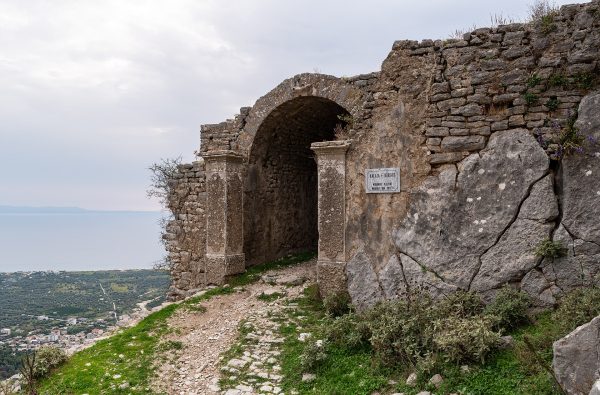
Photo: Steffen Schmitz, CC BY-SA 4.0, via Wikimedia Commons -
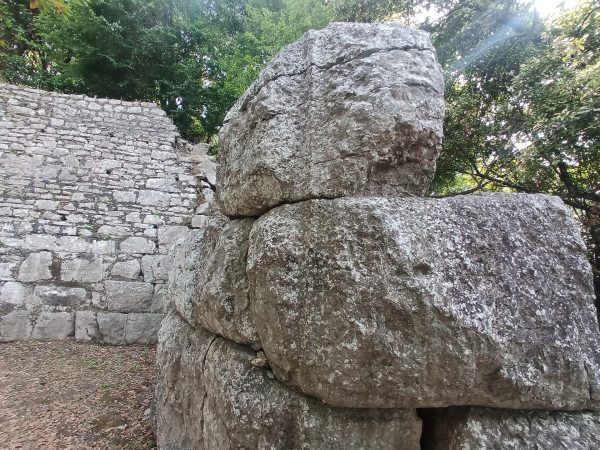
Photo: Aktron, CC BY-SA 4.0, via Wikimedia Commons
Did you know?
-
100 km
Length of the Ceraunian Mountains along the coast
-
1,500 inscriptions
Carved by sailors into the rock of Grama Bay
-
950 m
Drop of the Julius Caesar Trail from the Llogara Pass to Palasë
-
6 km
Length of the Llogara Tunnel, which cuts about 30 minutes to around 7
Test yourself: how well do you know the mythic south?
1. What did the ancient Greeks call the Karaburun Peninsula?
Show the answer
Akrokeraunia, Cape Thunder. Both Keraunia and Akrokeraunia were a warning of the storms that wrecked ships on this coast.
2. Who did the sailors of Grama Bay pray to?
Show the answer
The Dioscuri. About 1,500 inscriptions are carved into the rock there, many of them prayers to the twin protectors of sailors.
3. In which year was Butrint declared a UNESCO World Heritage Site?
Show the answer
1992. It became a national park in 2000.
Plan your visit
Plan three days from Vlorë, with a fourth for Butrint.
Day one, the bay by land
Oricum in the morning, lunch at Llogara, choosing among the restaurants with the best recent reviews, and Kanina Castle at the end of the day.
Day two, the sea
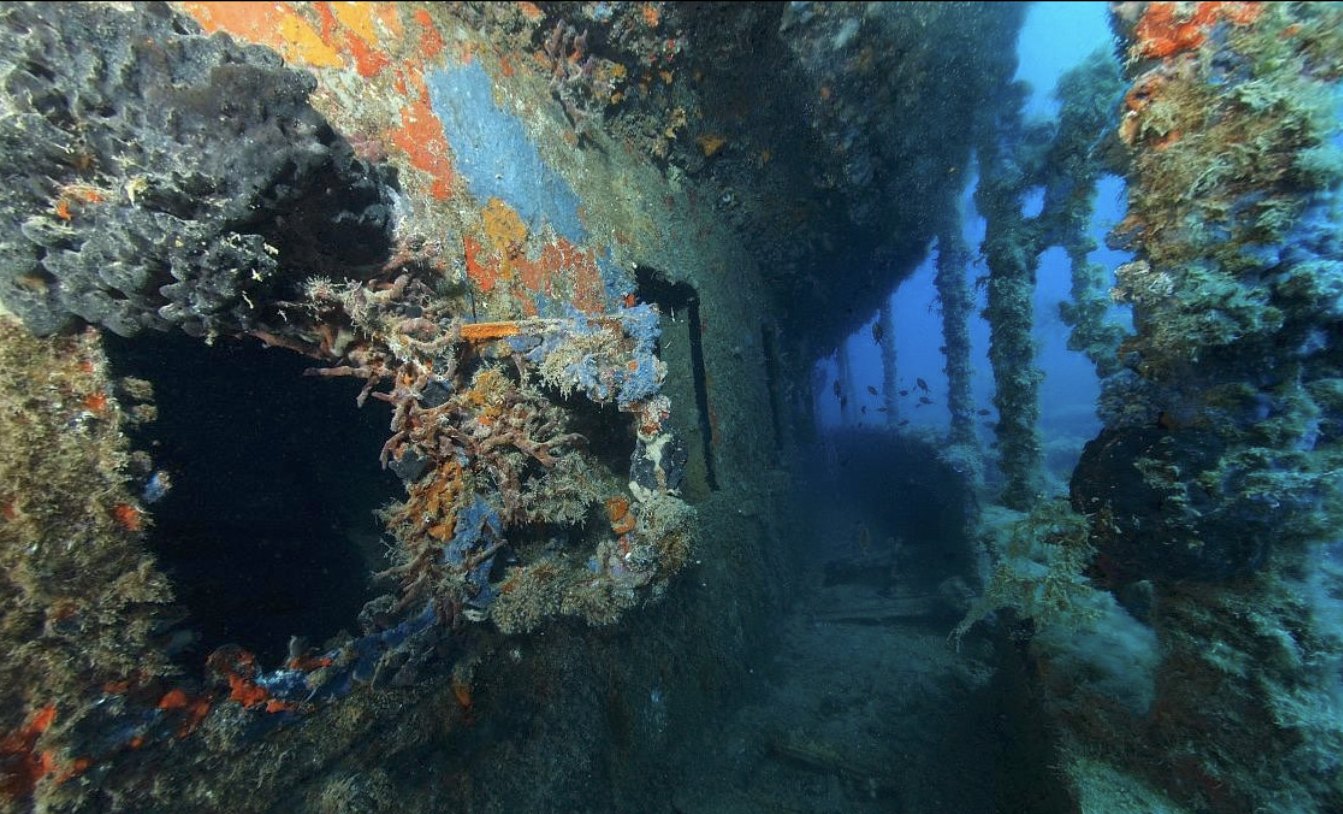
A boat trip to Karaburun and Grama Bay from Vlorë or the marina at Orikum, if the sea allows; if not, swap it with day three.
Day three, the Riviera
Through the tunnel or over the pass, a stop at Porto Palermo, the old lanes of Qeparo and the walk up to Borsh Castle.
A fourth day for Butrint
Leave early if Aeneas is the reason you came: it is about 125 km from Valza, at least three hours each way. On site, allow two to three hours.
Best season
Spring and autumn for castles and walks; June to September for boat trips.
What to bring
- Proper shoes with a good grip for old stones and steep lanes
- Water
- A hat
- Clothes that cover shoulders and knees for churches
Is the mythic south worth the drive?
Yes, if…
you like your history with a story attached, and want castles, a mountain pass and an ancient city on one coast.
Maybe not, if…
you want a single short outing: Butrint alone takes at least three hours each way, and the Riviera villages are about two hours south by car.
The fix is simple: spread it over three or four days, or spend a night on the Riviera.
Go deeper
Our corner of Vlorë
Valza Boutique Hotel, a 4-star hotel in Uji i Ftohtë, the calm southern end of Vlorë, is a natural starting point for the mythic south: from the hotel, the road to Radhimë, Orikum and Llogara does not cross the city centre, and our reception team helps guests book boat trips to Karaburun when the sea allows. In the evening, Eden by Valza, on the hotel’s rooftop, looks across the Bay of Vlora with a 180-degree view, towards the same Cape Thunder the ancient sailors feared. When you are ready to plan your stay, see our rooms and suites.