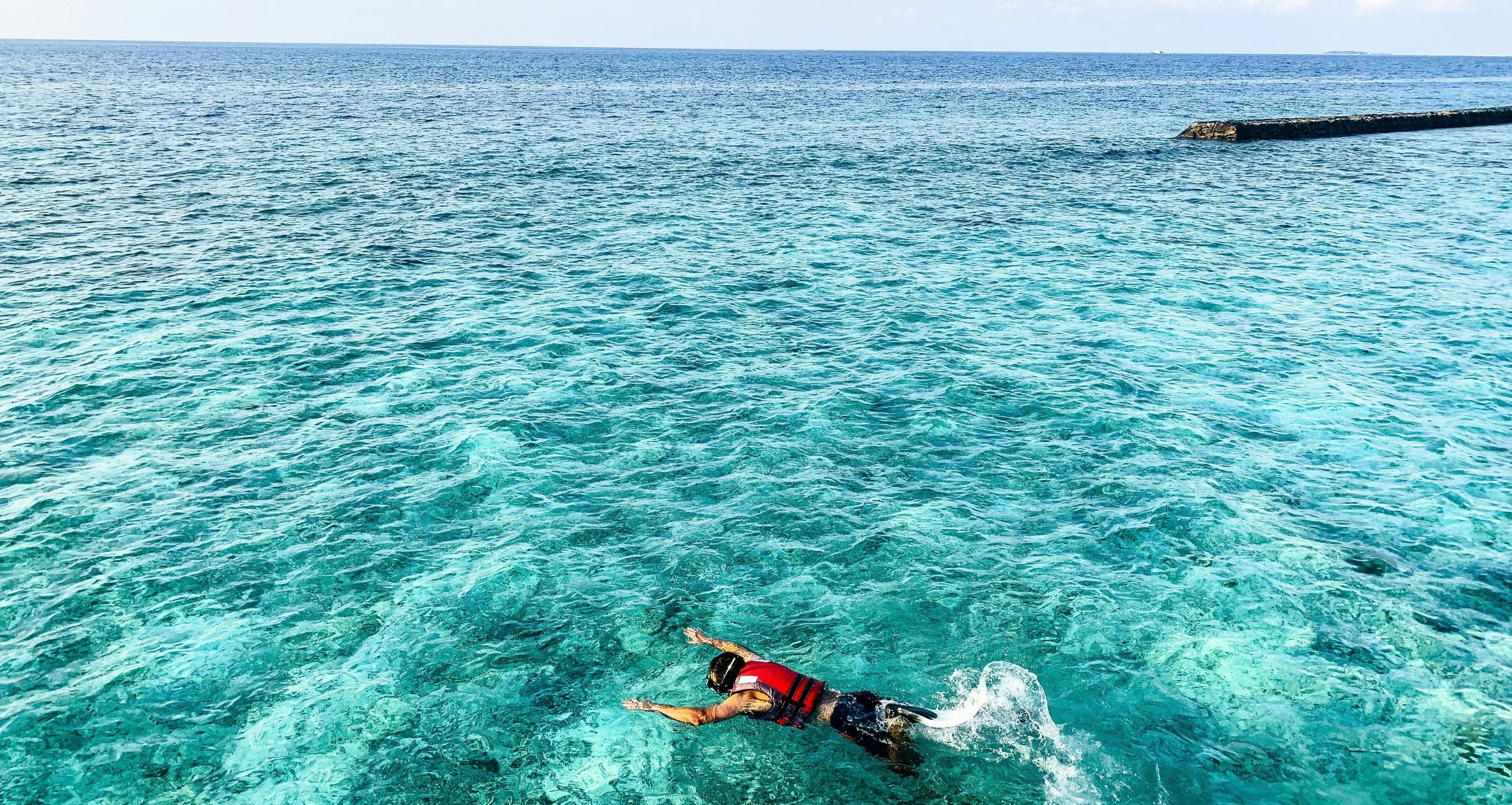
Snorkelling the Bay of Vlora The Mediterranean Begins Only a Few Metres from Shore

The first surprise comes before you see a single fish.

You lower your face into the water, take one slow breath through the snorkel, and the familiar coastline disappears. Voices from the beach collapse into a distant murmur. The weight of your body seems to change. Sunlight begins moving across the seabed in bright, restless ribbons, and a world that had been hidden beneath an ordinary blue surface suddenly comes into focus.

You may still be standing close enough to touch the bottom.

Nothing dramatic has happened. You have not boarded a boat, crossed the bay or descended into deep water. You have simply moved your eyes through the surface.

Yet the landscape has changed completely.

From the shore, the sea often appears to be one continuous field of blue. From below, it is divided into neighbourhoods. Bare rock is different from gravel. A narrow crack offers a different kind of shelter from an exposed ledge. Sand, shade, algae and seagrass each create their own conditions, and each attracts a different community of life.

This is the central revelation of snorkelling in Vlora:

The Mediterranean does not begin somewhere offshore. It begins only a few metres from the beach.

Crossing the Thinnest Border

The surface of the sea appears almost insignificant: a trembling line between air and water. Biologically, however, it separates two completely different worlds.

Above it, we move quickly, talk loudly and understand distance almost without thinking. Below it, colour changes, sound loses direction and every movement feels larger than it really is. A fin striking a stone seems close enough to touch. A school of fish can disappear with one turn. Even breathing becomes something you notice.

The first minute can feel unfamiliar. The mask narrows your field of vision, the snorkel changes the rhythm of breathing and the body initially tries to swim faster than necessary. Then something settles. The movements become slower. The breathing becomes regular. The mind follows.

That change is important because a hurried swimmer sees mainly water and rock. A patient snorkeller begins to see behaviour.

A fish does not simply pass; it leaves the open seabed and repeatedly returns to the same crevice. A sea urchin is not placed randomly; it occupies a protected hollow. A shadow beneath a ledge is not empty darkness but a possible refuge. The longer you float without chasing anything, the more the sea appears to reorganise itself around you.

Snorkelling is therefore more than a way of looking underwater.

It is a lesson in attention.

A Coast Made of Underwater Rooms

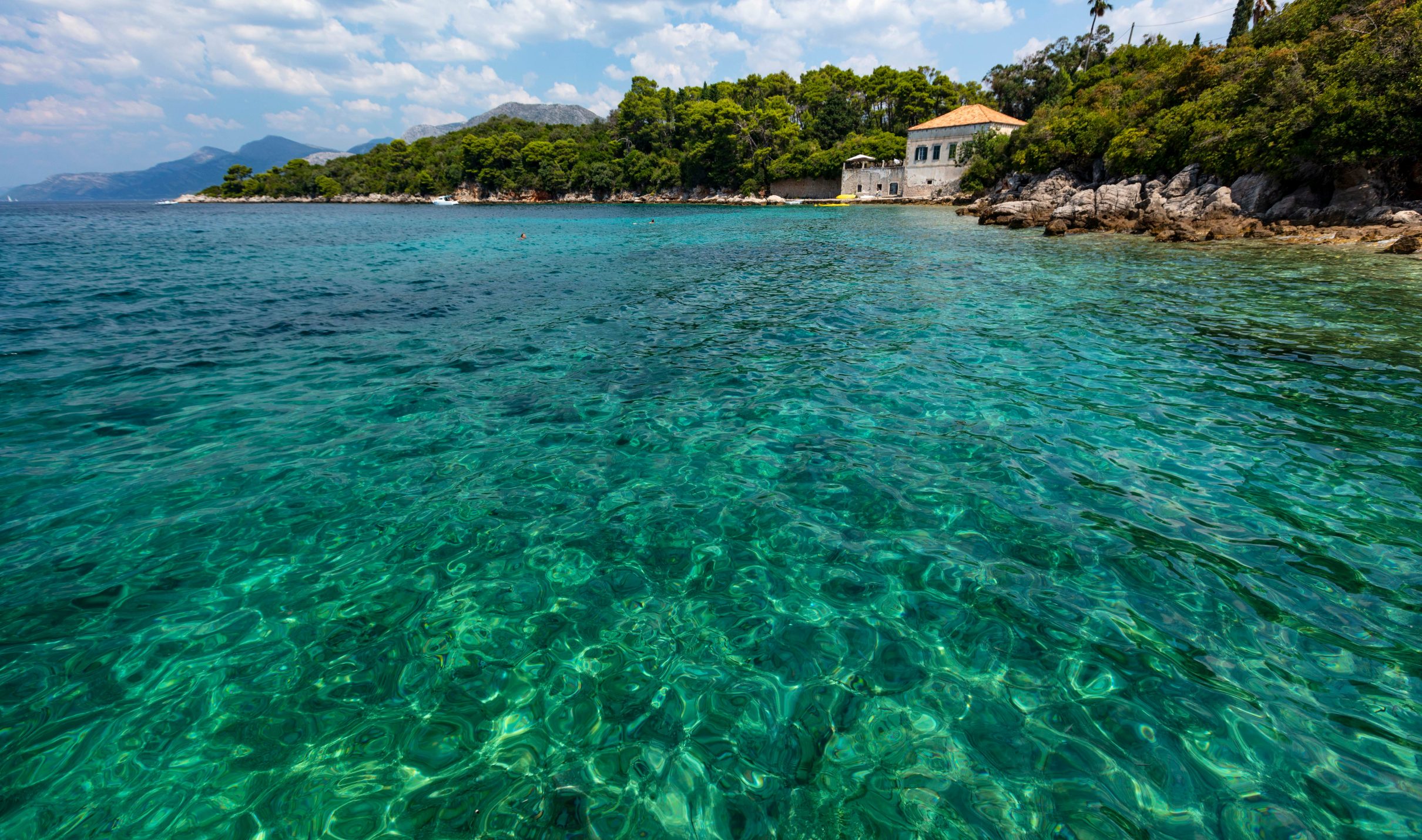
The Bay of Vlora contains far more variety beneath its surface than its broad shape suggests. Scientific assessments describe a coastline formed from rocky shores, small gravel beaches, sandy and muddy bottoms, underwater rock habitats, caves and seagrass beds. Along the Karaburun–Sazan marine area, these environments form a mosaic rather than one uniform seabed.

That mosaic explains why even a short swim parallel to the coast can feel like a journey through several landscapes.

Near the beach, rounded stones move quietly beneath the wash of small waves. A few metres farther out, the bottom may become solid rock, broken into terraces and narrow openings. Pale surfaces exposed to the sun support a different community from the shaded undersides of ledges. Where rock gives way to sand, outlines soften and animals become more difficult to recognise because many carry the colours of the ground beneath them.

The most interesting route is therefore not always the one leading directly towards deeper water.

It is often the line where one habitat becomes another.

Follow the edge between rock and sand. Look beneath the point where sunlight gives way to shadow. Watch where small stones meet a solid ledge or where open seabed becomes vegetation. Every boundary offers more choices: somewhere to feed, hide, hunt or escape.

Five metres of thoughtful snorkelling can cross more ecological borders than a much longer swim over a uniform bottom.

The First Fish Sees You First

Beginners often enter the water expecting fish to appear immediately in front of the mask.

At first, there may seem to be nothing.

Then the eyes adjust.

A movement separates itself from the stone. Several tiny fish become visible where seconds earlier there appeared to be only reflected light. A darker shape leaves the shadow of a ledge. A silver group turns at the same instant, briefly catching the sun before disappearing against the seabed.

The animals were already there.

You were simply not yet capable of seeing them.

Shallow-water fish detect movement, vibration and changes in shadow. Long before a snorkeller notices them, they have usually noticed the snorkeller. Chasing them only confirms that you are something to avoid.

Stop kicking. Float quietly. Let your arms rest beside you.

After a short time, the fish begin returning to their normal paths. Some graze close to the rock. Others hold their position against a faint current. Small groups move repeatedly between open water and shelter, following routes that become visible only when the observer stops interrupting them.

A familiar transformation then occurs. A child who was reluctant to put their face in the water no longer wants to lift it. An adult who entered for a quick swim remains motionless for twenty minutes, absorbed by fish no longer than a hand.

The discovery may be small.

The emotional shift is not.

An entire world has been continuing beside the beach without waiting for us to notice it.
The Dark Patch That Is Not Deep Water

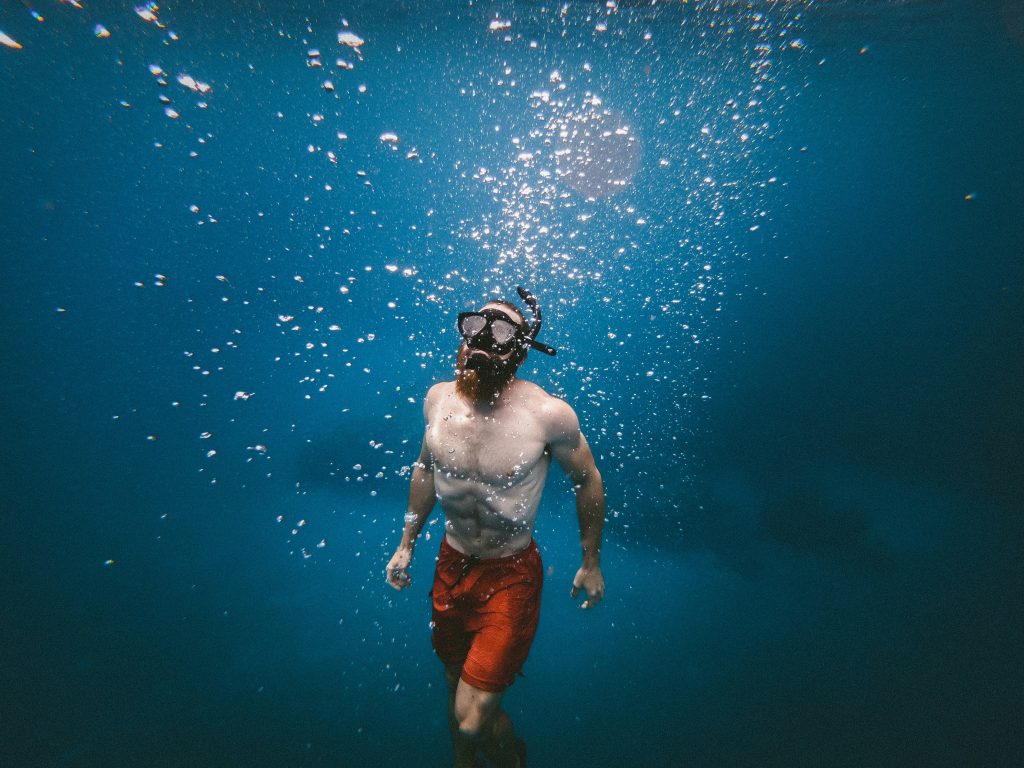
One of the most common underwater illusions begins with a dark patch ahead.

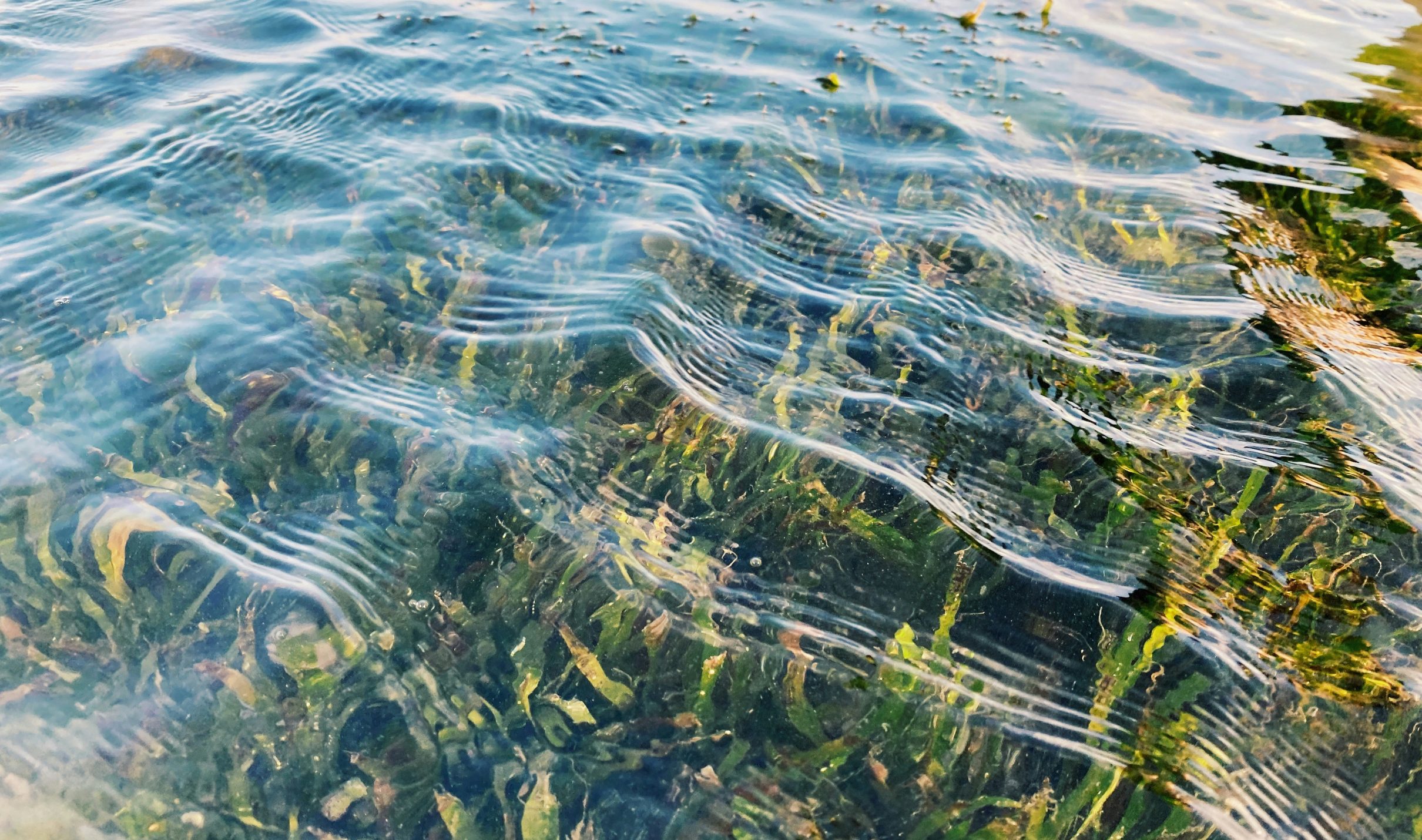
From the surface, it may look like a sudden increase in depth. A cautious swimmer may even turn away. As the distance closes, however, the darkness separates into individual leaves moving slowly with the water.

It is not an underwater hole.

It is a living landscape.

Posidonia oceanica is not a seaweed but a flowering marine plant found only in the Mediterranean. Its meadows provide food and shelter, support important stages in the lives of many marine species and help stabilise coastal sediments. Within the Bay of Vlora, significant areas have historically been recorded along the more sheltered eastern side of Karaburun and elsewhere inside the bay.

KU-012 will enter that underwater forest in detail. For the snorkeller, however, the first lesson is simpler: colour beneath the sea is information.

Pale blue may indicate sand or light-coloured rock. Broken patterns may reveal stones and algae. A dense green-brown area can be vegetation rather than depth. Once the eye learns these differences, the seabed stops appearing as background and begins functioning like a map.

That is one of snorkelling’s most satisfying “aha” moments.

You are not merely seeing through the water. You are learning to read it.

The Mediterranean Does Not Perform on Command

The Bay of Vlora is not a tropical aquarium, and it should not be presented as one.

Its underwater beauty is usually quieter.

Colours often belong to stone, algae, reflected light and subtle changes in texture rather than to enormous schools of brightly coloured fish. Much of its marine life survives precisely by avoiding attention. The reward is therefore not constant spectacle but discovery.

Look closely at the rock and a small blenny or goby may suddenly move, revealing that what seemed to be part of the surface was an animal watching you. Wrasse can pass through algae-covered areas in brief flashes of colour. Small seabream may patrol the open edges, while combers remain closer to rocky shelter. Sea urchins occupy hollows, and sea stars may appear almost impossibly bright against pale stone. Surveys of the Karaburun–Sazan area have recorded rocky habitats, algae communities, seagrass, sponges, molluscs, crustaceans, sea urchins and several species of sea star across its underwater zones.

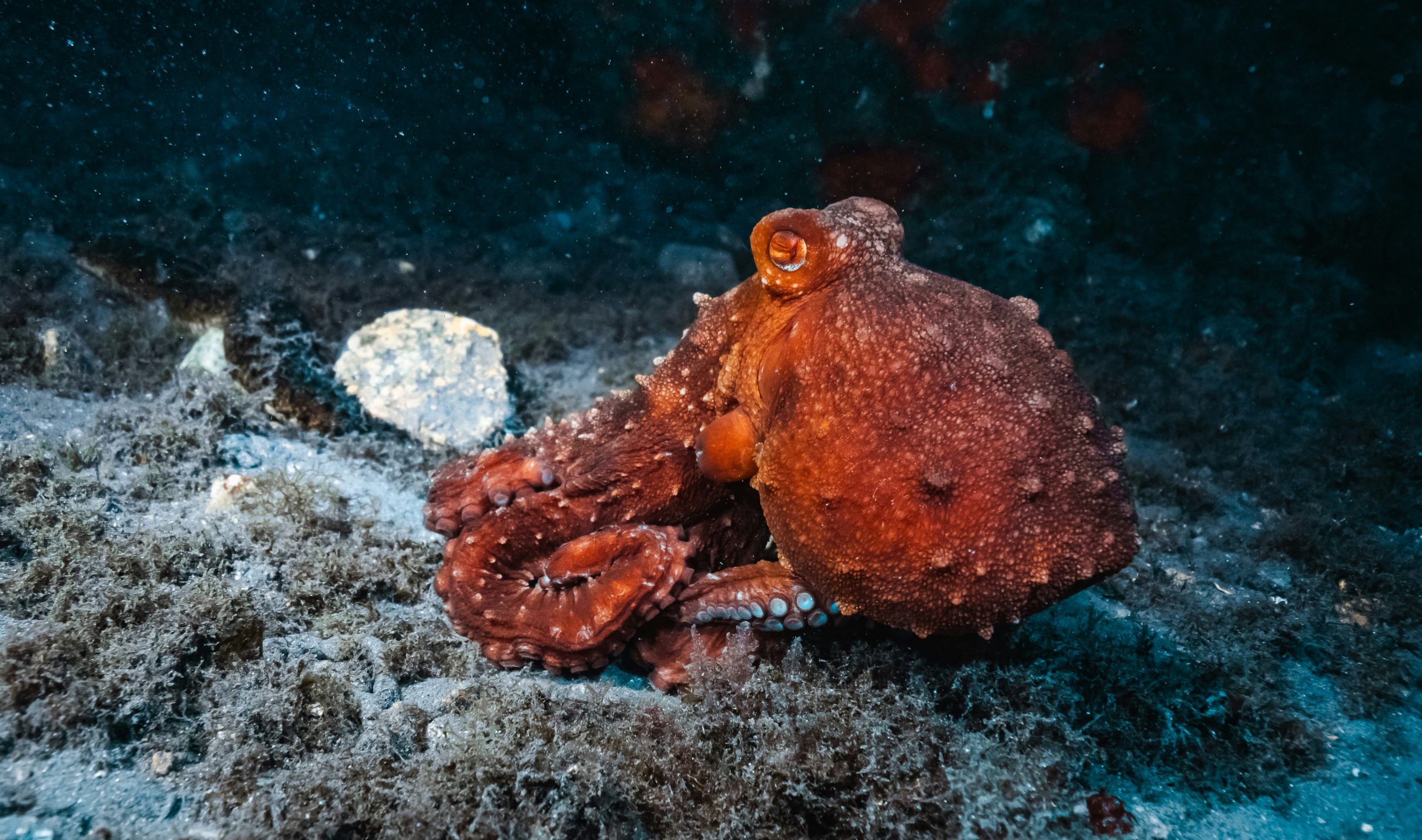
The octopus is the most desired encounter, but also the one that best explains why patience matters. It does not need to leave the rock to become invisible. It can change colour and texture, compress its body into a narrow opening and remain still while swimmers pass directly above it.

Sometimes the first sign is not the animal itself. It may be an arrangement of shells near a crevice, an unexpected movement at the edge of a shadow or an eye that appears to belong to the stone until it turns towards you.

The sea rarely reveals the octopus to the fastest swimmer.

It reveals it to the person who has learned to pause.

Clear Water Is Not the Same as an Untouched Sea

There is another important lesson beneath the beautiful surface.

Exceptional visibility can create the impression that everything underwater must be healthy. Ecologically, clarity and health are not the same measurement.

Official assessments of the Vlora marine environment have also documented pressure from coastal development, pollution, illegal fishing, damaged seagrass and invasive species. Some underwater surveys have found areas of ecological value beside habitats showing clear signs of degradation. UNESCO’s account of the Karaburun–Sazan protected area likewise describes the contrast between the beauty visible at the surface and damage caused historically by bottom trawling and illegal fishing practices.

This does not make the experience less valuable.

It makes it more honest.

A snorkeller may see a healthy patch of vegetation and, farther away, an area where the seabed appears unusually bare. Sea urchins may be fascinating animals to observe, yet very high numbers in some rocky environments can also be associated with the loss of algae through intensive grazing. A clear bay can contain rich habitats while still facing pressure from human activity.

The sea is not a decorative object arranged for visitors.

It is a living system with strengths, injuries and limits.

That understanding changes the meaning of snorkelling. What begins as recreation becomes a form of witnessing. The swimmer sees not only beautiful organisms but the spaces they require, the boundaries they occupy and the damage that can occur when those relationships are disturbed.

The Smallest Safari in Vlora

Traditional travel often measures experience through distance. We expect the greatest discoveries to require long roads, remote summits or expensive boats.

Snorkelling reverses that logic.

The journey may begin from the same beach where someone is reading beneath an umbrella. The landscape may lie in water shallow enough to stand in. The animals may be smaller than a finger. Yet the experience can feel expansive because it reveals a dimension of the destination that had remained completely hidden.

A single rock can become an entire observation point.

Its upper surface receives direct sun and supports algae-loving grazers. Its shaded side provides cooler shelter. The narrow gap beneath it may hide a crab. Small fish use its edge as an escape route, while a sea urchin occupies a hollow shaped by years of exposure and movement.

Nothing is merely “a rock” once you begin looking properly.

This is the quiet power of snorkelling in the Bay of Vlora. It does not overwhelm the visitor with scale. It changes the scale at which the visitor pays attention.

The sea becomes larger because the details become visible.

When the Bay Is Most Willing to Be Seen

The best snorkelling conditions are usually created by calm water, gentle light and patience rather than by the hottest hour of the day.

Early mornings often offer a particularly rewarding combination. Boat traffic is usually lower, the surface may be smoother and sunlight enters the water at an angle that gives shape to rocks and shallow ledges. After several calm days, fewer particles remain suspended near exposed shores, making outlines easier to follow.

Conditions can change quickly, however. Wind can roughen one part of the bay while another remains protected. A coastline that felt effortless the previous morning may become uncomfortable when waves begin pushing swimmers towards rocks.

The most sensible approach is local rather than rigid: choose a sheltered and easily accessible shore, observe the water before entering and ask people familiar with the area about the day’s conditions. Rocky sections around Uji i Ftohtë, Jonufër, Radhimë and the southern bay can offer interesting shallow landscapes, but suitability always depends on wind, waves, access and boat movement.

A beautiful sea is not automatically a safe one.

Snorkel with another person, remain within a comfortable distance of shore and identify the exit point before beginning. Do not enter unfamiliar water during rough conditions, and do not allow clear visibility to tempt you into swimming farther than your ability permits. Guidance for water activities consistently emphasises checking weather, currents and water temperature, telling someone where you are going and avoiding solitary exploration.

Leave the World Exactly Where You Found It

The best snorkeller is almost invisible.

They do not chase fish, turn stones, feed wildlife or remove shells simply because they are beautiful. They keep their fins away from vegetation and delicate organisms and allow animals to choose the distance.

A shell that appears empty may still be shelter for a hermit crab or another small animal. A stone may protect eggs or an organism adapted to darkness. Standing on a seagrass meadow or repeatedly kicking the seabed can disturb the very habitat the swimmer entered to admire.

Responsible underwater exploration follows a simple principle: observe without rearranging.

NOAA guidance for divers and snorkellers recommends keeping hands and equipment away from delicate marine habitats, leaving underwater objects in place and watching wildlife from a respectful distance. The same ethic is appropriate in the Bay of Vlora, particularly around protected or ecologically sensitive areas.

Take photographs.

Leave the shells.

Carry the memory back to shore.

What the Mask Changes

When you finally lift your face from the water, the beach returns all at once.

Voices become clear. The body feels heavy again. The coastline looks almost exactly as it did before you entered.

But it no longer means the same thing.

The dark patch offshore is now a meadow rather than an unexplained shadow. The line where rock meets sand has become a corridor. A quiet ledge is no longer empty; it is shelter. Even the apparently bare stones beside the beach may contain territories, feeding grounds and hiding places.

This is why snorkelling belongs at the beginning of MAREOGRAPH’s journey beneath the surface.

It teaches the reader how to enter the next chapters.

Before understanding Posidonia, marine biodiversity or the secret lives of octopuses and cuttlefish, we must first learn that the sea is not a single landscape. It is an accumulation of borders, rooms, signals and relationships, many of them beginning within sight of our towel on the shore.

Perhaps that is the most memorable discovery of all.

You arrive believing that Vlora’s beauty lies in the blue water stretching towards Karaburun and Sazan. Then you place your face beneath the surface and realise that the blue was only a curtain.

The landscape had been there all along.

It was waiting a few metres from shore, beneath the thinnest border in the Mediterranean.

Editorial Note

This article is part of the MAREOGRAPH Editorial Project, an independent editorial initiative founded and developed by Valza Boutique Hotel to document the landscapes, history, biodiversity, culture and living systems of Vlora and the Albanian Mediterranean through research-based storytelling.

Experience the Place

The rocky shores and transparent shallows around Uji i Ftohtë and the southern Bay of Vlora offer opportunities to discover the Mediterranean at its most immediate. Valza Boutique Hotel provides a thoughtful base close to this coastline, while Eden by Valza offers a higher perspective at the end of the day: the same underwater landscape disappearing beneath changing blue, silver and gold light.

www.valza.al