Where Europe’s last great wild river reaches the sea, building dunes, lagoons and turtle beaches as it goes.
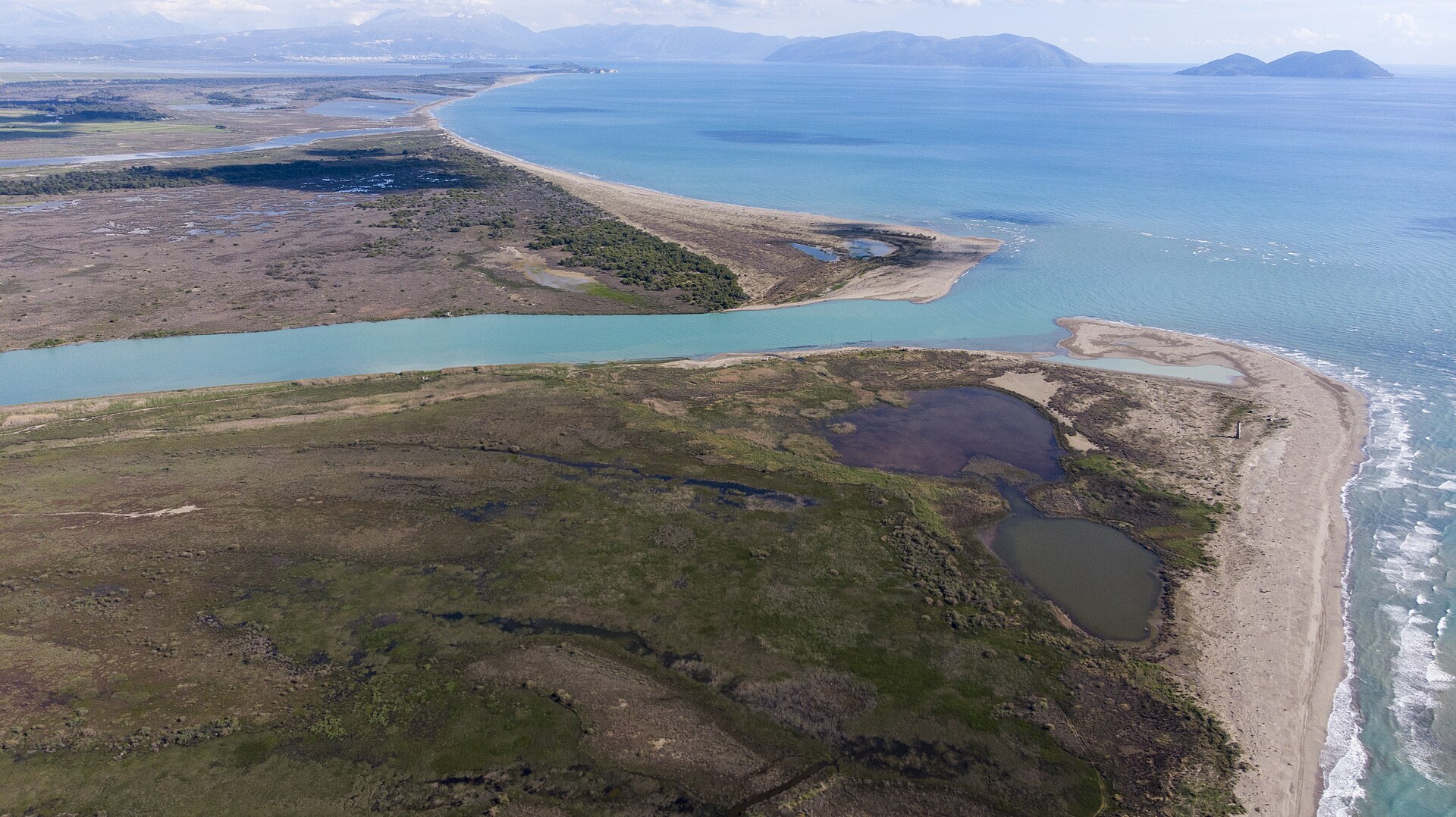
The Vjosa Delta is where the Vjosa, one of the last big free-flowing rivers in Europe, meets the Adriatic north of Nartë, building a delta of about 240 square kilometres of lagoons, reed beds, salt flats and dunes. Loggerhead turtles still nest on its beaches. Allow half a day, in spring or autumn.
A river that still reaches the sea
The Vjosa rises in the Pindus Mountains of Greece and runs for about 190 km through Albania without a single large dam, one of the last big free-flowing rivers in Europe. In March 2023 its course became the Vjosa Wild River National Park, the first of its kind on the continent, covering 12,727 hectares.
Here, north of Nartë, the river finally meets the Adriatic, and it has spent thousands of years building something extraordinary from the sediment it carries: a delta of about 240 square kilometres of lagoons, reed beds, salt flats, dunes and old river channels, constantly reshaped by the river and the waves. It holds 18 habitat types protected under the EU’s Natura 2000 network and some 2,300 known species. Loggerhead turtles still come ashore to nest on its beaches.
What makes it remarkable is that it is still alive. Because nothing blocks the river upstream, the Vjosa still delivers its sediment to the coast, and that is why the dunes, the lagoons and the Narta Lagoon itself exist at all. Scientists see the river and its delta as a single living system, and its protection is the subject of an ongoing public debate.
Walk the edges quietly, keep off the dunes, and leave the nesting beaches undisturbed.
What you’ll see
-
A river without dams
About 190 km through Albania without a single large dam, one of the last big free-flowing rivers in Europe.
-
Lagoons, dunes and reed beds
Salt flats and old river channels too, constantly reshaped by the river and the waves.
-
Turtles on the beaches
Loggerhead turtles still come ashore to nest.
-
Quiet edges
Walk the edges quietly, keep off the dunes and leave the nesting beaches undisturbed.
The delta in numbers
-
190 kilometres
About how far the Vjosa runs through Albania without a single large dam
-
12,727 hectares
Vjosa Wild River National Park, created in March 2023
-
240 square kilometres
The approximate area of the delta
-
2,300 species
Known on the delta, an approximate figure
Where it is
North of Nartë, beyond the Narta Lagoon, where the Vjosa reaches the Adriatic.
What to bring
- Binoculars: birds around the lagoons and reed beds
- Camera with zoom: leave nesting beaches undisturbed
- Walking shoes: for the edges of dunes and lagoons
- Insect repellent: reed beds and lagoons
- Sun hat: for half a day outdoors
- Water: for a half-day walk
- Litter bag: carry everything out with you
Is it worth it?
Yes, if…
you love wild places, birds and quiet walks along the edges of a living river delta.
Maybe not, if…
you want to cross the dunes: the advice is to walk the edges quietly, keep off the dunes and leave the nesting beaches undisturbed.
Allow half a day, and come in spring or autumn.
Combine it with
Continue exploring
More places and ideas for your days around Vlorë:
- All attractions around Vlorë
- Byllis in a day: the Illyrian city above the Vjosa
- Vlorë in autumn: a 3-day itinerary from Orikum to Labëria
- Vlorë: the city, its history and where it is
- Where to stay in Vlorë: our complete guide