An old stone bridge over the Shushica, in a valley where Albanians once swore to stand together.
Brataj Bridge (Ura e Bratit) is an old stone bridge of about 50 metres in the Shushica valley, from the Ottoman centuries: usually given as 16th-century, though the regional cultural directorate lists it as 15th-century. It is a quiet stop, 45 km from Valza. Allow 30 minutes, or a full day with Lepenicë and Velçë.
A crossing that has seen all that history pass
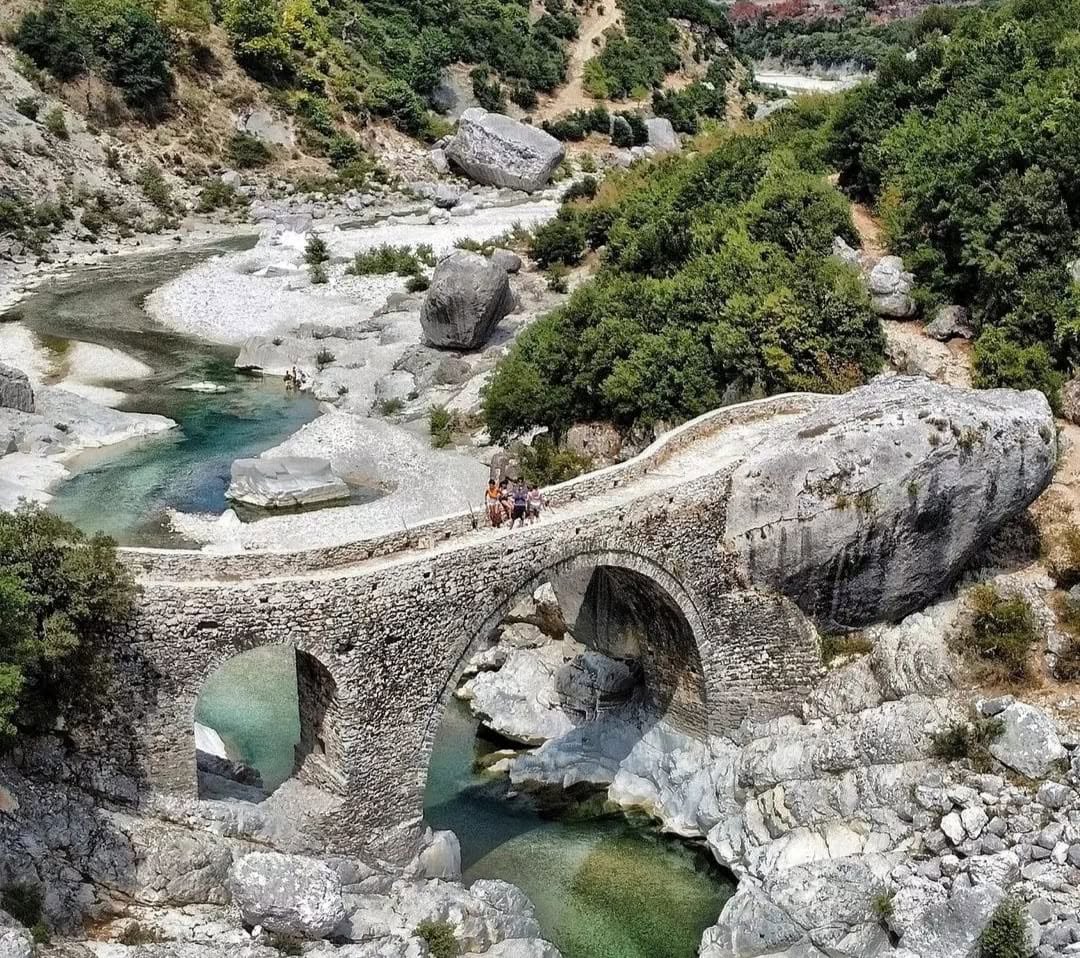
Deep in the Shushica valley, the old stone bridge of Brataj, Ura e Bratit, spans the Vlora River, about 50 metres of old stone. It belongs to the Ottoman centuries: it is usually given as 16th-century, while the regional cultural directorate lists it as 15th-century. Either way, it has been crossing this river for some five hundred years, and it is one of the historic bridges of Labëria in the care of Vlorë’s heritage authorities, who cleared it of vegetation and carried out maintenance in 2015.
The valley around it has a proud history. In June 1847, at nearby Mesaplik, representatives from across southern Albania met to oppose the Ottoman Tanzimat reforms. They declared that Albanians of every faith stood together and refused to pay the new taxes, and their assembly led to the Albanian Revolt of 1847. Nearly a century later, in 1943, the Battle of Gjorm was fought against Italian forces close by.
Stand on the bank and look at the bridge against the river, and you are looking at a crossing that has seen all of that history pass. It is a quiet place now, and all the better for it.
Combine it with Lepenicë and Velçë for a full day in the valley.
What you’ll see
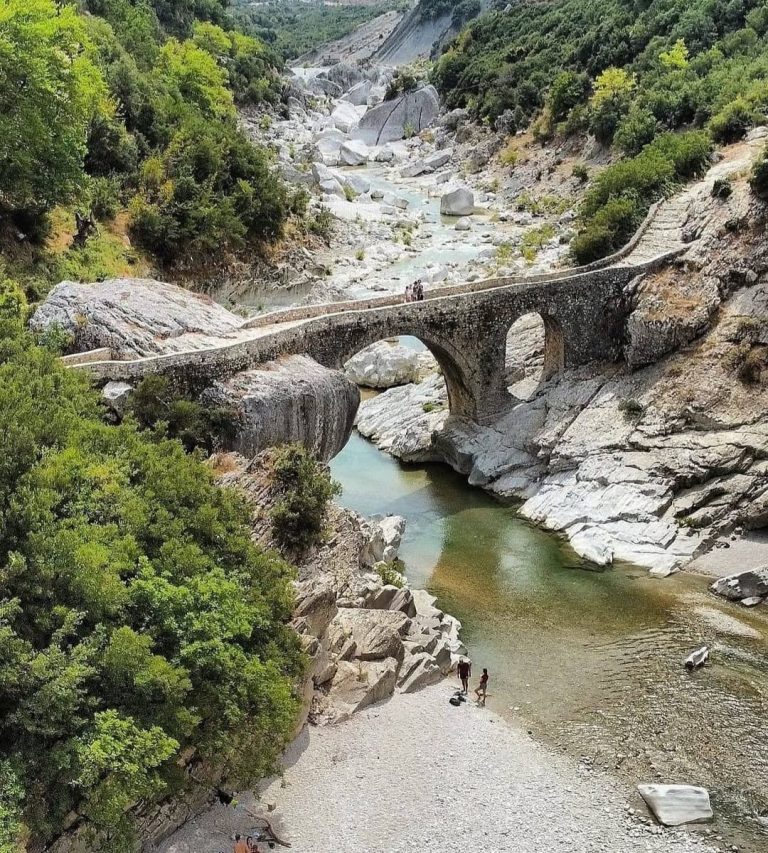
The old stone arches
Seen from above, they stand over the green water of the river.
-
About 50 metres of old stone
The bridge has been crossing the river for some five hundred years.
-
The bank
Stand there and look at the bridge against the river. It is a quiet place now, and all the better for it.
-
A day in the valley
Combine the bridge with Lepenicë and Velçë.
The valley in four dates
- 15th or 16th century
The bridge is built in the Ottoman centuries: usually given as 16th-century, listed by the regional cultural directorate as 15th-century.
- June 1847
At nearby Mesaplik, representatives from across southern Albania meet to oppose the Ottoman Tanzimat reforms, and their assembly leads to the Albanian Revolt of 1847.
- 1943
The Battle of Gjorm is fought against Italian forces close by.
- 2015
Vlorë’s heritage authorities clear the bridge of vegetation and carry out maintenance.
Brataj Bridge in numbers
-
50 metres
Length of the stone bridge
-
~500 years
Crossing the river since the 15th–16th century
-
1847
The assembly of Mesaplik, nearby
-
45 km
From Valza, about an hour
Where it is
Deep in the Shushica valley, in Labëria, close to Mesaplik.
What to bring
- Camera: 50 metres of old stone against the river
- Shoes with grip: for the river bank
- Picnic: a quiet place to linger by the water
- Sun hat: for a quiet hour on the bank
- Water: for a day in the valley
- Daypack: for a full day with Lepenicë and Velçë
Is it worth it?
Yes, if…
you like quiet places with a story, an old Ottoman-era stone bridge to photograph, or a day in the Shushica valley with Lepenicë and Velçë.
Maybe not, if…
you want a long visit on its own: the bridge takes about 30 minutes, and it is about an hour from Valza by car.
Come in spring or autumn. Visiting is free.
Combine it with
Continue exploring
More places and ideas for your days around Vlorë:
- Mesaplik and the Smokthina valley, a short drive away
- All attractions around Vlorë
- Kurvelesh in a day: Nivica Canyon, Peshtura Falls and the springs of Kuç
- Vlorë in autumn: a 3-day itinerary from Orikum to Labëria
- Archaeological sites in Vlorë: Amantia, Orikum, Kanina and ancient Aulona
- Where to stay in Vlorë: our complete guide