A tiny cove where, for two thousand years, sailors waiting for the wind carved their names into the rock.
Grama Bay is a small pebble cove on the Ionian side of the Karaburun Peninsula, once one of the few safe anchorages on this exposed coast. Its rocks carry a thousand or more inscriptions, carved by sailors from the 3rd century BC through the Middle Ages. You reach it by boat, as a full-day trip.
Why sailors carved their names into the rock
On the Ionian side of the Karaburun Peninsula, the cliffs part just enough to let in a small pebble cove. For more than two thousand years, Grama Bay was the only safe anchorage on this exposed coast, and so it became a waiting room for the ancient Mediterranean. Its name comes from the Greek word for “letter”, and once you look closely at the rocks, you understand why.
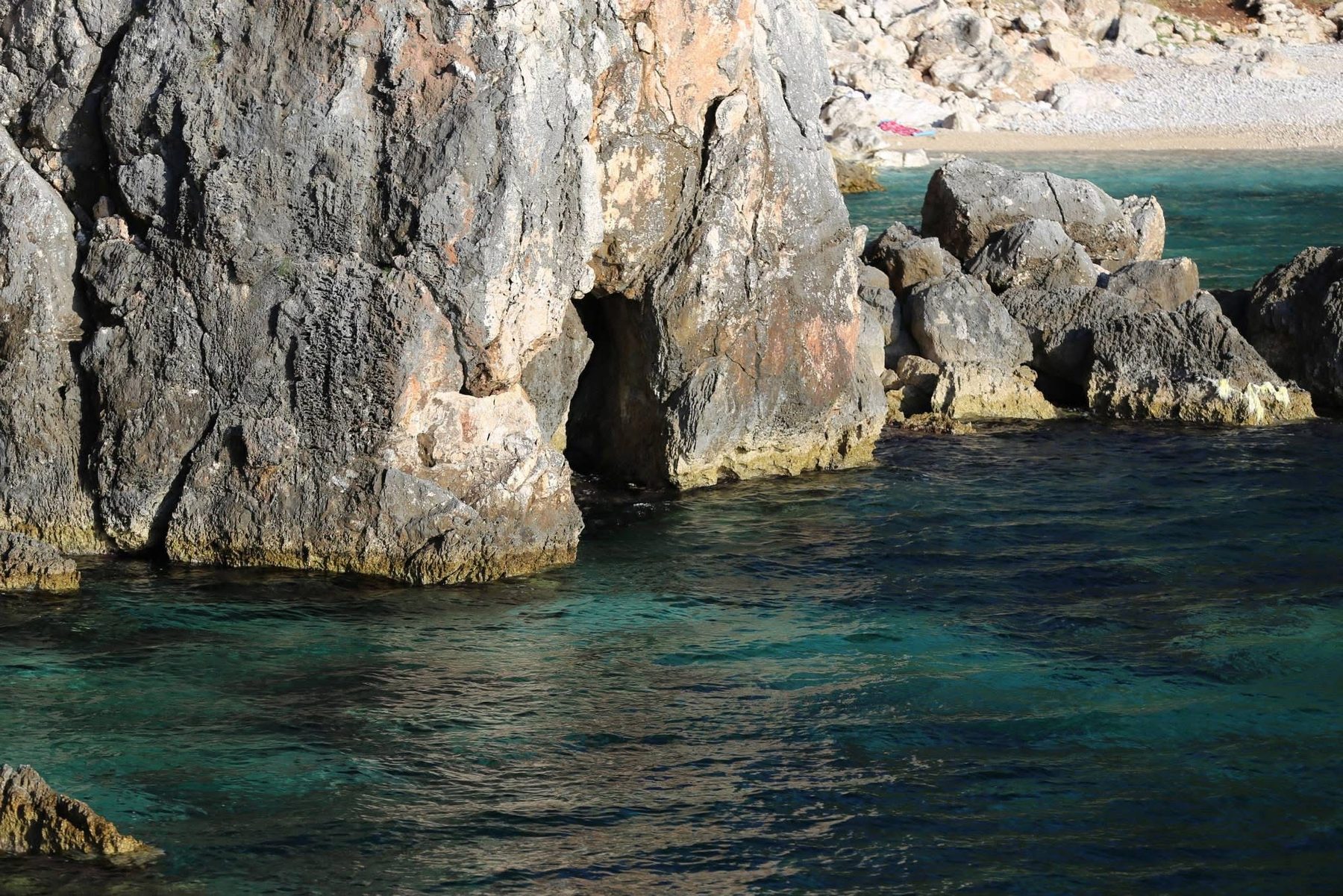
The bay was first a quarry: the cut faces of the old quarries are still visible on both sides of the cove. Then came the sailors, stuck in the bay while the storm blew itself out, who smoothed the stone and carved their names and prayers for a safe voyage, often to the Dioscuri, the twin protectors of sailors. Early travellers counted about a thousand inscriptions; later estimates reach 1,500. The oldest Greek ones date from the last centuries BC, followed by Latin inscriptions of the Roman Empire, then medieval Greek prayers asking the Lord to help “his servant”, and even one inscription in Turkish.
Some carry famous names. One preserves the name of Cnaeus Pompeius, Caesar’s rival in the war of 49–48 BC, probably followed by a list of names the sea has worn away. Another records that in 1369 the Byzantine emperor John V Palaiologos stopped here on his way to Venice and Rome, to ask the Pope for help against the advancing Ottomans. Look closely at the letters (without touching them), and the cove feels crowded with people who stood exactly where you are standing.
What you’ll see
-
The cove between the cliffs
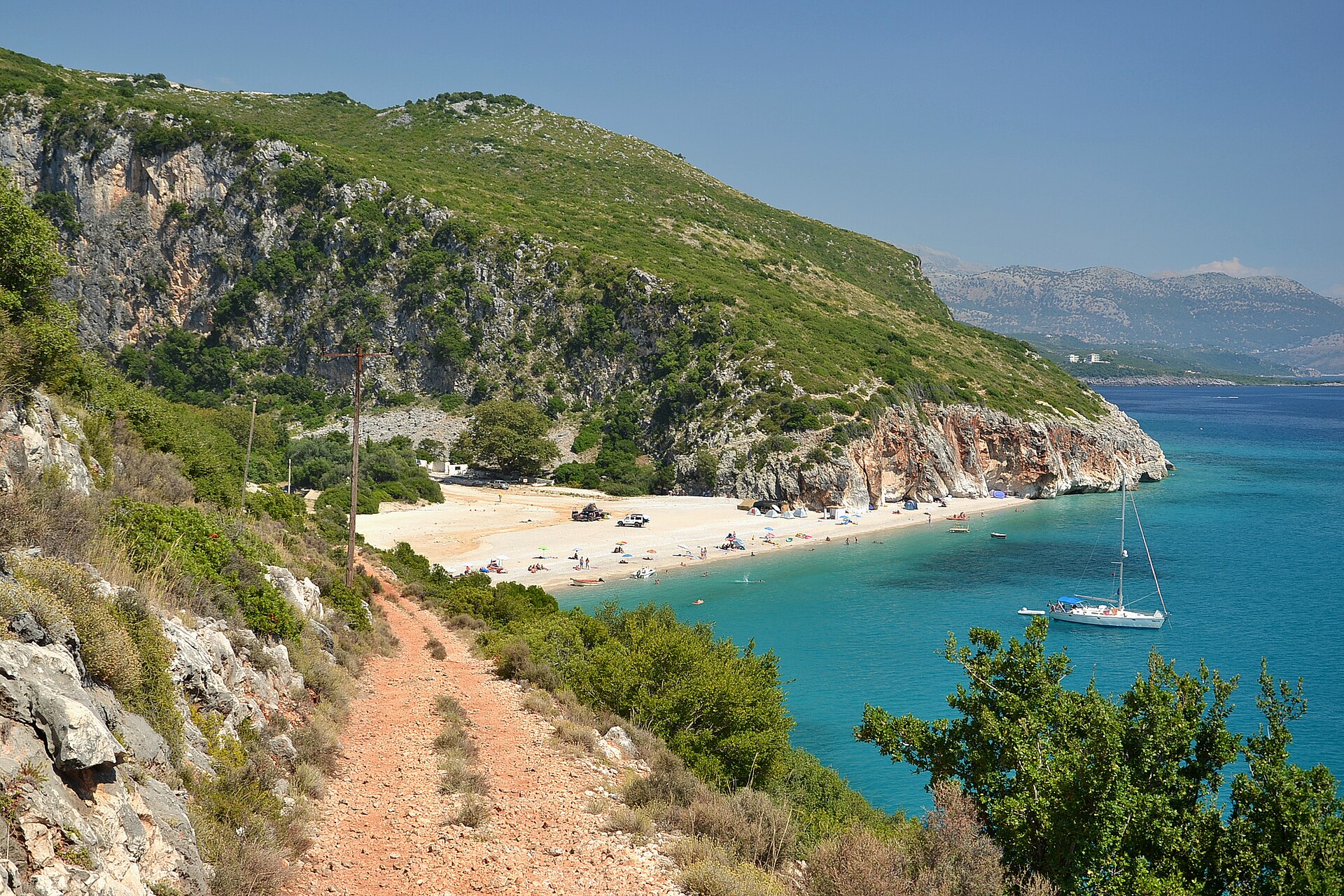
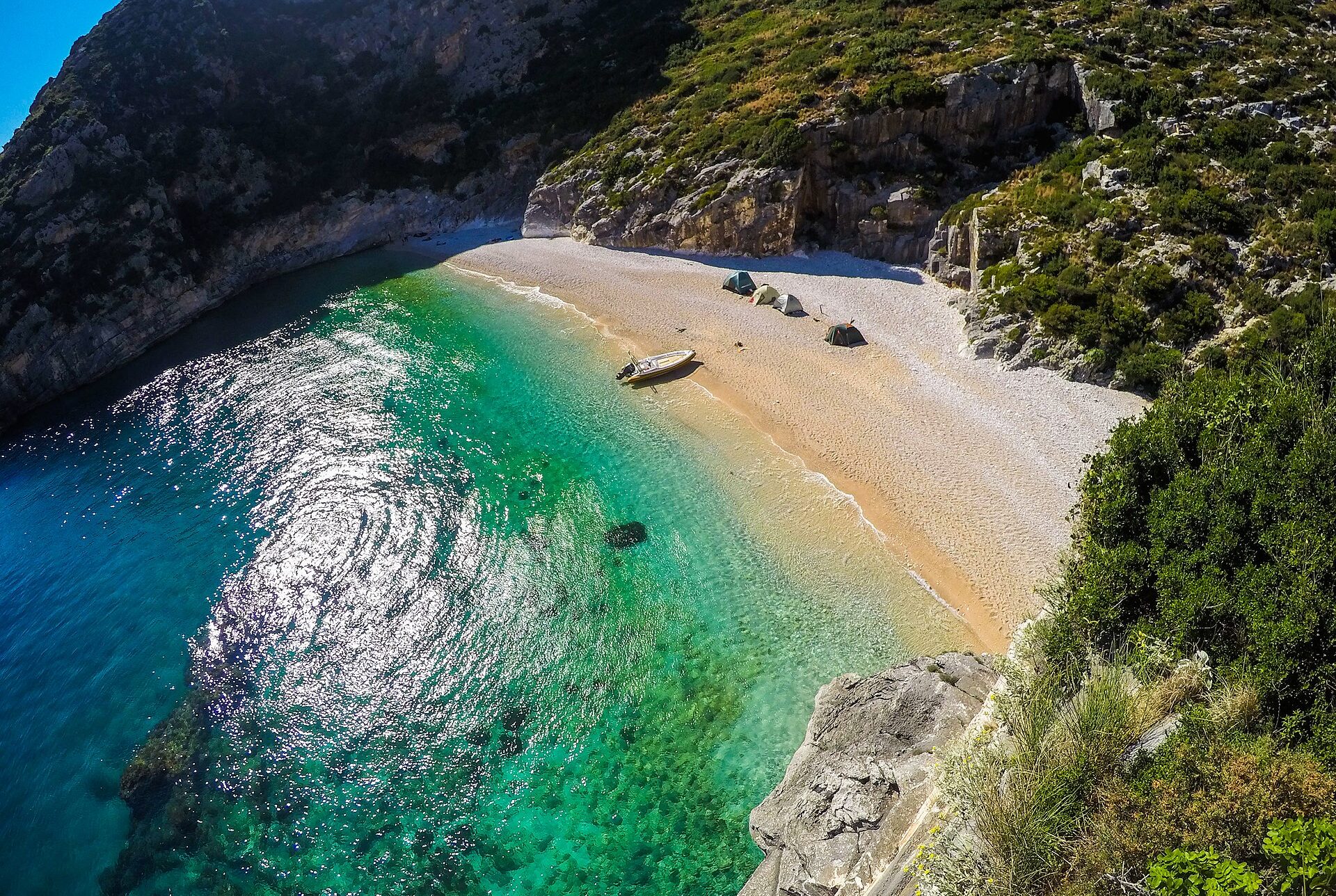
The cliffs part just enough to let in a small pebble cove, the only safe anchorage on this coast.
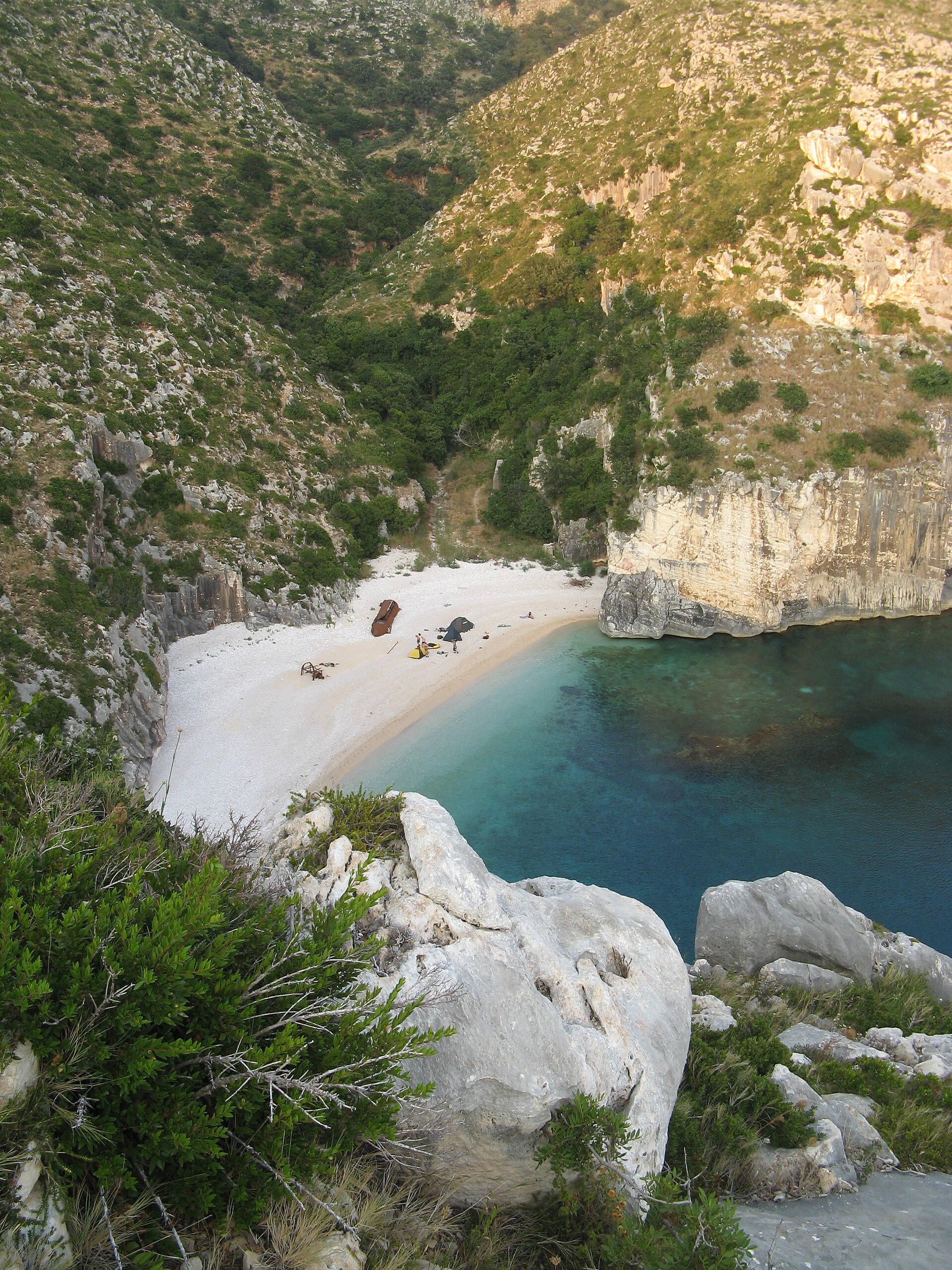
The cove from the cliffs
The white limestone cliffs above, the small beach and the turquoise water below.
-
A thousand or more inscriptions
Names, ships and prayers for a safe voyage, often to the Dioscuri. Look closely, without touching them.
-
Many languages
Ancient Greek and Latin, then medieval Greek prayers, and even one inscription in Turkish.
Some of the dates on the rock
- Antiquity
The bay is first a quarry; the cut faces are still visible on both sides of the cove.
- 3rd century BC
The oldest Greek inscriptions, many of them prayers to the Dioscuri.
- 49–48 BC
The name of Cnaeus Pompeius, Caesar’s rival, is carved on the rock.
- Roman Empire
Latin inscriptions join the Greek ones.
- 1369
An inscription records the stop of the Byzantine emperor John V Palaiologos, on his way to Venice and Rome.
Grama Bay in numbers
-
1,000–1,500
Inscriptions carved in the rock
-
3rd century BC
The oldest Greek inscriptions
-
49–48 BC
The name of Cnaeus Pompeius on the rock
-
1369
Emperor John V Palaiologos stops in the bay
Where it is
On the Ionian side of the Karaburun Peninsula, reached by boat from Vlorë or from Orikum marina.
What to bring
- Camera with zoom: read the letters without touching them
- Water shoes: a tiny pebble cove
- Swimwear: a sheltered cove for a swim
- Sun hat: for a full day by boat
- Water: the trip takes a full day
- Snack: the boat day runs long
- Notebook: to sketch the ships and names carved in the rock
Is it worth it?
Yes, if…
you like places where history is written on the rock itself, and you are happy to spend a full day on a boat.
Maybe not, if…
you want a short outing: the overland route is long and difficult, so the visit is a full day by boat.
Choose a calm summer day, and check current boat trip prices before you go.
Combine it with
Continue exploring
More places and ideas for your days around Vlorë:
- Karaburun Peninsula
- The Bays of Karaburun by Boat
- Haxhi Ali Cave, Karaburun
- Grama Bay by speed boat: the Karaburun day, stop by stop
- Sea caves and mountain caves of Karaburun
- All attractions around Vlorë
- A complete Riviera itinerary from Vlorë to Himarë
- Archaeological sites in Vlorë: Amantia, Orikum, Kanina and ancient Aulona
- Where to stay in Vlorë: our complete guide