A sea cave big enough to sail into, named after a warrior who is said to have hidden here.
Haxhi Ali Cave is a sea cave near Cape Gjuhëz on the Karaburun Peninsula, the largest sea cave of the Albanian coast: an entrance about 45 metres high and a hall about 60 metres long, some 100 metres in all. Small flat-bottomed boats can slip inside on calm days. It is a protected Natural Monument, reached only by sea on boat trips from Vlorë and Orikum.
Who was Haxhi Ali?
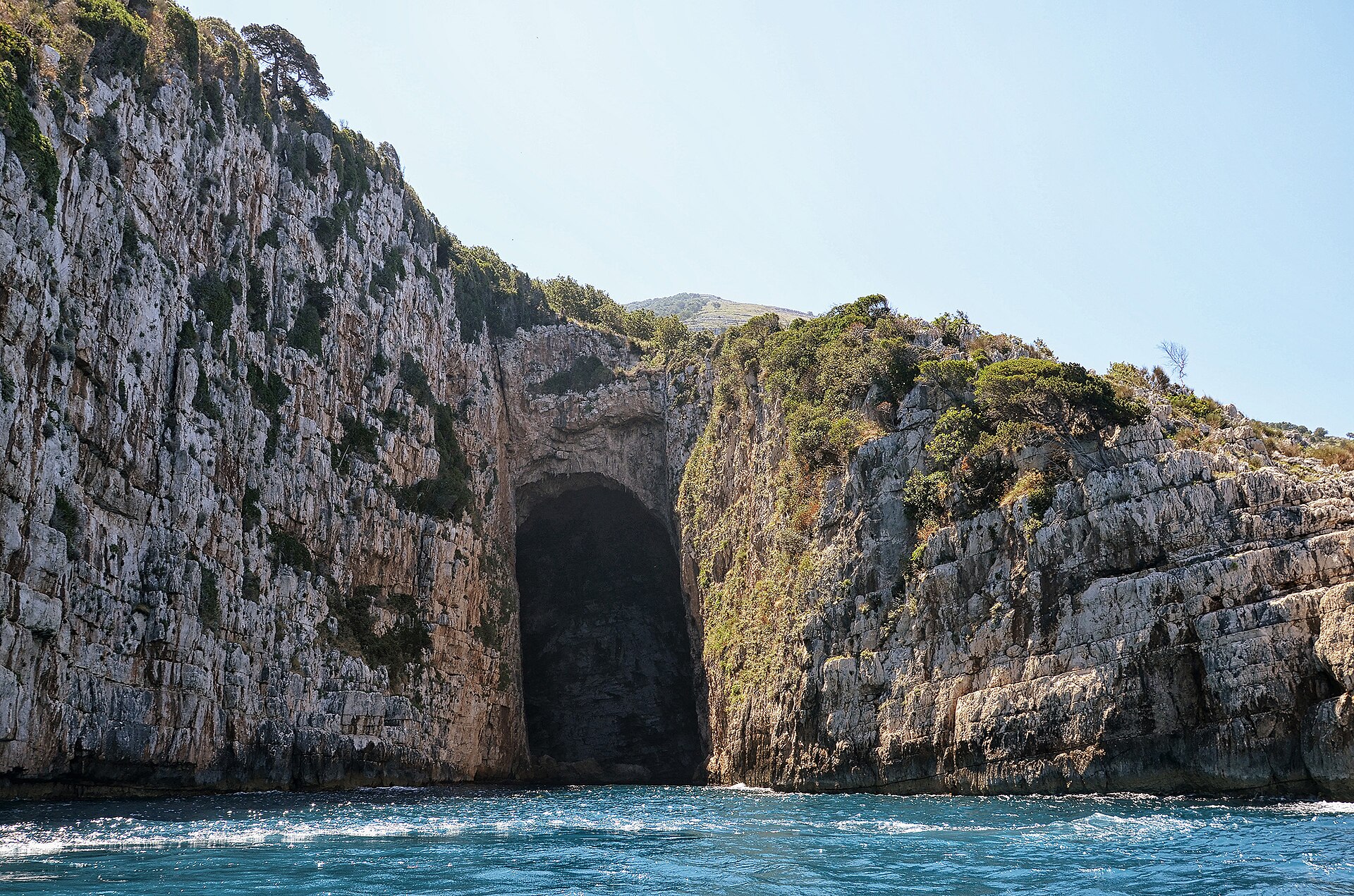
The boat rounds the last cliff near Cape Gjuhëz, and the rock suddenly opens: a dark mouth in the limestone, with the sea running straight in. This is Haxhi Ali Cave, the largest sea cave of the Albanian coast. Its entrance rises about 45 metres above the sea, and an underwater sill only 0.8 metres deep lets in small flat-bottomed boats on calm days. Inside, a domed hall about 60 metres long and up to 40 metres wide holds a pool up to 10.9 metres deep; with the entrance corridor, the known cave runs about 100 metres into the cliff. Inside, the light changes and the water turns a deeper blue.
The cave takes its name from Haxhi Ali, remembered as a sailor and warrior from Ulcinj who is said to have taken refuge here with his son. It is also called Shpella e Ilirëve, the Cave of the Illyrians, and finds linked to ancient trade suggest that sailors sheltered here long before the excursion boats came. Today it is a protected Natural Monument within the Karaburun–Sazan Marine Park.
And it is only one door into a hidden world. The caves and sea canyons of Karaburun are among the last refuges in the region of the Mediterranean monk seal, one of the rarest marine mammals on Earth. Sightings are rare, but the same cliffs that make this coast so hard to reach are what keep it wild.
The cave can only be reached by sea, on boat trips that leave from Vlorë and from the marina at Orikum.
What you’ll see
-
The rock opens
The boat rounds the last cliff near Cape Gjuhëz, and a dark mouth opens in the limestone, with the sea running straight in.
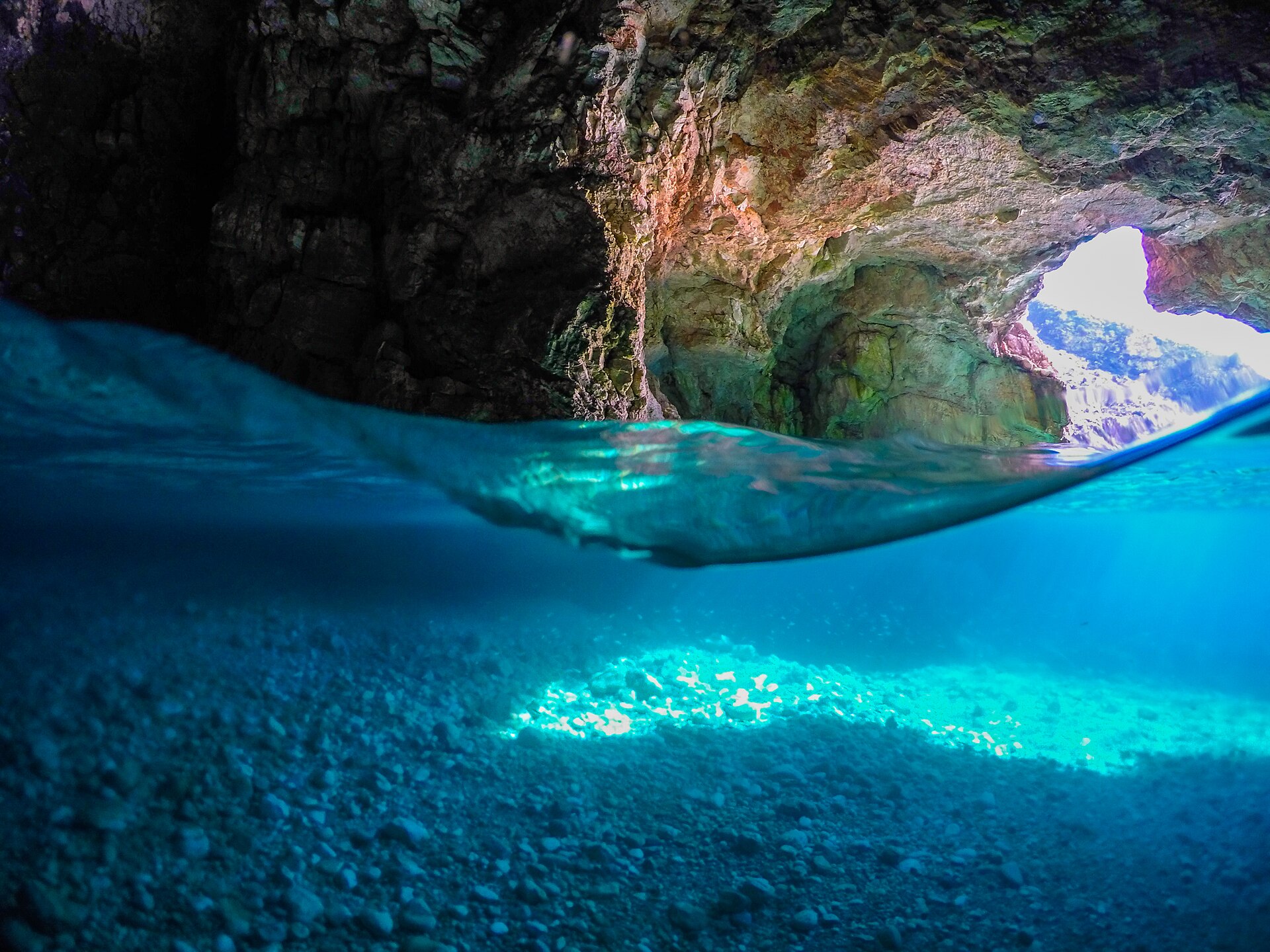
Another sea cave of Karaburun
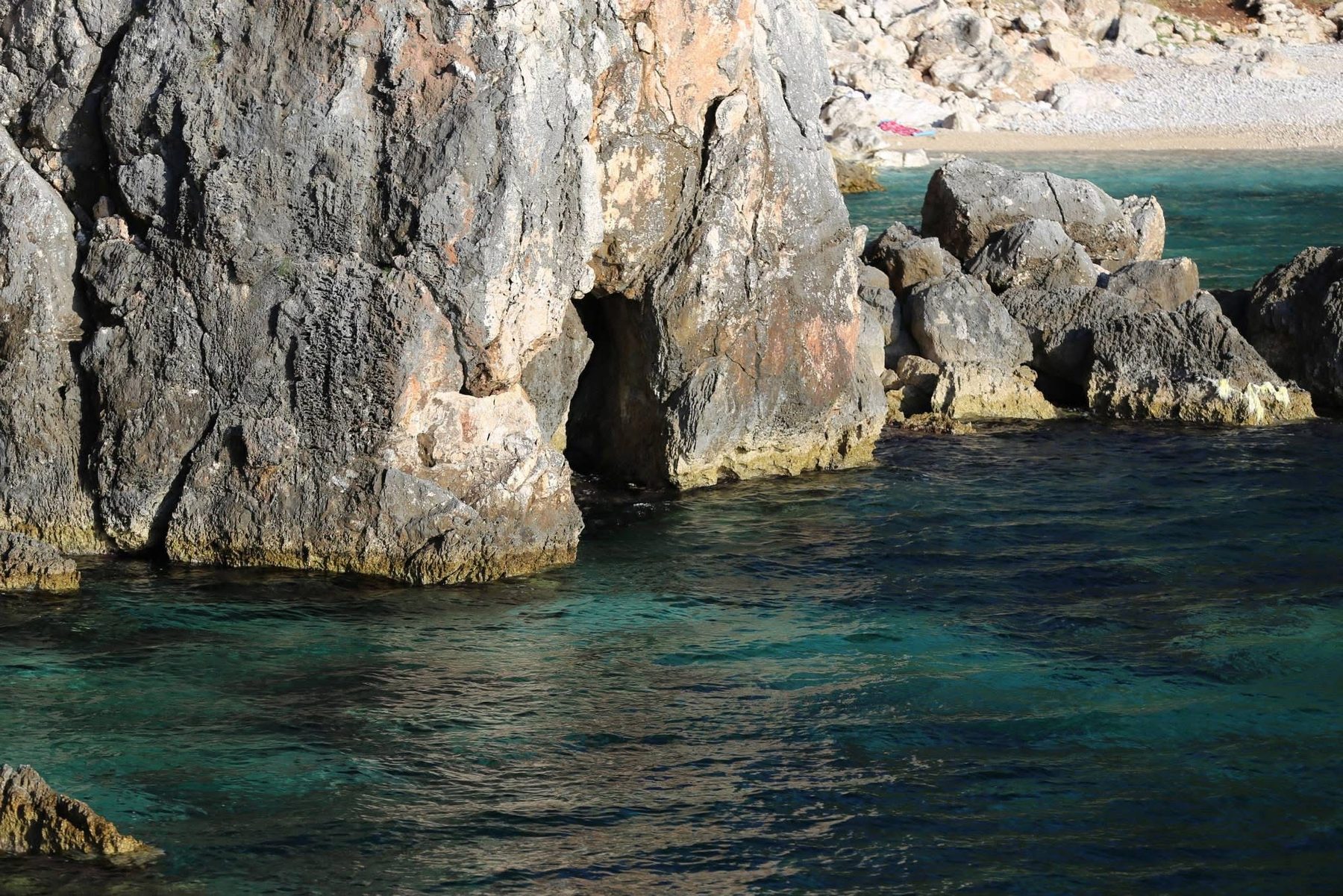
The photo shows Dafina Cave, with turquoise water inside.
-
Inside the cave
On calm days small boats slip inside. The light changes and the water turns a deeper blue.
-
Monk seal country
The caves and sea canyons of Karaburun are among the last refuges of the Mediterranean monk seal. Sightings are rare.
Haxhi Ali Cave in numbers
-
100 metres
Known length of the cave into the cliff
-
45 metres
Height of the entrance above the sea
-
0.8 metres
Depth of the underwater sill at the entrance
-
17 caves
Recorded as possible monk seal shelters on this coast
Where it is
On the Karaburun Peninsula, near Cape Gjuhëz, within the Karaburun–Sazan Marine Park.
What to bring
- Swimwear: boat trips run on calm summer days
- Towel: for drying off after a swim
- Sun cream: for a half or full day on the boat
- Non-slip shoes: for stepping on and off the boat
- Waterproof phone pouch: small boats slip inside the cave
- Binoculars: monk seals are rare, but the cliffs reward a look
- Camera: the light changes and the water deepens inside
Is it worth it?
Yes, if…
you want to see a sea cave from a boat: on calm days small boats slip inside, where the light changes and the water turns a deeper blue.
Maybe not, if…
you want to arrive by road: the cave can only be reached by sea, as part of a Karaburun boat trip.
Go on a calm summer day, June to September, and check current boat trip prices before you go.
Combine it with
Continue exploring
More places and ideas for your days around Vlorë:
- Karaburun Peninsula
- The other caves of Karaburun: Duk Gjoni, Dafina and the sea tunnels
- The Bays of Karaburun by Boat
- Grama Bay and its Ancient Inscriptions, Karaburun
- Inside Haxhi Ali Cave by speed boat
- The big boat to Sazan, with Haxhi Ali Cave from the outside
- All attractions around Vlorë
- A complete Riviera itinerary from Vlorë to Himarë
- Archaeological sites in Vlorë: Amantia, Orikum, Kanina and ancient Aulona
- Where to stay in Vlorë: our complete guide