Submarine 105: Albania’s Cold War Secret in the Bay of Vlora

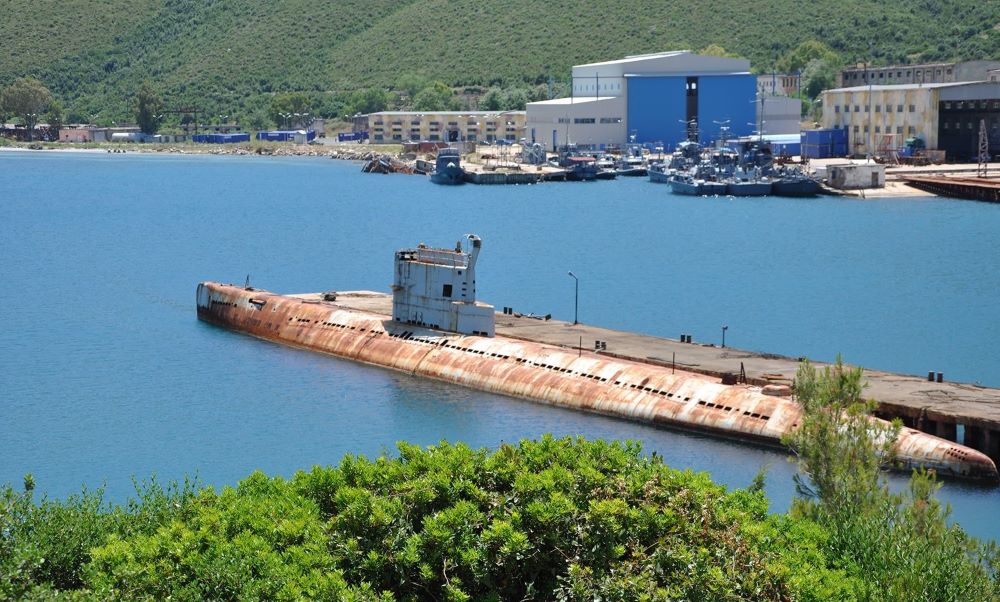
Rust-red Submarine 105 moored at a pier in Pashaliman naval base, with green hills and base buildings behind.

Yes, the Soviet Union once kept a submarine base in Albania, and it was here, in the Bay of Vlora. From 1958 to 1961 up to twelve Soviet submarines were stationed at Pashaliman, about 16 km by road from Valza Boutique Hotel in Uji i Ftohtë. One of them is still afloat. Albanians call it Submarine 105, a number that no navy ever gave it.

It is a strange survivor. Its number was invented by a novelist. Its fame comes from a film. And the bay it floats in was once described by American intelligence analysts as the most heavily defended place in the country. This is the story of that submarine, the base around it, and the spring of 1961, when two communist allies came close to fighting each other over a handful of boats.

Submarine 105 at a glance

What it is
A Soviet Project 613 diesel-electric submarine (NATO name: Whiskey class), 76 metres long, the last of the four that Albania kept in 1961.
Where
Pashaliman naval base, near Orikum, at the southern end of the Bay of Vlora: about 16 km, or half an hour, by road from Valza Boutique Hotel.
Time needed
Half a day for Orikum, the ruins of Oricum and the shore nearest the base; a full day if you add a boat trip to Karaburun.
Best time
Late afternoon, when the light falls across the bay from Sazan and Karaburun; from May to October for the boat trips.
Cost
Looking costs nothing: the base is a working military site, so the submarine is seen from a distance unless a visit is announced.
Good for
Cold War and naval history lovers, readers of Ismail Kadare, and anyone who likes a story the guidebooks leave out.

Seven things most visitors never hear

Before the full story, here are the seven facts that surprise our guests most when we tell them at the reception desk.

The number is fiction, and the author admitted it. No navy gave this submarine the number 105. Ismail Kadare did, in a 1973 novel; in 2022 he told AFP it was simply the only number that came to his mind.

The CIA was counting guns here in 1959. A declassified photo-interpretation report lists 28 gun positions around the bay and calls it the most heavily defended area in Albania.

The Soviet defence minister came to look in person. Marshal Georgy Zhukov inspected Karaburun in October 1957. Within days of flying home he had lost his job.

The Soviet crews were to wear Albanian uniforms. That was the arrangement written down in 1957, so that the boats would sail under the Albanian flag.

Two Warsaw Pact allies aimed artillery at each other here. It happened at Pashaliman in the spring of 1961, and nobody fired.

The famous submarine tunnel was not built for submarines. The tunnel at Porto Palermo was designed for Chinese missile boats that never came.

The deadliest submarine attack of the First World War happened just outside this bay. One torpedo, off Cape Linguetta, in June 1916.

Where it all happened: the bay on one map

Everything in this story fits inside the view from our seafront. The map below, drawn by us from OpenStreetMap, shows the hotel on the eastern shore, Pashaliman tucked into the far southern corner, Karaburun closing the bay from the west and Sazan standing in the entrance. The triangles on the ridge mark where the CIA counted anti-aircraft batteries in 1959; the dashed line follows the eight Soviet submarines out of the bay in 1961.

The Bay of Vlora and its submarine history, with Valza Boutique HotelMap of the Bay of Vlora drawn from OpenStreetMap: Valza Boutique Hotel in Uji i Ftohtë, the Pashaliman naval base where Submarine 105 is moored, the ancient city of Oricum and Orikum, Sazan Island in the entrance, the Karaburun peninsula with the anti-aircraft batteries counted by the CIA in 1959, Cape Linguetta where the troopship Principe Umberto was torpedoed in 1916, and the route by which eight Soviet submarines left the bay on 26 May 1961.Pashaliman naval baseSubmarine 105 is moored hereOricum, ancient cityOrikumVlorë centreValza Boutique Hotelwatch the bay from here1916: Principe Umberto torpedoedoff Cape LinguettaSazan IslandKARABURUN1959: anti-aircraft batteriescounted by the CIA26 May 1961: eight Sovietsubmarines leave the bayBay of VlorëStrait of OtrantoItaly, about 70 km westSubmarines in the Bay of VloraSoviet departure, 1961Gun positions on Karaburun, 195910 km© OpenStreetMap contributors

Pashaliman cannot be seen from the open sea: the curve of Karaburun hides it. That one fact explains why every navy that came here wanted it.

Why did navies want the Bay of Vlora?

Because of where it sits. The bay opens onto the Strait of Otranto, the narrow gate between the Adriatic and the rest of the Mediterranean. Italy is about 70 km away, and any ship leaving the Adriatic has to pass this point.

The bay is also a natural fortress. The Karaburun peninsula closes it from the west like a wall of rock, and Sazan Island stands in the entrance. Inside, the water is deep and calm, and a fleet anchored at the southern end is invisible from outside. Venetians, Ottomans, Italians and finally the Soviets all understood the same thing: a submarine base needs deep water, shelter and a short run to a busy sea lane, and Vlora has all three.

Below are the twelve dates that tell the whole story, from the first torpedo to the concert on the deck of Submarine 105.
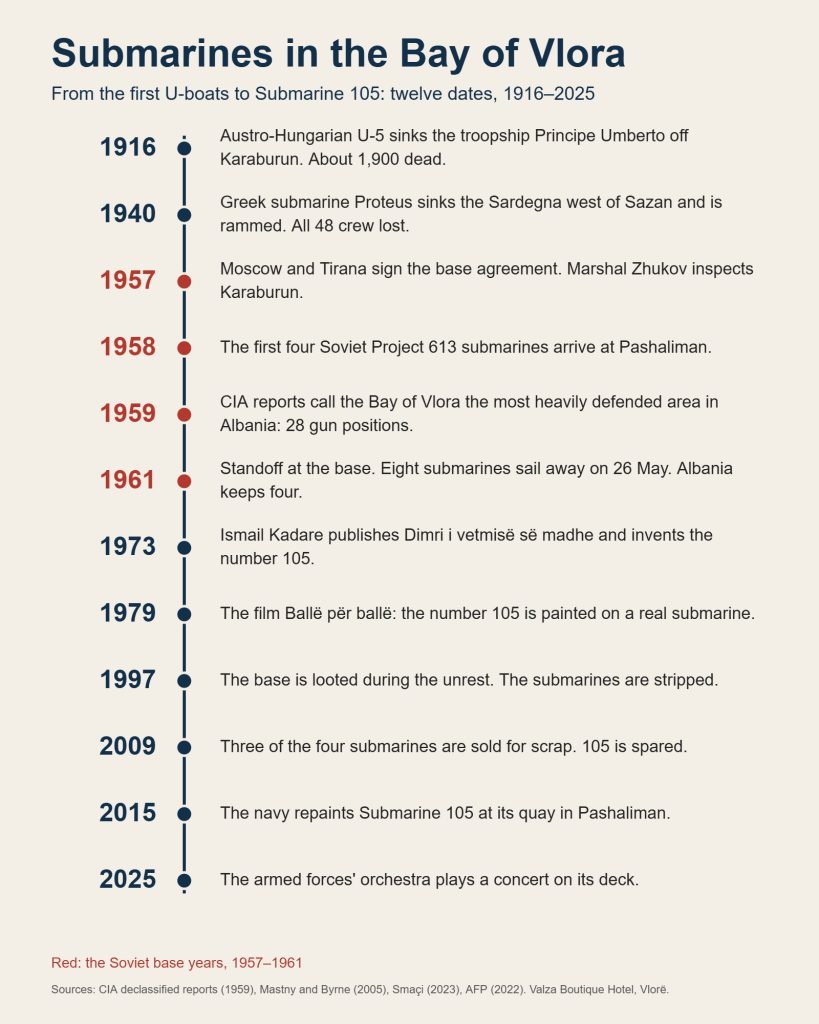
Timeline infographic of twelve dates in the submarine history of the Bay of Vlora, from 1916 to 2025.

Twelve dates in the submarine history of the Bay of Vlora, from 1916 to 2025.

1916: the first submarines arrive as hunters

Submarines first came to these waters as attackers. During the First World War Italy held Vlorë, a town it later planned to rebuild from scratch, and used the bay as a supply port, while Austro-Hungarian and German U-boats waited outside.

On 8 June 1916 the Italian troopship Principe Umberto left the bay carrying the 55th Infantry Regiment home. Off Cape Linguetta, the northern tip of Karaburun, the Austro-Hungarian submarine U-5 hit it with a torpedo, and the ship sank in minutes. Sources give between about 1,750 and 1,926 dead; either way, it was the greatest loss of life caused by any submarine attack in the whole war. The wreck was found in 2022 by an Italian underwater robot.

Four months later another Austro-Hungarian boat, U-16, torpedoed the Italian destroyer Nembo off the same coast and was itself lost in the fight. We tell these stories, and how divers visit the wrecks today, in our guide to the shipwrecks of the Bay of Vlora.

1940: a Greek submarine’s last attack

The second war brought a second chapter. On 29 December 1940 the Greek submarine Proteus attacked an Italian convoy on its way to Vlorë and sank the troopship Sardegna. Moments later the Italian torpedo boat Antares rammed the submarine. All 48 men on board Proteus were lost.

So by the time the Cold War began, these few kilometres of sea had already seen what submarines could do. The next ones would come to stay.

1957: how did a Soviet submarine base end up in Albania?

By invitation. In the 1950s Albania was the only Warsaw Pact country with a coast on the Mediterranean. For Moscow, the Bay of Vlora was a door to the open sea that did not pass through the Turkish straits.

The two governments signed the agreement on 12 September 1957. A month later, on 17 October, the Soviet defence minister, Marshal Georgy Zhukov, landed in Albania and went to see Karaburun for himself. Albanian military records show what was promised: four submarines in 1958 and eight more in 1959, with Soviet crews in Albanian uniforms, sailing under the Albanian flag. Two days after Zhukov left, the waters around Pashaliman were closed to navigation and Karaburun became a military zone. It stayed closed to the public for decades.

Zhukov never saw the result. He flew home at the end of October 1957 and was removed from his post almost at once.

The first four submarines arrived in August 1958 with a supply ship, and more followed until there were twelve. They were Project 613 boats, the first submarines the Soviet Union built after the Second World War: 76 metres long, diesel-electric, able to dive to about 200 metres. In 1959 Nikita Khrushchev came to see the base. Albanian veterans remember him saying that from this bay he could watch the Mediterranean all the way to Gibraltar.

  • 12 submarines

    Soviet Project 613 boats based at Pashaliman by 1961

  • 76 metres

    The length of Submarine 105, from bow to stern

  • 28 gun positions

    Counted around the bay by CIA analysts in December 1959

  • 4 submarines

    Kept by Albania when the Soviet fleet sailed away in 1961

What did the CIA see in the Bay of Vlora?

The Americans were watching closely. Two CIA photo-interpretation reports from 1959, now declassified, describe the bay position by position.

The first, from July 1959, looks at Sazan. The analysts expected a submarine base on the island and did not find one: only a small harbour with patrol boats.

The second, dated 17 December 1959, is the striking one. It calls the Bay of Vlora the most heavily defended area in Albania and counts 28 gun positions around it, including five new anti-aircraft batteries along the ridge of Karaburun and a new military road about eight miles long. The analysts are careful: all this was probably there to protect a new submarine base at Pashaliman. On their map, the southern end of the bay carries two words: Submarine Base.

Stand on the seafront in Uji i Ftohtë and look across the water to Karaburun. The quiet green ridge in front of you was, in 1959, being counted gun by gun by analysts in Washington.

Spring 1961: what happened when the allies fell out?

The alliance lasted less than three years after the first submarine arrived. By 1960 Tirana and Moscow were quarrelling openly. Albania sided with China, and the base became the place where the quarrel turned physical.

Veterans describe mixed crews that stopped speaking to each other. One story, told to the news agency AFP by a retired Albanian commander, has a Soviet sailor raising the red flag and an Albanian sailor tearing it down.

In the spring of 1961 Moscow announced that it was withdrawing its fleet. The question was which boats were Soviet and which were now Albanian. Warsaw Pact documents published by historians record what followed: Albanian forces blocked the base, brought artillery into position and boarded a submarine. The same documents admit that it is not clear who made the first move.

Nobody fired. On 26 May 1961 eight submarines sailed out of the bay for the last time, and the last Soviet personnel left on 5 June. Four submarines stayed behind, with about a dozen smaller vessels. Albania, a country of fewer than two million people, now had a submarine fleet.

What happened to Albania’s four submarines?

They served for about thirty years. Albanian crews learned to run them without Soviet instructors and, after the break with Moscow, without Soviet spare parts. It was dangerous work: in 1967 an explosion on board one of the boats killed several sailors, and accounts still differ on how many.

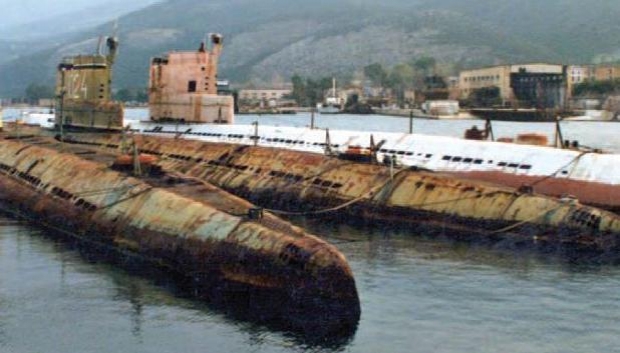
The fleet stopped sailing in the early 1990s. In 1997, during the unrest that followed the collapse of the pyramid schemes, the base was looted. According to AFP, the submarines lost their weapons, their engines and even the sailors’ beds. Three of the four were later cut up and sold for scrap. The fourth was on the same list.


Rusting Albanian submarines moored side by side at Pashaliman naval base in the Bay of Vlora.

The Albanian submarines at Pashaliman, before three of them were scrapped.

Why is it called Submarine 105?

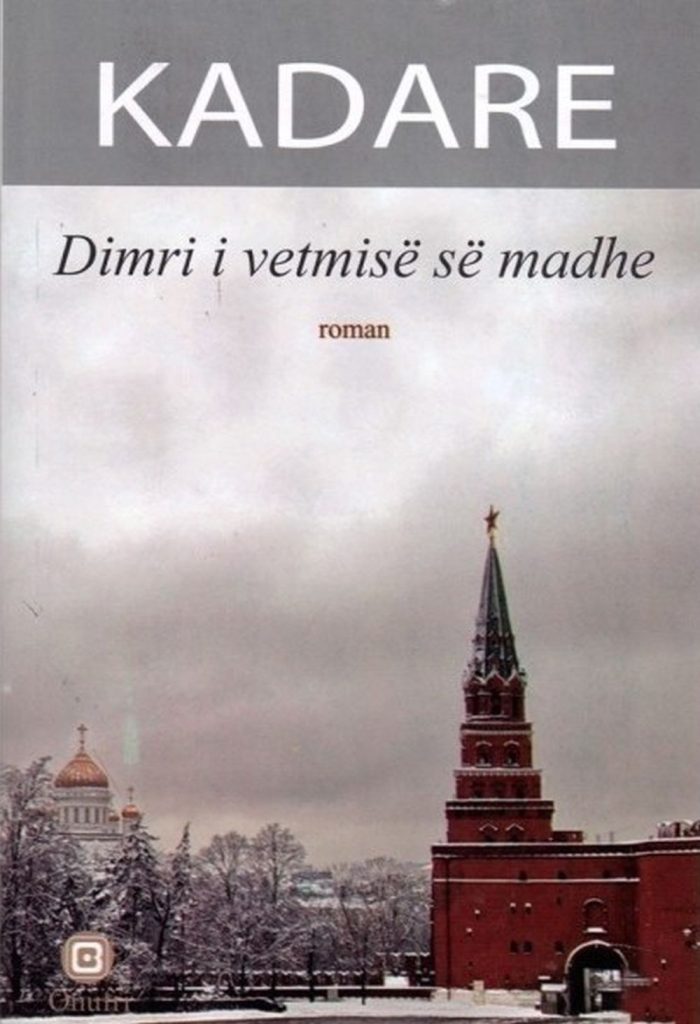
Because a writer needed a number, and he told us so himself. In 1973 Ismail Kadare, Albania’s best-known novelist, published Dimri i vetmisë së madhe (The Winter of Great Solitude), a novel about the break between Tirana and Moscow. The standoff at the Vlorë base is one of its central scenes, and the submarine in it needed a name. Kadare gave it a number: 105.


Cover of Ismail Kadare’s novel Dimri i vetmisë së madhe, Onufri edition, showing a Kremlin tower in snow.

A recent Onufri edition of Dimri i vetmisë së madhe, the 1973 novel that gave the submarine its number.

“This is the only number that came to my mind while I was writing.”

— Ismail Kadare, speaking to AFP in May 2022

Nearly half a century after the novel, AFP asked Kadare where the number came from. There was no secret code and no naval register behind it: just the first number that came to mind. He gave that interview at 86, two years before his death in Tirana in July 2024.

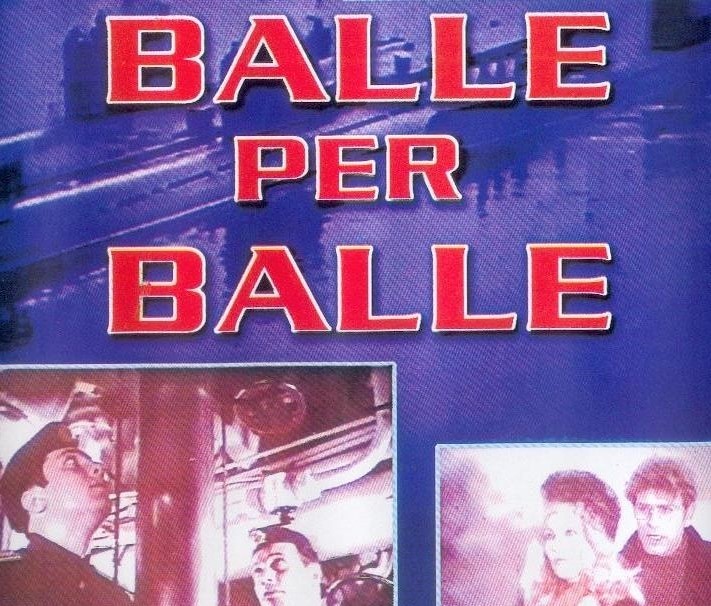
The novel was reworked and reissued in 1977 as Dimri i madh (The Great Winter). Then came the film. Ballë për ballë (Face to Face), directed by Kujtim Çashku and Piro Milkani from Kadare’s own screenplay, was shot at the base and opened in Tirana on 7 November 1979. For the cameras, the number 105 was painted on a real submarine.


DVD cover of the 1979 Albanian film Ballë për ballë, with red title letters over a submarine scene.

Ballë për ballë (1979), the film that painted 105 on a real submarine.

The paint stayed. So did the name. For Albanians who grew up with the film, there is only one submarine, and it is 105. Kadare put it simply when he spoke to AFP in 2022: in his view, the submarine is alive today thanks to that number.


Portrait of the Albanian novelist Ismail Kadare in glasses and a grey jacket.

Ismail Kadare, who gave the submarine its number.

Did a novel really save Submarine 105?

In a way, yes, but not alone. The government listed all four submarines for scrap. Three were dismantled. The fourth was taken off the list to be kept as a museum piece, and Albanian news reports of the time give the reason plainly: this was the boat from the film, the one everybody knew.

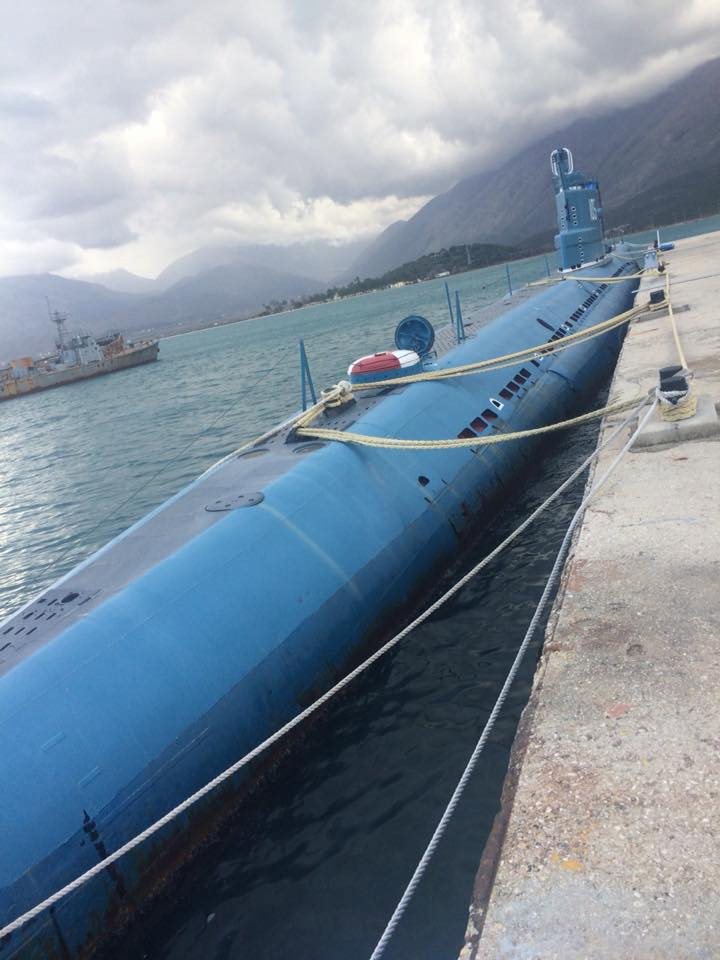
There is a second rescuer, and he deserves equal credit. Neim Shehaj, a retired sergeant who served on the boat for about thirty years, has spent years repairing it by hand: the wiring, the ventilation, the command post, the torpedo room, the holes in the hull. In 2015 the navy repainted the outside. In 2022 Shehaj warned that sea water was still eating the steel and that the boat needed to come out of the water.


Submarine 105 painted blue and tied to the quay at Pashaliman, with mountains and clouds behind.

Submarine 105 after its repainting in 2015.

So the honest version is this. A number invented by a novelist, painted on for a film, made one submarine too famous to melt down. A sergeant has kept it floating ever since.

Was the tunnel at Porto Palermo built for these submarines?

No, and this is the most common mistake visitors make. The tunnel cut into the rock at Porto Palermo, further south on the Riviera, dates from the late 1960s, after the Soviets had gone. A peer-reviewed study of the site gives its size as 650 metres long and 12 metres wide, and records that it was designed for four Chinese missile boats. Those boats never arrived: Albania broke with China in 1978.

The submarines did use it later. The tunnel served as the base of the Albanian submarine brigade from 1986 to 1993. It remains a military site, but on the same bay you can visit Porto Palermo Castle, an easy stop on the Riviera road south of Himarë.

Myths and misunderstandings

Several things often said about the submarines of Vlorë are not supported by the sources. Tap each one to see what the record shows.

Myth“105 was its navy number.”Tap to see the reality

Reality The number comes from Kadare’s 1973 novel and was painted on the hull for the 1979 film.

Myth“The Soviets had a submarine base on Sazan.”Tap to see the reality

Reality The CIA looked for one in 1959 and found only a small harbour with patrol boats. The base was at Pashaliman. Sazan has its own Cold War story, told in our Sazan Island guide.

Myth“Captain von Trapp sank the Principe Umberto.”Tap to see the reality

Reality Georg von Trapp, later famous through The Sound of Music, did command U-5, but earlier. In June 1916 the boat was commanded by Friedrich Schlosser.

Myth“The Russians left the submarines as a gift.”Tap to see the reality

Reality Albania kept four boats after a standoff with artillery in position. Moscow did not offer them.

Myth“Its real name is certain.”Tap to see the reality

Reality Albanian television calls the boat Tufani; AFP calls it Stuhia. Until the naval records are published, we simply call it 105, like everyone in Vlorë.

Can you see Submarine 105 today?

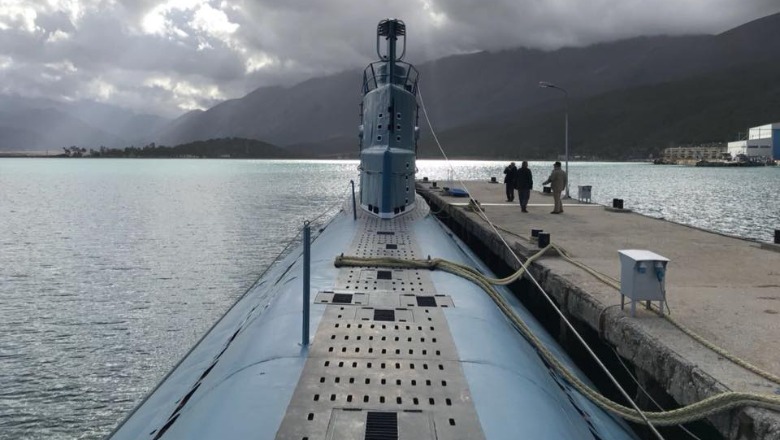
From a distance, yes; on board, only when a visit is announced. The submarine is moored inside Pashaliman, which is still a working naval base. In 2015 officials said it would open to visitors, but we could not confirm regular visits today, so ask locally before you go. Plans for a Cold War museum have been announced several times since 2010, and in 2025 the armed forces’ orchestra played a concert on its deck: a sign that the idea is still alive.


The deck and conning tower of Submarine 105, painted blue, moored beside the quay at Pashaliman naval base.

On the deck of Submarine 105 at Pashaliman.

What you can do is walk, sail and eat on the stage where all this happened. These are the four ways we suggest to our guests.

From the seafront at Uji i Ftohtë

The whole bay is in front of you: Sazan in the entrance, the Karaburun ridge where the guns once stood, and Pashaliman out of sight at the southern end, exactly as its builders intended.

Orikum and ancient Oricum

About 16 km and half an hour by road from Valza Boutique Hotel, Orikum is the closest you can get to the base. Next to it, Oricum Archaeological Park keeps the little theatre of a city Caesar knew.

By boat across the bay

A speed boat day to the caves of Karaburun crosses the same water the submarines used to leave the bay, and passes the coast the CIA once photographed.

Sunset on the rooftop

In the evening, Eden by Valza, our sixth-floor rooftop, looks straight across the bay to Karaburun and Sazan: the best seat in Vlorë to think the story over.

If you would like to stay close to this story, see our rooms and suites or contact our reception team, who are happy to help you plan the day.

Go deeper

Frequently asked questions about Submarine 105


Was there really a Soviet submarine base in Albania?

Yes. From 1958 to 1961 the Soviet navy kept up to twelve Project 613 submarines at Pashaliman, at the southern end of the Bay of Vlora, about 16 km by road from Valza Boutique Hotel. The Soviets left in 1961, after Albania broke with Moscow.


What is Submarine 105?

Submarine 105 is the last survivor of the Soviet submarines once based in the Bay of Vlora, and one of the four that Albania kept in 1961. The number 105 comes from a 1973 novel by Ismail Kadare and from the 1979 film Ballë për ballë; no navy ever used it. In 2022 Kadare told AFP that 105 was simply the only number that came to his mind while he was writing.


Where is Submarine 105 now?

Submarine 105 is moored at Pashaliman naval base, near Orikum, at the southern end of the Bay of Vlora. Pashaliman is still a working naval base. By road it is about 16 km, or roughly half an hour, from Valza Boutique Hotel in Uji i Ftohtë, Vlorë.


Can tourists go inside Submarine 105?

Only when a visit is announced. Submarine 105 lies inside a working naval base, and we could not confirm regular public visits at the time of writing. A Cold War museum at Pashaliman has been announced several times since 2010, so ask locally, or ask our reception, before you plan a trip for this reason alone.


Why did the Soviet navy leave the Bay of Vlora?

Albania’s leadership broke with Moscow in 1960 and 1961 and sided with China. After a standoff at the Pashaliman base in spring 1961, the Soviet navy sailed away with eight submarines on 26 May 1961. Four submarines stayed in Albanian hands.


Is the Porto Palermo submarine tunnel open to visitors?

No. The tunnel at Porto Palermo is a military site and is not open to the public. You can see the bay from the coastal road and visit Porto Palermo Castle nearby. The tunnel was built in the late 1960s for Chinese missile boats, not for the Soviet submarines.


Sources

  1. Edemskiy, A. (2019). Additional evidence on the final break between Moscow and Tirana in 1960–1961. Balcanica L. — the 1961 standoff and the departure of the Soviet fleet.
  2. Mastny, V. and Byrne, M. (eds.) (2005). A Cardboard Castle? An Inside History of the Warsaw Pact, 1955–1991, document 13. CEU Press — Warsaw Pact records of the Vlorë base dispute.
  3. Smaçi, A. (2023). Marshal Zhukov’s visit to Albania (1957). Military Journal, 4th edition, pp. 143–151. Ministry of Defence of Albania — the 1957 agreement, Zhukov’s visit and the uniforms.
  4. Vokshi, A., Shehu, E. and Dervishi, S. (2021). City, Territory and Architecture 8:14 (open access) — the Porto Palermo tunnel, its size and purpose.
  5. Central Intelligence Agency (July 1959). Photographic interpretation report PIC/JR-1004/59 (declassified) — Sazan.
  6. Central Intelligence Agency (17 December 1959). Photographic interpretation report PIC/JB-1004/59 (declassified) — 28 gun positions and the submarine base at Pashaliman.
  7. uboat.net – ships hit by U-boats in the First World War, greatest loss of life — the Principe Umberto, 8 June 1916.
  8. uboat.net – the Greek submarine Proteus (Y-3) — 29 December 1940, 48 men lost.
  9. Mema, B. (18 May 2022). Albania’s Soviet-era sub awaits its fate, refusing to sink. Agence France-Presse, republished by Daily Sabah — the interview in which Kadare explains the number 105, Kadare, Neim Shehaj and the state of the boat.
  10. Top Channel (19 August 2010). Nëndetësja 105 kthehet në muze — the decision to keep Submarine 105.
  11. Arkivi Qendror Shtetëror i Filmit — catalogue record for Ballë për ballë (1979).