Slow tourism in Vlorë means letting the city set the pace: a swim before the umbrellas open, a long breakfast, the hottest hours in the shade and the evening walk along the Lungomare with half the town. Give it four or five days and one area per day, in May, June, September or October.
Slow tourism in Vlorë at a glance
- What it is
- Fewer places, more time in each: early swims, long breakfasts, one outing a day and the evening xhiro on the Lungomare.
- Where
- Around the Bay of Vlora: Oricum, Marmiroi, Old Tragjas, Kuzum Baba and the Karaburun coast, all within about 20 km of Uji i Ftohtë.
- Time needed
- Four to five days, one area per day; a week lets you add the Riviera or the Narta lagoon.
- Best time
- May, June, September and October.
- Cost
- Walking the Lungomare and the old town costs nothing; check ticket prices at Oricum and boat trip prices before you go.
- Good for
- Couples, families and anyone who prefers depth to a checklist.
The city that walks twice a day
Like every seaside city, Vlorë has a rhythm, and it walks twice a day: early in the morning, while the sea is still flat, and again at dusk, when the heat lifts and the whole city comes out.
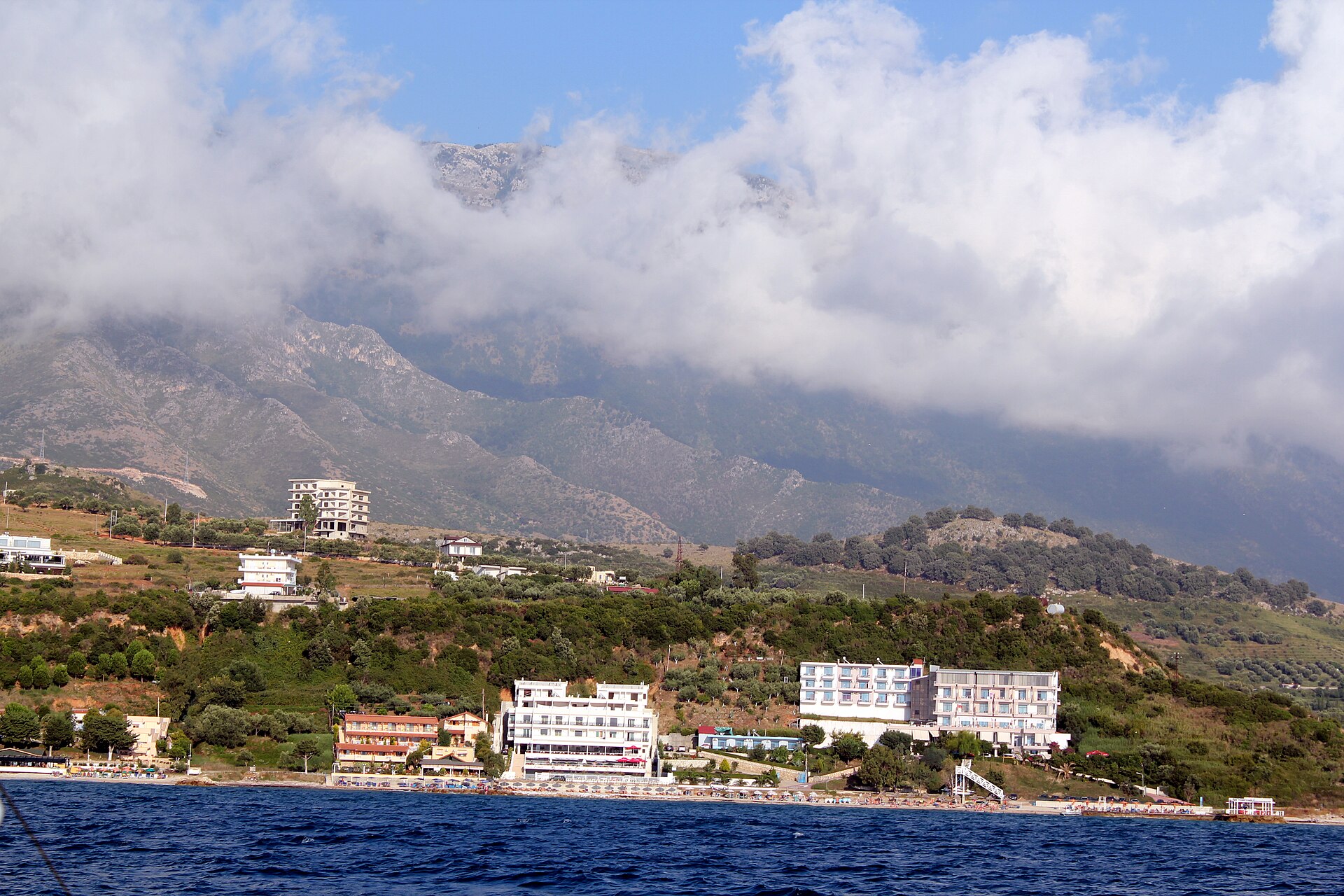
The morning belongs to swimmers. South of the busiest stretch, where the shore runs under pines and the promenade loosens into pebbles and pale rock, people swim before the sunbeds fill. Breakfast comes in two cultures: in traditional households, kulaç, a round home-baked loaf eaten with white cheese; along the seafront, a cappuccino and a brioche by the water.
The evening has a name. Albanians call it xhiro, the stroll: people walk not to reach anywhere, but to take the evening air and greet familiar faces. In Vlorë the xhiro follows the Lungomare, the city’s seafront promenade: grandparents on benches, children on scooters, couples with ice cream. Join it once, and you will understand the city better than any tour could.
-
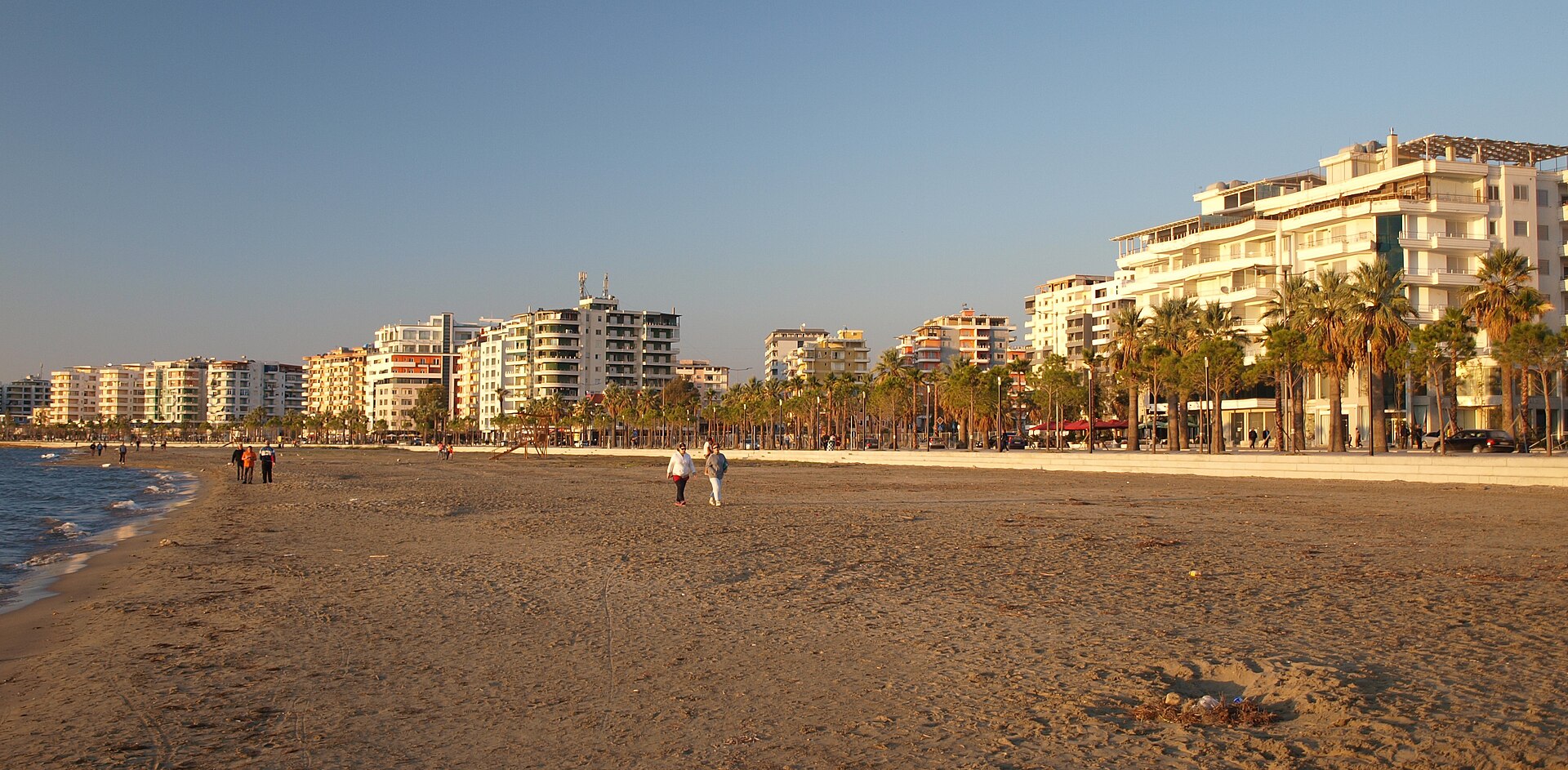
Photo: Peter Chovanec, CC BY 2.0, via Wikimedia Commons
Two and a half thousand years on one bay
- 6th century BC
Oricum, at the southern end of the bay, is founded; in 48 BC Julius Caesar takes it and makes its harbour his naval base.
- 1307
The church of Marmiroi, beside the Orikum lagoon, is first mentioned in writing; it is usually dated to the 12th or 13th century.
- 28 November 1912
Independence from the Ottoman Empire is proclaimed in Vlorë; six days later the Assembly of Vlorë forms the provisional government led by Ismail Qemali.
- 14 March 1941
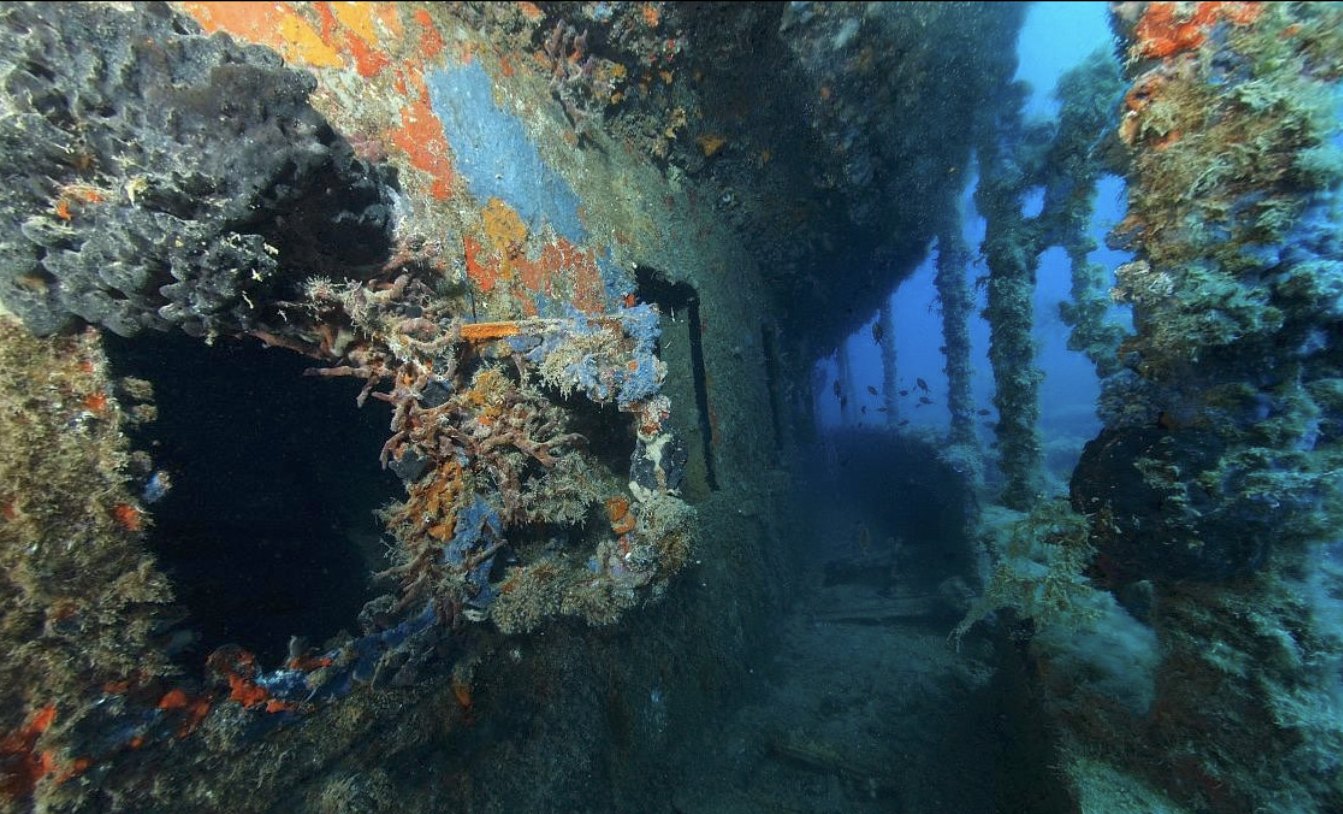
The Italian hospital ship Po is torpedoed in the bay; 23 of the 240 people aboard die.
- 1 and 2 January 1943
Tragjas fights in the Battle of Gjorm, where Albanian resistance units rout Italian troops.
- 7 August 1943 and 5 August 1944
Tragjas is burned by Italian forces, then by German forces; the survivors rebuild lower down.
- 2005
An Italian diving expedition explores the wreck of the Po, less than a mile off the coast, and on 30 July identifies the battleship Regina Margherita, lost off Cape Gjuheza in 1916.
- 28 April 2010
The waters of Karaburun and Sazan Island become the Karaburun–Sazan Marine Park, Albania’s first.
What slow tourism means, and what it does not
The idea was born just across the sea. In 1986 Carlo Petrini led a protest against the opening of a McDonald’s on Piazza di Spagna in Rome, and the Slow Food movement grew out of it; slow travel is one of its offshoots. The principle is simple: fewer places, more time in each.
In Vlorë that means staying long enough to see a place change with the light, eating what the season brings and walking. Our hotel takes part in the Slow Food community in Vlorë, and the kitchens of this coast still cook by the calendar.
Slow does not mean empty. In July and August Vlorë is a busy summer city, and you travel slowly by moving the clock: swim at seven, rest through the afternoon, go out after sunset. If you want a club every night, or have one day and a long list, this is not your way to see Vlorë, and that is fine.
Slow days around the Bay of Vlora
Each fills half a day or a day at an unhurried pace. Keep to one area per day, back for the evening.
Oricum and Marmiroi: stones in the morning, birds in the afternoon
At the southern end of the bay, about 20 km from Uji i Ftohtë and around 40 minutes by car, lie the remains of ancient Oricum. The city dates back to the 6th century BC, and in 48 BC Julius Caesar, at war with Pompey, took it and made its harbour his naval base. The site lies next to the Pashaliman naval base: go to the entrance gate, where someone accompanies you, and check the current ticket price there.
A dirt track leads to the Orikum lagoon and the church of Marmiroi, most likely dedicated to the Mother of God of the Life-giving Spring, a dedication given to churches built beside water; around it, egrets and grey herons stand motionless in the shallows. Come in the late afternoon, and check the track after heavy rain.
-
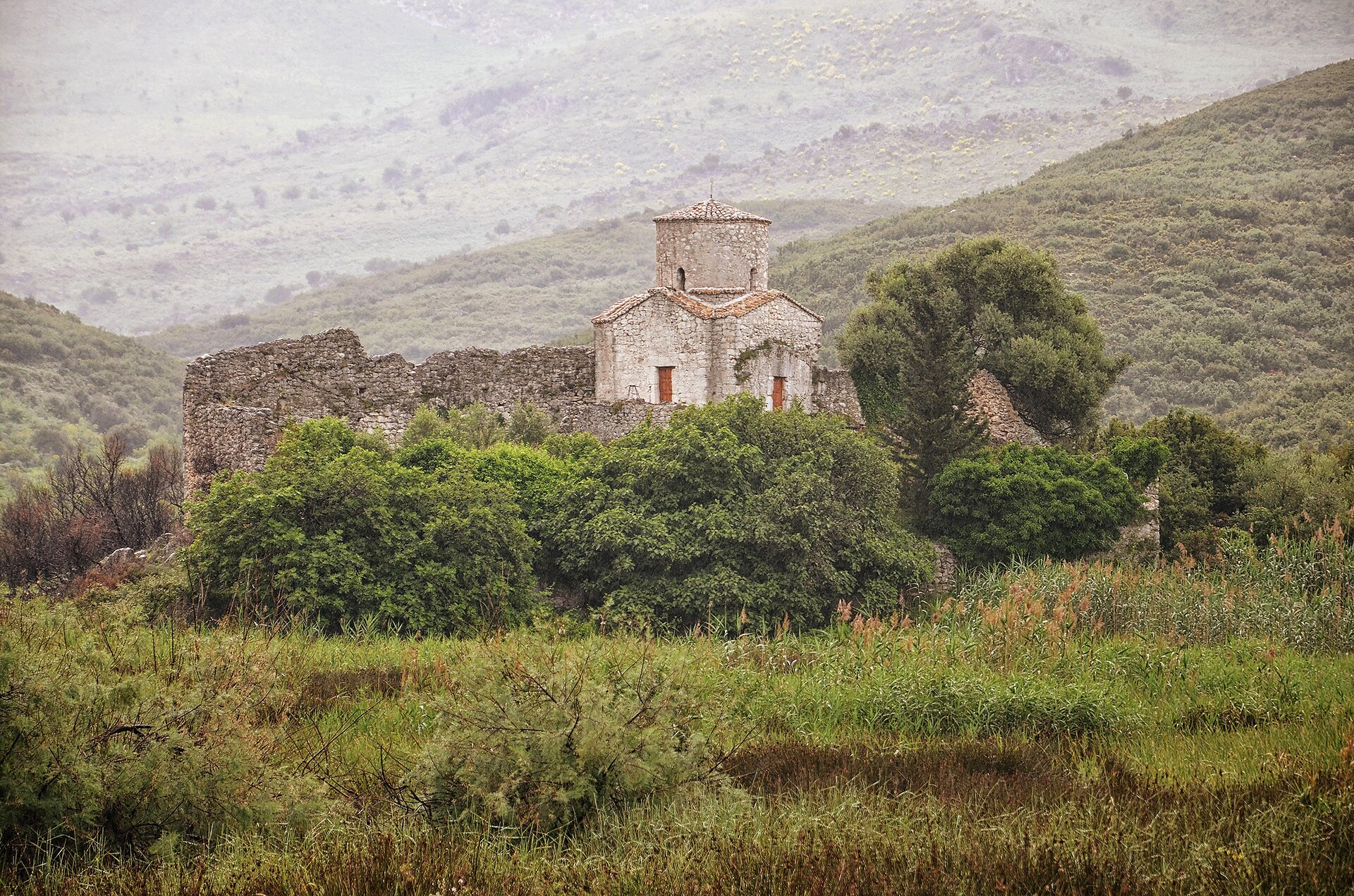
Photo: Pasztilla aka Attila Terbócs, CC BY-SA 4.0, via Wikimedia Commons
Old Tragjas: a village left to the olive trees
In the hills between Radhimë and Orikum, about 20 km from Uji i Ftohtë, the roofless stone houses of Old Tragjas stand among the olives. Under the green, the layout of the village still shows; it has been a protected cultural monument since 1980.
From the new village an unpaved track of about 5 km climbs some 260 metres to the ruins: a car with higher clearance helps, or walk the last stretch. The walls are unstable, so wear sturdy shoes, keep children close and stay off the ruins.
Kuzum Baba: the city’s balcony at sunset
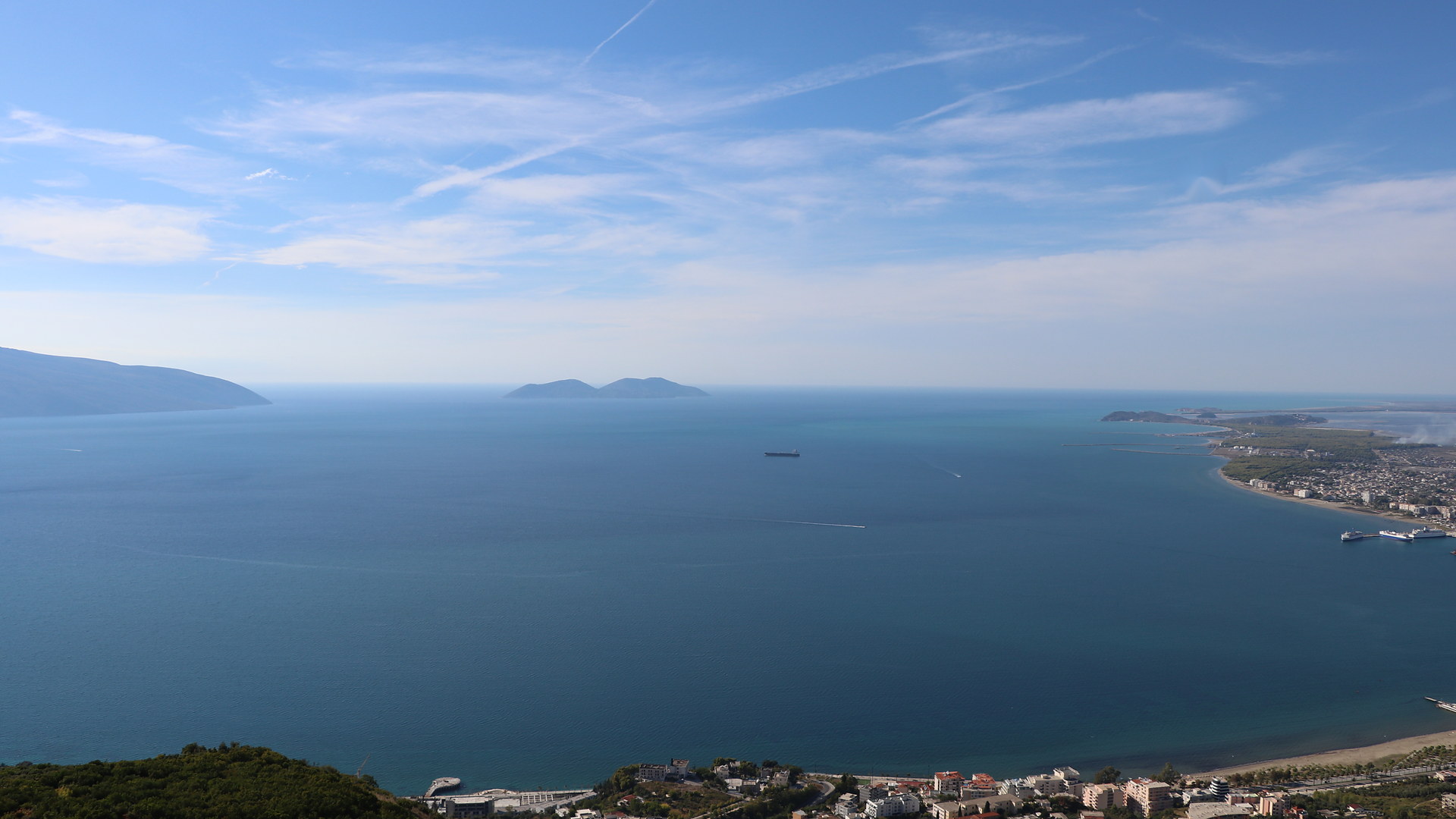
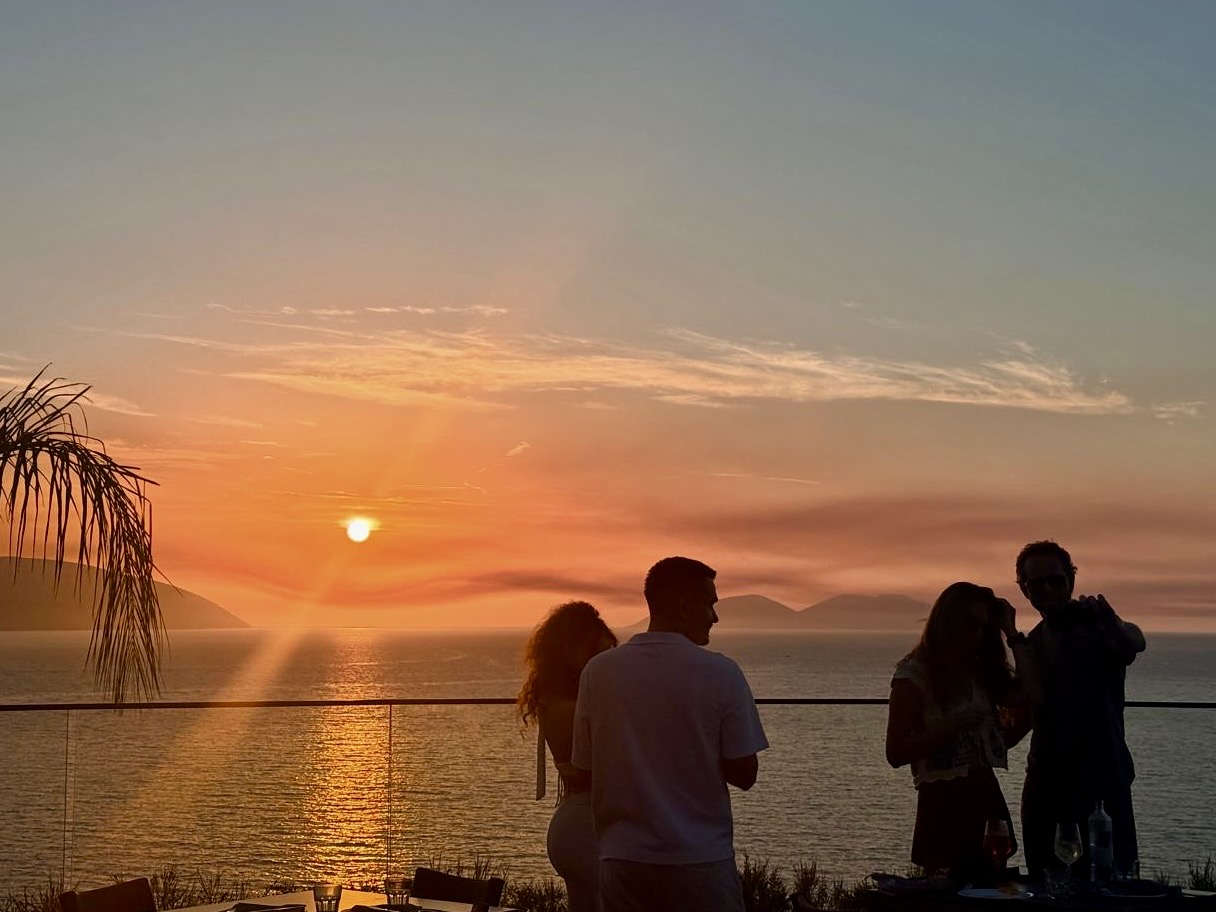
On the hill behind the centre, Kuzum Baba is where Vlorë watches the sun go down: rooftops below, the long curve of the bay, Karaburun dark on the horizon. It is also a sacred place of the Bektashi order, the Sufi tradition rooted in southern Albania, so keep your voice low near the shrine. Walk up from the centre or take a taxi to the top, then find a seat at one of the cafés on the hill and stay for the last of the light.
Karaburun and Grama Bay: the coast without roads
Across the bay, the Karaburun Peninsula has no road along its coast. On the Ionian side, the rocks of Grama Bay keep some 1,500 inscriptions, from the 3rd century BC to the 16th century: names, ships and prayers for a safe voyage, carved by sailors waiting for the wind.
Boat trips run from April, when the weather allows, until the end of October, and every departure depends on the sea. Bring water and shade: the coves have no services ashore.
Beneath the bay: the wreck of the Po
Among the survivors of the Po, picked up from the water, was Mussolini’s daughter, Edda Ciano, then a volunteer with the Italian Red Cross. The wreck lies at 33 to 37 metres and has become an artificial reef: researchers recorded 151 species on it, and in 2023 a Mediterranean monk seal was seen there, the first sighting in the bay since 1996. It is a dive for experienced, suitably certified divers with a local dive centre, and the full story of the Po and the other ships of the bay is in our guide to the Vlorë shipwrecks. Near the surface, snorkelling in the Bay of Vlora begins a few metres from the shore.
Above the bay: paragliding
For the opposite view, tandem paragliding flights take off from the hills above Vlorë, at Shashicë, around 750 metres up, and land on the Lungomare; others start from Llogara. The descent reads the region in one line: mountain, town, shore, open sea. Flights depend on the wind: keep a spare day, and choose a pilot among those with the best recent reviews.
28 November 1912: the city’s own story
The flag was raised on what is now Flag Square, with its Independence Monument, the natural start of a slow morning in the centre, before the old town and a coffee in the shade. Ancient harbours, a Byzantine church, a burned village, a wreck on the seabed: in Vlorë they lie close together, one landscape where different times overlap. That is the real reason to slow down here.
A simple slow day in Vlorë
-
Morning
Swim early. Go while the water is flat and the beaches empty, then take a long breakfast above the bay.
-
Late morning
Choose one outing. Decide the evening before: Oricum and Marmiroi, Old Tragjas, or a boat to Karaburun when the sea allows.
-
Lunch
Late, without hurry. Eat late and let the day settle.
-
Afternoon
Shade. Let the hottest hours pass in the shade.
-
Sunset
Join the xhiro. Walk the Lungomare as the light turns gold, and eat late, as Vlorë does.
The best months for a slow trip to Vlorë
- May Fresher, sea about 18.5 °C, green hills
- June Sea about 22 °C, no August crowds
- July Busy summer city
- August Busy summer city
- September Sea about 24 °C, no August crowds
- October Warm days, first heavy rain
October keeps warm days but brings the first heavy rain, about 120 mm in the month, twice as much as September. Spring and autumn also bring migrating waders to the lagoons of Orikum and Narta, and the most comfortable weather for ruins and walks. Valza Boutique Hotel operates each year from 15 March to 15 November.
Did you know?
-
1,500 inscriptions
Carved by sailors on the rocks of Grama Bay
-
125 km²
Covered by the Karaburun–Sazan Marine Park, Albania’s first
-
151 species
Recorded on the wreck of the Po
-
20 km
From Uji i Ftohtë to Oricum, Marmiroi and Old Tragjas
Test yourself: how slow is your Vlorë?
1. What is the xhiro?
Show the answer
The evening stroll. People walk not to reach anywhere, but to take the evening air and greet familiar faces.
2. When did the Karaburun–Sazan Marine Park open?
Show the answer
28 April 2010. It is Albania’s first marine park, covering about 125 square kilometres.
3. How many species have researchers recorded on the wreck of the Po?
Show the answer
151. The wreck has become an artificial reef, and in 2023 a Mediterranean monk seal was seen there.
Plan your visit
On foot
The Lungomare is flat and continuous; its busier section is about 1 km from Uji i Ftohtë.
By taxi
Flag Square and the old town are a short ride, about 7 km by road. Ask the driver to use the meter or agree the fare first.
By car
The easiest way to Oricum, Marmiroi and Old Tragjas; the coastal road south starts in Uji i Ftohtë without crossing the centre.
By boat
The only practical way to the coast of Karaburun.
Time needed
Four or five days: one on the water, one or two inland, one in the city and one with nothing planned. With fewer than three, you will be choosing places rather than living in one.
Slow travel with a group
Wellness retreats, creative residencies and company retreats work well here. Our team coordinates rooms, breakfast and dining at Eden by Valza around a group’s programme.
What to bring
- Shoes for rocks and ruins
- Binoculars for the lagoons
- Water: the coves of Karaburun have no services ashore
- Covered shoulders for churches and shrines
Is slow tourism in Vlorë worth it?
Yes, if…
you prefer depth to a checklist and are happy to give the bay four or five days, one area at a time.
Maybe not, if…
you want a club every night, or have one day and a long list.
In July and August, move the clock: swim at seven, rest through the afternoon, go out after sunset.
Go deeper
Our corner of Vlorë
Valza Boutique Hotel is a family-run 4-star boutique hotel in Uji i Ftohtë, the calmer end of the Lungomare, and it suits this pace: the nearest beach is about 300 metres away, breakfast is served on the rooftop from 08:00 to 10:30, and the road south to Radhimë, Orikum and Llogara does not cross the city centre. Our reception team helps guests book boat trips to Sazan Island and the Karaburun Peninsula, weather permitting. At the end of the day, Eden by Valza, on the sixth-floor rooftop, looks across the Bay of Vlora with a 180-degree view.