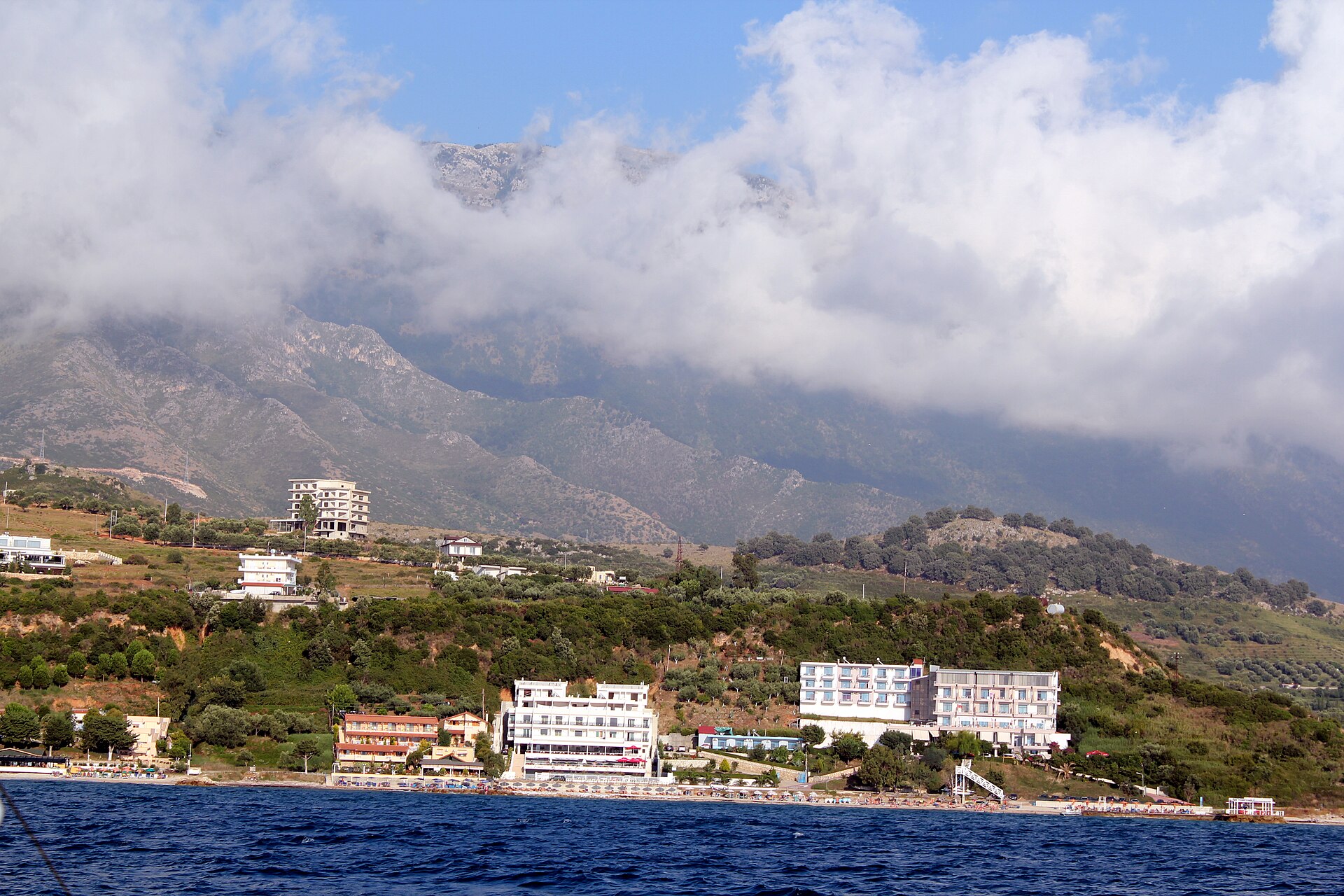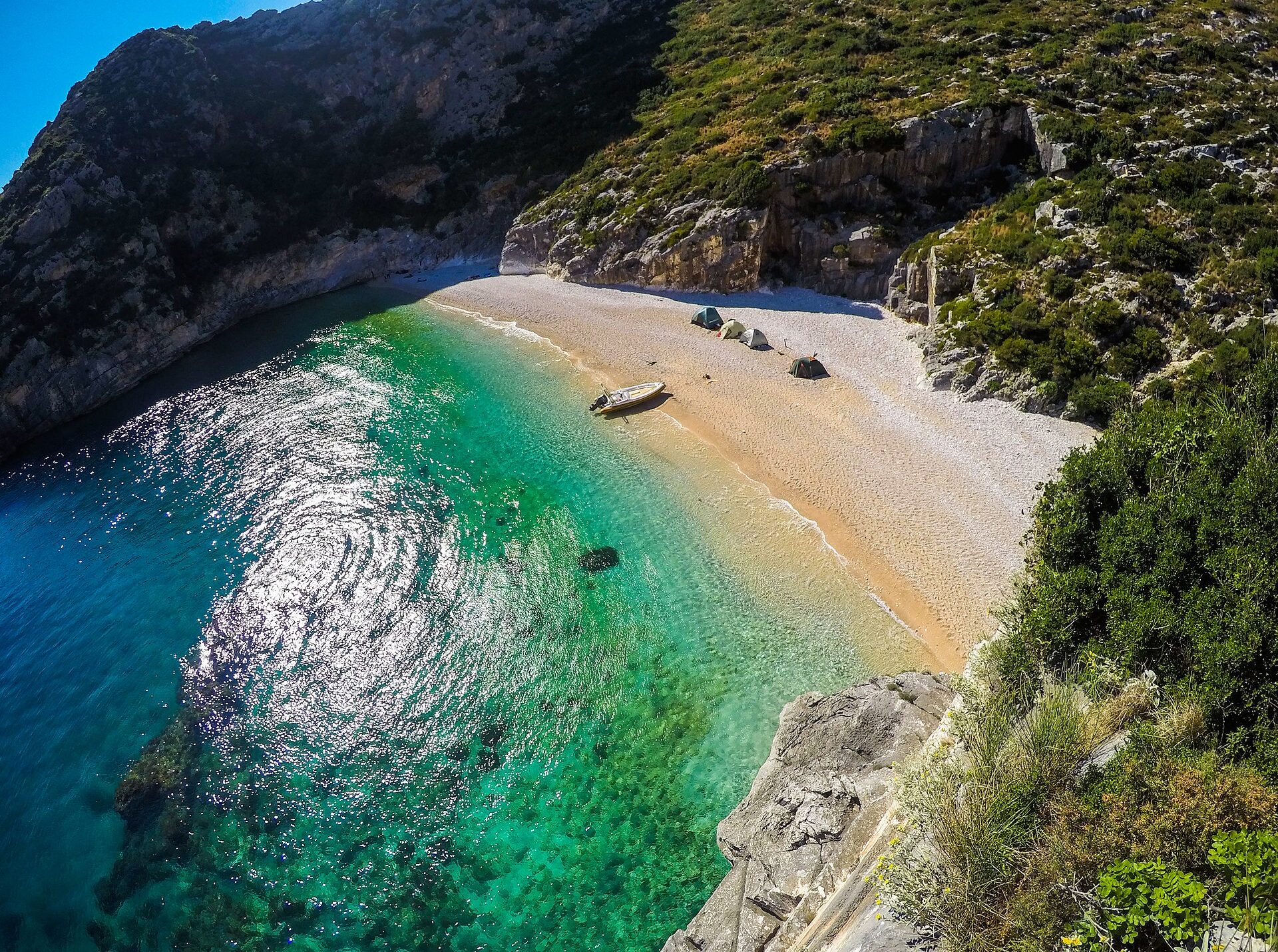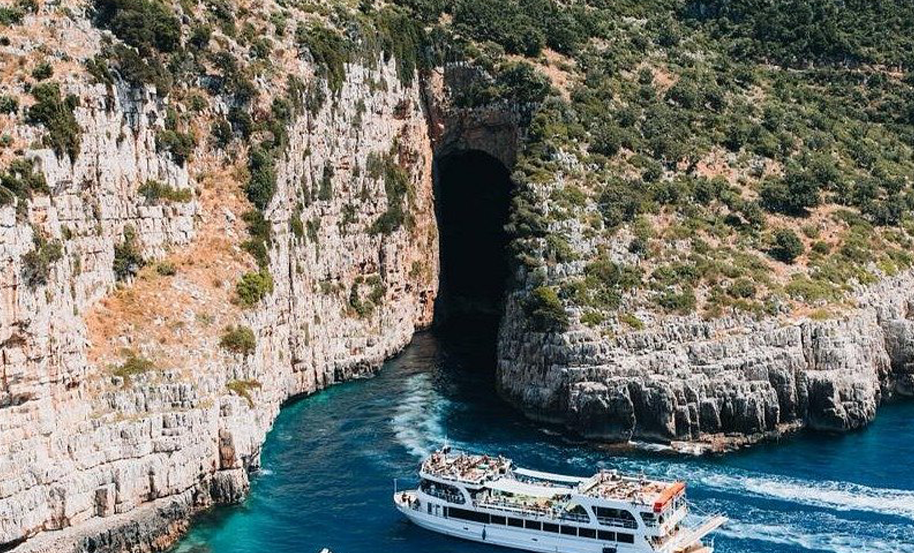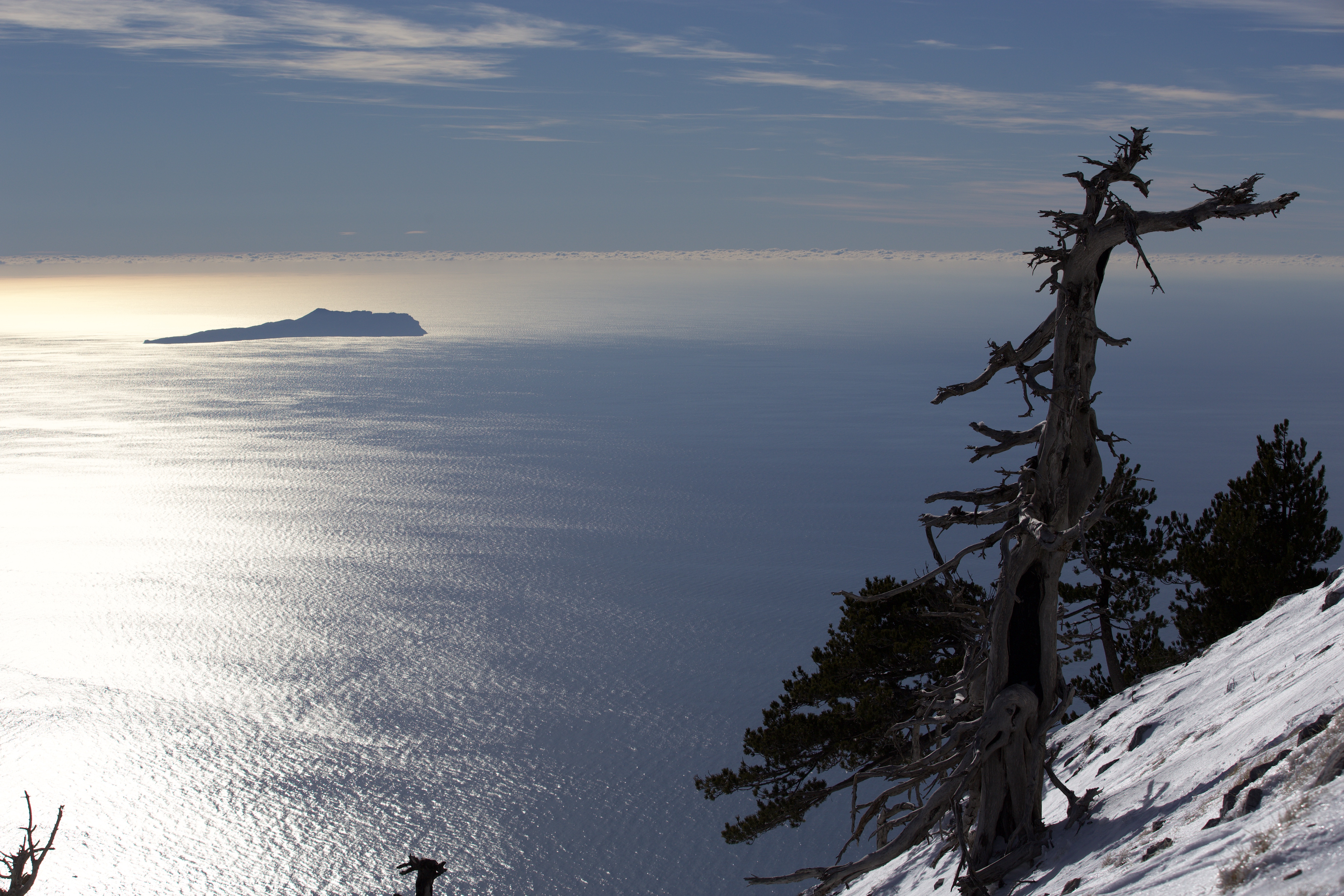
Llogara National Park is the pine forest and mountain pass about 32 km south of Vlorë, 40 to 45 minutes from Valza by car on the old road. The coastal road climbs to 1,027 metres through the Ceraunian Mountains, then drops to the Riviera. Come for the view down to Palasë, the wind-bent pines and mountain honey.
Llogara at a glance
- What it is
- A national park of pine and fir forest, with a 1,027-metre pass and views over the Ionian Sea and the Riviera.
- Where
- About 32 km south of Valza in Uji i Ftohtë, 40 to 45 minutes by car on the old road over the pass.
- Time needed
- Half a day; a full day if you hike or continue along the Riviera.
- When to go
- Late spring to early autumn; snow and ice are possible from December to February.
- Cost
- We do not quote a park fee: ask our reception or check locally before you go. Meals in the forest restaurants are extra.
- Who it suits
- Families, nature lovers, photographers and hikers.
Thunder-split mountains and a Roman general
The ancient Greeks called this range Keraunia, the “thunder-split peaks”, a name that recalled the storms and dangers sailors met along this coast. Like the other ranges of southern Albania, the Ceraunian Mountains are largely limestone, an ancient seabed lifted as the African and Eurasian plates collided: the same rock that shapes the whole Albanian Mediterranean.
In January 48 BC, in the middle of the civil war against Pompey, Julius Caesar crossed the Adriatic in winter. In his own account he wrote that, wary of every harbour, he found a quiet anchorage among the rocks of the Ceraunian Mountains and landed his army at a place called Palaeste, usually identified with today’s Palasë, directly below the pass. From there he moved on Oricum, which surrendered to him without a fight. Look down at the bay of Palasë from the top: if the usual identification is right, that is the beach.
- January 48 BC
Caesar crosses the Adriatic in winter and lands his army at Palaeste, usually identified with Palasë.
- 21 November 1966
Albania declares Llogara a national park.
- July 2024
The Llogara Tunnel, about 6 km long, opens to traffic beneath the park.
The air changes before the view does
Nobody warns you about the smell. Leave the bay behind, pass the olive groves of Radhimë and the flat fields of the Dukat valley, and the road begins to fold back on itself in tight bends. Open the window somewhere on the climb and the air has already changed: cooler, thinner, sharp with pine resin, while the trees still hide the horizon.
Meteorologists work with an average drop in temperature of 6.5 °C for every 1,000 metres of height, so at the pass the air is on average 6 to 7 °C cooler than on the beach you left less than an hour before. Then the road crests the ridge, the trees open, and the whole Riviera is suddenly at your feet. The view arrives last, which is why the drive is part of the visit.
How to get to Llogara from Vlorë
From Valza, follow the coastal road south through Radhimë and past Orikum, then across the Dukat valley towards the mountains. It is the same SH8 that continues to Dhërmi and Himarë, and from our side of town it does not cross the city centre. Just past Dukat the road divides.
| Old road over the pass | Llogara Tunnel | |
|---|---|---|
| What it is | The mountain road through the forest and over the pass | About 6 km long, open since July 2024, running under the national park |
| Time | 40 to 45 minutes from Valza to the pass | Cuts Dukat to Palasë from about 30 minutes to 7 |
| You get | The forest, the viewpoints and the pass | The fast way to the Riviera |
| Our take | For Llogara itself take the old road; use the tunnel when you are heading straight for the Riviera or the winter weather is bad. | |
Since the tunnel opened, traffic on the pass road has dropped noticeably, and the climb is far more pleasant than it used to be. The road is good but steep, one hairpin after another: drive slowly and use a low gear on the way down. A car is the easiest way to visit; without one, our reception team can help you choose and book a local excursion.
The Llogara Pass: 1,027 metres above the Riviera
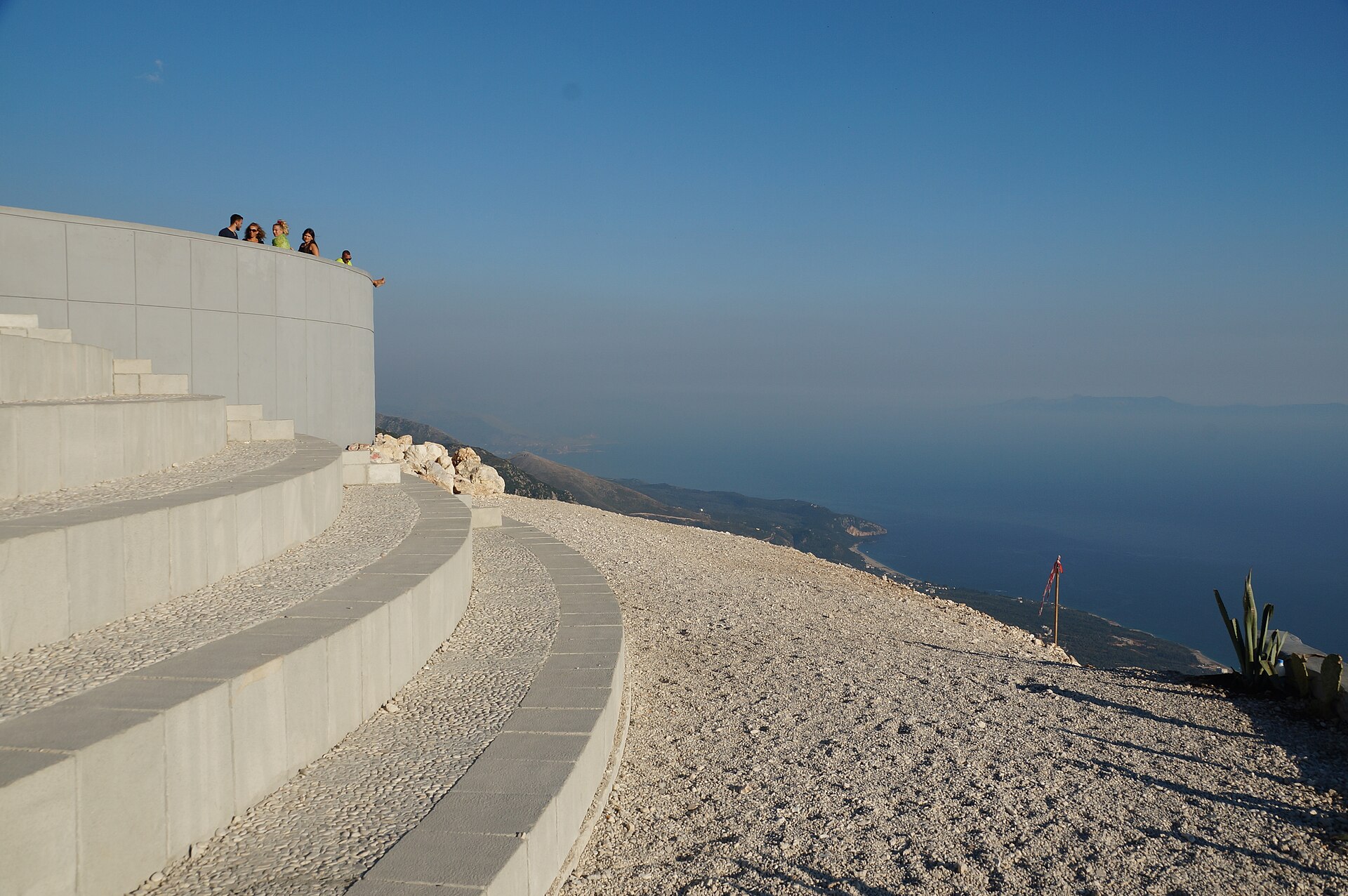
The pass crosses the ridge between two summits, Maja e Çikës and Maja e Gjipalit. Behind you are the forest and the Dukat valley; in front of you the mountainside falls almost straight to the sea, with the beach of Palasë far below and the coast running on towards Dhërmi. Come in the morning for fewer cars and cooler air, or in the late afternoon, when the sun lights up the peaks. On the clearest days, visibility can stretch towards Corfu. On calm days you may also see paragliders over the slopes: a site south of Llogara has served as a venue for international paragliding competitions.
There are two natural stops. The first is the forest just below the pass on the northern side, where several restaurants, small hotels and a cluster of wooden cabins stand among tall pines: park at the restaurant where you plan to eat, then walk. The second is the pass itself, with lay-bys and viewpoints over the coast. Stop only where there is enough space, and never park on a bend.
A forest shaped by the wind
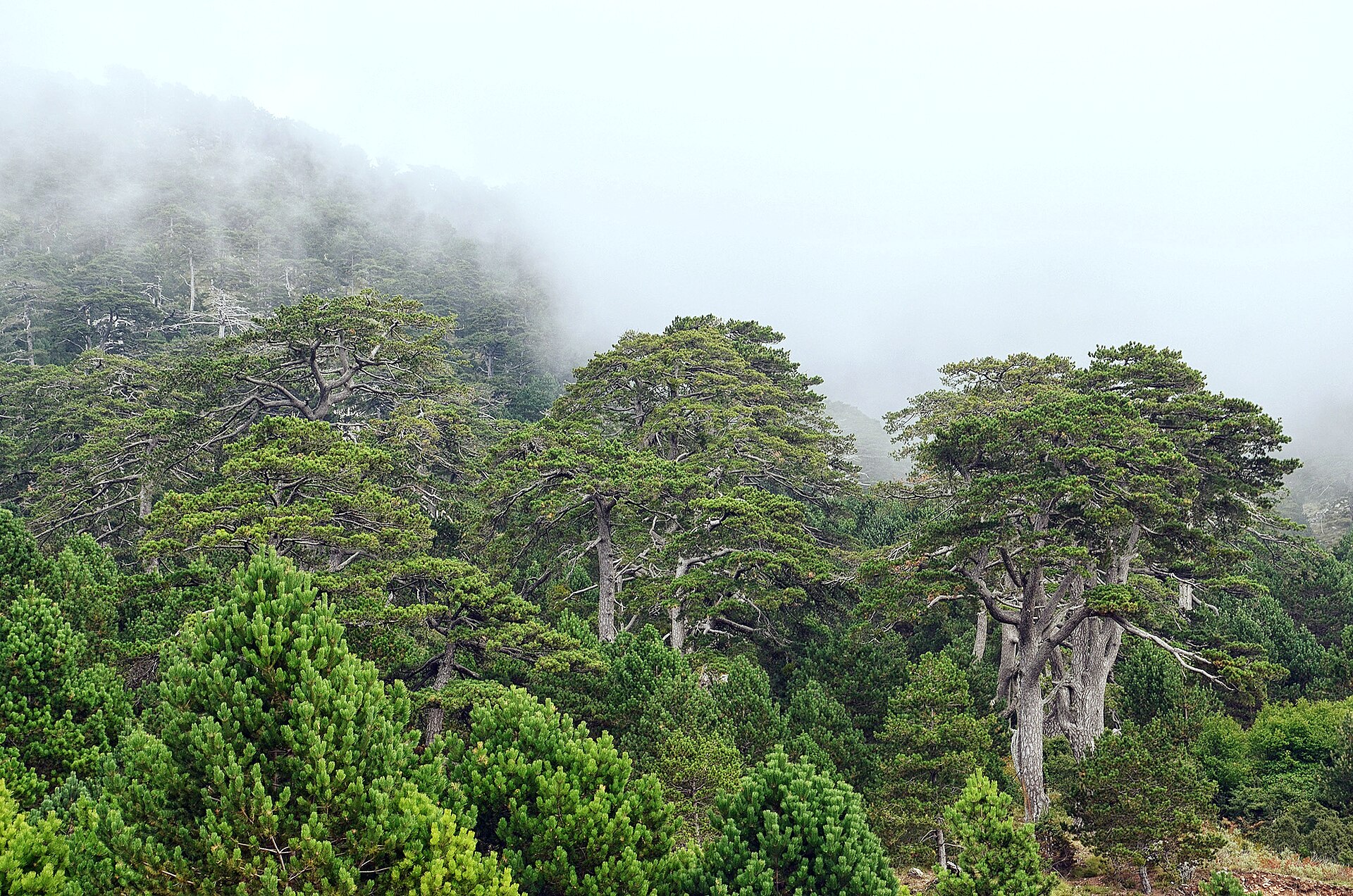
The park rises from about 200 metres to more than 2,000. Its forests are mainly black pine (Pinus nigra) and Bosnian pine (Pinus heldreichii), with Bulgarian fir, silver fir, ash and kermes oak. Air currents squeezed between the mountains and the sea have bent many of them into strange shapes, and the most famous, the Flag Pine near the road, has been combed by the wind into a single sideways sweep, like a banner. Our page on the Flag Pine and the Llogara Pass tells its story.
The park’s list of animals is long: griffon vulture, golden eagle and rock partridge in the open, and in the woods and on the high rocks roe and fallow deer, chamois, wildcat, red squirrel, red fox and wolf. Be realistic, though. Most mammals keep well away from the road, and a day visitor is far more likely to see a bird of prey riding the warm air above the ridge than a deer. Walk early, quietly, and look up.
Llogara in pictures
-
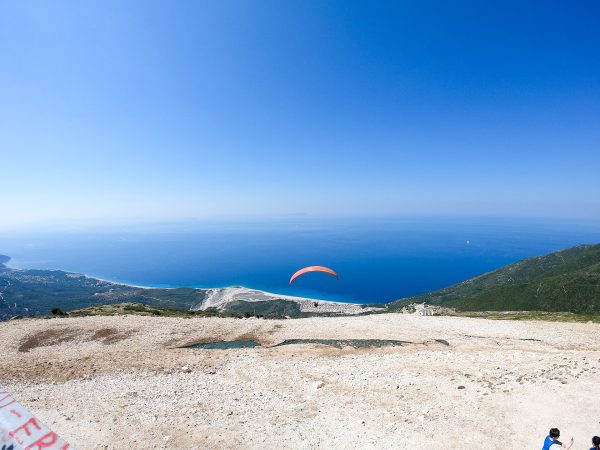
Photo: Liridon, CC BY-SA 4.0 -
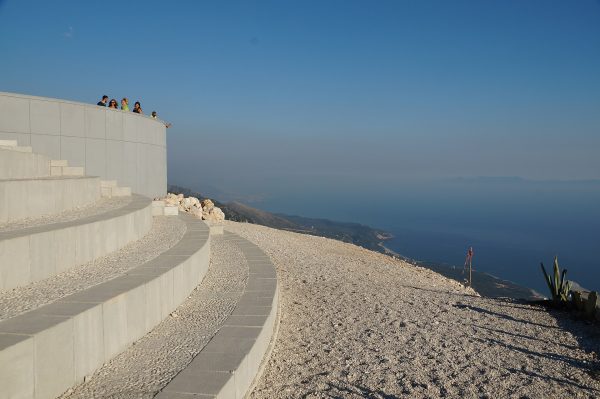
Photo: Albinfo, CC BY-SA 4.0 -
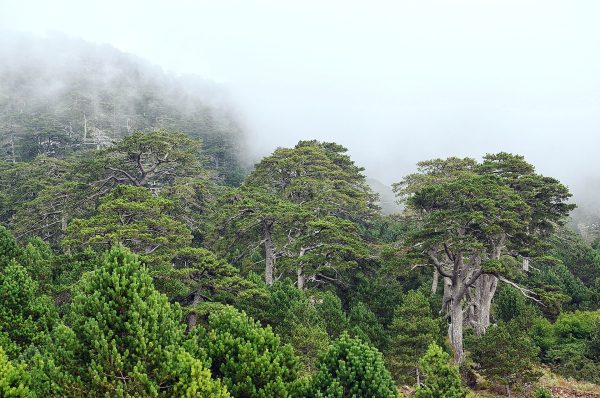
Photo: Pasztilla aka Attila Terbócs, CC BY-SA 4.0
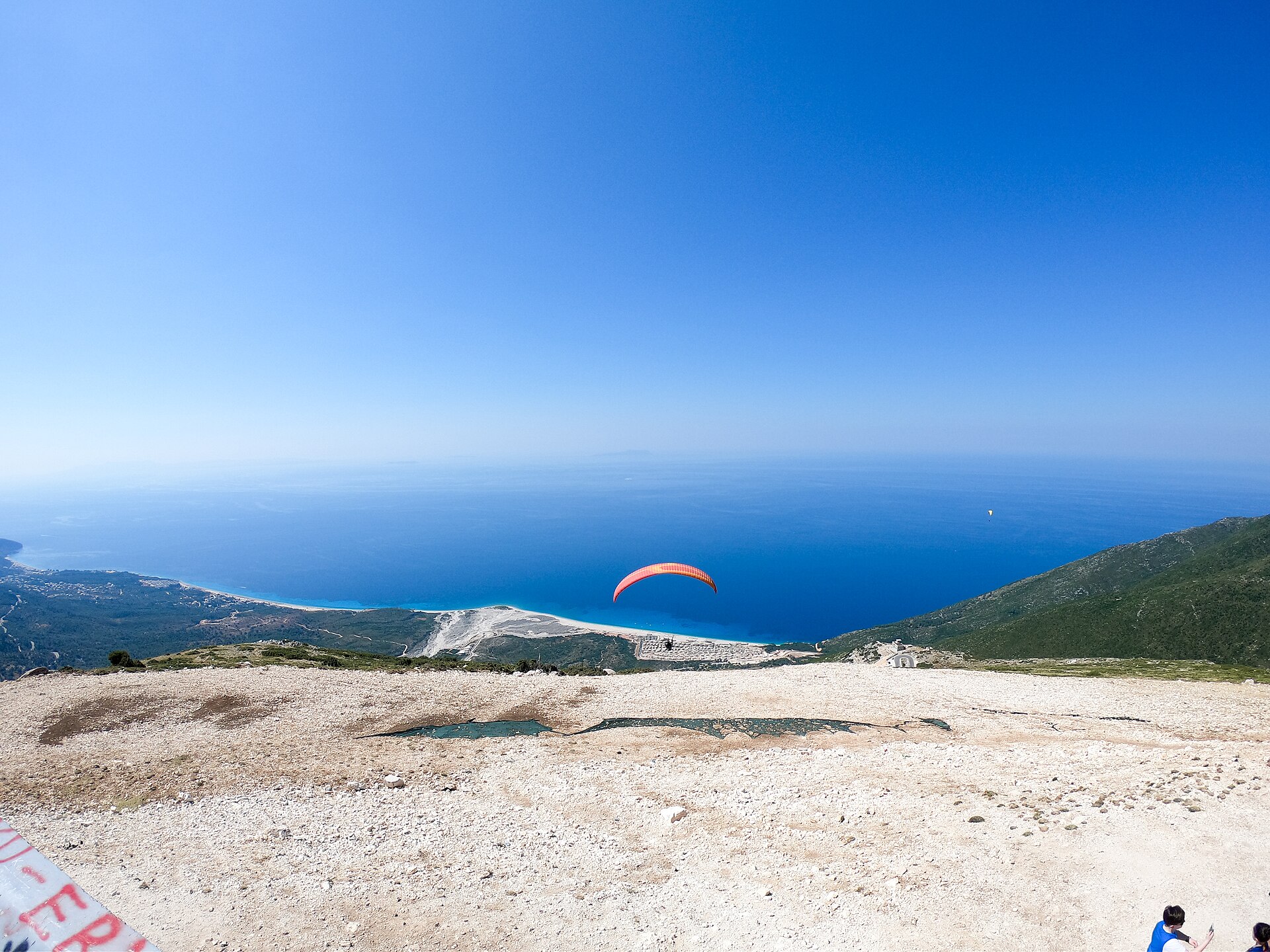
Walks and hikes from the pass
You do not need to be a hiker to enjoy Llogara: a slow hour under the pines is a visit in itself. For more, four routes start around the pass.
- Maja e Thanasit (Shën Thanas), about 1,378 metres. The lowest and most accessible of the summits around the pass, with antennas on top, reached by a 4.2 km unpaved track that leaves the main road north of the pass. By car the track needs a 4×4.
- Mount Qorre, 2,018 metres. About 8.9 km and roughly three hours of walking, plus breaks, with the whole Riviera at the top.
- Mount Çika, 2,045 metres. The highest peak of the Ceraunian Mountains and a full day, about five to six hours up and four down.
- The Julius Caesar Trail. A steep path that drops about 950 metres from near the pass to the bay of Palasë. Arrange a pickup at the bottom unless you plan to climb back.
Above the trees there is no shade and little water. Start early, carry water and a warm layer, and turn back in fog, strong wind or snow.
What to eat and buy on the mountain
Mountain food here is simple and tied to the place: yogurt with honey and walnuts, lamb or goat grilled over an open fire, local cheese and dairy. Along the bends you will also find small stalls selling honey and mountain tea, çaj mali, an infusion of the dried flowering stems of a wild herb, ironwort. For the wider story of what this region eats, read our guide to Mediterranean food culture in Albania.
A simple half-day route from Uji i Ftohtë
-
Leave after breakfast and drive south along the bay, through Radhimë and past Orikum.
-
Just past Dukat, leave the tunnel road and follow the old road up into the forest.
-
Stop among the pines for a slow walk.
-
Continue to the pass for the view over Palasë and the Riviera, and look out for the Flag Pine near the road.
-
Have lunch in the forest: yogurt with honey and walnuts is the classic ending.
-
Drive back to Vlorë for an afternoon by the sea, or continue down to Palasë and Dhërmi and return through the tunnel.
With a car and a whole day, Llogara is also the natural first stop of a Riviera road trip from Vlorë to Himarë.
Myths and legends
More legends of this coast are gathered in the mythic south of Albania.
Did you know?
-
1,027 m
The height of the Llogara Pass
-
2,045 m
Mount Çika, the highest peak of the Ceraunian Mountains
-
950 m
The drop of the Julius Caesar Trail down to Palasë
-
7 min
Dukat to Palasë through the tunnel, instead of about 30
Test yourself: Llogara
1. How high is the Llogara Pass?
Show the answer
1,027 metres. 2,045 metres is Mount Çika, the highest peak of the Ceraunian Mountains.
2. What did the ancient Greeks call this range?
Show the answer
Keraunia. The name recalled the storms and dangers sailors met along this coast.
3. How long does the Llogara Tunnel take from Dukat to Palasë?
Show the answer
About 7 minutes. The same drive took about 30 minutes before the tunnel opened.
Plan your visit
Getting there
About 32 km from Valza, 40 to 45 minutes by car on the old road over the pass.
How long
Half a day; a full day with a long hike or the Riviera.
Best time of day
Morning for fewer cars, late afternoon for the light on the peaks.
Best season
Late spring to early autumn. In July and August the pass is a cool escape from the coast.
Winter
Snow and ice are possible from December to February: check conditions first, or take the tunnel.
Parking
At the restaurants and in lay-bys, never on a bend.
What to bring
- Water
- A warm layer, even in summer
- Walking shoes
Yes, if…
You want cool air and a big view after the beach, a slow walk under the pines or a first stop on the Riviera.
Maybe not, if…
You are heading straight south in bad weather: the pass can be windy, foggy and cold, so take the tunnel.
Is it worth it? Yes: the drive is part of the visit, and half a day is enough.
Go deeper
Our corner
Valza Boutique Hotel, a 4-star boutique hotel in Uji i Ftohtë, on the way out of Vlorë towards Llogara, sits on the right side of town for Llogara: from the hotel, the road south to Radhimë, Orikum and Llogara does not cross the city centre, and parking is free for guests, indoors and outdoors. Back from the cool air of the pass, Eden by Valza, on the hotel’s sixth-floor rooftop, looks across the Bay of Vlora with a 180-degree view.